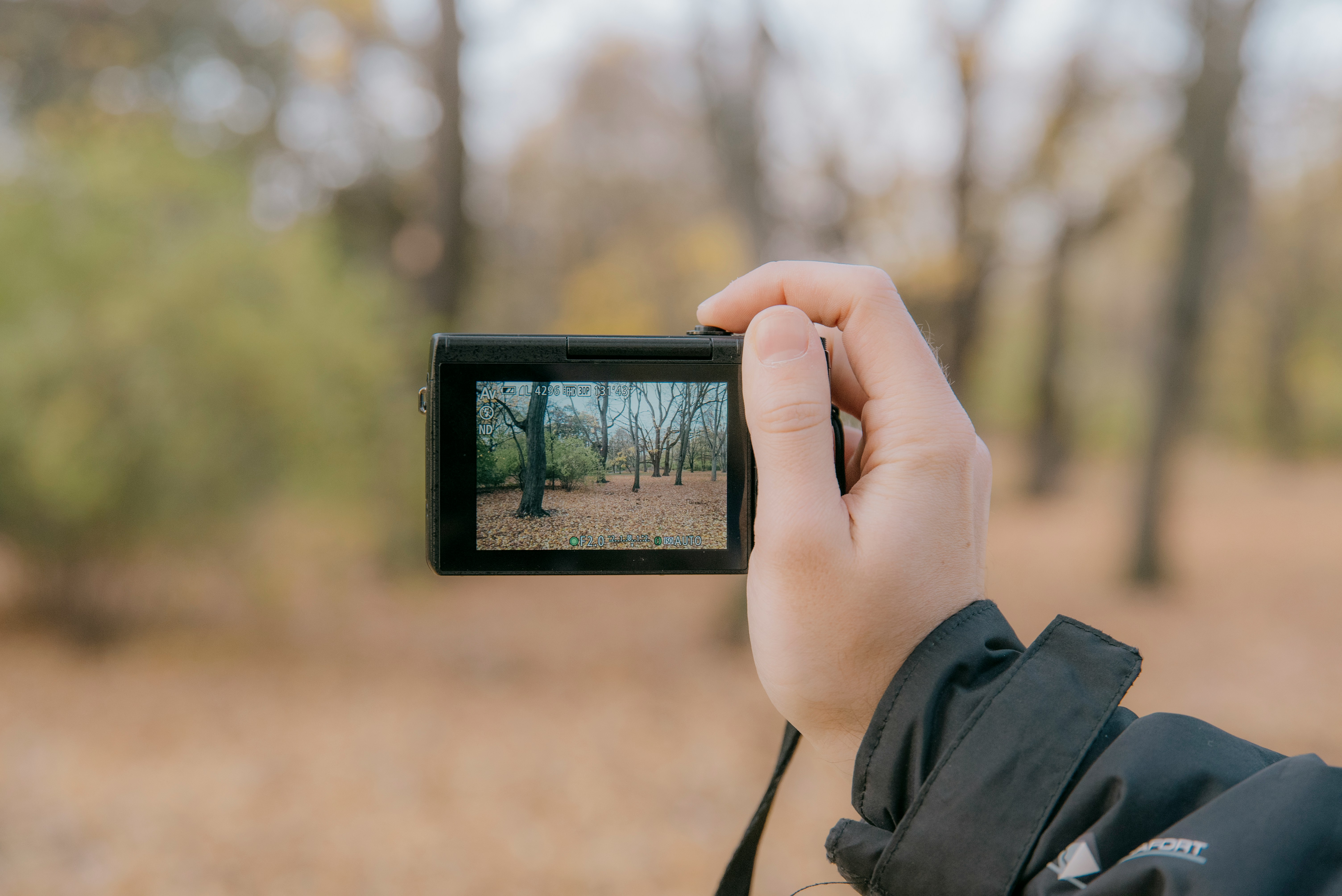
Phones are great until they aren’t—low light gets muddy, zoom looks crunchy, and you miss that “real camera” depth. The best compact cameras fix all of it without asking you to haul a backpack.
Below is a full guide: a quick comparison table, deep dives on each pick (including a budget option), what real reviewers say, and smart extras like how to choose, accessories, and FAQs.
Budget Options: 5 Best Point and Shoot Cameras Under $500
Quick comparison table
| Camera | Why it’s great | Sensor | Lens (equiv.) | EVF | Weight | Typical price* |
|---|---|---|---|---|---|---|
| Sony RX100 VII | Best overall pocket camera; blazing AF; big zoom in a tiny body | 1″ 20MP | 24–200mm f/2.8–4.5 | Pop-up | 302g | $$$$ |
| Canon PowerShot G7 X Mark III | Best compact for vlogging; bright lens; flip screen | 1″ 20MP | 24–100mm f/1.8–2.8 | — | 304g | $$$$ |
| Fujifilm X100VI | Best premium compact; APS-C quality; film-style colors | APS-C 40MP | 23mm f/2 (fixed) | Hybrid OVF/EVF | 521g | $$$$ |
| Panasonic Lumix ZS200 / TZ200 | Best travel zoom; huge reach in a jacket pocket | 1″ 20MP | 24–360mm f/3.3–6.4 | EVF | 340g | $$ |
| Ricoh GR IIIx | Best pocket street camera; APS-C in jeans pocket | APS-C 24MP | 40mm f/2.8 (fixed) | — | 262g | $$$ |
| Canon PowerShot SX740 HS | Best budget compact; 40× super-zoom, tiny price | 1/2.3″ 20MP | 24–960mm f/3.3–6.9 | — | 299g | $ |
*Pricing varies by retailer and supply
Sony RX100 VII — Best Overall Compact Camera
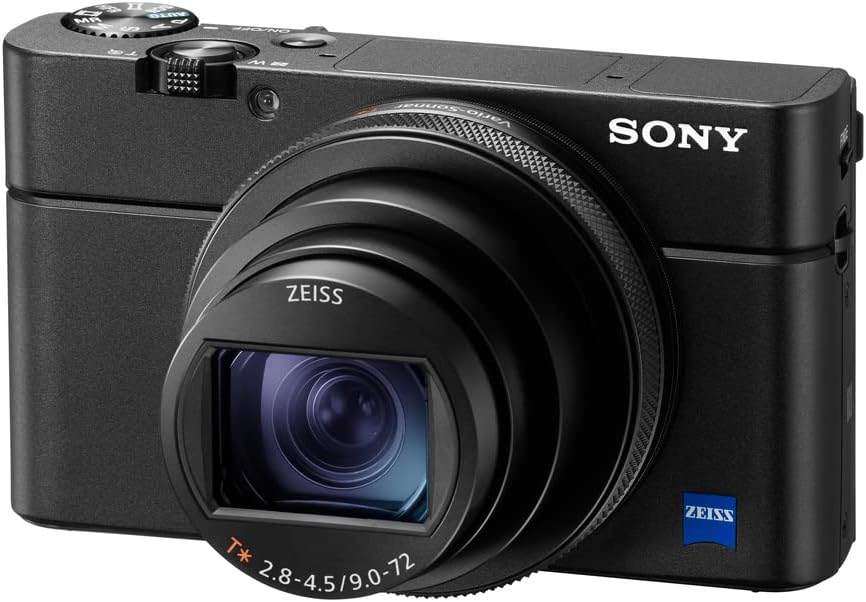
If you want one camera that covers family trips, street moments, food pics, concert clips, and 4K video without a bag, this is it. The 24–200mm lens reaches far, the 1-inch sensor stays clean in tough light, and Sony’s eye-detect autofocus feels like cheating.
Key specs
- 20.1MP 1-inch sensor
- 24–200mm f/2.8–4.5 zoom
- 4K video (oversampled), real-time eye AF
- Pop-up EVF, tilting screen
Pros
- Best-in-class autofocus for a compact
- Big zoom range with legit sharpness
- Pocketable, truly travel-ready
Cons
- Pricey
- Menus take a minute to learn
What reviewers say
- DPReview calls it “an excellent travel camera” with a lens that “works in nearly every situation,” noting the EVF’s usefulness but middling battery life.
- Tech Radar highlights its detailed, oversampled 4K and overall video quality, calling it “the perfect carry-everywhere camera if you can stomach the price.”
Canon PowerShot G7 X Mark III — the vlogger’s compact
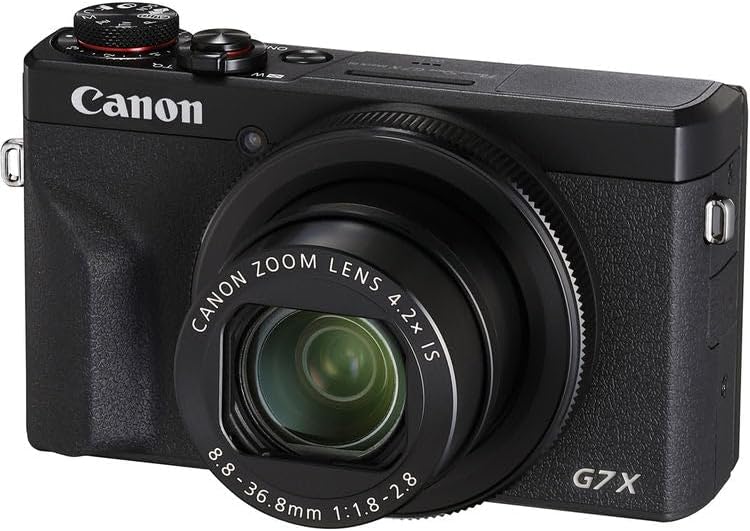
This camera was built with YouTubers in mind. It’s small, has a bright lens that stays sharp indoors, and most importantly, it flips forward so you can frame yourself while recording. The microphone input is a big deal too—very few compacts offer that.
Key specs
- 20.1MP 1-inch sensor
- 24–100mm f/1.8–2.8 lens
- 4K video with live streaming to YouTube
- Tilting touchscreen, mic input
Pros
- Wide, bright lens for low light and bokeh
- Flip screen perfect for vlogging
- Livestream directly to YouTube
- Lightweight
Cons
- No EVF
- Autofocus not as reliable as Sony RX100
- Limited zoom reach
What reviewers say
- The Verge called it “a compact camera built for the YouTube generation,” praising its livestream feature but noting occasional autofocus hunting.
- TechRadar liked the bright lens and portability, describing it as “a smart choice for creators who don’t want to haul bigger gear.”
Fujifilm X100VI — the premium compact for photographers

This isn’t just a compact, it’s a cult classic. The X100 line has been around for years, beloved by street shooters, wedding pros, and travel photographers who want Leica vibes without Leica pricing. The latest X100VI has a new 40MP APS-C sensor, stabilized for handheld sharpness, and Fujifilm’s film simulations that give photos a look straight out of camera.
Key specs
- 40MP APS-C sensor with IBIS
- Fixed 23mm f/2 lens (about 35mm full-frame equiv.)
- Hybrid optical/electronic viewfinder
- Classic rangefinder design
Pros
- Gorgeous Fujifilm colors straight out of camera
- Hybrid finder gives old-school feel with digital convenience
- Fixed lens keeps it sharp and compact
- IBIS finally added
Cons
- Pricey and often hard to find in stock
- Fixed lens means no zoom flexibility
- Slightly bigger than pocket size
What reviewers say
- DPReview called it “a dream camera for street and documentary work,” noting the new 40MP sensor brings incredible sharpness.
- PetaPixel praised it as “the most fun you can have with a digital camera right now,” though they warn supply shortages make it tough to buy.
Panasonic Lumix ZS200 / TZ200 — the travel zoom king
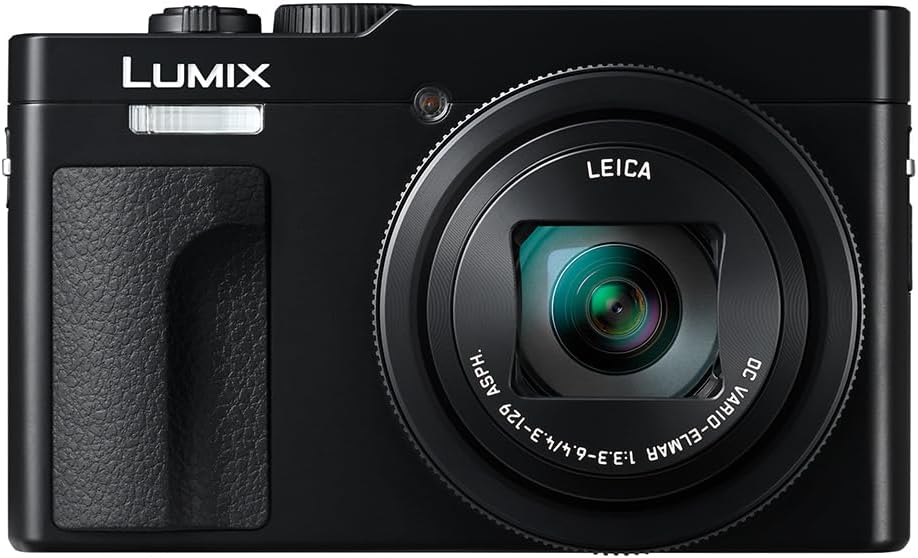
If you want one camera to cover your entire trip without swapping lenses, this is the one. Panasonic squeezed a 24–360mm zoom into a body that slips into a jacket pocket. It’s not as fast in low light as the Sony RX100 or Canon G7 X, but for daytime travel, it’s unbeatable.
Key specs
- 20MP 1-inch sensor
- 24–360mm zoom lens
- 4K video and photo modes
- Built-in EVF and touchscreen
Pros
- Huge zoom range for its size
- EVF useful in bright sunlight
- Great value for travel shooters
Cons
- Lens is slow at the long end (f/6.4)
- Low light performance weaker than rivals
- AF slower than Sony’s
What reviewers say
- Digital Camera World notes it “delivers unmatched zoom versatility in a compact form.”
- Photography Blog said it’s “a no-brainer for travelers,” but warns you’ll want good light.
Ricoh GR IIIx — the street shooter’s pocket tool

The Ricoh GR series has always been a cult favorite among photographers who live for street shooting.
The GR IIIx keeps that reputation alive with an APS-C sensor tucked into a body that slips into your jeans pocket.
The fixed 40mm lens is a little tighter than the classic GR’s 28mm, which makes it great for portraits, details, and a slightly more intimate look at the world.
Key specs
- 24MP APS-C sensor
- Fixed 40mm f/2.8 lens
- Snap Focus for fast street shooting
- Pocketable at just 262 grams
Pros
- Incredible image quality in a tiny body
- Snap Focus mode makes it lightning quick on the streets
- Discreet and stealthy — looks like a point-and-shoot
- APS-C sensor rivals larger cameras
Cons
- Fixed lens, no zoom flexibility
- No built-in EVF
- Battery life could be better
What reviewers say
- The Phoblographer called it “one of the purest photographic experiences you can buy,” especially praising the Snap Focus.
- DPReview noted its “incredible portability and sharp results,” but warned the battery drains faster than expected.
Canon PowerShot SX740 HS — the budget-friendly superzoom
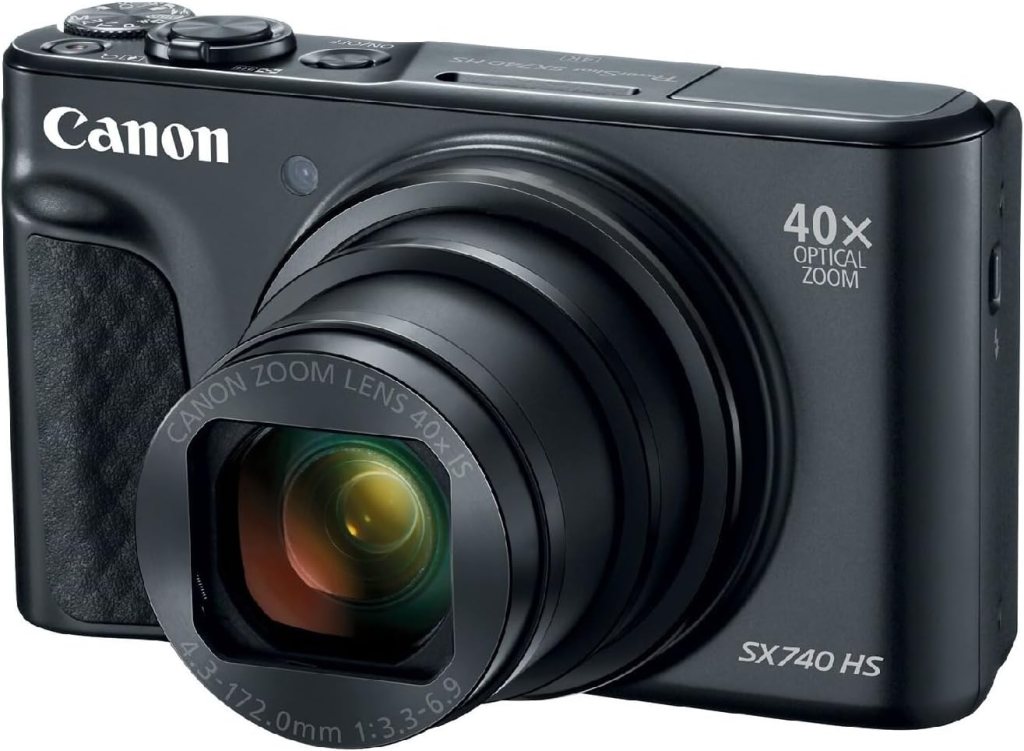
Not everyone needs a $1,000+ compact. If you want something affordable that still blows past what a smartphone can do, the Canon SX740 HS is worth a look. It packs a 40× optical zoom—yes, 24–960mm equivalent—into a camera that fits in your palm. It’s not going to give you pro-level low-light results, but for daytime travel, wildlife, or just family use, it’s excellent value.
Key specs
- 20.3MP 1/2.3″ sensor
- 24–960mm f/3.3–6.9 zoom lens
- 4K video recording
- 299 grams
Pros
- Huge zoom range in a small package
- Easy to use, great for beginners
- Affordable compared to premium compacts
Cons
- Smaller sensor, struggles in low light
- No EVF
- Limited manual control compared to higher-end models
What reviewers say
- Camera Jabber says it “delivers amazing zoom reach for its size and price,” though you’ll want good light.
- TechRadar highlights it as “a great budget travel camera” while admitting smartphones often beat it in low light.
Compact vs Smartphone Cameras
This is the big question people ask: why even buy a compact when your phone already takes great pictures? The answer comes down to physics.
A compact camera has a larger sensor than a phone, which means better performance in low light, richer detail, and more dynamic range. You also get real optical zoom—up to 200mm or even 360mm on some models—without the grainy digital tricks phones rely on.
Another point is battery life. If you’re traveling, you’ll drain your phone fast if you rely on it for photography, navigation, and everything else. A compact camera spreads the load and keeps your phone free.
How to Choose the Right Compact Camera
Not all compacts serve the same purpose. Here’s a quick framework for choosing:
- If you want something all-purpose and pro-level, go for the Sony RX100 VII.
- If your main focus is YouTube or vlogging, the Canon G7 X Mark III was designed with you in mind.
- If you’re a purist who loves photography as an art, the Fujifilm X100VI is unmatched.
- If you’re traveling and need zoom flexibility, the Panasonic ZS200 will keep you covered.
- If you’re into stealthy, minimalist shooting, Ricoh GR IIIx is perfect.
- If budget matters most, Canon SX740 HS gives you reach and fun without a huge price tag.
Best Accessories for Compact Cameras
A compact camera is only as good as how you use it. A few accessories can make a huge difference:
- A wrist strap: keeps your camera safe without being bulky.
- A small hard case: prevents scratches and protects against drops when traveling.
- Extra batteries: most compacts aren’t known for all-day life, so carrying spares is essential.
- A pocket tripod: especially useful for vlogging or group shots.
- SD cards with fast write speeds: makes 4K video recording smoother.
Real-World Tips for Getting Better Shots
Even the best compact can disappoint if you just use it like a phone. Here are some tips:
- Learn to use aperture priority (A mode). It gives you control over background blur and sharpness.
- Don’t always zoom to the max—stay within the lens’s sweet spot (usually the middle of the zoom range).
- Keep an eye on light. Compacts still struggle in the dark, so position your subject where the light is strongest.
- Experiment with angles—since the cameras are small, it’s easy to hold them high, low, or even squeeze them into tight spaces for creative shots.
FAQ: Best Compact Cameras
What is the best compact camera overall?
Right now, the Sony RX100 VII is widely considered the best compact camera thanks to its powerful zoom, excellent autofocus, and pocketable design.
Are compact cameras better than smartphones?
Yes, mainly for image quality and zoom. Compact cameras have larger sensors, optical zoom lenses, and better low-light performance, giving you results a phone can’t always match.
What’s the best compact camera for beginners?
The Canon PowerShot SX740 HS is a strong beginner choice. It’s affordable, easy to use, and offers a 40× zoom lens that’s great for travel and everyday use.
Which compact camera is best for travel?
The Panasonic Lumix ZS200 is perfect for travel. It has a long 15× zoom, solid image quality, and a slim body that slips easily into a pocket or small bag.
What’s the best budget compact camera?
If you want something under $500, the Canon SX740 HS and older versions of the Sony RX100 line offer excellent value without sacrificing too much performance.
Do compact cameras shoot video well?
Yes, many of today’s best compact cameras shoot high-quality 4K video. Models like the Canon G7 X Mark III and Sony RX100 VII are especially popular with vloggers.
Are compact cameras good for professional use?
Some, yes. The Fujifilm X100VI and Ricoh GR IIIx are beloved by professional photographers for street and travel work because of their high-quality lenses and image performance in a tiny body.
This post contains affiliate links. If you purchase through these links, I may earn a small commission at no extra cost to you. As an Amazon Associate, I earn from qualifying purchases and stand behind all of my recommendations.





Leave a Reply