
How to Choose Fast and Avoid Overthinking
Start with the sport, not the spec sheet. Friday-night football and a dim high-school gym are two different planets.
- The big three: autofocus that sticks; a buffer that breathes; lenses you can actually afford.
- Match to venue: indoor/LEDs → anti-flicker or global shutter; night fields → full-frame + f/2.8; daylight fields → APS-C/MFT for lighter, longer reach.
- Burst speed (reality): 15–30 fps with a deep buffer beats headline 60–120 fps you can’t sustain.
- Viewfinder: blackout-free makes tracking and panning much easier.
- Cards: fast CFexpress (or top-tier UHS-II) = longer bursts; buy a couple big ones.
- Ergonomics & weather: grippy body, sensible buttons, real sealing—you’ll be holding it for hours.
- Budget split: roughly 50/50 body and lenses; glass is the long game.
- Backup plan: two bodies if you’re paid; at minimum carry a spare battery, a spare card, and a cheap rain cover.
Sports Cameras Comparison Table
| Camera | Price (body) | Best for | Highlights |
|---|---|---|---|
| Canon EOS R10 | ~$950 | First sports camera on a tight budget | 15 fps mechanical; easy subject tracking; light, simple controls |
| Sony a6700 | ~$1,400–$1,600 | Fast AF without full-frame prices | Excellent human/animal tracking; great “keeper rate” |
| Canon EOS R7 | ~$1,499 | Soccer/baseball/track with extra “reach” | 15 fps mechanical / 30 e-shutter; big buffer for JPEGs |
| Nikon Z6 III | ~$2,199–$2,499 | Night football & indoor courts | Bright EVF, quick readout, strong AF in bad light |
| Fujifilm X-H2S | ~$2,499–$2,699 | Speed on a smaller sensor | Stacked APS-C; up to 40 fps; deep buffer; blackout-free feel |
Reality check: headline fps is nice, but sticky AF + a buffer that lasts will save more shots than chasing 60–120 fps for half a second.
7 Best Cameras for Sports Photograhy
Canon EOS R10 — Best Under $1000
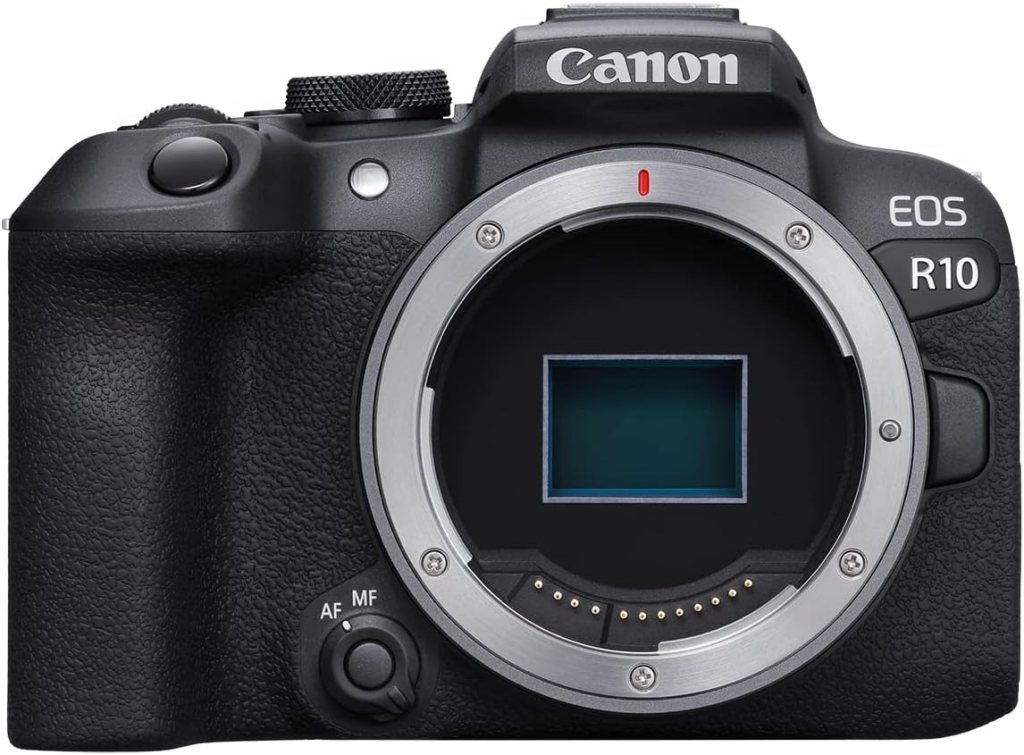
Why it works: The R10 is small, quick, and friendly. It’ll track a kid sprinting down the touchline without turning your settings into homework, and the 15 fps mechanical shutter is the good kind of fast—clean motion with fewer “weird bendy bat” moments than ultra-fast electronic shutters. Autofocus is the star: set it to subject detect + Servo AF and it sticks more often than you’d expect at this price.
Where it shines
- Daylight field sports: soccer, baseball, track meets.
- Sideline parents & students: light body, simple menu, easy wins.
- Travel teams: tiny kit, no chiropractor bills.
Where it struggles
- Dim gyms/night games: you can do it, but you’ll fight higher ISO and slower kit lenses. If that’s your life, aim up the ladder (R7 or a value full frame).
First lens to buy
- Starter tele for daylight: RF-S 55–210mm. It’s light, cheap(ish), and gets you into the action without a monopod. Perfect for soccer sidelines and little league outfields.
- All-day walkaround: RF-S 18–150mm. Not a “sports lens,” but great for weekend tournaments when you’re mixing candids with action.
- When you need real speed (later): grab the EF-EOS R adapter and use the used-market classics: EF 70–200mm f/2.8, EF 70–200mm f/4, or EF 135mm f/2. The adapter route keeps costs sane and opens a huge lens pool.
Quick rule: for outdoor action, reach (200–300mm) beats speed; for indoor/night, speed (f/2.8) beats reach.
Sony a6700 — stickiest autofocus for the money
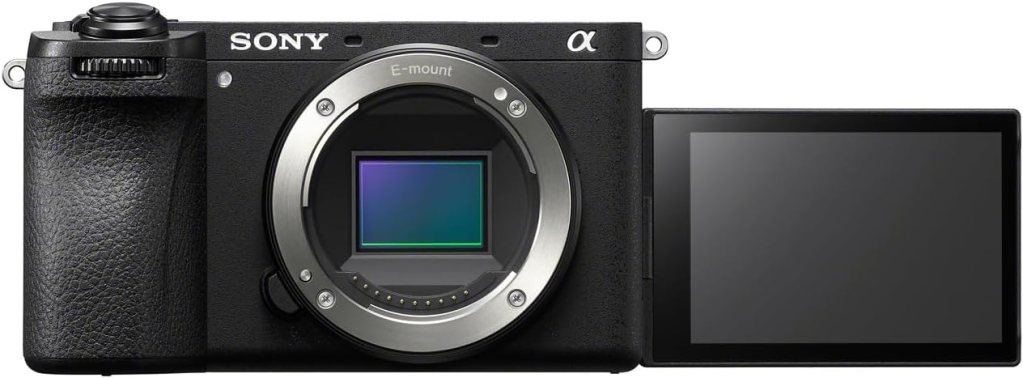
Why it works: The a6700 locks, tracks, and stays glued to people in motion better than anything else near its price. Set it to AF-C with subject detection and it’ll follow a runner through a crowd or a point guard slicing the lane with very little hunting. It’s small, balances well with mid-size zooms, and the battery actually lasts a full game. If you’re chasing a high keeper rate without full-frame costs, this is the sweet spot.
Where it shines
- Daylight field sports: soccer, baseball, track—especially from the sidelines with a lightweight tele.
- Fast, erratic motion: the tracking feels confident even when players overlap or change direction.
- Travel/light kits: body + one long zoom fits in a small shoulder bag.
Where it struggles
- Dim gyms/night games: it can do it, but noise climbs faster than on full-frame—fast glass helps a lot.
- Long, sustained bursts: the buffer is good, not bottomless; short, well-timed bursts work better.
- Electronic shutter quirks: under nasty LED lighting or with very fast swings, stick to mechanical to avoid banding/warping.
First lens to buy
- Sony E 70–350mm f/4.5–6.3 G OSS — Daylight sideline workhorse. Sharp, stabilized, and light enough to hand-hold all game. On the a6700 it frames like ~105–525mm, so you can cover midfield runs and outfield plays without a monopod.
- Tamron 70–180mm f/2.8 (Di III VXD) — Your indoor/night solution. Constant f/2.8 keeps shutter speeds high in gyms and under lights; AF is snappy. No optical stabilization on the original version, but the a6700’s IBIS handles it. Think baseline basketball, volleyball, and closer football work.
- Sigma 100–400mm f/5–6.3 DG DN OS — Extra reach when you’re stuck far from the action. Optical stabilization helps at the long end; pair with a monopod for long innings or soccer from the stands. On APS-C it behaves like ~150–600mm—perfect for daylight baseball outfield and big pitches.
Quick tip: Day games from the sideline → 70–350. Gyms/night → 70–180 f/2.8. Far sidelines (day) → 100–400 + monopod.
Canon EOS R7 — Best Under $2000

Why it works: The R7 is quick where it counts. The 15 fps mechanical shutter feels sporty without wrecking the buffer, and Canon’s subject detection (people/eyes) latches on fast. Because it’s APS-C, your lenses frame tighter—great for soccer, baseball, and track. In-body stabilization helps with long lenses when your hands get tired in the 4th quarter.
Where it shines
- Daylight fields: that crop factor turns a modest tele into real sideline reach.
- Erratic movement: Servo AF + Whole Area + People Detect keeps up well.
- All-day carry: lighter than full-frame kits; easy to hand-hold a long zoom.
Where it struggles
- 30 fps electronic: rolling shutter can bend bats/balls under LED lights—use mechanical for peak plays.
- Dark gyms/night games: totally doable, but you’ll want faster glass to keep shutter speeds high.
First Lens to Buy
- RF 100–400mm f/5.6–8 IS USM — Daylight reach without the weight. Fast AF, very hand-holdable; on the R7 it frames like ~160–640mm, which is money for outfield and long sidelines.
- RF-S 55–210mm IS STM — Cheapest way to start. Light, stabilized, and long enough for youth soccer and little league from the fence. Frames like ~88–336mm.
- EF 70–200mm f/2.8 (via EF-to-RF adapter) — The night/indoor fix. Constant f/2.8 keeps 1/1000–1/2000s in gyms or under lights. The used market makes this route far more affordable than RF 70–200.
Quick tip: Daytime fields → RF 100–400. Tight budget/daylight → RF-S 55–210. Night games/gyms → EF 70–200mm f/2.8 + adapter.
Nikon Z6 III — Best value full-frame for night games and gyms
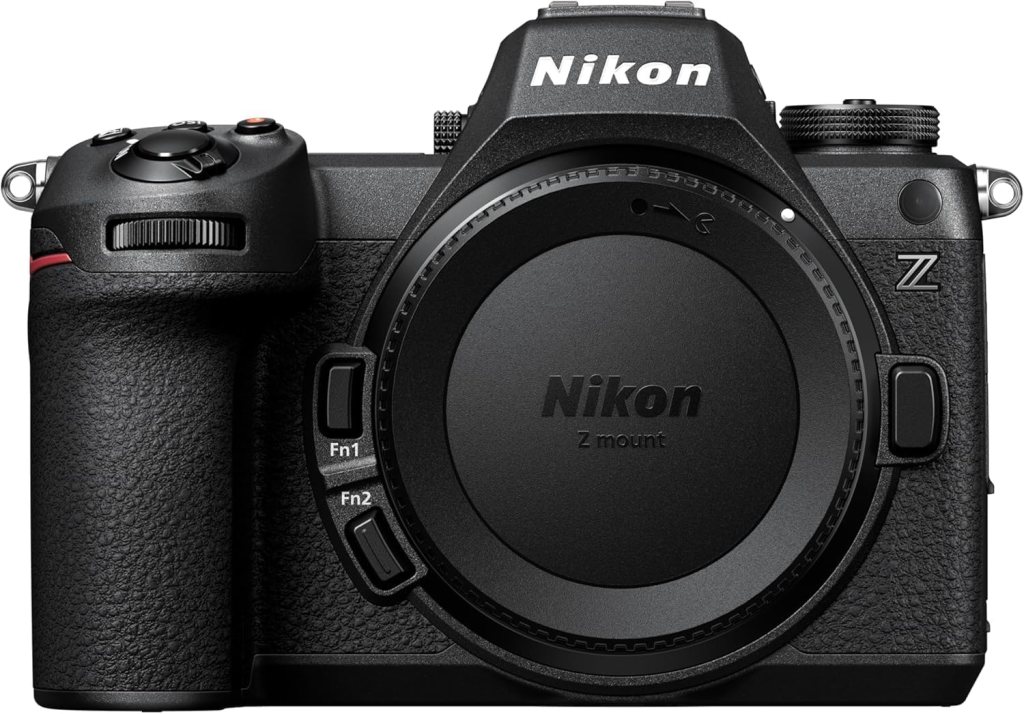
Why it works: Full-frame buys you cleaner high-ISO, which is exactly what you need under Friday-night lights and in dim gyms. The Z6 III feels quick and confident—fast readout, bright EVF, and AF that holds on to faces through messy plays. It’s the body you grab when you want fewer blurry, grainy disasters and more keepers after sunset.
Where it shines
- Night football & indoor courts: cleaner files at 1/1000–1/2000s with reasonable ISO.
- Mixed weekends: one camera that does family, travel, and sports without drama.
- Long lenses: in-body stabilization and a comfy grip make heavy teles manageable.
Where it struggles
- Budget pressure: great body, but you still need a fast tele—plan for that.
- Spray-and-pray bursts: the buffer is solid, not bottomless; time your bursts.
First Lens to Buy
- NIKKOR Z 70–180mm f/2.8 — The indoor/night workhorse. Lighter and cheaper than the 70–200/2.8 S, but still fast enough to keep shutter speeds high in gyms and under lights. Perfect baseline basketball and close-sideline football lens.
- NIKKOR Z 180–600mm f/5.6–6.3 VR — Daylight reach without the silly price. Sharp, stabilized, and surprisingly usable handheld for soccer, baseball outfield, and track from the stands.
- AF-S 300mm f/4E PF ED VR (+ FTZ adapter) — The “sneaky light” prime. Small, fast, and razor-sharp; fantastic for night fields when you can work one angle and want cleaner files than an f/5.6–6.3 zoom.
Quick tip: Gyms/night → Z 70–180 f/2.8. Daylight far sideline → Z 180–600. Need a lighter fast option → 300mm f/4 PF + FTZ.
Fujifilm X-H2S – Best Under $3000

Why it works: It’s the fast Fuji—the stacked APS-C sensor gives you blackout-free bursts and sticky subject tracking without flagship prices or weight. Autofocus is confident on runners, skaters, and midfield scrums; the grip is comfy for long games; and the files hold up well when you crop a bit.
Where it shines
- Daylight field sports where you want “extra reach” from APS-C
- Fast, erratic motion—bursts feel smooth and responsive
- Travel/light kits—body and lenses stay reasonable in size
Where it struggles
- Dim gyms and night games push ISO harder than full frame
- Electronic shutter can show banding/warping under ugly LEDs—use mechanical for peak plays
- The wild 40 fps modes eat buffer fast in RAW—short, timed bursts win
First Lens to Buy
- XF 70–300mm f/4–5.6 OIS WR — Affordable, sharp, stabilized, and light. On APS-C it frames like ~105–450mm—perfect for soccer sidelines, baseball outfield, and track in daylight.
- XF 50–140mm f/2.8 R LM OIS WR — The indoor/night zoom. Constant f/2.8 keeps 1/1000–1/2000s alive in gyms and under lights. Fast AF, excellent stabilization, and durable build.
- XF 100–400mm f/4.5–5.6 R LM OIS WR — Extra reach when you’re stuck far away. Stabilized, quick to focus, and hand-holdable for long innings or big pitches.
Quick tip: Daylight fields → 70–300. Gyms/night → 50–140 f/2.8. Far sidelines (day) → 100–400.
Sports Camera Settings Cheat Sheets
Daytime field sports (soccer/football/lacrosse)
- Shutter: 1/1600s (bump to 1/2000s for faster play)
- Aperture: f/4–f/5.6 on long zooms
- ISO: Auto, max 3200 (full frame) / 1600–3200 (APS-C/MFT)
- AF: Continuous (AF-C) + subject detect (people) + wide/zone
- Drive: High (short bursts, half-second at a time)
Quick tip: Sun behind you if possible; it lights faces and jerseys, and your AF grabs faster.
Night football / evening soccer (under lights)
- Shutter: 1/1000–1/2000s
- Aperture: as wide as it goes (f/2.8 if you have it)
- ISO: Auto, cap 12,800 (full frame) / 6400–10,000 (APS-C)
- AF: AF-C + people/eye detect; avoid tiny single points
- Extras: Turn on anti-flicker if your camera has it; mechanical shutter for peak plays
Quick tip: If files look noisy, don’t slow the shutter—open the aperture or raise ISO. Blur ruins more shots than grain.
Indoor basketball / volleyball
- Shutter: 1/1000–1/2000s
- Aperture: f/2–f/2.8 primes/zooms if you can
- ISO: 6400–16,000 (full frame) / 8000–20,000 (APS-C)
- AF: AF-C + tracking; use a medium “zone” so it doesn’t jump to the crowd
- Extras: Anti-flicker ON; prefer mechanical shutter to avoid banding
Quick tip: Park yourself at the baseline, shoot players moving toward you—AF locks easier and faces are cleaner.
Baseball / softball
- Shutter: 1/2000s for bat-on-ball; 1/1000s for general play
- Aperture: f/4–f/5.6 outdoors; f/2.8 at night
- ISO: Auto with a sensible cap (same as night sports above)
- AF: AF-C; use a smaller zone for pitchers/catchers, wider zone for base running
- Angles: Shoot through fence gaps; keep the lens right up on the mesh to hide it
Quick tip: Pre-focus on the plate or base before the pitch/steal so the first frame is sharp.
Hockey / ice rinks
- Shutter: 1/1250–1/2000s
- Aperture: f/2.8 if possible
- ISO: 6400–12,800 (full frame) / 8000–16,000 (APS-C)
- AF: AF-C + tracking; use a mid-size zone to avoid grabbing the glass
- Exposure: +0.3 to +0.7 EV (ice fools meters)
Quick tip: Wipe the glass spot you’ll shoot through before warmups; it matters more than another stop of ISO.
Track & field
- Shutter: 1/1600s for sprints/jumps, 1/1000s for distance
- Aperture: f/4–f/5.6 (day), f/2.8 (night)
- AF: AF-C + tracking; switch to single point for long jump takeoff board
- Coverage: 24–70mm for starts/medals, tele for finish line
Quick tip: For finish-line shots, aim chest-high and let the runner break into your focus—don’t chase with the AF point.
Motorsports (panning vs freeze)
- Freeze: 1/2000s, AF-C, wide/zone, burst High
- Pan: 1/160–1/320s, AF-C with a small zone, steady stance, follow through
- ISO: Auto; set a floor (ISO 100–200) so the shutter doesn’t climb on bright laps
Quick tip: For pans, half-press and follow for a full second before the pass—smoothness beats settings.
Universal tweaks that save shots
- Back-button focus: assign AF-ON so you can stop/start tracking without lifting your eye
- Minimum shutter in Auto ISO: set it (1/1000s) so the camera won’t dip too low
- White balance: “Auto” is fine; gyms with weird tints benefit from a custom WB off the floor
Quick tip: Review one burst at halftime. If faces are soft, widen your AF area and shoot players coming toward you.
This post contains affiliate links. If you purchase through these links, I may earn a small commission at no extra cost to you. As an Amazon Associate, I earn from qualifying purchases and stand behind all of my recommendations.




Leave a Reply