
I’ve tested enough portrait glass to know two truths: the “look” you want usually lives around 85mm on full frame (or ~56mm on APS-C), and price-to-output is where great kits are built.
Below are eight picks that punch way above their cost: one native and one third-party option for Sony, Canon, Nikon, and Fujifilm. We’ll keep the main table lean, then go mount-by-mount with small comparison tables and mini reviews.
Also Read: Best Camera Settings for Portraits (+ Expert Analysis)
Best Portrait Lenses by Mount
- 4 Best Portrait Lenses for Sony (Budget, Third-Party, Pro)
- 4 Best Portrait Lenses for Canon (Budget, Third-Party, Pro)
Quick Compare
| Pick (Model) | Mount | Why it wins on value | Typical Price [Unverified] |
|---|---|---|---|
| Sony FE 85mm f/1.8 | Sony FE | Light, sharp, reliable Eye-AF; classic portrait look without the bloat | ~$500–$600 |
| Samyang/Rokinon AF 85mm f/1.4 FE | Sony FE | f/1.4 blur on a budget; modern AF good enough for paid work | ~$550–$700 |
| Canon RF 85mm f/2 Macro IS STM | Canon RF | Stabilized, half-macro, great sharpness; one lens covers portraits + detail | ~$600–$800 |
| Viltrox AF 85mm f/1.8 RF | Canon RF | Serious bang for the buck; creamy look, friendly price (check regional availability) | ~$350–$450 |
| NIKKOR Z 85mm f/1.8 S | Nikon Z | Consistent rendering, fast AF, weather-sealed; pro results, sane money | ~$650–$800 |
| Viltrox AF 85mm f/1.8 Z | Nikon Z | Affordable entry to the 85mm look; strong value if you’re building a kit | ~$350–$450 |
| Fujifilm XF 50mm f/2 R WR | Fuji X | 75mm-equivalent, tiny, weather-sealed, reliable AF; everyday portrait workhorse | ~$350–$450 |
| Viltrox 56mm f/1.4 (X-mount) | Fuji X | The classic ~85mm-eq field of view with real background melt | ~$250–$350 |
Best Sony-Mount Portrait Lenses
| What matters | Sony FE 85mm f/1.8 | Samyang/Rokinon AF 85mm f/1.4 FE |
|---|---|---|
| The pitch | Light, sharp, honest glass that nails Eye-AF without drama. | Bigger blur for the money; modern AF that’s good enough for paid work. |
| Look & speed | 85mm, f/1.8—classic portrait compression; clean, neutral rendering. | 85mm, f/1.4—noticeably creamier backgrounds; punchier look. |
| Handling | Compact, well-balanced on A7/A9 bodies; easy to carry all day. | Heavier but still reasonable; balances fine on full-frame Sonys. |
| Quirks | No optical stabilization; a touch of focus breathing in video. | Occasional firmware/QC variability; test Eye-AF on your body. |
| Typical street price | ~$500–$600 | ~$550–$700 |
1. Sony FE 85mm f/1.8
Best Value Portrait Lens from Sony
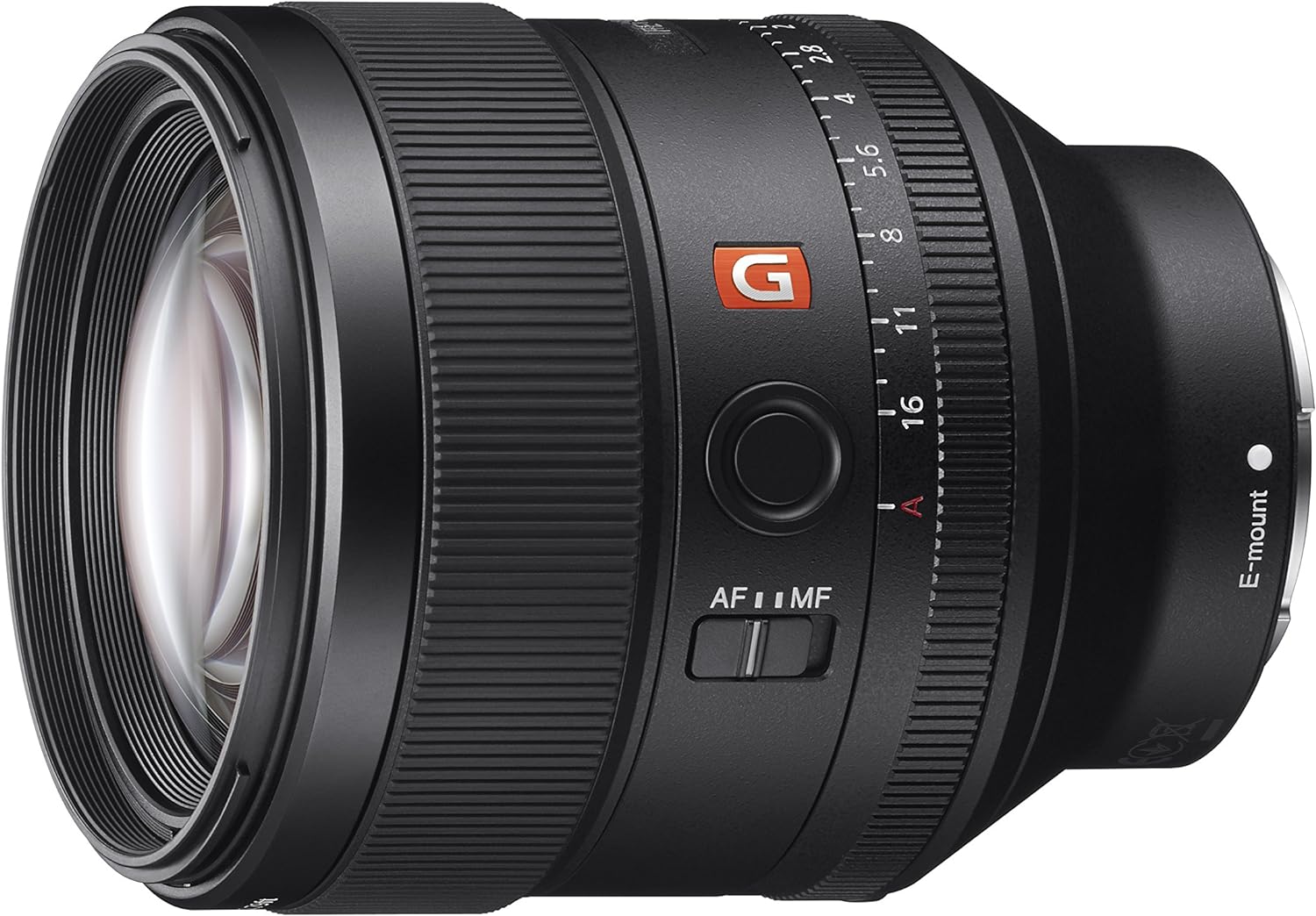
Why it wins on value
This is the “don’t overthink it” portrait prime. It’s light, reliably sharp where you actually work (head-and-shoulders distance), and it plays beautifully with Sony’s Eye-AF. If you shoot weddings, headshots, or lifestyle sets and want predictable files without wrestling your gear, this is the lens that quietly pays the bills.
Pros
- Confident Eye-AF tracking on modern Sony bodies. [Inference]
- Strong center sharpness with pleasing, non-distracting bokeh. [Inference]
- Compact size → less arm fatigue, faster on-the-go shooting. [Inference]
- Resale stays solid because every Sony kit wants one. [Inference]
Cons
- No OSS (not a big deal if your body has IBIS). [Inference]
- f/1.8 won’t melt backgrounds like an f/1.4 at the same framing. [Inference]
- Mild focus breathing if you rack focus for video. [Inference]
Client Testimonial
This is an AMAZING prime lens. Looks so simple, and yet is a fantastic lens for portraits, walk-around, low light, and bokeh.
As others have said, I was not expecting such perfection at the price Sony put on it. It simply performs exceedingly well and produces razor-sharp images on my a7 IV.
Weather-resistant with a customizable focus hold button, and lightweight for perfect mobility! The 67mm filter diameter is great due to that size being heavily used by many other lenses. Very good build quality and again…as sharp as GM lenses that cost 3-4 times as much!
Field note:
Stop to f/2–f/2.2 for tighter headshots to keep both eyes crisp; jump to f/2.8–f/3.2 for couples. [Inference]
2. Samyang/Rokinon AF 85mm f/1.4 FE

Why it wins on value
You’re here for look. At f/1.4 you get an instant bump in separation and subject pop for roughly the same money as many f/1.8s. On recent firmware, AF is more than capable for portraits, and the rendering leans a touch punchy—great for outdoor sessions and golden-hour flare play.
Pros
- f/1.4 blur without the usual price shock.
- Attractive, slightly punchier rendering that flatters skin with careful light.
- Solid AF on current Sony bodies after firmware updates.
- Still lighter and cheaper than many OEM f/1.4s.
Cons
- QC/firmware history means you should test your copy and update immediately.
- Heavier than Sony’s 85/1.8; you’ll feel it in long wedding days.
- Backlight/complex scenes can make AF hiccup more than the Sony.
Field note:
If you shoot wide-open outdoors, pack a 3–5-stop VND to hold shutter speeds and keep ISO clean. [Inference]
Best Canon Portrait Lens
| What matters | Canon RF 85mm f/2 Macro IS STM | Viltrox AF 85mm f/1.8 RF |
|---|---|---|
| The pitch | One lens that covers portraits and half-macro with stabilization | Affordable 85 with pleasing blur and modern AF |
| Look and speed | 85 mm, f/2, 0.5× macro, optical IS | 85 mm, f/1.8, shallow DOF, no IS |
| Handling | Solid balance on R6–R8 class bodies, quiet STM, close focus | Light enough for all-day carries, straightforward controls |
| Quirks | Not as creamy as f/1.4, focus breathing visible in video | Availability can vary by region, coatings and AF can lag in harsh backlight |
| Typical street price | ~$600–$800 | ~$350–$450 |
1. Canon RF 85mm f/2 Macro IS STM
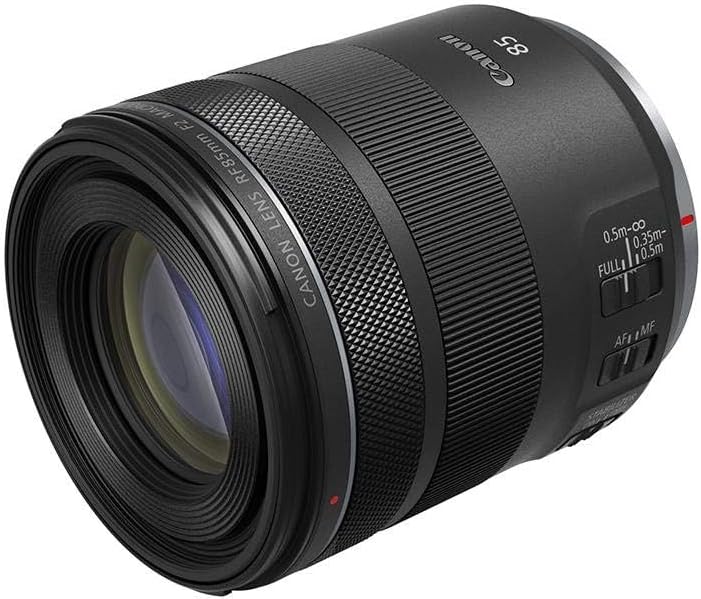
Why it’s the value choice
If you want one RF prime to handle headshots, detail cutaways, and handheld video, this is the sensible buy. The optical IS pairs with IBIS on newer bodies, the 0.5× close focus covers beauty and product inserts, and at portrait distances the rendering is crisp without being clinical.
Pros
- Stabilization helps in natural light and handheld video.
- Half-macro adds real utility for eyes, rings, fabric, and product.
- Quiet STM drive that behaves nicely with Canon’s Dual Pixel AF.
- Balanced size and weight for long sessions.
Cons
- f/2 will not blur like f/1.4 at the same framing.
- Focus breathing is noticeable if you rack focus in video.
- Bokeh highlights can cat-eye toward the edges wide open.
Client testimonial
I bought this lens to replace my old EF 85 f/1.8 lens. I was hesitant because of some bad reviews. But it turned out to be a great upgrade. Image quality is top notch – very sharp, good contrast and great colors. I use it on my EOS R6. Images from this combo are very clean (no haze that I often experienced from the old 85 f/1.8).
Before buying this, I was concerned about 2 issues – slow and noisy autofocus and geometric distortion. Neither turned out to be issues for me. Autofocus is noisy but it is fast for normal shooting (0.5m to infinity). Manual/focusing for Macro (0.35m – 0.5m) is difficult, but Macro in general is difficult if you want to do it right. Geometric distortion (very minor pincushion distortion) is harmless, especially after lens correction.
Field note
For tight headshots, start at f/2 to f/2.2 so both irises hold detail, then use the macro range for lashes and jewelry between poses. A small reflector under the chin pairs well with this lens’s contrast.
Best Nikon Portrait Lenses
| What matters | NIKKOR Z 85mm f/1.8 S | Viltrox AF 85mm f/1.8 Z |
|---|---|---|
| The pitch | Consistent, weather-sealed 85 that just works for paid portraits | The classic 85 look at a very friendly price |
| Look and speed | 85 mm, f/1.8; clean rendering, confident AF for headshots and weddings | 85 mm, f/1.8; creamy blur, modern AF that’s fine for posed sets |
| Handling | Balanced on Z6/Z7/Z8 bodies; quiet focus; pro finish | Solid metal build; a bit heavier, still easy to carry all day |
| Quirks | No optical VR (most Z bodies have IBIS); mild breathing in video | More flare/ghosting in strong backlight than the NIKKOR |
| Typical street price | ~$750 | ~$329 |
NIKKOR Z 85mm f/1.8 S
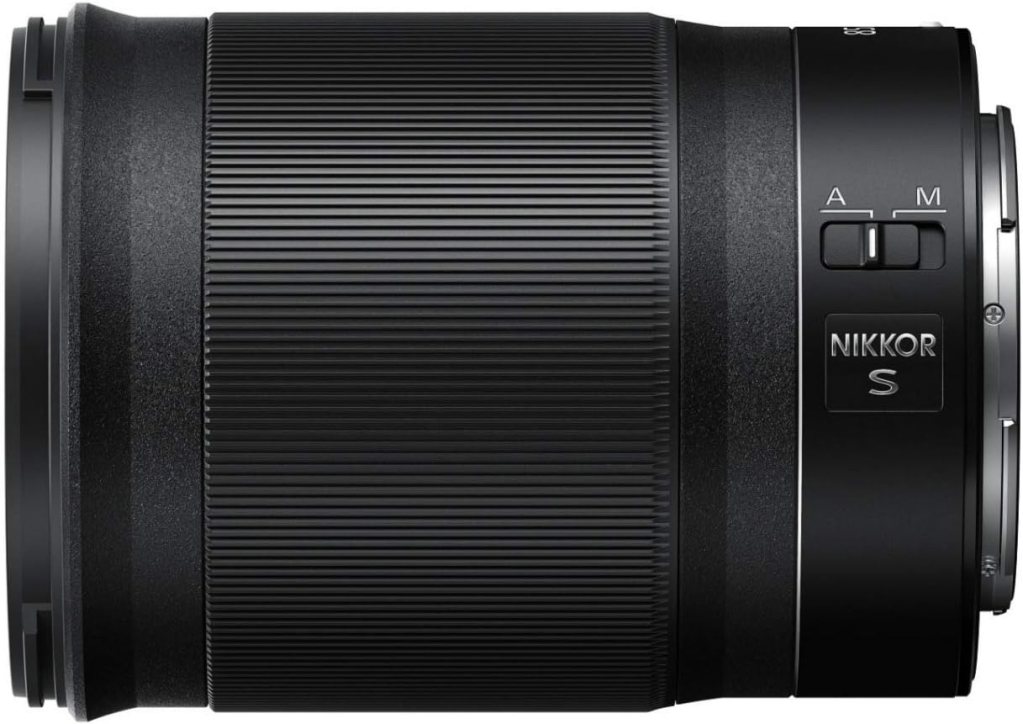
Why it’s the value choice
If you want a “set it and forget it” portrait lens for Nikon mirrorless, this is it. Skin tones come out honest, Eye-AF locks without drama, and the build feels like it’s ready for real work. Indoors or out, it’s the dependable 85 you can stake a booking on.
Pros
- Reliable Eye-AF tracking for singles and couples
- Weather-sealed, pro feel, and consistent sharpness across working distances
- Neutral rendering that grades well for both warm and cool looks
Cons
- f/1.8 won’t melt backgrounds like faster glass
- No lens-based VR; lean on your Z body’s IBIS and shutter discipline
- Focus breathing visible in deliberate video racks
Client testimonial
Over the years I have used many, many short telephoto lenses and this one simply takes the cake as my favorite. It’s tempting to think of this only as a portrait lens — and it *shines* in that role (more in a bit) — but this is a jack-of-all-trades that can be used for landscapes, cityscapes, event shooting, concerts, etc. etc. etc. Autofocus is quick and accurate on my Z7. Optically, the lens is stellar. It’s just a joy to use.
And yes, if you want to use this for portraits, you’ll have a hard time topping it. The lens is sharp enough especially towards infinity where it’s bitingly sharp. Crucially, though, in the portrait distance range, it’s just soft enough to take the edge off of that sharpness to not be harsh.
The bokeh is very, very pleasant but what makes it really shine is that the transition from in-focus to out-of-focus is just sooooo smooooth. It’s about as graceful as the transition zone gets and it really serves to make your subject pop in ways that don’t normally happen.
Field note
For tight headshots, start at f/2–f/2.2 to keep both irises crisp. Outdoors, use a small flag to tame sun-angle flare and keep contrast snappy.
Viltrox AF 85mm f/1.8 Z
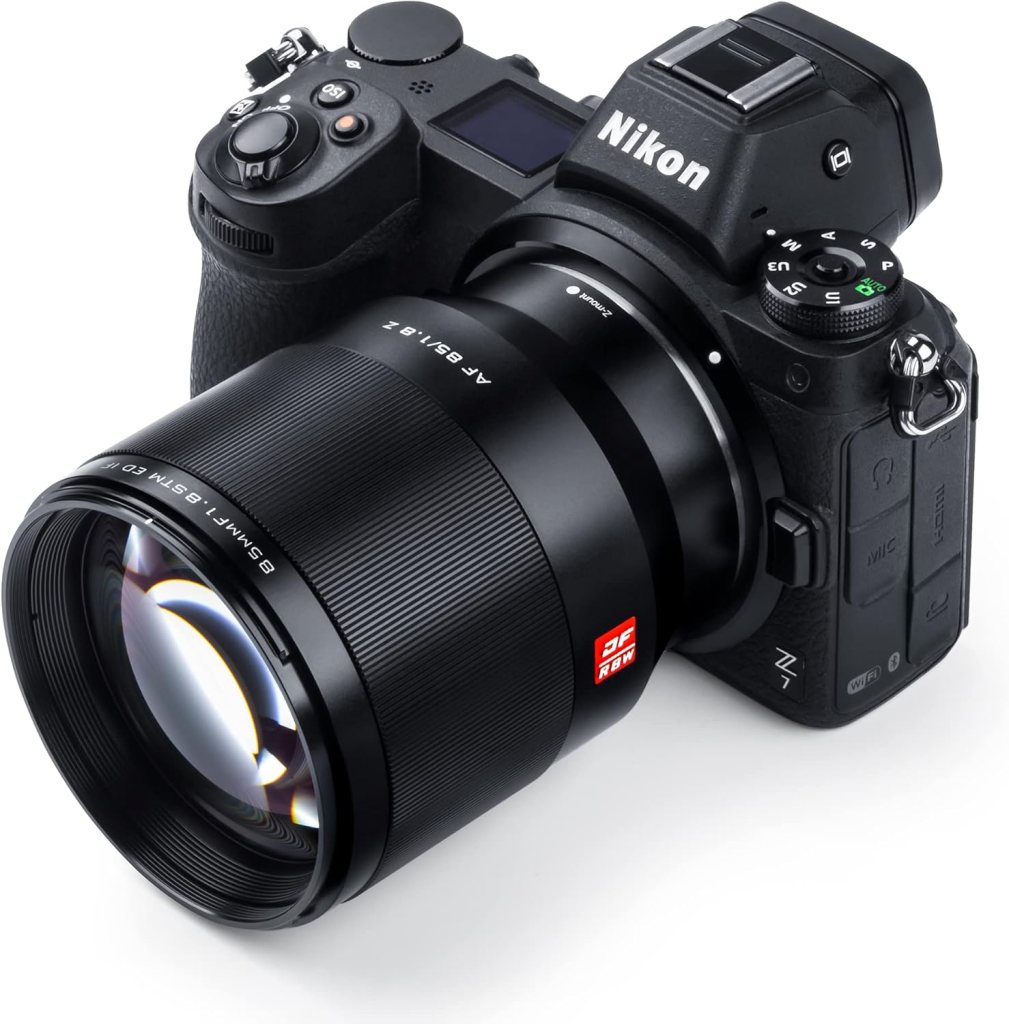
Why it’s the value choice
You want that flattering 85mm perspective and real background separation while keeping budget for lights and stands. The Viltrox nails the brief. Stop it down a touch for maximum bite and it delivers professional-looking portraits without punishing your wallet.
Pros
- True 85mm/f1.8 look at a bargain price
- Solid AF for portraits on recent Z bodies
- All-metal construction feels dependable
Cons
- More prone to flare/ghosting against strong light
- AF behavior isn’t as bulletproof as Nikon’s S-line in chaotic scenes
- No lens VR; rely on IBIS or shutter speed
Client testimonial
This is the second Viltrox lens I’ve grabbed for my Z50 and both of them have been great additions . I purchased this one specifically to photograph low-light live music events and it has performed great in that capacity. Auto focus performance seems on par with the Z50 kit lenses and the shallow depth of field and light gathering at f1.8 is fantastic (as expected). It has also been surprisingly useful in capturing candid people shots since you don’t have to be quite so up-in-their-face and you get the awesome blurred background without iPhone portrait mode artifacts.
Field note
If you shoot wide-open outdoors, pack a 3–5 stop variable ND to keep shutter speeds reasonable and ISO low. Use face/eye priority AF and slow AF transitions one notch for smoother video pulls.
Best Fujifilm Portrait Lenses
| What matters | Fujifilm XF 50mm f/2 R WR | Viltrox 56mm f/1.4 (X-mount) |
|---|---|---|
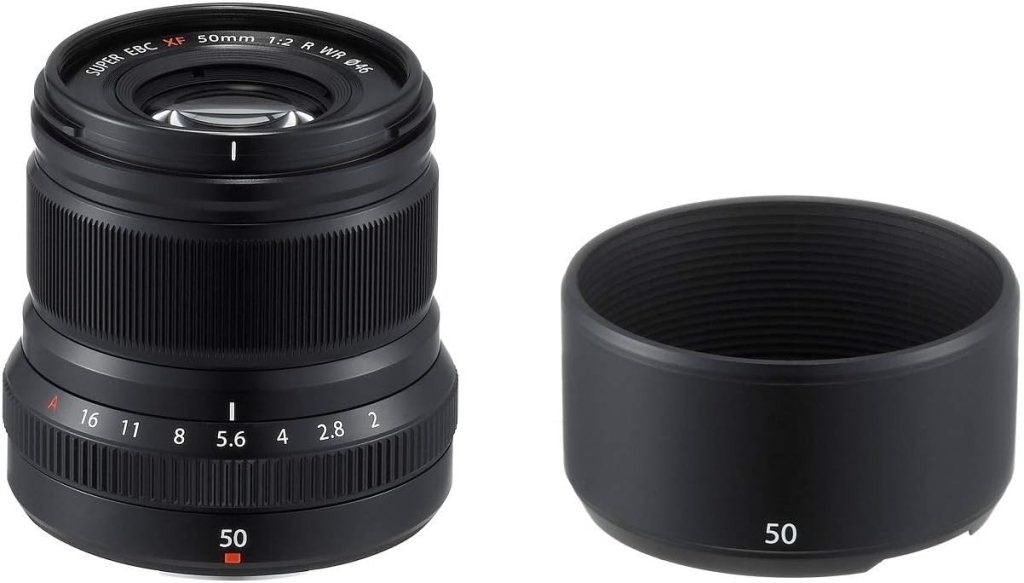
| The pitch | Compact, weather-sealed everyday portrait prime (~75mm-eq) | Affordable “~85mm-eq” with real background melt |
| Look and speed | 50 mm, f/2; crisp, classy rendering; great with film sims | 56 mm, f/1.4; shallow DOF, flattering compression for faces |
| Handling | ~200 g, tiny, balances on any X body; quiet stepping AF | Light, straightforward, easy to carry; modern AF for portraits |
| Quirks | Less blur than faster glass; modest cat-eye bokeh toward edges | AF and coatings trail Fuji’s latest WR primes in tough backlight |
| Typical street price | ~$499 | ~$239–$299 |
Fujifilm XF 50mm f/2 R WR
Why it’s the value choice
This is the quiet professional in Fuji-land. It’s tiny, weather-sealed, and ruthlessly practical for head-and-shoulders work, street portraits, and candid family sessions. Pair it with Classic Chrome or Pro Neg Std and you get elegant skin right out of camera.
Pros
- Pocketable size with weather resistance; bring it everywhere
- Clean, repeatable AF for portraits and low-key video
- Color that plays beautifully with Fuji’s film simulations
Cons
- f/2 depth isn’t as dreamy as faster lenses
- Slight cat-eye highlights at the edges wide-open
- Minimum focus is fine, but not “beauty macro” territory
Client testimonial
I bought this lens because I’ve started to take portrait’s semi-professionally. Being that great portrait lenses aren’t exactly budget friendly, I was looking for a lens that could perform nicely without busting my wallet.
This lens did the trick!
No, it doesn’t quite have the character and mouth-watering bokeh of the Fujifilm 56mm f1.2, or the gorgeous sharpness and ridiculously good subject isolation of the 90mm f2, but it does have great contrast and fast auto focus, and renders sharp images that my clients love. All this for less than half the prize of those other lenses!
Field note
Use a 36″ softbox just off-axis and feather the light. Start around f/2.2–f/2.8 for headshots; for environmental frames, step to f/3.2–f/4 to keep context readable.
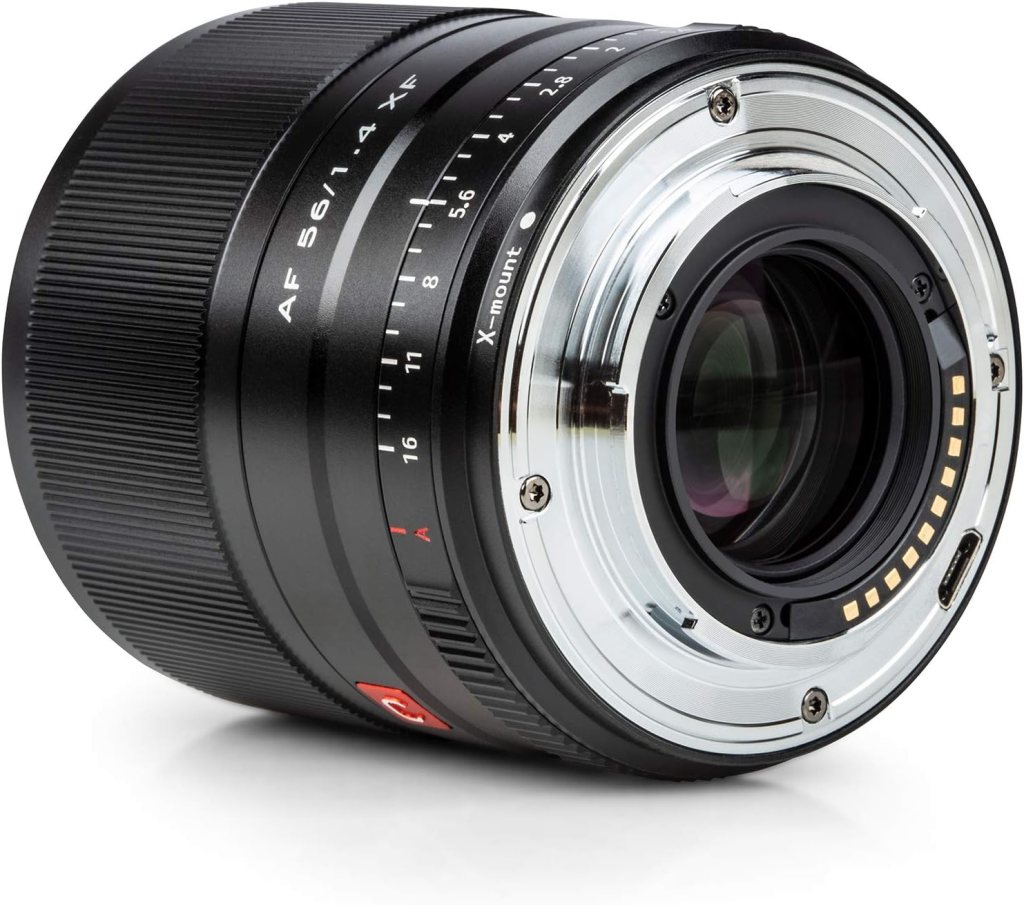
Viltrox 56mm f/1.4
Why it’s the value choice
If you bought into X-Series for compact kits but still crave that classic full-frame-ish portrait blur, this is the cheat code. At 56mm you’re right in the flattering zone, and the f/1.4 opening gives you the background melt clients love.
Pros
- True “~85mm-equivalent” framing with shallow depth of field
- Friendly price leaves room for lights, stands, and a reflector
- Light enough for all-day weddings and long street sessions
Cons
- AF and flare control are a touch behind Fuji’s newest WR primes
- Bokeh can get busy with specular backgrounds at certain distances
- No weather sealing
Client testimonial
The lens is amazing! Viltrox is definitely a great company and getting better and better.. quality and build are great, doesn’t feel cheap, even the lens hood is metal. The pouch/case is typical drawstring hardly any padding but still better than the Fuji ones. Only issue for me is the aperture ring doesnt “lock” on each number, it glides.. it glides nice and smooth though… this is a personal preference though nothing wrong with it just my taste.. excited for the 85 to come and try out!
Field note
Backlit scenes? Angle the subject a few degrees off the sun line and bring a small flag or lens hood. Stopping down to f/1.8–f/2 tightens rendering without losing the mood.
Tips & Tricks (high-yield)
Focal distance discipline
- For tight headshots with an 85 mm, work at roughly 1.2–1.5 m (about 4–5 ft). Faces stay natural, noses do not “balloon,” and both eyes land inside the sharp plane.
- In smaller rooms, switch to 50 mm and step back until the chin and ears feel proportionate. For full-body frames outdoors, 135 mm gives flattering compression from a comfortable distance.
- If features look distorted, you are standing too close. Back up, reframe, and crop later.
Aperture control
- Singles: start at f/2–f/2.8 for crisp irises and pleasing falloff.
- Couples: f/2.8–f/3.2 if heads are on different planes.
- Groups: f/4–f/5.6 and align faces as much as possible to the same plane.
- Wide-open is a look, not a rule. If eyelashes are sharp but ears vanish, close down a third or two.
Eye-AF setup
- Use AF-C/Continuous with Face/Eye Priority. Confirm your camera is set to “human eye,” not animal.
- For video, slow AF transition speed and AF sensitivity one step for smoother, less “snappy” pulls.
- Map AF-On to a back button to separate focusing from the shutter. This reduces accidental refocus mid-shot.
Lighting pairings
- The classic combo for portraits is 85 mm + a 36″–48″ octa placed just off-axis and slightly above eye level. Feather it across the face to avoid hotspots and to keep catchlights clean.
- With 35–50 mm indoors, flag your key with a small black card or collapsible flag to control spill and wall bounce.
- Add a negative fill (black side of a reflector) on the shadow side to carve cheekbones. Outdoors, a 3-stop VND helps you stay wide open without clipping highlights.
Micro-adjust and firmware
- DSLRs: run AF micro-adjust for your lens/body pair using a target or a printed chart.
- Mirrorless: keep body, lens, and adapter firmware current. Third-party AF lenses often gain reliability with updates.
- Save custom recalls for portrait work: one for indoor strobe, one for outdoor backlight.
Shutter discipline
- Even with IBIS, subject twitch and your sway can blur at slow speeds. For people, aim for 1/200–1/250 s minimum in ambient light, faster with kids or candids.
Things to Know (before you buy)
Adapters
- EF→RF and F→Z adapters can perform very well, but Eye-AF speed and tracking behavior vary by combo. Test your exact body, adapter, and lens together before client work, and update adapter firmware.
Resale and reliability
- OEM glass typically holds value better over time. Third-party lenses can be outstanding buys, but their price advantage depends on good firmware and service availability in your region.
Try before you buy
- Rent for a weekend or borrow in-store. Shoot a friend under the same light you use for clients. Check Eye-AF hit rate, bokeh character, and minimum-focus portraits.
Service and warranty
- Confirm regional service centers, turnaround times, and warranty terms. Be cautious with gray-market deals if you rely on the lens for paid gigs.
System fit
- Think beyond the lens: filter sizes, balance on your body, your bag’s weight, and whether you already own the needed ND, step-up rings, and modifiers.
FAQs
Prime vs zoom for portraits?
Primes win on speed, size, and rendering character. A 70–200 mm f/2.8 remains the most flexible portrait workhorse for events and fast-moving sessions. Many photographers carry both: a fast 85 for “wow” shots and a 70–200/2.8 for coverage.
Is f/1.2 worth it over f/1.8?
For absolute separation, specular bokeh, and that “medium-format-ish” mood, yes. For most client work, f/1.8 offers far better value, lighter weight, and higher keeper rates, especially in mixed light or when subjects move.
Full-frame vs APS-C for portraits?
Full frame gives more background separation at the same framing and aperture. APS-C can absolutely deliver professional portraits by using slightly longer focal lengths or faster apertures and good lighting. Choose the system that fits your budget, lenses, and workflow.
Do I need stabilization?
Stabilization helps with handheld ambient portraits and video. It does not freeze faces that are moving. Prioritize shutter speed and posing for sharp eyes, and treat IBIS/OIS as insurance for camera shake, not subject motion.
This post contains affiliate links. If you purchase through these links, I may earn a small commission at no extra cost to you. As an Amazon Associate, I earn from qualifying purchases and stand behind all of my recommendations.

Leave a Reply