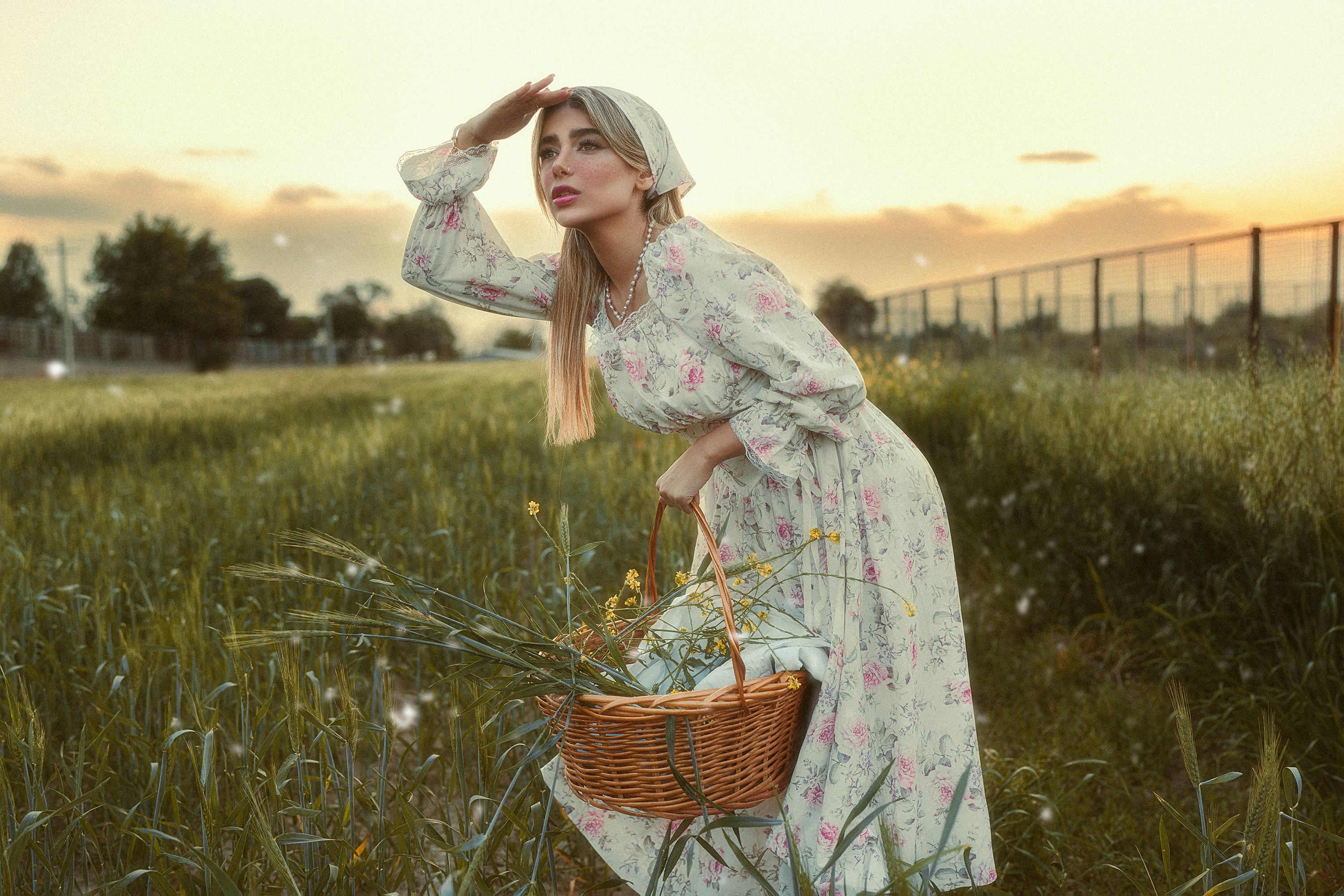
If you shoot people on Sony, you’ve got four smart lanes: a cheap “gets-it-done” fifty, a value 85 that looks expensive without the price tag, the best third party lens for portraits, and a pro lens that prints money when the brief is high-stakes. Here’s the clean path.
Also Read: Best Camera Settings for Portraits (+ Expert Analysis)
Quick Picks
- Budget: Sony FE 50mm f/1.8 — the entry ticket. Small price, classic look, a few quirks.
- Bang-for-Your-Buck (native): Sony FE 85mm f/1.8 — the safest portrait buy in E-mount.
- Bang-for-Your-Buck (third-party): Samyang/Rokinon AF 85mm f/1.4 FE — bigger blur for similar money.
- Professional: Sony FE 135mm f/1.8 GM — jaw-drop separation, pro AF, elite optics.
1. Sony FE 50mm f/1.8
Best Budget Sony Lens for Portraits

Why it earns a spot
It’s the cheapest way to make people look good on full frame. At 50mm you can work in tighter rooms, shoot environmental portraits without shouting across the street, and still get that gentle background roll-off at f/1.8.
Pros
- Tiny, light, and inexpensive
- Natural perspective indoors and on walk-and-talk sessions
- Easy to color-match and grade
Cons
- Older AF design can chatter and hesitate in low contrast
- Bokeh can turn busy with specular backgrounds
- No stabilization (most modern Sony bodies have IBIS)
Client voice
This is a great starter lens. As a beginner photographer (as I am) this is the perfect lens for me to take portraits with. The background blur and bokeh is really good for such a *cheap* lens. It also does pretty well in low light as seen in the first pic. I use the hood that comes with it almost constantly. I don’t really like how the light comes in without it but I think that’s just a personal preference.
If I had other lenses I would definitely call this an ol’ reliable. Even as my camera kit grows and my knowledge continues to expand, I can always see myself coming back to a 50mm 1.8. It just makes sense. An easy, lightweight, affordable lens that has great quality (I’m huge on quality) and blurs out the background to give you that nice crisp portrait effect? Of course, I will buy.
Now cons: I will say that the autofocus is a tad bit slow…
Use it like this
Stand a touch farther back than you think, then step in half a pace when your subject relaxes. For head-and-shoulders, start around f/2–f/2.2 to keep both irises crisp.
2. Sony FE 85mm f/1.8
Best Bang for Your Buck Lens

Why it’s the default recommendation
This is the lens that quietly pays the mortgage. It’s sharp at working distances, Eye-AF just sticks, and files look expensive with minimal fuss. If you shoot people for money and want predictable results, start here.
Pros
- Confident Eye-AF and great keeper rate
- Light enough for 8-hour wedding days
- Pleasant, non-distracting bokeh; easy to grade
Cons
- Not as creamy as faster 85s
- Mild focus breathing in deliberate video racks
- No OSS (usually irrelevant with IBIS bodies)
Client voice
This is an AMAZING prime lens. Looks so simple, and yet is a fantastic lens for portraits, walk-around, low light, and bokeh.
As others have said, I was not expecting such perfection at the price Sony put on it. It simply performs exceedingly well and produces razor-sharp images on my a7 IV.
Weather-resistant with a customizable focus hold button, and lightweight for perfect mobility! The 67mm filter diameter is great due to that size being heavily used by many other lenses. Very good build quality and again…as sharp as GM lenses that cost 3-4 times as much!
Use it like this
Headshots at ~1.2–1.5 m; singles around f/2–f/2.5; couples f/2.8–f/3.2. Outdoors, add a 3-stop VND to stay wide open without torching shutter speeds.
3. Samyang/Rokinon AF 85mm f/1.4 FE
Best Third Party Lens for Portraits

Why you’d choose it
You want the f/1.4 look without signing up for flagship prices. This delivers the “pop” clients notice—more subject isolation, rounder highlights—and modern AF that’s perfectly usable for portraits.
Pros
- f/1.4 depth for real background melt
- Strong value vs. OEM f/1.4 glass
- Solid AF on current Sony bodies (keep firmware current)
Cons
- Heavier than the Sony 85/1.8
- AF can hesitate in nasty backlight or dense foliage
- Coatings and flare control trail Sony’s best
Use it like this
Live at f/1.6–f/2 for a touch more bite. Backlight? Angle your subject five degrees off the sun line and use a small flag to keep contrast.
4. Sony FE 135mm f/1.8 GM
Best Professional Lens for Portraits

Why pros swear by it
This is the “make it look like a magazine cover” button. Compression is flattering, edge-to-edge sharpness is silly, autofocus is sticky, and the bokeh is the cleanest in the system. If you shoot fashion, editorial, or high-end portraits, it earns its keep fast.
Pros
- Elite sharpness and separation, even off-center
- Fast, accurate AF that tracks beautifully
- Bokeh that stays calm in cluttered scenes
Cons
- Big and spendy
- Needs space; not ideal in tiny rooms
- 82mm filters add cost
Client voice
No lens is perfect, but this lens is close.
I think 135mm lenses are easy to design to get fantastic results. You can see a lot of different vendors produce 135mm at f2 which are superb, but for Sony to do this at an aperture of 1.8 is just phenomenal.
This lens could be reference quality lens based on how much it can resolve with clarity. This is close to clinical perfection, and that’s the reason it is near flawless and not flawless.
Use it like this
Give yourself distance. For half-body frames outdoors, you’ll often be across the sidewalk. Start around f/2–f/2.5; go to f/2.8 if your subject moves a lot.
Quick spec snapshots (what matters in practice)
- 50/1.8: lightweight, close-quarters friendly, AF is the compromise
- 85/1.8: light, reliable Eye-AF, mild breathing, no OSS
- 85/1.4 (Samyang): bigger blur, heavier, mind backlight behavior
- 135/1.8 GM: flagship AF and optics, large filters, wants room to work
Tips & tricks for Sony shooters
- Eye-AF setup: AF-C + Face/Eye Priority (Human). For video, slow AF transition and sensitivity one notch for smoother pulls. Map AF-On to the rear button.
- Shutter discipline: People move. Even with IBIS, hold 1/200–1/250 s or faster for ambient portraits.
- Lighting pairings: 85mm with a 36″–48″ octa, feathered across the face; add negative fill on the shadow side.
- Color workflow: Build a simple preset for each lens to normalize skin tones session-to-session.
- Firmware habit: Keep body and lenses updated; third-party AF reliability often improves with updates.
Things to know before you buy
- Adapters: If you’re bringing EF glass to Sony via smart adapters, test Eye-AF speed and tracking on your exact combo before client work.
- Budget vs lighting: An 85/1.8 plus a decent strobe and 36″ modifier will beat a pricey lens with bad light every day.
- Resale: Sony and GM glass hold value well; third-party is price-led but make sure you have local service options.
- Try first: Rent for a weekend or test in-store under the light you actually use. Check Eye-AF hit rate and bokeh character.
FAQs
Prime or 70–200 for portraits?
Primes (50/85/135) deliver speed and character. A 70–200mm f/2.8 is the coverage king for weddings and events. Many shooters carry both.
Do I really need f/1.4 or f/1.2?
If the look is the product—editorial, fashion, luxury branding—yes. For most paid portrait work, f/1.8 delivers cleaner files, lighter kits, and higher keeper rates.
Full frame or APS-C on Sony?
Full frame buys you more separation at the same framing. APS-C can absolutely hang—use slightly longer lenses (e.g., 56mm on crop) or faster apertures and good light.
Is stabilization essential?
Helpful for ambient and video, but it won’t freeze people. Prioritize shutter speed and posing; treat IBIS/OIS as insurance against camera shake.
This post contains affiliate links. If you purchase through these links, I may earn a small commission at no extra cost to you. As an Amazon Associate, I earn from qualifying purchases and stand behind all of my recommendations.

Leave a Reply