
Finding the best camera glasses comes down to more than resolution. The right pair balances comfort, stabilization, field of view, battery life, and a workflow that fits how you shoot.
In this guide, I’ll map real-world picks to specific needs and budgets—from everyday best smart glasses with camera for hands-free clips, to sport-ready frames that stay put on rides, to creator rigs that deliver true best camera glasses 4k footage.
You’ll also see mid-budget choices that qualify as the best glasses with camera for balanced features, plus a quick snapshot of where “glasses-adjacent” POV options make more sense than ultra-thin eyewear.
Best spy camera glasses or best hidden camera glasses will be addressed in a dedicated section at the end, along with important notes on responsible use.
Also Read: 5 Best Hidden Camera Detectors to Keep You Safe
Quick Picks
- Everyday/lifestyle smart glasses: Ray-Ban Meta smart glasses — natural-looking frames with solid video, clear mics, and a tight phone app workflow for quick sharing. Great for hands-free story clips and day-in-the-life footage.
- Action and rides on a budget: OhO Sunshine 4K camera glasses — sport sunglasses with onboard recording and wide field of view; simple controls make them easy for cycling, fishing, or travel POV.
- Creator 4k quality (glasses-adjacent POV): ORDRO EP7 head-mounted 4K — true 4K60 recording with stabilization and a headband mount that keeps framing steady for tutorials, build videos, and vlogs.
- Best glasses with camera at mid-budget: iVUE Glide/Denali series — lightweight eyewear that records 1080p/2K, good battery life for outings, and easy offload—an approachable step up from toy gadgets.
- Ultra-low-cost starter: OhO entry variants — pared-down models that still capture usable clips for quick POV notes without a big spend. Expect shorter battery life and fewer pro features.
Ray-Ban Meta Smart Glasses
Best everyday/lifestyle camera glasses
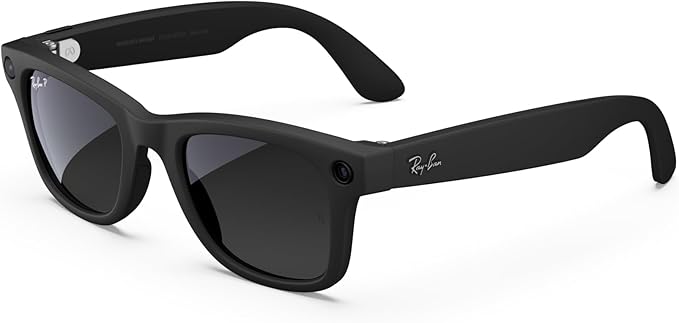
These look like normal frames but capture smooth, social-ready clips with better mics than typical sport sunglasses and a tidy phone-app workflow.
The latest models add useful voice control and on-device features, so you can keep your hands on the moment instead of your phone.
If you want a pair you’ll actually wear daily—walking videos, travel diaries, behind-the-scenes—this is the most balanced experience for comfort, audio, and sharing.
OhO Sunshine 4K Camera Glasses
Best for action and rides on a budget
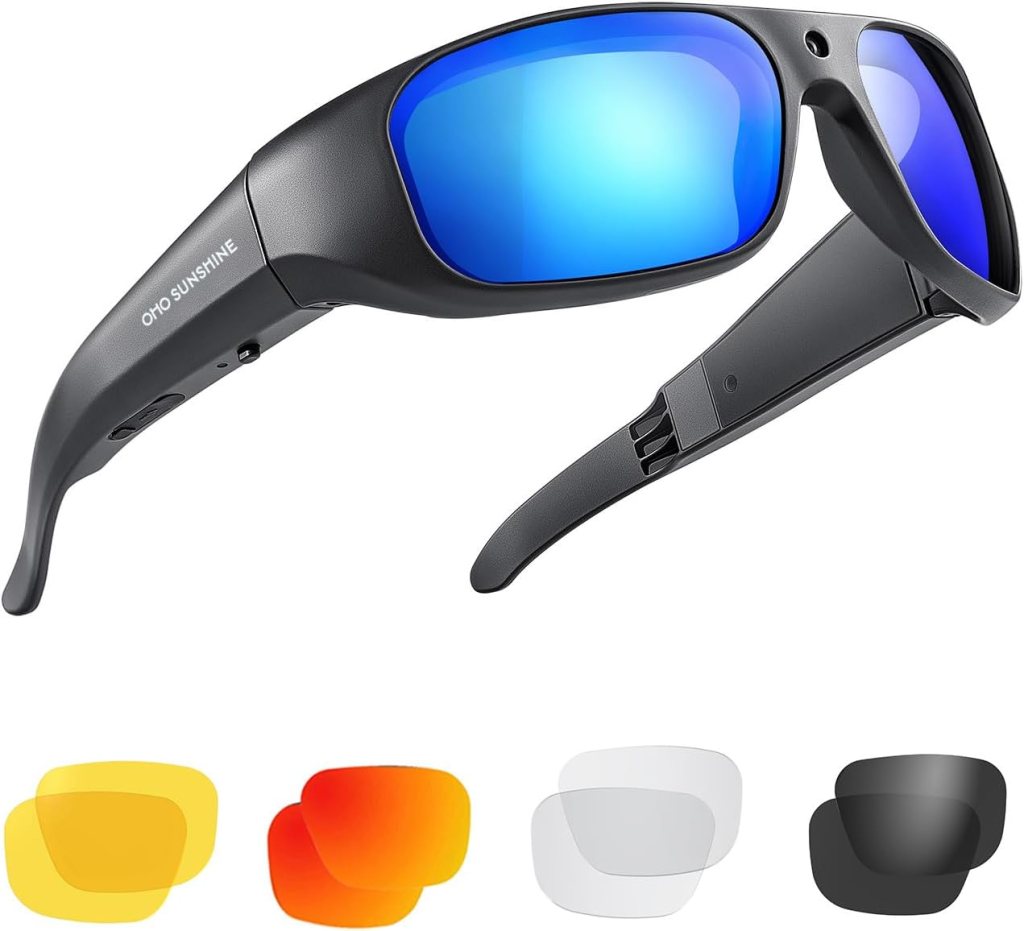
Sporty frames with built-in recording, wide field of view, and simple one-button controls. They won’t replace a top action cam for stabilization, but for bike paths, fishing piers, and casual trips they’re lightweight, reasonably durable, and inexpensive.
Several variants include onboard storage and water-splash resistance; expect basic apps and straightforward file offload. A strong price-to-fun ratio if you prioritize POV convenience over cinematic polish.
ORDRO EP7 Head-mounted 4K
Best creator-grade 4k quality (glasses-adjacent POV)
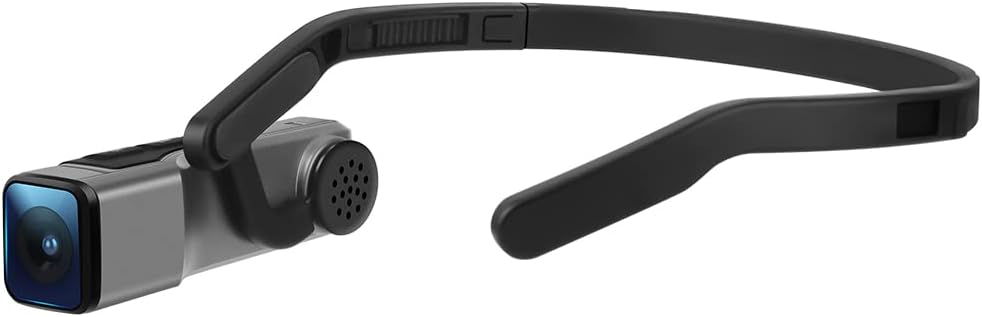
When you truly need crisp 4K60 with usable stabilization, a head-mounted cam outperforms thin eyewear. The EP7 sits just off your temple, keeping framing stable for tutorials, build videos, cooking, or shop work where two free hands matter. You trade fashion for fidelity, but you gain higher bitrates, better thermal headroom, and fewer wind issues than hollow temple arms can manage. Great for creators who prioritize quality and workflow over stealth styling.
iVUE Glide / Denali
Best glasses with camera at mid-budget
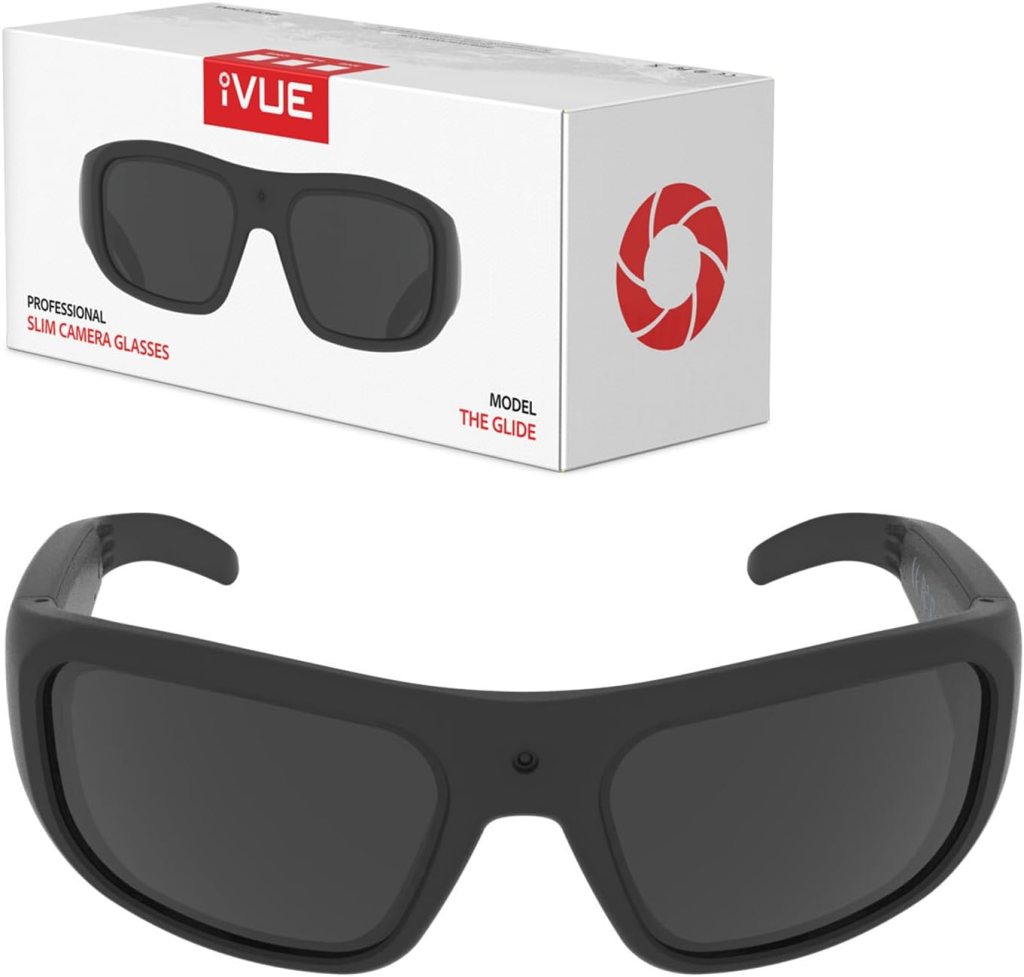
If you want a true glasses form with decent image quality, the iVUE line hits a sweet spot. Video tops out at 1080p or 2K depending on model, which is plenty for POV clips and trip highlights, and the frames are light enough to wear for an afternoon. Battery life and storage are modest but predictable, and the sunglasses look keeps them versatile for hikes, shore days, and DIY projects where you don’t want a headband rig.
OhO 32GB Camera Glasses
Budget starter to test the category
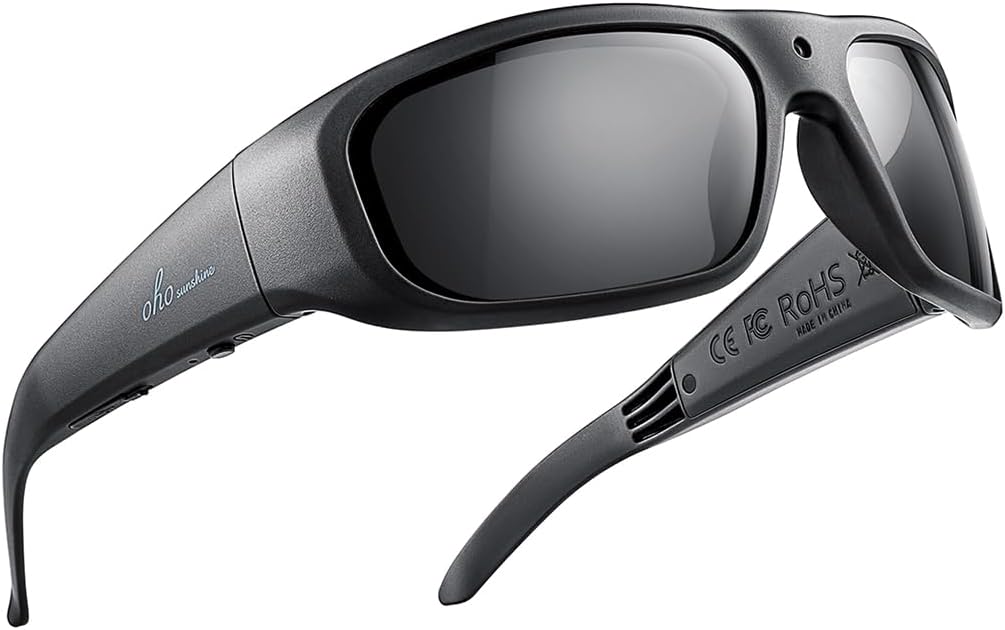
Before committing, an entry-level OhO variant lets you test the POV workflow for very little money. Expect shorter battery life, fewer chassis materials, and simpler apps—but still enough to capture quick notes, neighborhood walks, or casual family moments. If you discover you love hands-free video, you can step up to a mid-budget pair or a creator rig knowing exactly what features you’ll use.
Comparison snapshot by budget
- Under $150: entry-level OhO variants — basic 1080p recording, simple control, onboard memory; fine for quick POV notes and walks.
- $150–$300: iVUE Glide/Denali — lightweight frames with 1080p/2K capture, comfortable TR90 build for day trips.
- $300–$400: Ray-Ban Meta smart glasses — everyday wear with better mics and a clean app workflow for social sharing.
- $400+ (creator 4k): ORDRO EP7 head-mounted — true 4K60 with stabilization for tutorials, builds, and hands-on vlogs.
Buyer’s guide: how to choose
- Resolution vs. stabilization: real 4K on thin temples often struggles with bitrate and shake; stabilized 1080p/1440p can look cleaner. If you truly need best camera glasses 4k, confirm frame rate and stabilization claims—or use a head-mounted option like EP7.
- Field of view: 100°–120° feels natural for faces and walk-and-talks; extreme wide angles can distort. Product pages usually list FOV or example footage—scan before you buy.
- Audio: dual-mic arrays and wind filtering matter more than headline megapixels. Lifestyle models like Ray-Ban Meta emphasize clearer voice pickup for social clips.
- Battery and storage: entry models bundle built-in memory; mid and premium lines vary. Check listed capacity and expected runtime in the specs.
- Comfort and style: smart glasses aim to look like normal frames for daily wear; sport sunglasses trade style for grip and durability; head-mounted rigs sacrifice fashion for stability and image quality.
- App workflow: an easy companion app can save hours. Ray-Ban Meta’s app integration is the current benchmark for painless capture and sharing.
Camera Glasses FAQs
What’s the difference between camera glasses and smart glasses with camera?
Camera glasses are any frames that record video. Smart glasses with camera add voice control, tighter phone integration, and often better audio—useful for daily clips and stories. Ray-Ban Meta exemplifies the smart-glasses approach.
Do I really need 4k?
If your shots are steady and well lit, 1080p or 1440p with stabilization is usually enough for reels and vlogs. Choose true 4K60 only if you need detailed tutorials or plan to crop—head-mounted EP7 is built for that.
Which option is best for biking or fishing?
Sport sunglasses with a secure fit are the simplest, budget-friendly route. OhO’s 4K and 1080p variants are popular because of the wide view and easy controls. For serious tutorial quality, the EP7’s headband wins.
Are these good for vlogging?
Yes. Lifestyle smart glasses are great for casual walk-and-talks and behind-the-scenes clips; head-mounted rigs deliver steadier framing and higher bitrates for how-to content.
How do I transfer footage quickly?
Smart-glasses apps handle transfer and sharing; sport models appear as storage devices for drag-and-drop. Check the product page for app support and file formats before purchasing.
Notes on responsible use
Phrases like best spy camera glasses or best hidden camera glasses often imply covert recording. Laws vary by location, but recording someone without consent—especially capturing audio—can violate wiretapping and privacy rules. Avoid recording in places with a reasonable expectation of privacy, respect posted rules, and get permission when in doubt. Use overt, consent-based setups, and communicate clearly if you’re filming.
Affiliate disclosure
Some links in this guide are affiliate links. If you buy through them, I may earn a commission at no extra cost to you.




Leave a Reply