
Hidden cameras in rentals, hotels, changing rooms, even offices… it’s a modern headache. If you want a quick sanity check of a room or car, a compact detector is the most practical tool you can carry.
If you just want a super budget option, choose the Dronewing S500 Hidden Camera Detector.
It has a 5 star rating from 180 reviews, and sometimes it goes for $40 or even $30.
But if you want a lifetime tool, check out the options below.
Top Picks
- Best overall: Wattne Anti Spy Detector — balanced, approachable, covers the key detection methods at a friendly price.
- Most sensitive: Jepwco G8 Elite RF Detector — pocketable, fine-grained sensitivity control, handy multi-mode tool.
- Best splurge: Discover It Professional RF Bug Detector — stronger RF front end for serious signal sniffing.
- Best lens finder: SPYFINDER PRO — fast optical “sparkle” checks for wired or dormant cameras.
- Best budget lens finder: Mic-Lock Hidden Camera Detector (large IR viewer) — big viewfinder, simple, effective indoors.
Also Read: 5 Best Camera Glasses (4k, Spy, Budget)
Also Read: Is JAXTIN G66 Pro the Best Hidden Camera Detector?
Why these five made the cut
- Coverage of techniques
There are two ways to catch cameras:
- RF scanning (finds active transmitters like Wi-Fi/Bluetooth/cellular cams).
- Optical lens finding (makes a camera lens reflect a bright dot—even if it’s off).
A good kit includes one or both. Our list covers both ends so you can mix to match your risk.
- Signal handling and usability
We value adjustable sensitivity, clear feedback (bars, tones, or vibrations), and simple controls. A tool you understand beats a “pro” box you can’t interpret. - Real-world practicality
Travel-friendly size, battery life that lasts an evening scan, and mounts/attachments you’ll actually use.
Quick comparison table
| Pick | What it’s best at | Detection methods | Who it’s for |
|---|---|---|---|
| Wattne Anti Spy Detector | All-around confidence on a budget | RF scan + basic lens find | Travelers who want one tool that does most things |
| Jepwco G8 Elite RF Detector | Fine control and pocket carry | RF scan + lens + magnetic probe + flashlight modes | Power users who want 12-step sensitivity |
| Discover It Professional RF | Stronger RF performance | RF scan (digital + analog) | Those who mostly chase live transmitters |
| SPYFINDER PRO | Dormant/wired camera finding | Optical lens find | Anyone who needs fast room sweeps in dim light |
| Mic-Lock Large IR Viewer | Big, easy optical sweeps | Optical lens find | Budget buyers who prefer a large viewport |
Hidden Camera Detector Reviews
Wattne Anti Spy Detector
Best overall
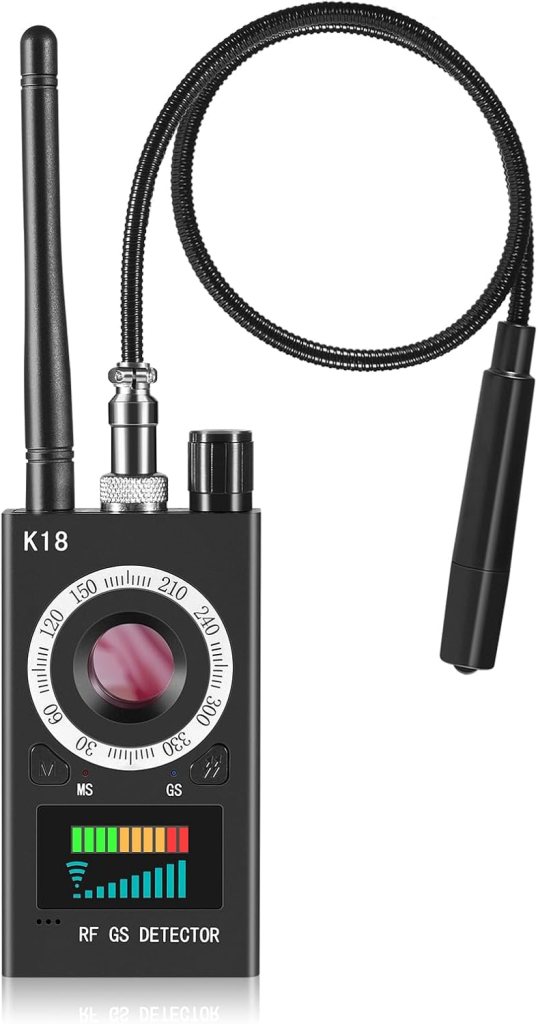
Why it’s our default: it covers the essentials without a steep learning curve. The sensitivity knob makes it easy to tame noisy hotel environments, and the LED bar helps you “walk the spike” toward a source. The built-in lens-find strobe gives you a second confirmation path for wired or sleeping cameras.
Pros
- Solid RF performance for the price
- Simple controls and clear feedback
- Handy lens-find mode for off/SD-card cams
Cons
- RF selectivity is good, not surgical
- You still need a careful sweep plan to avoid chasing the hotel router
Best for: frequent travelers who want one device that handles most scenarios.
Jepwco G8 Elite RF Detector
Most sensitive
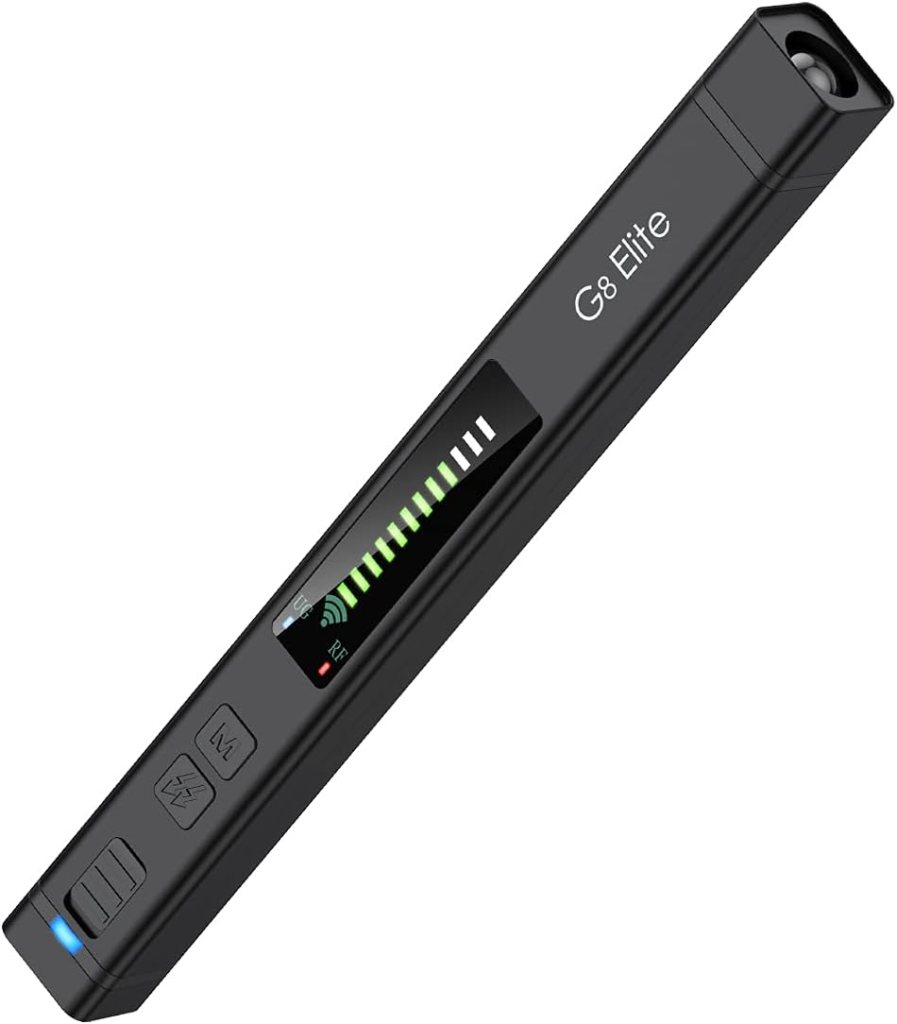
This pen-style unit is all about fine control. With twelve sensitivity steps and multiple modes (RF, lens, magnetic probe, flashlight), it’s easy to dial down the background noise and home in on problem areas. The slim form factor is discreet in public spaces.
Pros
- Granular sensitivity; helps separate router din from close-range transmitters
- Multiple modes in a small device
- Long battery life for full-evening sweeps
Cons
- More settings = slightly higher learning curve
- As with any compact RF tool, technique matters more than the spec sheet
Best for: users who enjoy precision and want a pocket tool with pro-leaning controls.
Discover It Professional Radio Frequency Bug Detector
Best splurge
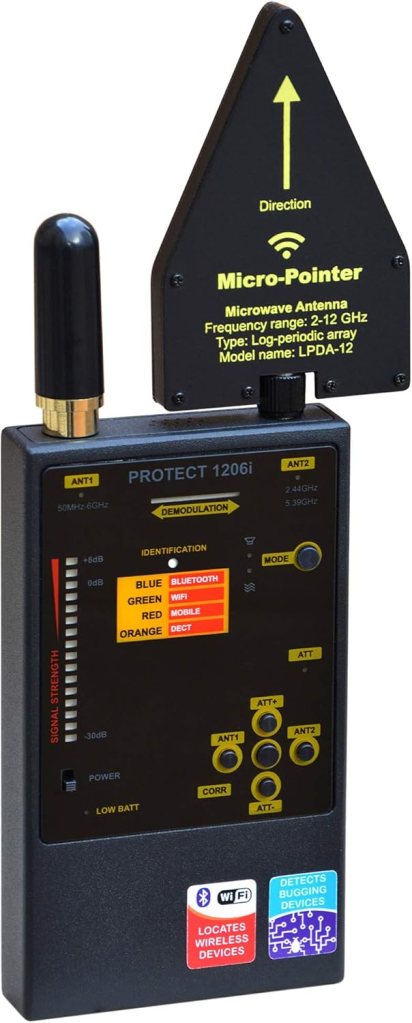
If your priority is RF only (Wi-Fi cams, LTE hot-spots, Bluetooth beacons), this is the step-up option. It handles digital and analog signals cleanly and gives more confident “directionality” as you move around a room.
Pros
- Stronger RF front end for live transmitter hunts
- Straightforward interface aimed at signal work
- Better at rejecting background junk when gain is set well
Cons
- No optical lens finder (pair with a lens viewer if dormancy is a concern)
- Pricey if you won’t use the extra RF headroom
Best for: users who mostly chase active transmitters and want a sturdier RF tool.
SPYFINDER PRO
Best optical lens finder
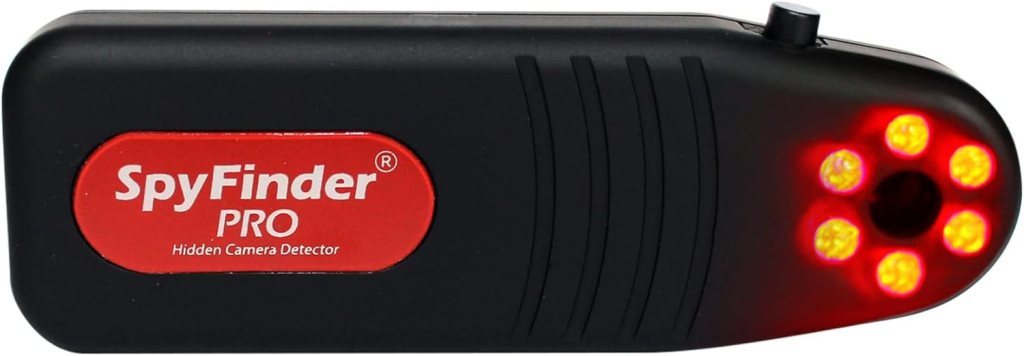
Lens finders are underrated. In a darkened room, this device’s strobing LEDs make camera optics pop as a bright dot—even if the camera isn’t transmitting. The compact, keychain-friendly body makes it perfect for fast hotel sweeps.
Pros
- Finds lenses on wired or powered-off cameras
- Three brightness levels; works across larger rooms with practice
- Pocketable and intuitive
Cons
- Needs dim light for best results
- Purely optical—no RF, so pair with an RF unit for complete coverage
Best for: quick, discreet “is there a lens here?” checks in rentals, bathrooms, and changing areas.
How hidden camera detectors actually work (quick primer)
- RF scanning finds active transmitters (Wi-Fi cams, cellular modems, Bluetooth trackers, analog bugs). Start on low sensitivity, walk the room slowly, then turn sensitivity up as you close in.
- Optical lens finding uses a pulsing red/IR light to make a camera lens reflect a bright dot. Dim the room, sweep slowly, and look for a single, persistent sparkle that stays put as you change angles.
- Magnetic probing helps locate magnet-mounted GPS trackers on vehicles. Sweep rails and wheel wells slowly; reduce sensitivity if everything beeps.
Buying guide
- Detection methods: At minimum, carry one RF tool and one optical viewer. The combo handles both live and dormant devices.
- Sensitivity & control: A simple dial or multi-step gain is key. You’re not decoding frequencies—you’re following rising signal strength.
- Ease of use: Clear bar meters, vibration or tone alerts, and simple mode buttons beat “AI” buzzwords.
- Portability & battery: You should be willing to use it nightly on a trip. A pocket body and multi-hour battery win.
- Build and support: A small case, USB-C charging, and readable instructions make the difference in real life.
Step-by-step: a three-minute rental sweep
- Baseline RF (60 seconds): Airplane-mode your phone and laptop. With sensitivity low, walk the perimeter and note spikes near smoke detectors, vents, picture frames, clocks, power strips.
- Lens sweep (60–90 seconds): Lights down. Use a lens finder and move in arcs. Mirrors, thermostats, air returns, artwork, alarm clocks, lamp housings. Look for the single, stubborn sparkle.
- Targeted re-scan (30–60 seconds): Anything that pinged twice? Unplug or cover it, then re-check. If you’re uneasy, document with photos and escalate to management.
Tips to reduce false positives
- Start low sensitivity and walk slowly. Cranking gain instantly just pins the meter everywhere.
- Compare readings high vs. low. Ceiling domes behave differently than power strips.
- With lens finders, a real lens stays bright across small angle changes; random glints disappear when you shift.
Pros and cons of owning a detector
Advantages
- Portable peace of mind in unfamiliar spaces
- Works in hotels, rentals, offices, and cars
- Optical tools can reveal cameras that aren’t transmitting
Limitations
- RF tools alert on any transmitter, not just “spycams”
- Optical tools need dim light and careful angles
- No consumer device can guarantee a space is 100% clean
Common myths, debunked
- “A detector will find everything.” Not true. Wired or powered-off cams won’t show up on RF; that’s why the lens finder matters.
- “AI auto scan means no skill required.” Helpful, yes. But you still need a method: baseline, isolate, confirm.
- “If nothing alarms, I’m safe.” Detectors reduce risk; they don’t eliminate it. Keep basic awareness.
Frequently asked questions
Are hidden camera detectors legal to use in rentals and hotels?
Generally yes, as long as you’re scanning spaces you occupy and you don’t damage property.
Will an RF detector find a camera that’s turned off?
No. Use a lens finder to catch optics on wired or dormant cameras.
Do I need both RF and optical tools?
If you want best coverage, yes. RF for active transmitters; optical for lenses.
How close do I need to be for the lens to “sparkle”?
A few feet in a dim room is typical. Move in arcs and change angles—one bright dot that stays put is your tell.
Will these detect Bluetooth trackers like AirTags?
RF units often spike near BLE beacons, but a dedicated Bluetooth-scanner app is better at identifying them. Use both if you’re concerned.
Can I check a car for trackers?
Yes. Use the magnetic probe along rails and wheel wells. Sweep slowly and reduce sensitivity if everything chirps.
What order should I scan a hotel room?
RF perimeter on low gain, lens sweep with lights down, then targeted re-scans of anything that pinged twice.
This post contains affiliate links. If you purchase through these links, I may earn a small commission at no extra cost to you. As an Amazon Associate, I earn from qualifying purchases and stand behind all of my recommendations.





Leave a Reply