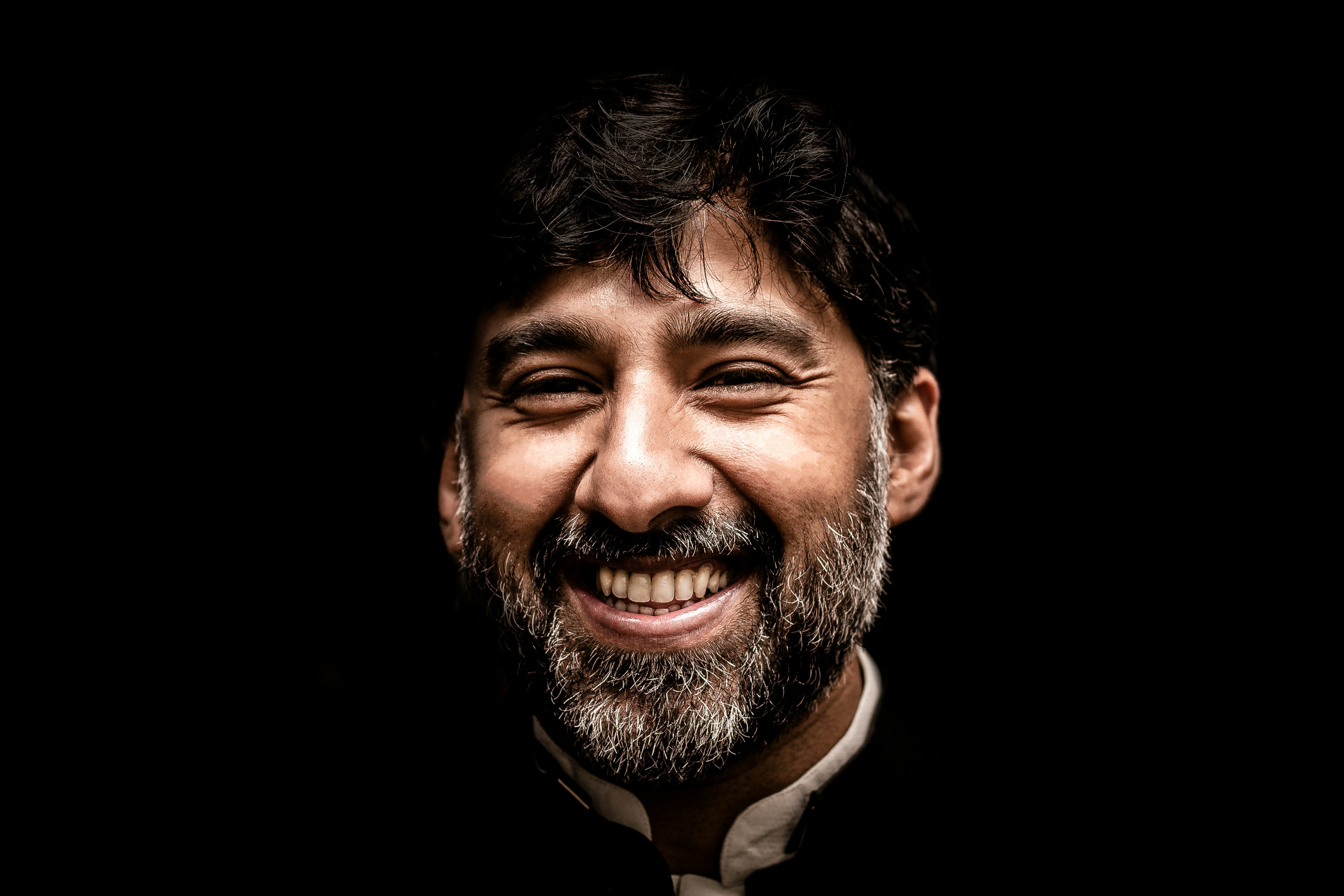
After months of shooting with Canon’s RF lineup, I’ve learned that price and aperture don’t always tell the full story. The best portrait lenses blend rendering, autofocus confidence, and build quality in a way that makes your work faster, not just prettier.
Also Read: Best Camera Settings for Portraits (+ Expert Analysis)
Whether you’re assembling your first kit or refining a professional loadout, these four Canon RF lenses offer exceptional value across different budgets.
Canon’s mirrorless system now spans everything from compact f/1.8 primes to flagship L-series telephotos. Below you’ll find the strongest choices in four key categories: best bang for your buck, best third-party lens, best professional lens, and best budget option.
Also Read: 8 Best Portrait Lenses: Bang-for-Your-Buck Winners by Brand
Canon RF 85mm f/2 Macro IS STM
Best bang-for-your-buck lens
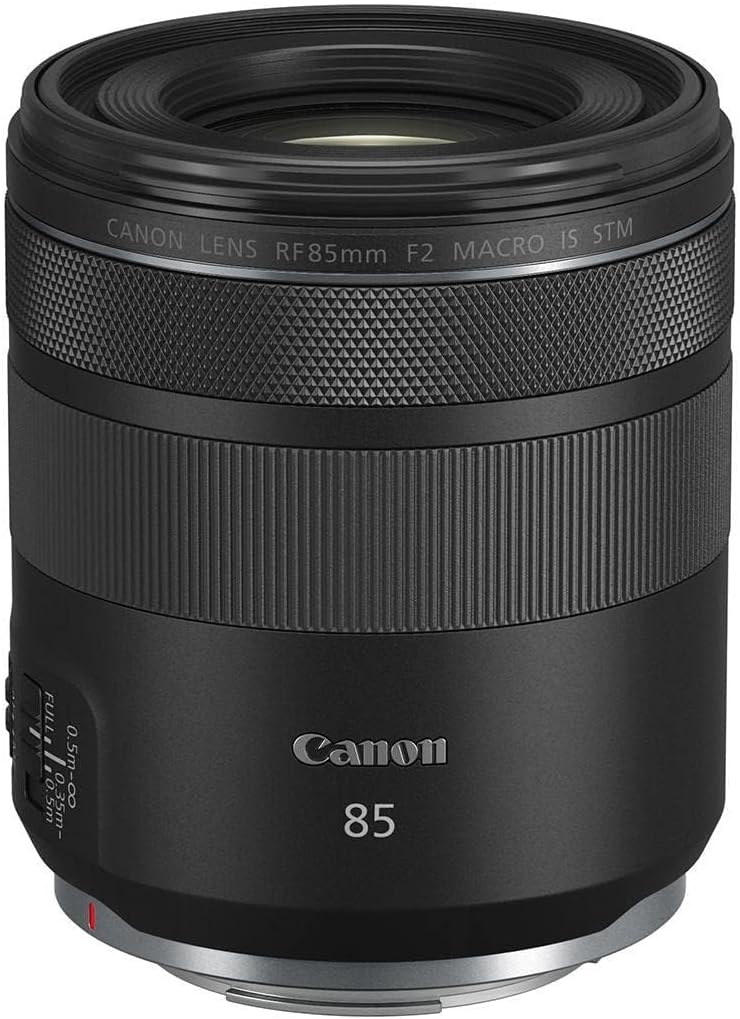
This is the lens that consistently delivers more than its price suggests. The 85mm focal length is a natural fit for flattering portraits, and Canon’s inclusion of image stabilization plus half-macro capability makes it a rare hybrid tool.
You can capture crisp headshots, then move in close for lashes, rings, or fabric textures without switching glass. The STM motor is quiet and precise, which also makes it useful for hybrid shooters who record both stills and video.
Why it stands out: stabilization, half-macro flexibility, and sharp rendering at a size you’ll actually carry.
Keep in mind: f/2 can’t isolate backgrounds quite like an f/1.4, and focus breathing shows up in video.
Field note: work between f/2 and f/2.2 for tight portraits; step closer and engage macro range for beauty details.
Customer Review
I bought this lens to replace my old EF 85 f/1.8 lens. I was hesitant because of some bad reviews. But it turned out to be a great upgrade. Image quality is top notch – very sharp, good contrast and great colors. I use it on my EOS R6. Images from this combo are very clean (no haze that I often experienced from the old 85 f/1.8).
f/2.0 vs f/1.8 on the old lens – this really didn’t matter much to me. The performance of the old lens wide open wasn’t great. I used f/2.2 or above for most of my shooting with it. This new RF lens however produce excellent results wide open at f/2.0. The bokeh it produces is very good too.
And of course, this new RF lens has IS, close focusing distance and 1:2 macro. All useful features.
Before buying this, I was concerned about 2 issues…
Viltrox AF 85mm f/1.8 RF
Best third-party portrait lens
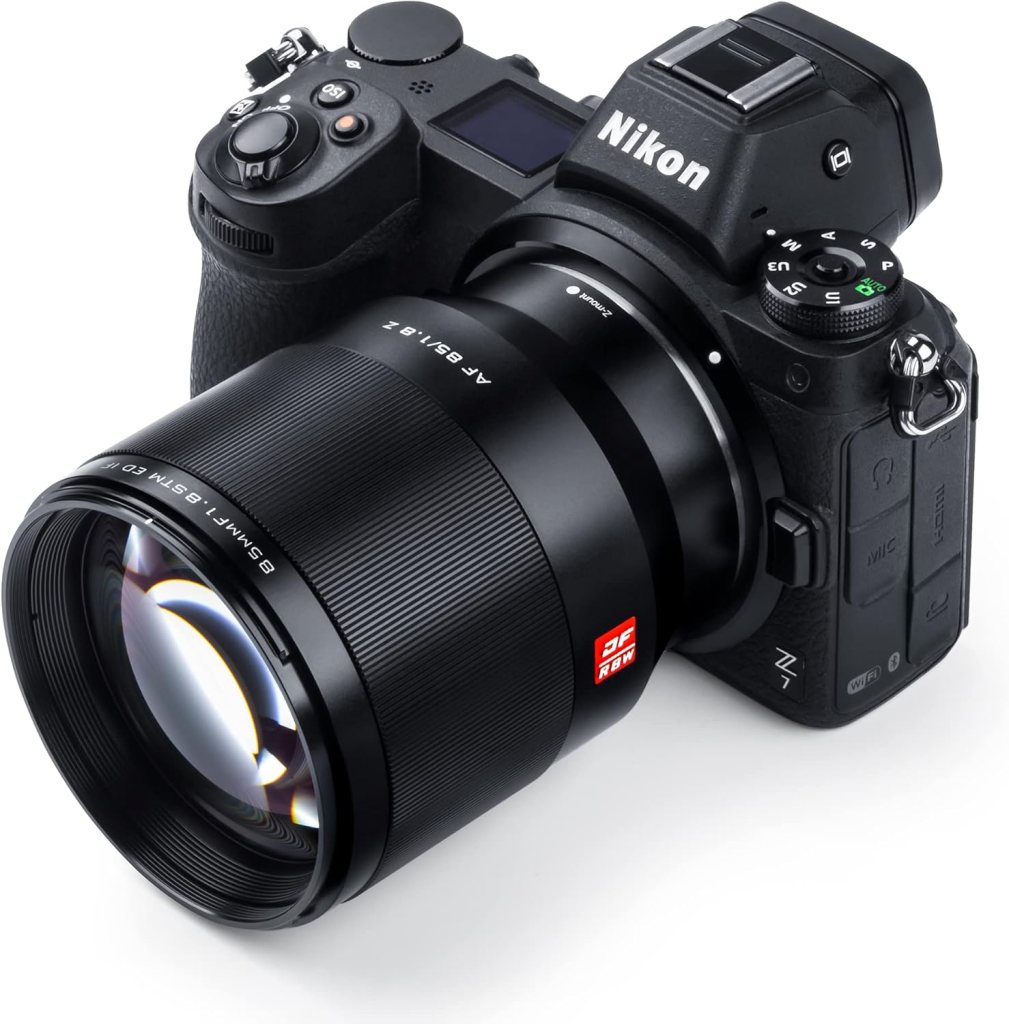
Viltrox has carved out a spot as the go-to third-party maker for Canon’s mirrorless mount. This 85mm f/1.8 produces the look portrait shooters crave: soft backgrounds, natural contrast, and a hint of warmth that flatters skin tones.
Autofocus is confident enough for professional portrait work, and the all-metal construction feels premium despite the modest cost.
Why it stands out: real 85mm compression with smooth falloff at nearly half Canon’s price.
Keep in mind: no optical stabilization, and flare resistance trails Canon’s coatings.
Field note: outdoors, use a 3–5 stop variable ND filter to stay wide open without overexposure.
Customer Review
Not sure how the hell Viltrox pulled this off, but they created a real gem with this lens. It’s seemingly well made, being mostly metal (as far as I can tell) and quite substantial feeling. It’s also quite heavy, but not enough to make an A7-series body feel unbalanced.
AF is fast, generally quite accurate, and quiet. It does tend to hunt a bit in lower light situations, especially when stopped down a bit, but it’s not a huge issue in most cases. Image quality is a lot better than I had expected, especially in terms of sharpness in the center of the frame. Wide open, it’s acceptably sharp…but stopped down to f/2.8 it really gets super-sharp.
I bought this instead of the Sony 85mm, and I’m damn glad I did.
Canon RF 135mm f/1.8L IS USM
Best professional Canon lens for portraits
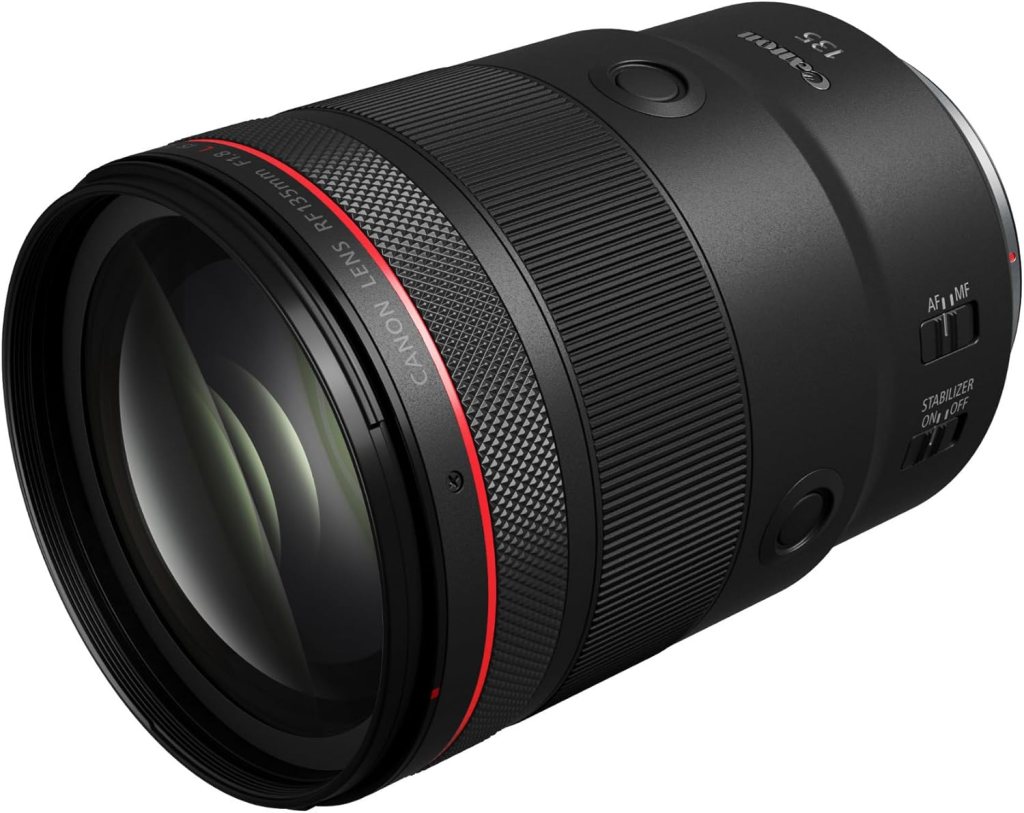
When you need that jaw-dropping subject separation and compression, nothing in Canon’s lineup matches the 135mm f/1.8L.
This is the lens portrait specialists dream of: razor-sharp optics, whisper-quiet Nano USM autofocus, weather sealing, and built-in image stabilization. It delivers a medium-format feel on full frame—perfect for fashion, weddings, and editorial sessions where space allows.
Why it stands out: extreme subject isolation, IS for handheld shooting, and flawless optical performance.
Keep in mind: large, heavy, and priced accordingly; best used deliberately.
Field note: back up slightly for three-quarter or full-length portraits—the longer focal length slims subjects and creates cinematic compression.
Expert Review
Fast focus and exceptional clarity. All of the Canon RF lenses I have purchased are terrific. Even the less expensive 24 to 240. The big advantage of the 135mm is its f1.8 aperture.
I use it mostly for photographing grandkids in sporting events and for portraits. It freezes action and isolates faces and objects better than any other lens I have used. If you need more versatility, I’ve found you don’t give up clarity with the RF zooms.
I also use the 100 – 500 and get remarkably clear shots but it is a slower lens. I tried buying a used 135 f2 EF lens but it was not as crisp and missed the focus when tracking more than the RF lens.
I have used Canon cameras since digital photography first developed in the late 90s. Each new generation provided clear incremental improvements. I highly recommend the RFs as state of the art.
Canon RF 50mm f/1.8 STM
Best budget Canon lens for portraits
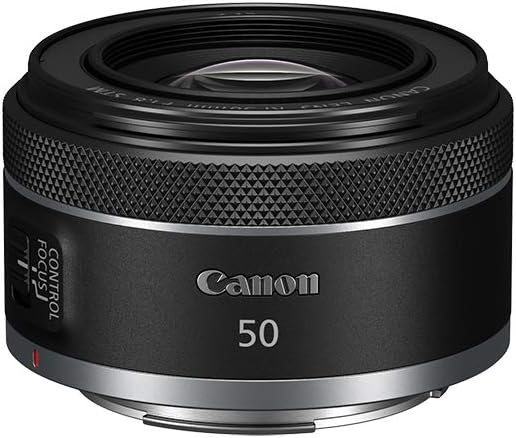
The gateway lens for almost every Canon mirrorless shooter. Compact, featherlight, and optically sharp once stopped down slightly, the RF 50mm f/1.8 gives you a natural field of view that works indoors or out. It’s ideal for environmental portraits or travel photography where you want context in the frame.
Why it stands out: small, affordable, and surprisingly crisp when used with care.
Keep in mind: AF can hunt in dim light and bokeh can look busy up close.
Field note: keep some distance between you and the subject to avoid distortion, and shoot around f/2.2–f/2.8 for both eyes sharp.
Customer Review
I love this lens, I have a entry level camera, R100, and with this lens my pictures look like I have an expensive one. Its a great quality lens, cheap and small and light weight which make’s it great for travel photos.
It ha a great built in stabilization and autofocus does wonders if you are a beginner. It does not have a a lot of bokeh but it will blur your subject’s background in lower f. I take a lot of portraits and is my go to lens since I purchased it.
How to choose the right portrait lens
• 50mm is ideal for tight spaces or environmental portraits.
• 85mm offers the most flattering look for head-and-shoulder portraits.
• 135mm creates professional separation and compression, perfect for full-body frames.
• If you shoot handheld, prioritize image stabilization; if you use strobes or tripods, speed and optical character matter more.
• Autofocus reliability and ergonomics often make a bigger difference than a third of a stop of aperture.
FAQs: Canon RF Portrait Lenses (Expert Answers)
1. What is the best portrait lens for Canon RF?
The Canon RF 85mm f/2 Macro IS STM is widely considered the best all-around portrait lens for Canon’s mirrorless system. It offers sharp optics, image stabilization, half-macro capability, and a balanced price point—making it ideal for both professionals and hobbyists who want versatility without overspending.
2. Is the Canon RF 85mm f/2 good for professional work?
Yes. While marketed as a mid-range lens, the RF 85mm f/2 performs well enough for professional portraits, weddings, and studio work. Its stabilized optics and accurate autofocus make it a reliable choice for paid sessions.
3. Is the Canon RF 85mm f/1.2L worth it over the f/2?
The RF 85mm f/1.2L produces slightly smoother bokeh and better low-light performance, but at nearly three times the cost and double the weight. For most photographers, the RF 85mm f/2 delivers 90% of the look for a fraction of the price.
4. What Canon RF lens has the best bokeh for portraits?
The Canon RF 135mm f/1.8L IS USM delivers the most impressive background blur in the lineup. Its long focal length and wide aperture create rich, smooth separation that flatters every subject.
5. Are third-party RF lenses like Viltrox reliable?
Modern Viltrox RF lenses, such as the 85mm f/1.8 RF, are surprisingly reliable. Autofocus is quick on Canon R-series bodies, image quality rivals OEM glass, and the build quality feels solid. They’re excellent alternatives for photographers on a budget.
6. Do Canon RF lenses have better autofocus than EF lenses on adapters?
Yes. Native RF lenses use Canon’s Dual Pixel AF communication protocol directly, resulting in faster and quieter autofocus compared to adapted EF lenses. If you rely on Eye-AF, RF glass is noticeably more consistent.
7. Is image stabilization important for portrait photography?
Image stabilization helps reduce camera shake when shooting handheld at slower shutter speeds, especially in natural light. It’s not essential if your camera has IBIS or you primarily use strobes, but it adds flexibility for on-location work.
8. What is the best budget portrait lens for Canon RF?
The Canon RF 50mm f/1.8 STM is the best entry-level portrait lens. It’s compact, lightweight, and produces sharp images at f/2.2–f/2.8. It’s perfect for new RF shooters and content creators looking for an affordable prime.
9. How does the RF 50mm f/1.8 compare to the RF 85mm f/2 for portraits?
The 50mm provides a more natural, environmental look suitable for tight indoor spaces. The 85mm offers flattering compression and smoother backgrounds for traditional headshots. Many photographers use both for different situations.
10. What’s the sharpest Canon RF lens for portraits?
The Canon RF 135mm f/1.8L IS USM is among the sharpest portrait lenses available. Even wide open, it maintains edge-to-edge clarity while producing exceptionally smooth falloff.
11. Can I use RF portrait lenses for video?
Yes. The RF 85mm f/2 and RF 135mm f/1.8L are particularly strong for video due to their stabilization and silent focus motors. The STM and Nano USM systems are optimized for hybrid shooters who record both stills and motion.
12. What’s the best focal length for portraits on Canon RF?
85mm remains the classic choice for portraits due to its flattering compression, but 50mm works better in small spaces and 135mm provides a more cinematic, high-end look with stronger separation.
13. Are RF lenses weather-sealed?
Canon’s L-series lenses, such as the RF 135mm f/1.8L and RF 85mm f/1.2L, include full weather sealing. Non-L lenses like the RF 85mm f/2 and RF 50mm f/1.8 are not fully sealed but can handle light outdoor use with care.
14. Do third-party lenses like Viltrox and Meike support Eye-AF?
Yes. Recent firmware updates have improved Eye-AF compatibility on Canon R-series cameras. While not as consistent as Canon’s native lenses, third-party options like the Viltrox 85mm f/1.8 RF perform well in controlled light.
15. Which Canon RF portrait lens is best for beginners?
The RF 50mm f/1.8 STM is the best first lens. It’s affordable, lightweight, and helps new photographers learn composition, depth of field, and focus discipline without technical frustration.
16. Which Canon RF portrait lens is best for professionals?
The RF 135mm f/1.8L IS USM is Canon’s top-tier portrait lens for professionals. It combines stabilization, flawless sharpness, and beautiful compression that’s perfect for high-end editorial, wedding, and fashion photography.
17. What are the differences between 50mm and 85mm for portraits?
At the same subject distance, 50mm lenses show more background and can exaggerate facial features slightly. 85mm lenses compress features, reduce distortion, and produce more separation—making them ideal for headshots.
18. Is 85mm too long for indoor portraits?
In tight rooms, yes—it can be difficult to frame full-body shots. A 50mm or 35mm RF prime is better for small studio or apartment setups, while 85mm shines outdoors or in larger spaces.
19. Can I use RF portrait lenses on APS-C bodies like the EOS R7 or R10?
Yes. RF lenses mount directly to Canon APS-C cameras, though the field of view changes. An 85mm lens behaves like a 136mm equivalent, and a 50mm acts like an 80mm equivalent—both excellent for tight portraits.
20. Which Canon RF portrait lens offers the best overall value?
The Canon RF 85mm f/2 Macro IS STM remains the most balanced choice. It’s sharp, stabilized, close-focusing, and affordable—making it the ultimate “do-it-all” portrait lens for Canon mirrorless users.
Affiliate disclosure: Some of the links mentioned in this article may be affiliate links. This means I may earn a small commission if you make a purchase, at no additional cost to you.



Leave a Reply