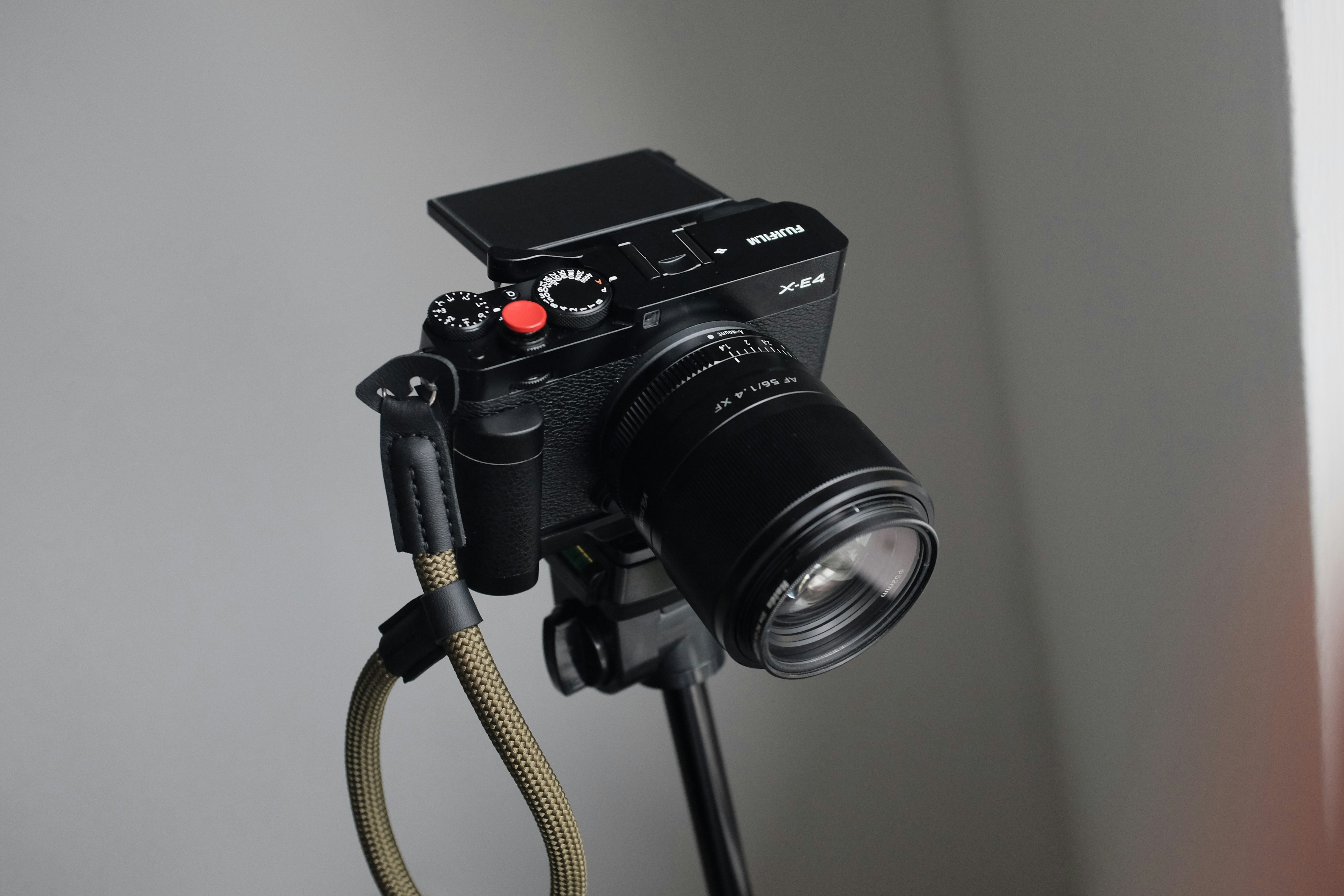
I’ve tested a lot of glass on Fujifilm X bodies, but two Viltrox primes have taken up permanent residency in my bag because they cover 90% of what I shoot and they make work look bigger than the budget: the Viltrox 75mm f/1.2 Pro XF and the Viltrox 27mm f/1.2 Pro XF.
One is a hero portrait lens with a signature look; the other is a fast “normal” that tells whole stories without swapping lenses.
Fortunately for you, you don’t need to take my word for it about the quality of these lenses. Or how great a deal they are.

Below is how I actually use them across client work, travel, and mixed photo/video days, plus two more strong choices if your work leans wider or you want a budget-friendly portrait alternative.
1. Viltrox 75mm f/1.2 Pro XF

My Hero Portrait Lens
On APS-C this lands around a 112mm equivalent, which is perfect for head-and-shoulders, half-body, and tight editorial frames. The draw is simple: at f/1.2 backgrounds melt into cream, faces pop, and even ordinary locations feel cinematic.
Autofocus is confident and quiet, the build is solid, and the rendering has a polished, modern character without looking clinical.
How I use it
- Portrait sessions and headshots: I can work a full session with just this lens. It gives flattering compression, smooth bokeh, and a clean separation that clients immediately notice.
- Wedding and event details: Tight crops on rings, florals, table settings, and candid moments from a respectful distance. I stay invisible and still get intimate frames.
- Indoor ceremonies and small stages: That extra stop makes a real difference in dim light. Paired with Fuji’s film sims, the files have a rich, finished feel.
- Environmental compression: I’ll step back and layer subjects against distant lights or architecture. The 75/1.2 turns busy scenes into minimal backdrops.
- Editorial/fashion: It draws edges with just enough bite while keeping backgrounds soft. Great for beauty, hair, and any look where the subject must dominate.
- Product and food close-ups: Not a macro lens, but the working distance and softness behind the subject make hero shots look expensive.
- Video cutaways: Smooth, precise AF and that shallow depth deliver instant “A-roll” energy for interviews and beauty shots.
Honest User Reviews
I don’t expect you just to take my word for how great these lenses are. Here are some more reviews with lots of upvotes for helpfulness.
Using on my Fuji X-T50 and this is my FAVORITE lens. By far. Absolutely stunning photos and of the highest quality. AMAZING for portraits but also incredible for landscape/cityscape/product photography.
Absolutely a no brainer for the price too! Cannot recommend enough! All metal and feels like pure quality. Slightly heavier but that’s good! Noise is a non-issue. Super easy to use and get sued to as well!
It’s a 75mm so obviously you have to step back a little ways from your subject, but it’s not that big of a deal at all! That being said, GO BUY ONE NOW! You won’t regret it 🙂
Shooting notes
- Distance and communication matter. With the longer working distance, I give clear direction so expressions don’t get lost between frames.
- Shutter discipline. At f/1.2 I keep shutter up to avoid micro-blur, especially outdoors; IBIS helps on newer bodies, but technique still wins.
- ND filters. For outdoor portrait work wide open, a decent ND stays on the lens.
Who it’s for
Portrait shooters, brand photographers, wedding creatives, and anyone who wants a signature, premium look without jumping to full frame. If you sell portraits or run paid sessions, this lens pays rent fast.
2. Viltrox 27mm f/1.2 Pro XF

The Storyteller
Think of this as a 40mm-equivalent with superpowers. It’s wide enough to include context, tight enough to flatter faces, and fast enough to handle almost any light. When I need one lens to carry an entire day—photo and video—I put the 27/1.2 on and stop thinking about gear.
How I use it
- Brand stories and documentary jobs: Cafés, studios, makers’ spaces—this focal length shows the person and the place with honest perspective.
- Weddings and events: Prep rooms, dance floors, tablescapes, candid groups. I can move fast and still get clean subject separation at f/1.2.
- Travel and street: It feels natural. I can shoot scenes, food, interiors, and people without backing into traffic or bumping into strangers.
- Environmental portraits: I’ll shoot at f/1.2–f/2 to keep the subject crisp while letting the environment whisper the context.
- Video as a single-lens setup: On a gimbal or handheld, this focal length avoids distortion but still feels immersive. AF is smooth and quiet, which matters when recording audio.
- Low-light lifestyle: Home sessions, restaurants, music rehearsals—this lens eats ugly light and still gives me files I like to grade.
Honest User Reviews
I am blown away by the quality of this lens. It is solidly built, came nicely packaged, and has great optics. The autofocus is fast, quiet, and effective, and the color rendering is right on. It’s worth every penny of the asking price, for sure!
Update: It keeps getting better. This lens is going to spend a lot of time on my X-T2.
I have tried a number of third-party prime lenses for my Fujifilm XT4 through rentals and found this lens to be the right combination of quality optics and price–it pairs well with my system and offers sharp focal points, with little discernible autofocus lag. When you compare this to the Fuji branded lenses that cost three times the price, it’s a great substitute.
Shooting notes
- Focus points and recomposing. At f/1.2 the plane is thin; I use small AF points on the eye and let the camera track, or I rock gently to lock focus manually if the scene is chaotic.
- Vertical storytelling. I’ll often shoot a wide establishing frame, then step in a half-pace for a tighter portrait—same lens, same light, a complete sequence.
Who it’s for
Creators who want one lens to tell a day’s story: brand shooters, travel/documentary photographers, hybrid photo-video folks, and anyone who values speed, AF reliability, and a natural look.
Why These Two Viltrox Lenses Work So Well
They complement each other without overlap. The 27/1.2 handles context, motion, and storytelling; the 75/1.2 delivers hero frames and high-impact portraits. I can cover a full wedding prep, a brand session, or an editorial afternoon with just these two and not feel limited. They also grade consistently, so mixing images looks seamless.
2 More Strong Viltrox X-Mount Lenses
Viltrox 13mm f/1.4 XF

If your world leans wide—architecture, interiors, real estate walk-throughs, travel rooms, night cityscapes—this is the fast, reliable ultrawide that stays small enough to bring everywhere.
Autofocus is solid for video, and f/1.4 lets you keep ISO sane indoors or at blue hour. It pairs beautifully with the 27/1.2 for a two-prime travel kit.
Customer Review (25 Upvotes)
Okay by no means are these going to be “optically” better than fuji lenses but the differences are negligible.
The reason I think these compete head to head with fuji branded lenses are because of the VALUE. Optically these are on par with my fuji equivalent lenses at almost half the price. The autofocus is SO much faster and they have software updates to improve even more over time. The contrast on these lenses are beautiful and the Bokeh is just as dreamy as any fuji lens albeit more pronounced. Highlight roll off is clean and lens flare is very minimal. There is some slight purple fringing that I do not see as often on fuji lenses BUT at the price of this lens it’s definitely not a deal breaker and can be easily corrected in photoshop.Pros
-AMAZING QUICK autofocus BEST i’ve EVER seen on a mirrorless
-cannot beat the price point for the quality
-software updates improve lens performance
-comes with a metal lens hood feels VERY premium and a nice carrying pouch
-super sharp at the sweet spot cant tell the difference between this and fuji at 5.6 aperture
-perfect for video because the autofocus is so accurate and works really well with eye trackingCons
-purple fringing in some scenes hard to avoid sometimes
-Viltrox doesn’t yet have a multi focal length lens for fuji which is really a bummer you’re locked to prime lenses
-some older lenses have micro USB where as the new 13mm is USB C so having multiple cables can be an annoyance
Viltrox 56mm f/1.4 XF

Need a lighter, budget-friendly portrait option? The 56/1.4 is the classic ~85mm-equivalent look with excellent sharpness and bokeh in a compact package.
It’s my recommendation for photographers building up paid portrait work who want premium results and minimal weight.
If traveling lean, pack 27/1.2 + 56/1.4 and feel completely covered.
How I’d Pack For Real Jobs
Brand day in mixed light
27/1.2 on camera, 75/1.2 in the bag. The 27 covers walkthroughs, product-in-context, and quick interviews; the 75 delivers hero portraits and detail cuts.
Portrait session, outdoor location
75/1.2 on camera for the look clients love; 27/1.2 for wider environmental frames and scene-setting. One ND filter each, bounce card, and we’re set.
Travel city weekend
27/1.2 on camera for everything; 13/1.4 in the bag for interiors and night scenes. I add the 56/1.4 only if I know portraits are part of the plan.
Small wedding or event
27/1.2 for prep rooms, candid groups, and reception coverage; 75/1.2 for ceremony from the aisle, couple portraits, and detail hero shots. If space is tight, I’ll swap in the 56/1.4 for a smaller footprint.
Final Thought
If you’re building a Fuji kit with an eye toward paid work and strong personal projects, the 27mm f/1.2 Pro and 75mm f/1.2 Pro are the two lenses that changed how I shoot. One tells the story; the other delivers the poster.
Add the 13mm f/1.4 or 56mm f/1.4 based on your lane, and you’ve got a compact system that can walk into almost any job and come back with frames you’re proud to sign.
This post contains affiliate links. If you purchase through these links, I may earn a small commission at no extra cost to you. As an Amazon Associate, I earn from qualifying purchases and stand behind all of my recommendations.




Leave a Reply