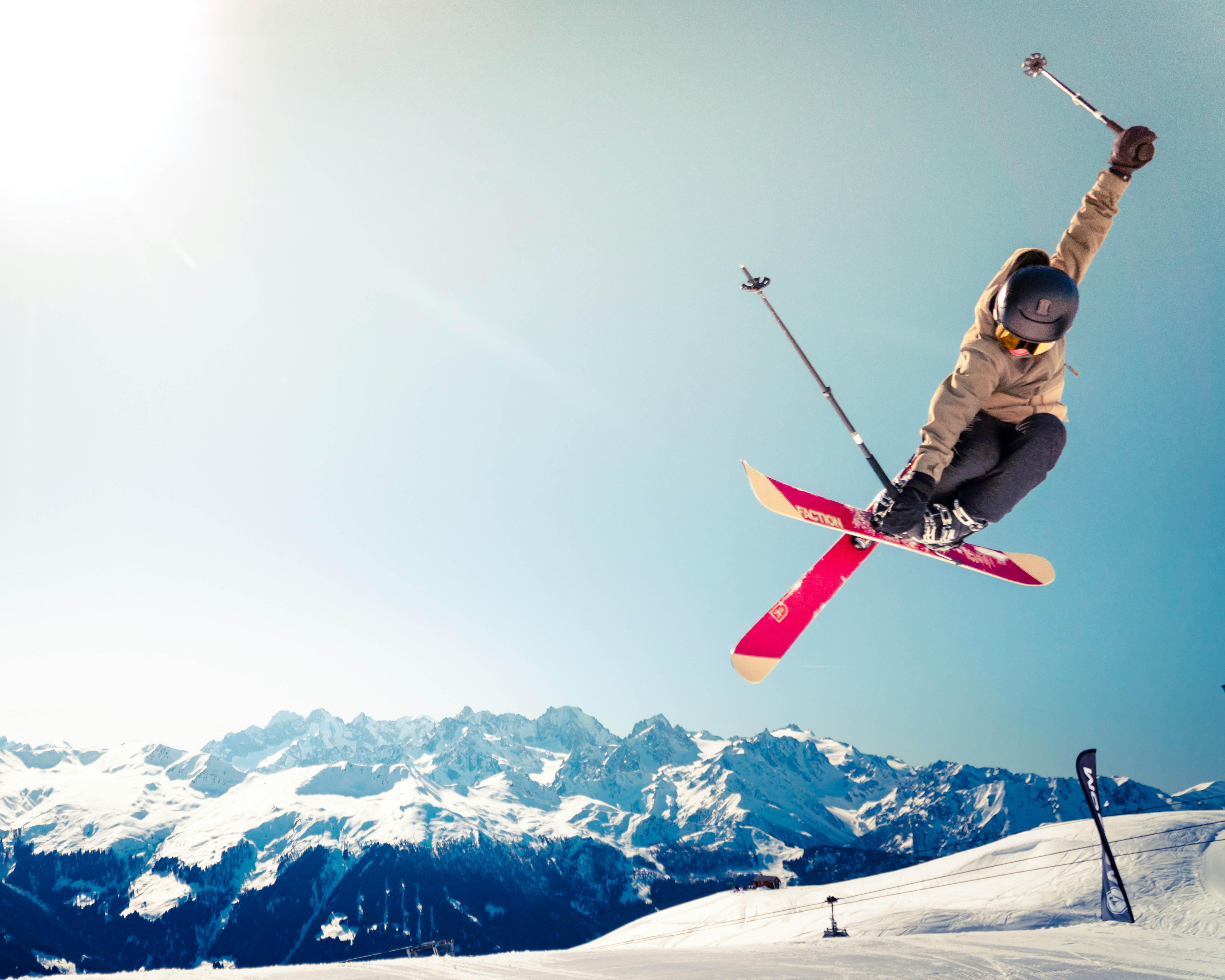
The best camera for skiing is the one that can survive cold temperatures, wet powder, and the occasional yard sale while still giving you great footage of your day on the mountain. Whether you’re filming fast tree runs, park laps, or your kids’ first turns, the right ski camera will depend on your shooting style. Some people want a simple helmet POV, others want cinematic edits with creative angles, and a few want a rugged camera for professional action stills.
After countless days on the slopes experimenting with different setups, I’ve found that certain cameras just work better in the cold, handle shake more gracefully, and make it easier to shoot without taking off your gloves. Below are the options worth considering, and who they’re best suited for.
Also Read: 5 Best DSLR/Mirrorless Cameras for Sports Photography
Quick Picks
• Best overall for most skiers: GoPro Hero 13 Black
• Best for creative 360 edits: Insta360 X4
• Best for low-light + storm days: DJI Osmo Action 5 Pro
• Best tough pocket camera: OM System Tough TG-7
• Best for pro photography: Nikon Z8
Best Overall for Most Skiers
GoPro Hero 13 Black

Who it’s for: Skiers who want easy, reliable POV footage without a complicated setup.
Why it’s great on snow: The stabilization removes almost all chatter from icy turns and mogul runs. Colors look crisp against bright snow, and low horizon shots from a chest mount provide a fast, immersive feel. The menus are simple enough to adjust with gloves on, and the weather sealing handles powder days without fuss.
Key specs:
• 5.3K resolution for sharp POV detail
• High frame rates for smooth slow motion of jumps and carves
• Wide FOV keeps skis, hands, and scenery in the shot
• Convenient accessories for poles, helmets, and vests
Pros
• Stabilization makes bad conditions look smooth
• Rugged enough to take falls and still film
• Strong accessory ecosystem for skiing
• Good battery performance if kept warm in a pocket
Cons
• Needs periodic anti-fog care in heavy snow
• Footage benefits greatly from a quick edit workflow
Real scenario: Great when you want to hit record at the top, forget about it, and know the footage will work out.
Helmet vs Chest Mounts
Helmet vs Chest vs Pole Mount
| Mount type | Strengths | Weaknesses | Best for |
|---|---|---|---|
| Helmet | Natural perspective | Less ski visibility | Big-terrain exploring |
| Chest | Most immersive speed feel | Slightly less horizon view | Solo skiing + park |
| Pole | Cinematic group angles | Needs rider attention | Edits focused on friends |
Recommendation:
Carry two mounts for varied edits: helmet (speed) + pole (friends).
Mounts
GoPro Hero 12 vs GoPro Hero 13
Hero 12 owners still get excellent footage, but the 13 takes a noticeable step up in stabilization and highlight handling. The 13 also plays nicer with recent lens mods and accessories, making it a better long-term investment for skiers who upgrade mounts frequently. If you film mostly for social media and already own the 12, upgrading is optional. If you’re buying new, the 13 is the smarter pick, particularly for skiing video.
Comparison Table
| Feature | Hero 12 Black | Hero 13 Black | Which matters for skiing |
|---|---|---|---|
| Stabilization | Very strong | Even smoother in chatter + moguls | Helps rough terrain look clean |
| Highlight handling | Good | Improved detail in bright snow | Better on bluebird days |
| Accessory compatibility | Wide | Full support + newer lens mods | Expands shot variety |
| Battery use in cold | Solid | Slightly improved | Longer runs per battery |
| Price | Lower | Higher | Consider budget vs longevity |
Recommendation:
If the price difference is small (under $100), most skiers should choose the Hero 13 for the stabilization bump alone. If you already own the 12 and film casually, upgrading is optional.
Hero 13 Black vs DJI Osmo Action 5 Pro
The Hero 13 wins for the most realistic “you are there” POV footage. The Action 5 Pro inches ahead in flat light performance and warmer color tone. I recommend the GoPro for bluebird park days and action-heavy skiing, while storm chasers may prefer DJI’s exposure handling.
Best for Creative 360 Ski Edits/Best for Filming Groups
Insta360 X4

Who it’s for: Skiers who want more than POV — invisible pole shots, drone-style angles, and footage you can reframe later.
Why it stands out on the mountain: You can point the camera anywhere, even completely wrong, and still fix framing afterward. That’s a lifesaver during fast or unpredictable skiing when lining up the perfect angle isn’t realistic. The invisible selfie stick effect is still magical — it makes your edit look like a drone is chasing you down the hill.
Key specs:
• 360 capture lets you grab the best angle afterward
• Horizon lock keeps things level during bumpy terrain
• Great for filming yourself skiing without a dedicated camera person
Pros
• Extremely flexible footage — edit how you want later
• Ideal for creative edits and group rides
• Looks incredible with spin transitions and follow-cam shots
Cons
• Editing takes longer and can feel intimidating at first
• Requires more storage and battery rotation
Also Read: 5 Best SD Cards for Photography (By Budget & Niche)
Real scenario: Best when someone is riding behind you with a pole — it turns the whole run into a cinematic highlight reel.
Insta360 X4 vs Insta360 X3
| Factor | X3 | X4 | For ski content |
|---|---|---|---|
| Resolution | Great | Sharper | Helps when reframing fast runs |
| Stabilization | Strong | Better | Smoother mogul + chop footage |
| Cold efficiency | Good | Better | Longer recording between swaps |
| Price | Cheaper | Higher | Budget vs performance |
Recommendation:
Upgrade only if you want higher-detail ski edits or shoot fast terrain regularly.
Insta360 X4 vs GoPro Hero 13 Black
Pick the X4 if you want creative storytelling tools. Pick the GoPro if your goal is a pure “from my eyes” skiing perspective. The X4 rewards time spent editing. The GoPro rewards pressing record and riding. Both are amazing, just for different personalities.
| Feature | X4 | Hero 13 | Ski footage result |
|---|---|---|---|
| Angle flexibility | Total reframing | Fixed framing | Creative freedom vs realism |
| Editing time | Longer | Minimal | Choose based on patience |
| Group filming | Excellent | Good | X4 looks like a drone shot |
| POV authenticity | Decent | Excellent | GoPro wins “what I saw” feel |
| File sizes | Larger | Moderate | Storage matters for long trips |
Recommendation:
X4 if you want cinematic creativity.
Hero 13 if you want press-record simplicity.
Best for Flat Light and Storm Days
DJI Osmo Action 5 Pro

Who it’s for: Skiers who ride in mixed conditions — cloudy days, snowfall, early mornings, and night skiing under resort lights.
Why it works so well on the mountain: When the sky turns gray and the snow becomes a giant softbox, some action cameras lose contrast and definition. The Action 5 Pro keeps detail in flat light, making white-on-white environments easier to watch later. The touchscreen is responsive even when using gloves, and the waterproofing feels confidence-boosting on wet powder days.
Key specs in real English:
• Great exposure handling in low-contrast winter conditions
• Strong stabilization keeps footage usable on rough terrain
• 4K slow motion for park clips and spray turns
Pros
• Excellent for storm skiing and dull weather
• Color tone is flattering without heavy editing
• Good touchscreen interaction with gloves
Cons
• Not as many accessory options as GoPro
• Smaller ecosystem for ski-specific mounts
• Battery life still drops fast in freezing temps
Real scenario: When visibility is poor and colors are muted, the Action 5 Pro preserves your day better than most.
Osmo Action 5 Pro vs Hero 13 Black
| Category | Hero 13 | Action 5 Pro | Real-world takeaway |
|---|---|---|---|
| Best conditions | Bluebird + high action | Storm + low light | Pick based on when you ski |
| Color style | Crisp + contrasty | Warmer + smoother tones | Matters if you rarely edit |
| Accessories | Most options available | Smaller ecosystem | GoPro wins mounting flexibility |
| Ease of editing | Very simple | Also simple | Practically tied |
| Price/value | Great long-term pick | Sometimes cheaper | Budget shoppers may choose DJI |
Recommendation:
Hero 13 for fast action and mount variety.
Action 5 Pro for storm-chaser skiers.
Osmo Action 5 Pro vs Insta360 X4
Choose the Action 5 Pro if you prioritize clean, realistic POV in difficult lighting. Choose the X4 if you want creative flexibility and don’t mind more editing time. The Action 5 Pro is the practical choice for everyday skiing; the X4 is the fun choice for standout edits.
Best Rugged Pocketable Ski Camera
OM System Tough TG-7

Who it’s for: Skiers who want something simple they can pocket, hand to a friend, or use without worrying about mounts.
Why it works on the mountain: It’s freeze-proof, waterproof, shockproof, and basically wipeout-proof. If you’ve ever cracked a phone screen getting off the lift, this camera is made for you. It’s also one of the few compact cameras that genuinely thrives in cold conditions.
Key specs in real English:
• Still photos look noticeably better than phone pics in snow
• Macro mode is incredible for snowflake detail — a unique bonus
• Compact size means you always have it on you
Pros
• Survives hard falls, wet gloves, and slushy pockets
• Physical controls that work when screens don’t
• Great for family ski trips and travel
Cons
• Not ideal for high-speed POV video
• Sensor is smaller than mirrorless cameras
• Footage can look softer in low light
Real scenario: You’re riding with kids and want quick photos without straps or helmets involved — the TG-7 is perfect.
TG-7 vs Action Cam on Snow
The TG-7 gives you better photos and true ruggedness, but an action cam wins for POV skiing and dynamic video. If your priority is capturing the experience from your eyes, stick with GoPro or DJI. If you want memories and people-focused shots, the TG-7 is a smart companion. Of course, you can also just get a proper case for your smartphone.
Best DSLR for Pro Ski Photography
Nikon Z8

Who it’s for: Photographers who want the highest image quality and fast autofocus to freeze dynamic turns, jumps, and pow slashes.
Why it stands out: The Z8 tracks moving skiers smoothly even when the background is busy — think tree runs or moguls. The burst performance helps capture peak action moments. Weather sealing gives confidence on cold days and during chairlift moisture drips.
Also Read:
- 10 Best Camera Sling Bags (Tested & Reviewed)
- Top 5 Camera Backpacks for Every Situation
- 6 Best Camera Bags (Sling, Crossbody, Hiking)
Key specs:
• Action-ready autofocus for sharp results at speed
• Detailed images that print beautifully
• Strong 4K and 8K video if you shoot hybrid
Lens suggestions for skiing:
• 70-200mm for side-of-run action
• 24-70mm for lift rides and lifestyle shots
• 14-24mm for establishing terrain and big-mountain scenes
Pros
• Top-tier stills for publication or professional use
• Robust build for cold-weather performance
• Hybrid friendly for mixed shooting styles
Cons
• Larger and heavier than action cams
• More expensive lenses required to get full value
• Workflow demands more planning on the hill
Real scenario: A friend drops a cliff and you want a perfectly sharp frame mid-air — this camera delivers.
Z8 vs Canon R6 Mark II
If you want the absolute highest image quality and reliability, the Z8 is the pick. The R6 Mark II wins on price and is lighter for long days skiing with a camera bag. Professionals will lean Nikon; ambitious hobbyists may find the Canon the smarter value.
Nikon Z8 vs Canon R6 Mark II
| Feature | Z8 | R6 Mark II | Who it fits |
|---|---|---|---|
| Image quality | Higher | Excellent | Pros + publication shooters |
| Autofocus speed | Top tier | Very strong | Fast sequence tracking |
| Weight/size | Heavier | Lighter | Long ski-day comfort |
| Price | Higher | More affordable | Hobbyists upgrading |
| Hybrid video | Outstanding | Great | Mixed shooting styles |
Recommendation:
Z8 for professional output.
R6 II for performance per dollar and less weight in the backpack.
Must-Have Ski Camera Accessories
• Extra batteries kept in an inside jacket pocket
• Anti-fog inserts or wipes
• Chest mount for speed and stability
• Helmet mount for eye-line shots
• Pole mount for group riding and third-person angles
• High-speed microSD cards to avoid dropped frames
• Simple padded case for chairlift storage
Ski Filming Tips That Actually Matter
• Turn off the camera in lift lines — batteries die fast in the cold
• Avoid breathing directly on the lens to prevent fogging
• Lock exposure when shooting in bright sunshine on snow
• Get lower angles for a stronger feeling of speed
• Film only downhill and stay aware — safety beats any clip
FAQs — Best Camera for Skiing (Real Questions People Ask)
What’s the best camera mount for skiing?
A chest mount usually creates the most exciting footage because the skis, hands, and snow are visible. Helmet mounts feel more first-person but lose some sense of speed. Pole mounts are amazing for filming friends and for those invisible-pole shots that look like drone footage.
How do I keep my camera from fogging up on the slopes?
Keep the lens covered or in a pocket whenever you go indoors. Use anti-fog inserts for action cams on storm days. Try not to breathe directly toward the camera when stopped in the cold.
Do action camera batteries drain faster in cold weather?
Yes. Cold temperatures reduce battery efficiency significantly. Carry spare batteries in an inside pocket close to body heat and only power the camera on when you’re ready to ski.
Can a smartphone replace an action camera for skiing?
Phones are great in the lodge or for group selfies. On snow, they struggle with moisture, rapid temperature swings, glove use, and mounting. If you want true POV skiing, an action camera is the safer and more reliable choice.
Should I film skiing in 4K or 5.3K?
If you plan to crop or stabilize footage later, shoot as high as you can. For casual social posts and quicker editing, 4K looks excellent and saves space. Higher resolution is more forgiving during fast, bumpy skiing.
What’s the ideal frame rate for skiing footage?
60 fps works for almost everything. If you want slow-motion park tricks or powder sprays, 120 fps or higher looks fantastic but uses more storage.
How do I protect my camera during a fall?
Chest and helmet mounts keep the camera tucked in where it’s less likely to get ripped off. Pole mounts are more vulnerable, so add a safety tether or wrist strap.
How do I improve audio while skiing?
Wind overwhelms microphones at speed. Record narration on the lift, not mid-run. Wind covers help at slower speeds, but for skiing footage, music overlays are common.
Why does snow footage sometimes look too bright or washed out?
The snow reflects large amounts of light, tricking the camera’s exposure. Lock exposure when possible or slightly underexpose to keep detail in the highlights. Editing apps can easily brighten shadows later.
Do I need ND filters for filming skiing?
Only on bright bluebird days when you want cinematic motion blur at lower shutter speeds. Most skiers filming POV content can skip ND filters.
Should I use horizon lock for skiing?
Yes for most action cameras. It keeps the horizon level even when you’re bouncing through chop or banking turns. It feels more polished and easier to watch later.
Can 360 cameras be used for POV skiing?
They can, but the feel isn’t purely from-your-eyes. 360 cameras shine when filming groups or when someone rides behind you with a pole. They produce fun and creative footage that regular action cams can’t match.
What is the safest way to carry a mirrorless or DSLR camera while skiing?
Use a chest harness or a small padded sling bag worn under your jacket. Keep lenses capped when not shooting. Avoid carrying heavier lenses on the chairlift unsecured.
How do I make ski videos more interesting to watch?
Mix perspectives: chest mount on run one, pole on run two, helmet for big terrain. Add a few clips from the base area or gondola for story flow. Film turns from both sides when possible.
Can cameras overheat while skiing?
Surprisingly, yes. Shooting continuously for long periods inside a jacket pocket can trap heat. Alternate between protecting the camera in a warm pocket and exposing it to colder external air when filming.

Leave a Reply