
Fortunately for anyone looking for the best Fujifilm lenses, the official lens line (called Fujinon) provides extremely consistent, top-notch quality. The same is even true for many third-party X-mount lenses.
The charts below represent the average 5-star rating for almost every Fujifilm and third party lens available. I compiled this information from 10 highly-reputable, professional photography reviewers.
You may also be interested in my 7 Best FUJIFILM Cameras (By Budget and Niche).
Average Rating for Every Fujifilm Lens
As you can see, the vast majority of options land in the 4-5 star range. That said, the best Fujifilm lenses are so top-notch, they are universally admired. This article focuses on the 3 best Fujifilm lenses for each category: prime, zoom, and third party.
Understanding X-Mount Lenses
Fujifilm’s X-mount system is designed specifically for their APS-C mirrorless cameras, providing photographers with a versatile and high-performance lens lineup. When selecting a lens for your Fujifilm camera, there are several important factors to consider:
First-Party vs. Third-Party Lenses
First-Party Lenses: These are lenses manufactured by Fujifilm specifically for their X-mount system.
They are designed to work seamlessly with Fujifilm cameras, ensuring optimal performance, image quality, and compatibility. First-party lenses often feature advanced coatings, weather sealing, and superior build quality.
Third-Party Lenses: These are lenses made by other manufacturers, such as Sigma, Tamron, and Viltrox, that are compatible with the Fujifilm X-mount system.
Third-party lenses can offer excellent performance and value, often at a lower price point than first-party lenses. However, they may lack some of the specialized features found in Fujifilm’s own lenses.
Focal Length Adjustments
Fujifilm’s X-mount lenses are designed for APS-C sensor cameras, which have a crop factor of 1.5x.
This means that the effective focal length of the lens will be 1.5 times the focal length stated on the lens. Understanding this conversion is crucial for choosing the right lens for your photography needs.
Fujifilm Conversion Chart
| Lens Focal Length (mm) | Effective Focal Length (mm) |
|---|---|
| 16mm | 24mm |
| 23mm | 35mm |
| 35mm | 52.5mm |
| 50mm | 75mm |
| 56mm | 84mm |
| 75mm | 112.5mm |
| 90mm | 135mm |
| 200mm | 300mm |
| 300mm | 450mm |
3 Best Prime Fujifilm Lenses
1. Fujifilm 16mm f1.4
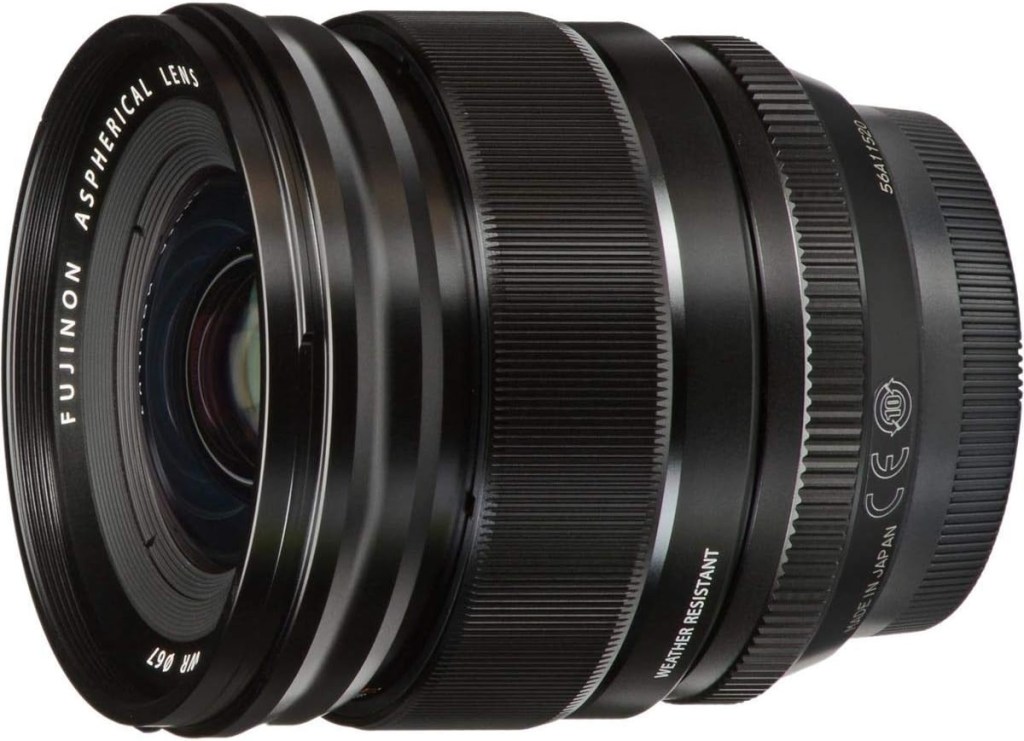
The Fujifilm 16mm f1.4 lens is a favorite among photographers for its versatility and outstanding image quality. This lens is perfect for landscape, architecture, and street photography, offering a wide field of view and a fast aperture for low-light conditions.
Tech Specs
| Specification | Details |
|---|---|
| Focal Length | 16mm |
| Maximum Aperture | f/1.4 |
| Minimum Aperture | f/16 |
| Lens Construction | 13 elements in 11 groups |
| Angle of View | 83.2° |
| Minimum Focus Distance | 0.15m |
| Filter Size | 67mm |
| Dimensions | 73.4mm x 73mm |
| Weight | 375g |
Pros and Cons
Pros:
- Excellent image quality with sharpness across the frame
- Fast f/1.4 aperture for low-light performance and beautiful bokeh
- Weather-sealed construction
- Close focusing distance for macro-like shots
Cons:
- Larger and heavier compared to other prime lenses
- Higher price point
Best Uses
- Landscape Photography: The wide 16mm focal length captures expansive scenes.
- Architecture Photography: Great for capturing the full scope of buildings and interiors.
- Street Photography: Fast aperture allows for shooting in various lighting conditions.
- Macro Photography: Close focusing distance enables detailed close-up shots.
Expert Reviews
“The Fujifilm XF 16mm f/1.4 R WR continues Fujifilm’s tradition of delivering exceptional optical performance. It produces impressively sharp images with minimal distortion and vignetting, even at wide apertures. The manual focus ring is a joy to use, and the lens’s overall build quality is outstanding.”
—Mark Goldstein, Expert Fujifilm Lens Reviewer, Photography Blog
“The Fujifilm XF 16mm f/1.4 is a spectacular performer, giving sharp images with smooth, attractive bokeh. Its weather-sealed construction and close focusing distance make it versatile for various shooting conditions. It’s a must-have for landscape and street photographers.”
—Mark Condon, Expert Fujifilm Lens Reviewer, Shotkit
Fujifilm 16mm vs. Fujifilm XF 16-55mm
The Fujifilm 16mm f1.4 is often compared to the Fujifilm XF 16-55mm f2.8 R LM WR.
While the 16mm f1.4 offers a faster aperture and better low-light performance, the 16-55mm f2.8 provides versatility with its zoom range, making it suitable for a wider variety of situations.
The prime lens is lighter and has better bokeh, whereas the zoom lens excels in flexibility.
| Lens | Focal Length | Max Aperture | Weight | Price |
|---|---|---|---|---|
| Fujifilm 16mm f1.4 | 16mm | f/1.4 | 375g | $999 |
| Fujifilm XF 16-55mm f2.8 | 16-55mm | f/2.8 | 655g | $1199 |
Fujifilm 16mm vs. Fujifilm 23mm
Another common comparison is between the Fujifilm 16mm f1.4 and the Fujifilm 23mm f1.4 R LM WR.
The 16mm f1.4 is wider, making it better for landscapes and architecture, while the 23mm f1.4 offers a more standard field of view, suitable for general-purpose photography and portraits.
The 16mm gives more bang for buck and is the height of an exceptional prime lens. The 23mm is also exceptional, but also more versatile.
| Lens | Focal Length | Max Aperture | Weight | Price |
|---|---|---|---|---|
| Fujifilm 16mm f1.4 | 16mm | f/1.4 | 375g | $999 |
| Fujifilm 23mm f1.4 R LM WR | 23mm | f/1.4 | 375g | $849 |
2. Fujifilm 35mm f2
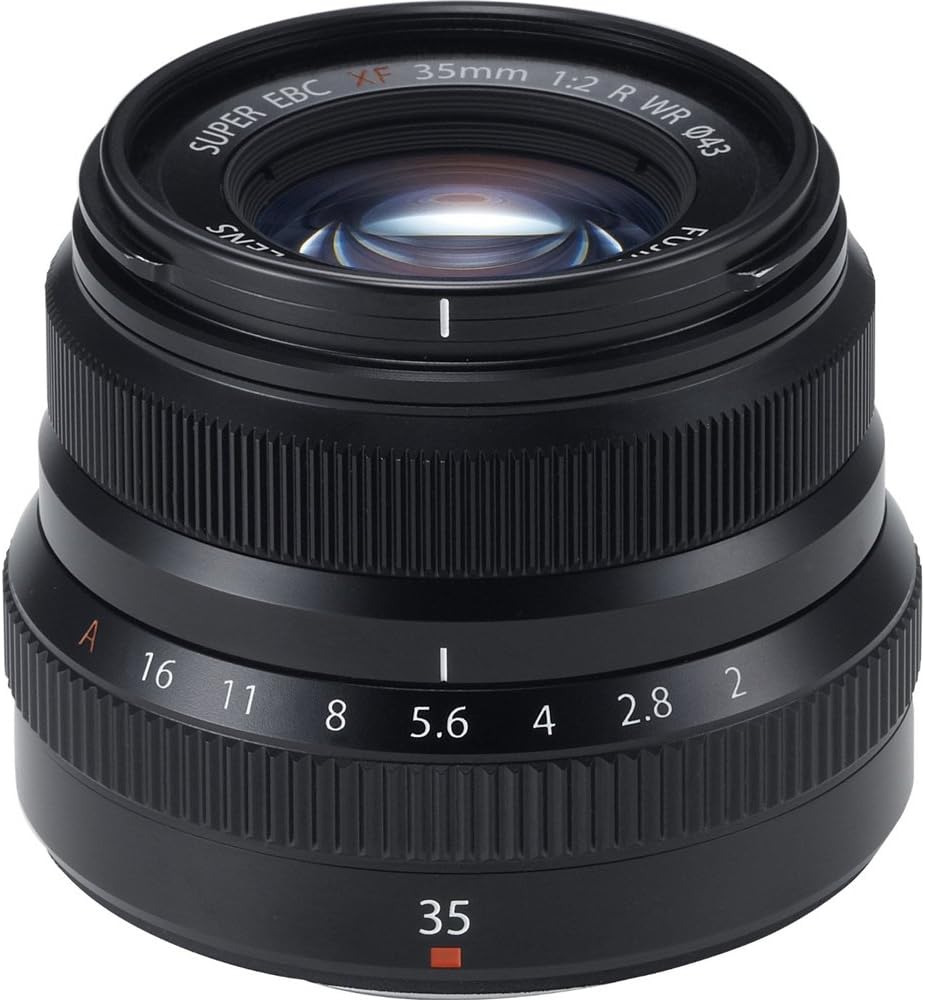
The Fujifilm 35mm f2 lens is a popular choice for street and portrait photography, known for its compact size and fast autofocus. This lens offers a natural perspective, making it versatile for various shooting scenarios.
Tech Specs
| Specification | Details |
|---|---|
| Focal Length | 35mm |
| Maximum Aperture | f/2 |
| Minimum Aperture | f/16 |
| Lens Construction | 9 elements in 6 groups |
| Angle of View | 44.2° |
| Minimum Focus Distance | 0.35m |
| Filter Size | 43mm |
| Dimensions | 60mm x 45.9mm |
| Weight | 170g |
Pros and Cons
Pros:
- Compact and lightweight design
- Fast and accurate autofocus
- Weather-sealed construction
- Excellent image quality
Cons:
- Not as fast as the f/1.4 lens
- Some might prefer a wider aperture for low-light shooting
Best Uses
- Street Photography: The 35mm focal length is perfect for capturing candid moments.
- Portrait Photography: Offers a natural perspective for portraits.
- Travel Photography: Compact size makes it easy to carry around.
- Event Photography: Fast autofocus helps in capturing fleeting moments.
Expert Review
“The Fujifilm XF 35mm f/2 R WR is an incredibly powerful, reliable, and sturdy piece of equipment that every Fujifilm photographer should at least try once. Its fast and silent autofocus, beautiful bokeh, and compact size make it a perfect all-rounder.”
— Adam Bonn, Expert Fujifilm Lens Reviewer, Fstoppers
“The Fujifilm XF 35mm f/2 R WR delivers excellent sharpness and fast, silent autofocus. Its weather-resistant build and compact size make it ideal for street and travel photography. It’s a versatile lens that performs well in various shooting scenarios.”
— Matt Golowczynski, Expert Fujifilm Lens Reviewer, Digital Camera World
Fujifilm 35mm f2 vs. Fujifilm 35mm f1.4
The Fujifilm 35mm f2 is often compared to the Fujifilm 35mm f1.4 R.
The f2 version is more compact and has faster autofocus, while the f1.4 version offers better low-light performance and creamier bokeh.
| Lens | Focal Length | Max Aperture | Weight | Price |
|---|---|---|---|---|
| Fujifilm 35mm f2 | 35mm | f/2 | 170g | $399 |
| Fujifilm 35mm f1.4 R | 35mm | f/1.4 | 187g | $599 |
Fujifilm 35mm vs. Fujifilm XF 18-55mm
Another common toss up is between the Fujifilm 35mm f2 and the Fujifilm XF 18-55mm f2.8-4 R LM OIS.
The 35mm f2 offers a fixed focal length with a fast aperture, while the 18-55mm provides versatility with its zoom range.
| Lens | Focal Length | Max Aperture | Weight | Price |
|---|---|---|---|---|
| Fujifilm 35mm f2 | 35mm | f/2 | 170g | $399 |
| Fujifilm XF 18-55mm f2.8-4 R LM OIS | 18-55mm | f/2.8-4 | 310g | $699 |
3. Fujifilm XF 56mm f1.2 R

The Fujifilm XF 56mm f1.2 R lens is renowned for its exceptional image quality and is a favorite among portrait photographers.
Its wide f/1.2 aperture allows for beautiful background blur and excellent low-light performance, making it an ideal choice for professional portraits.
Tech Specs
| Specification | Details |
|---|---|
| Focal Length | 56mm |
| Maximum Aperture | f/1.2 |
| Minimum Aperture | f/16 |
| Lens Construction | 11 elements in 8 groups |
| Angle of View | 28.5° |
| Minimum Focus Distance | 0.7m |
| Filter Size | 62mm |
| Dimensions | 73.2mm x 69.7mm |
| Weight | 405g |
Pros and Cons
Pros:
- Outstanding image quality with impressive sharpness
- Wide f/1.2 aperture for excellent low-light performance and shallow depth of field
- Beautifully rendered bokeh
- Solid build quality
Cons:
- Larger and heavier compared to some other prime lenses
- Higher price point
Best Uses
- Portrait Photography: Ideal for creating stunning portraits with beautiful background blur.
- Low-Light Photography: Wide aperture allows for shooting in challenging lighting conditions.
- Event Photography: Perfect for capturing detailed shots in various lighting environments.
Expert Review
“The Fujifilm XF 56mm f/1.2 R is an outstanding lens for portrait photographers. Its wide f/1.2 aperture allows for beautiful background blur and excellent low-light performance.
The sharpness and clarity it delivers, even wide open, is truly impressive. This lens is a must-have for any serious portrait photographer using the Fujifilm X-mount system.”
—Richard Butler, Expert Fujifilm Lens Reviewer, DPReview
“The XF 56mm f/1.2 R lens provides stellar image quality, with stunning sharpness and beautifully rendered bokeh. The build quality is solid and the lens is very reliable in various shooting conditions. It is one of the best portrait lenses available for Fujifilm users.”
—William Brawley, Expert Fujifilm Lens Reviewer, Imaging Resource
Fujifilm XF 56mm f1.2 R vs. Sigma 56mm f1.4 DC DN
While there’s no doubt that the Fujifilm XF 56mm f1.2 R is a high-quality and universally loved lens, you can’t ignore the Sigma 56mm f1.4 DC DN.
The Fujifilm lens offers a wider aperture and superior build quality. But the Sigma lens is almost the same quality for HALF of the price.
| Lens | Focal Length | Max Aperture | Weight | Price |
|---|---|---|---|---|
| Fujifilm XF 56mm f1.2 R | 56mm | f/1.2 | 405g | $999 |
| Sigma 56mm f1.4 DC DN | 56mm | f/1.4 | 280g | $479 |
3 Best Zoom Fujifilm Lenses
Fujifilm 50-140mm f2.8

The Fujifilm 50-140mm f2.8 lens is known for its flexibility and exceptional performance across a range of focal lengths, making it ideal for portrait, sports, and wildlife photography.
It’s the Fujifilm lens equivalent of the ever-popular 70-200mm zoom lens, a standard focal range across brands.
Tech Specs
| Specification | Details |
|---|---|
| Focal Length | 50-140mm |
| Maximum Aperture | f/2.8 |
| Minimum Aperture | f/22 |
| Lens Construction | 23 elements in 16 groups |
| Angle of View | 31.7° – 11.6° |
| Minimum Focus Distance | 1.0m |
| Filter Size | 72mm |
| Dimensions | 176mm x 82.9mm |
| Weight | 995g |
Pros and Cons
Pros:
- Wide focal range suitable for various types of photography
- Constant f/2.8 aperture throughout the zoom range
- Optical image stabilization
Cons:
- Relatively heavy and large
- Higher price point
Best Uses
- Portrait Photography: The 140mm focal length creates especially beautiful background blur.
- Sports Photography: Fast aperture and OIS are great for capturing action shots.
- Wildlife Photography: Telephoto range allows for shooting distant subjects.
Expert Review
“The Fujifilm XF 50-140mm f/2.8 R LM OIS WR is up there with the sharpest lenses Fujifilm has on offer. The 56mm f/1.2 and the 90mm f/2 are perhaps the sharpest Fujifilm lenses I have used, and the 50-140mm gives them a run for their money across the entire zoom range. The performance is impressive.”
—Alex Cooke, Expert Fujifilm Lens Reviewer, Fstoppers
“The Fujifilm XF 50-140mm f/2.8 R LM OIS WR lens boasts a five-stop in-built optical image stabilizer. Center sharpness is excellent at all focal lengths, even wide open at f/2.8. This lens is perfect for professional use, providing reliability and exceptional image quality.”
—Chris George, Expert Fujifilm Lens Reviewer, Digital Camera World
Fujifilm 50-140mm vs. Fujifilm XF 55-200mm
The Fujifilm 50-140mm f2.8 is often compared to the Fujifilm XF 55-200mm f3.5-4.8 R LM OIS.
The 50-140mm f2.8 offers a constant aperture and better build quality, while the 55-200mm provides a longer reach and is more affordable.
| Lens | Focal Length | Max Aperture | Weight | Price |
|---|---|---|---|---|
| Fujifilm 50-140mm f2.8 | 50-140mm | f/2.8 | 995g | $1599 |
| Fujifilm XF 55-200mm f3.5-4.8 | 55-200mm | f/3.5-4.8 | 580g | $699 |
Fujifilm 50-140mm vs. Tamron 70-180mm
Another common comparison is between the Fujifilm 50-140mm f2.8 and the Tamron 70-180mm f2.8 Di III VXD.
The 50-140mm f2.8 offers better build quality and weather sealing, while the Tamron lens provides a longer focal length range and is lighter. I’m a huge fan of the Tamron.
Not only is it a great middle man in terms of price point for this kind of focal range, it’s also the best bang for you buck. It’s just a sweet machine, and I really recommend it.
| Lens | Focal Length | Max Aperture | Weight | Price |
|---|---|---|---|---|
| Fujifilm 50-140mm f2.8 | 50-140mm | f/2.8 | 995g | $1599 |
| Tamron 70-180mm f2.8 Di III VXD | 70-180mm | f/2.8 | 810g | $1199 |
2. Fujifilm XF 16-80mm f4 R OIS WR
The Fujifilm XF 16-80mm f4 R OIS WR is a versatile zoom lens that covers a broad range of focal lengths, making it perfect for travel, landscape, and street photography.
Its constant f/4 aperture and optical image stabilization enhance its usability in various conditions.
Tech Specs
| Specification | Details |
|---|---|
| Focal Length | 16-80mm |
| Maximum Aperture | f/4 |
| Minimum Aperture | f/22 |
| Lens Construction | 16 elements in 12 groups |
| Angle of View | 83.2° – 20.1° |
| Minimum Focus Distance | 0.35m |
| Filter Size | 72mm |
| Dimensions | 78.3mm x 88.9mm |
| Weight | 440g |
Pros and Cons
Pros:
- Wide focal range suitable for various photography styles
- Constant f/4 aperture throughout the zoom range
- Optical image stabilization
- Weather-sealed construction
Cons:
- Not as fast as f/2.8 lenses
- Some distortion at wide angles
Best Uses
- Travel Photography: Versatile focal range covers a variety of scenes.
- Landscape Photography: Wide angle is great for expansive landscapes.
- Street Photography: Compact size and stabilization for handheld shooting.
- Portrait Photography: Decent bokeh at longer focal lengths.
Expert Review
“The Fujifilm XF 16-80mm f4 R OIS WR is a versatile lens that combines a broad zoom range with a constant f/4 aperture, making it an excellent choice for travel and general photography. The optical image stabilization is highly effective, ensuring sharp images even in low light.”
—William Brawley, Expert Fujifilm Lens Reviewer, Imaging Resource
“This lens is a fantastic all-rounder, suitable for landscapes, portraits, and everything in between. It delivers sharp images with beautiful color rendition, and its weather-sealed construction adds to its versatility.”
—Matthew Richards, Expert Fujifilm Lens Reviewer, TechRadar
Fujifilm XF 16-80mm vs. Fujifilm XF 18-55mm
The Fujifilm XF 16-80mm f4 R OIS WR is often compared to the Fujifilm XF 18-55mm f2.8-4 R LM OIS. The 16-80mm offers a broader focal range and weather sealing, while the 18-55mm has a slightly faster aperture at the wide end.
| Lens | Focal Length | Max Aperture | Weight | Price |
|---|---|---|---|---|
| Fujifilm XF 16-80mm f4 R OIS WR | 16-80mm | f/4 | 440g | $799 |
| Fujifilm XF 18-55mm f2.8-4 R LM OIS | 18-55mm | f/2.8-4 | 310g | $699 |
Fujifilm XF 16-80mm vs. Tamron 17-70mm
Another common comparison is between the Fujifilm XF 16-80mm f4 R OIS WR and the Tamron 17-70mm f2.8 Di III-A VC RXD.
The Tamron lens offers a faster constant aperture of f/2.8, while the Fujifilm lens provides a wider focal range and weather sealing.
| Lens | Focal Length | Max Aperture | Weight | Price |
|---|---|---|---|---|
| Fujifilm XF 16-80mm f4 R OIS WR | 16-80mm | f/4 | 440g | $799 |
| Tamron 17-70mm f2.8 Di III-A VC RXD | 17-70mm | f/2.8 | 525g | $799 |
3. Fujifilm XF 10-24mm f4 R OIS WR
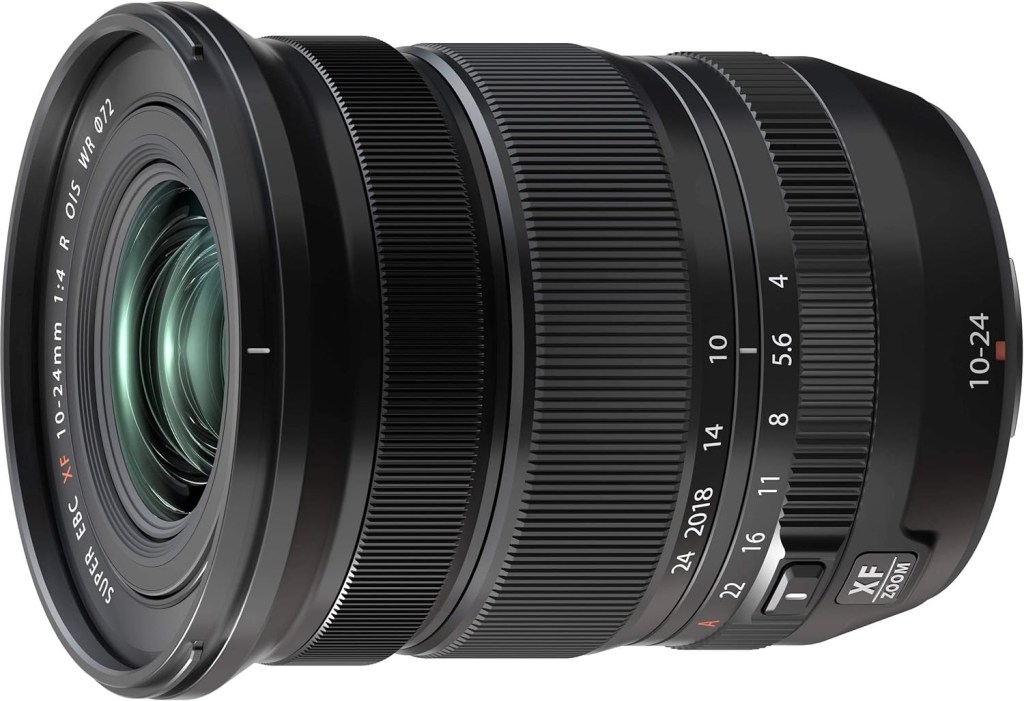
The Fujifilm XF 10-24mm f4 R OIS WR is a superb wide-angle zoom lens ideal for landscape, architecture, and interior photography. It offers a constant f/4 aperture and optical image stabilization for enhanced usability.
Tech Specs
| Specification | Details |
|---|---|
| Focal Length | 10-24mm |
| Maximum Aperture | f/4 |
| Minimum Aperture | f/22 |
| Lens Construction | 14 elements in 10 groups |
| Angle of View | 110° – 61.2° |
| Minimum Focus Distance | 0.24m |
| Filter Size | 72mm |
| Dimensions | 78mm x 87mm |
| Weight | 410g |
Pros and Cons
Pros:
- Ultra-wide focal range
- Constant f/4 aperture
- Optical image stabilization
- Weather-sealed construction
Cons:
- Not as fast as f/2.8 lenses
- Some vignetting at the widest angles
Best Uses
- Landscape Photography: The ultra-wide angle captures vast landscapes.
- Architecture Photography: Perfect for capturing the entirety of buildings and interiors.
- Interior Photography: Wide-angle is great for confined spaces.
- Travel Photography: Versatile focal length for various scenes.
Expert Review
“The Fujifilm XF 10-24mm f/4 R OIS WR is a versatile ultra-wide zoom lens, boasting excellent build quality and weather resistance. The updated aperture ring with a lock mechanism ensures precise control, while the improved optical image stabilization offers up to 3.5 stops of compensation. This lens is an excellent choice for landscape and architecture photographers.”
—Mark Goldstein, Expert Fujifilm Lens Reviewer, Photography Blog
“The XF 10-24mm F4 R OIS WR lens provides impressive sharpness, particularly at the wider end of the focal range. It handles well, with a smooth zoom ring and accurate autofocus performance. Although corner sharpness at 24mm could be better, the overall image quality and versatility make it a great addition to any photographer’s kit.”
—Rod Lawton, Expert Fujifilm Lens Reviewer, Digital Camera World
Fujifilm XF 10-24mm vs. Fujifilm XF 8-16mm
The Fujifilm XF 10-24mm f4 R OIS WR is often compared to the Fujifilm XF 8-16mm f2.8 R LM WR. The 8-16mm offers a faster aperture and even wider focal length, but is larger, heavier, and more expensive.
| Lens | Focal Length | Max Aperture | Weight | Price |
|---|---|---|---|---|
| Fujifilm XF 10-24mm f4 R OIS WR | 10-24mm | f/4 | 410g | $999 |
| Fujifilm XF 8-16mm f2.8 R LM WR | 8-16mm | f/2.8 | 805g | $1599 |
3 Best Third-Party X-Mount Lenses
1. Sigma 56mm f1.4 DC DN
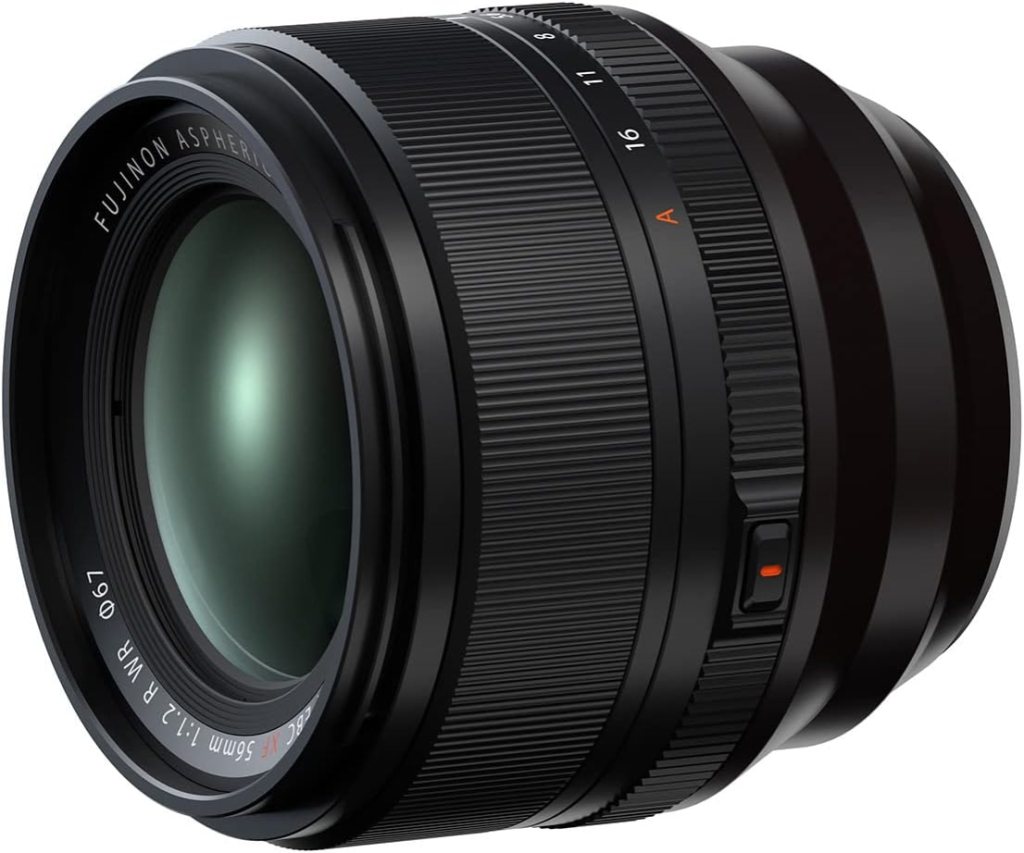
The Sigma 56mm f1.4 DC DN is a high-quality, affordable portrait lens that provides excellent image quality and a fast f/1.4 aperture, making it perfect for low-light conditions and creating beautiful bokeh.
Tech Specs
| Specification | Details |
|---|---|
| Focal Length | 56mm |
| Maximum Aperture | f/1.4 |
| Minimum Aperture | f/16 |
| Lens Construction | 10 elements in 6 groups |
| Angle of View | 28.5° |
| Minimum Focus Distance | 0.5m |
| Filter Size | 55mm |
| Dimensions | 66.5mm x 59.5mm |
| Weight | 280g |
Pros and Cons
Pros:
- Excellent image quality
- Fast f/1.4 aperture for low-light and bokeh
- Compact and lightweight design
- Affordable price
Cons:
- No weather sealing
- Limited macro capabilities
Best Uses
- Portrait Photography: Ideal focal length and aperture for stunning portraits.
- Street Photography: Compact size and fast aperture for diverse lighting conditions.
- Low-Light Photography: Great performance in dimly lit environments.
- Event Photography: Fast focus and aperture for capturing key moments.
Expert Review
“The Sigma 56mm F1.4 DC DN C lens is incredibly sharp, compact, and lightweight, making it a perfect companion for portrait photography. It delivers excellent image quality with minimal chromatic aberrations and beautiful bokeh. The build quality is superb, featuring a durable metal mounting plate and a well-designed focus ring.”
—Matthew Richards, Expert Fujifilm Lens Reviewer, Digital Camera World
“The Sigma 56mm f/1.4 DC DN is a stellar performer, offering superb sharpness even at its widest aperture. The lens is well-suited for portrait work, delivering smooth and pleasing bokeh. Despite some minor pincushion distortion, the overall optical performance makes it an excellent choice for APS-C shooters.”
—Richard Sibley, Expert Fujifilm Lens Reviewer, Amateur Photographer
Sigma 56mm f1.4 DC DN vs. Fujifilm XF 56mm f1.2
The Sigma 56mm f1.4 DC DN is often compared to the Fujifilm XF 56mm f1.2 R.
The Fujifilm lens offers a faster aperture and superior bokeh, while the Sigma lens is more compact, lighter, and significantly more affordable.
| Lens | Focal Length | Max Aperture | Weight | Price |
|---|---|---|---|---|
| Sigma 56mm f1.4 DC DN | 56mm | f/1.4 | 280g | $479 |
| Fujifilm XF 56mm f1.2 R | 56mm | f/1.2 | 405g | $999 |
Sigma 56mm f1.4 vs. Viltrox 56mm f1.4
Another common comparison is between the Sigma 56mm f1.4 DC DN and the Viltrox 56mm f1.4.
Both lenses offer similar specifications and performance, but the Sigma lens is often preferred for its build quality and autofocus performance. Don’t hate on the Viltrox, but go for the Sigma.
| Lens | Focal Length | Max Aperture | Weight | Price |
|---|---|---|---|---|
| Sigma 56mm f1.4 DC DN | 56mm | f/1.4 | 280g | $479 |
| Viltrox 56mm f1.4 | 56mm | f/1.4 | 290g | $329 |
2. Viltrox 75mm f1.2
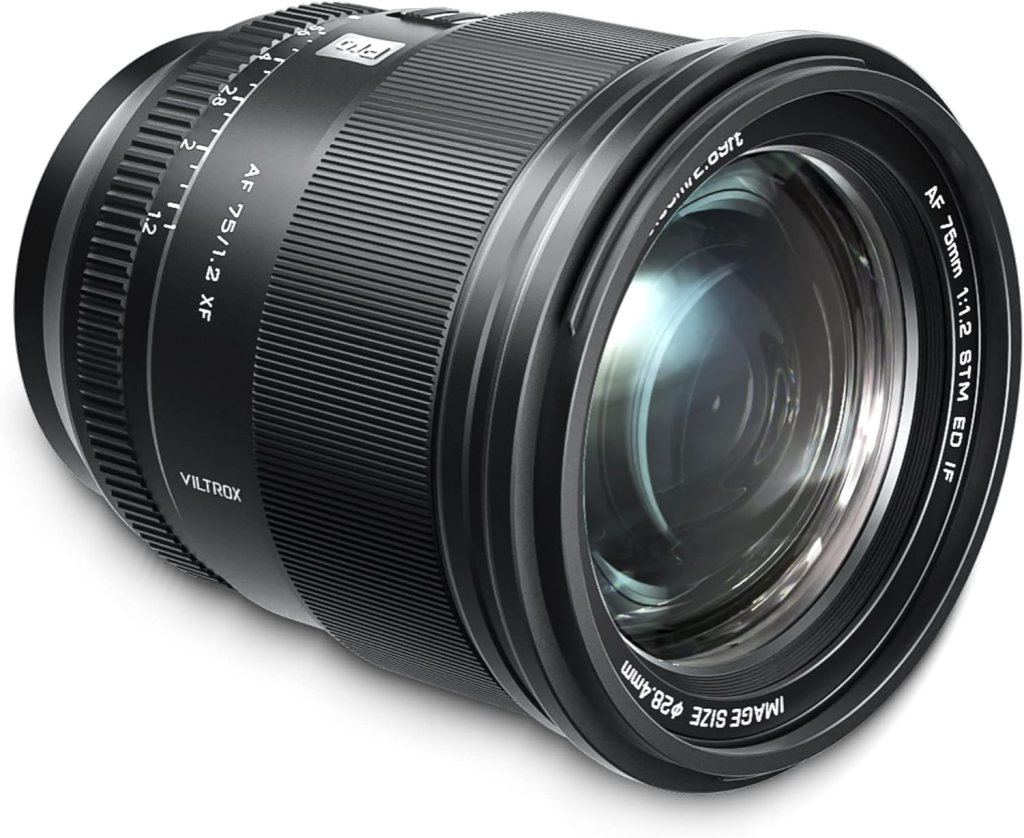
The Viltrox 75mm f1.2 is a high-quality prime lens known for its exceptional sharpness and beautiful bokeh, making it a favorite among portrait photographers. It’s one of the absolute best bangs for your buck on this article.
It’s not as sleek looking as other lenses, but it’s exceptional value and a bit of an unsung hero.
Tech Specs
| Specification | Details |
|---|---|
| Focal Length | 75mm |
| Maximum Aperture | f/1.2 |
| Minimum Aperture | f/16 |
| Lens Construction | 10 elements in 7 groups |
| Angle of View | 32° |
| Minimum Focus Distance | 0.8m |
| Filter Size | 77mm |
| Dimensions | 80mm x 98mm |
| Weight | 670g |
Pros and Cons
Pros:
- Extremely fast f/1.2 aperture
- Outstanding image quality and sharpness
- Beautiful bokeh for portrait photography
- Solid build quality
Cons:
- No weather sealing
- Larger and heavier than other primes
Best Uses
- Portrait Photography: The 75mm focal length and f/1.2 aperture are perfect for portraits.
- Low-Light Photography: Fast aperture for excellent low-light performance.
- Event Photography: Ideal for capturing detailed shots in various lighting conditions.
Expert Review
“Finally, I took the X-T5 and Viltrox 75mm with me on a family outing and took a bunch of portraits of my kids. The 112.5mm full frame focal length equivalent begs you to take portraits, and as this is a true portrait lens through and through, here, it really shines.
As before, the sharpness and overall detail impressed me. But what I loved the most were the beautiful colors, pleasing skin tones, and excellent contrast. Portrait photographers will absolutely love the bokeh, and as someone who enjoys shooting wide open, this lens hits the spot.
Regarding image quality, this is one of the best lenses I’ve tested and certainly rivals the quality I get with my Fujifilm lenses.”
—Pete Coco, Expert Fujifilm Lens Reviewer, Fstoppers
“Designated a PRO series lens by Viltrox, the 75mm F1.2 does meet and, in many ways, exceeds expectations for a USD549 lens.
One will have to try hard to find fault with the Viltrox 75mm F1.2, a lens that no longer seeks to play second fiddle to Fujifilm’s native lenses but etching out a league of its own. The build is impeccable; the Viltrox 75mm F1.2 is entirely metal in build.
The aperture ring clicks soundly, and while I did find my copy moving between F1.2 and F1.25 too easily, the body of the lens was well-built, with a generous amount of grip space on the focusing ring.”
—Keith Wee, Expert Fujifilm Lens Reviewer, KeithWee.com
Viltrox 75mm f1.2 vs. Fujifilm XF 90mm f2
The Viltrox 75mm f1.2 is often compared to the Fujifilm XF 90mm f2 R LM WR.
The Fujifilm lens is weather-sealed and has a longer focal length, while the Viltrox lens offers a faster aperture and is more affordable. Both are perfectly respectable for their price points.
| Lens | Focal Length | Max Aperture | Weight | Price |
|---|---|---|---|---|
| Viltrox 75mm f1.2 | 75mm | f/1.2 | 670g | $549 |
| Fujifilm XF 90mm f2 R LM WR | 90mm | f/2 | 540g | $949 |
Viltrox 75mm f1.2 vs. Sigma 85mm f1.4
Another common comparison is between the Viltrox 75mm f1.2 and the Sigma 85mm f1.4 DG DN.
The Sigma lens offers exceptional image quality and is known for its sharpness and bokeh, while the Viltrox lens provides a slightly faster aperture and is more compact.
| Lens | Focal Length | Max Aperture | Weight | Price |
|---|---|---|---|---|
| Viltrox 75mm f1.2 | 75mm | f/1.2 | 670g | $549 |
| Sigma 85mm f1.4 DG DN | 85mm | f/1.4 | 630g | $1199 |
3. Tamron 18-300mm f3.5-6.3 Di III-A VC VXD
The Tamron 18-300mm f3.5-6.3 Di III-A VC VXD is a versatile superzoom lens that covers a wide range of focal lengths, making it perfect for travel and everyday photography.
Tech Specs
| Specification | Details |
|---|---|
| Focal Length | 18-300mm |
| Maximum Aperture | f/3.5-6.3 |
| Minimum Aperture | f/22-40 |
| Lens Construction | 19 elements in 15 groups |
| Angle of View | 77° – 5.4° |
| Minimum Focus Distance | 0.15m (wide) / 0.99m (tele) |
| Filter Size | 67mm |
| Dimensions | 75.5mm x 125.8mm |
| Weight | 620g |
Pros and Cons
Pros:
- Extremely versatile focal range
- Compact and lightweight design for a superzoom
- Vibration Compensation (VC) for image stabilization
- Fast and accurate autofocus
Cons:
- Variable aperture
- Some distortion at wide and telephoto ends
Best Uses
- Travel Photography: Wide focal range covers everything from wide landscapes to distant details.
- Street Photography: Versatile zoom for capturing various scenes.
- Wildlife Photography: Long reach is great for distant subjects.
- Event Photography: Flexibility to capture different perspectives.
Expert Review
“The Tamron 18-300mm f/3.5-6.3 Di III-A VC VXD is a versatile superzoom lens that covers a wide range of focal lengths, making it ideal for travel and walkabout photography.
The VXD autofocus system is impressively fast, and the image quality is very good across most of the zoom range, especially in the center of the frame.”
—Matthew Richards, Expert Fujifilm Lens Reviewer, Digital Camera World
“Tamron’s 18-300mm f/3.5-6.3 Di III-A VC VXD offers an incredible zoom range and reliable performance. The VXD motor provides fast and accurate autofocus, and the lens is surprisingly lightweight given its capabilities.
It’s an excellent all-in-one solution for photographers who prefer not to swap lenses frequently.”
—Alex Cooke, Expert Fujifilm Lens Reviewer, Fstoppers
Tamron 18-300mm f3.5-6.3 vs. Fujifilm XF 18-135mm f3.5-5.6
The Tamron 18-300mm f3.5-6.3 Di III-A VC VXD is often compared to the Fujifilm XF 18-135mm f3.5-5.6 R LM OIS WR.
The Tamron lens offers a broader focal range, while the Fujifilm lens is weather-sealed and has a slightly faster aperture at the telephoto end. The Tamron is better value for money.
| Lens | Focal Length | Max Aperture | Weight | Price |
|---|---|---|---|---|
| Tamron 18-300mm f3.5-6.3 Di III-A VC VXD | 18-300mm | f/3.5-6.3 | 620g | $699 |
| Fujifilm XF 18-135mm f3.5-5.6 R LM OIS WR | 18-135mm | f/3.5-5.6 | 490g | $899 |
Fujinon Lens FAQs
What is the best Fujifilm lens for portrait photography?
The best Fujifilm lenses for portrait photography include the Fujifilm 35mm f2, the Fujifilm 56mm f1.2, and the Viltrox 75mm f1.2. These lenses offer fast apertures and excellent bokeh, which are essential for creating stunning portraits.
Can I use third-party lenses on my Fujifilm camera?
Yes, you can use third-party X-mount lenses on your Fujifilm camera. Brands like Sigma, Tamron, and Viltrox offer high-quality lenses that are compatible with Fujifilm’s X-mount system. These third-party lenses can provide excellent performance and value.
What is the best Fujifilm lens for travel photography?
The best Fujifilm lenses for travel photography include the Fujifilm XF 16-80mm f4 R OIS WR and the Fujifilm 18-55mm f2.8-4. These lenses offer a versatile focal range and compact size, making them ideal for capturing a variety of scenes while traveling.
Are Fujifilm prime lenses better than zoom lenses?
Fujifilm prime lenses and zoom lenses each have their own advantages.
Prime lenses typically offer superior image quality, faster apertures, and lighter weight, making them great for low-light situations and achieving a shallow depth of field.
Zoom lenses provide versatility by covering a range of focal lengths, which is useful for various shooting scenarios without changing lenses.
What is the difference between Fujifilm XF and XC lenses?
Fujifilm XF lenses are part of the high-end X-mount lens lineup, offering superior build quality, faster apertures, and advanced optical performance. XC lenses are more affordable and lightweight, designed for entry-level users or those looking for a budget-friendly option.
Do Fujifilm lenses have image stabilization?
Many Fujifilm lenses feature optical image stabilization (OIS), such as the Fujifilm XF 18-55mm f2.8-4 and the Fujifilm XF 50-140mm f2.8. OIS helps reduce camera shake, allowing for sharper images, especially in low-light conditions or when using longer focal lengths.
What are the best third-party lenses for Fujifilm X-mount?
Some of the best third-party lenses for Fujifilm X-mount include the Sigma 56mm f1.4 DC DN, the Viltrox 75mm f1.2, and the Tamron 18-300mm f3.5-6.3 Di III-A VC VXD. These lenses offer excellent performance and value, expanding the options available for Fujifilm users.
How do I maintain and clean my Fujifilm lenses?
To maintain and clean your Fujifilm lenses, use a blower to remove dust, a soft brush for delicate cleaning, and a microfiber cloth with lens cleaning solution for smudges. Avoid touching the lens elements with your fingers and store your lenses in a dry, dust-free environment when not in use.
Can I use Fujifilm lenses on other camera brands?
Fujifilm X-mount lenses are designed specifically for Fujifilm APS-C mirrorless cameras. To use these lenses on other camera brands, you would need a compatible lens adapter, but performance and functionality may vary.
What is the best wide-angle lens for Fujifilm cameras?
The best wide-angle lenses for Fujifilm cameras include the Fujifilm XF 16mm f1.4 and the Fujifilm XF 10-24mm f4 R OIS WR. These lenses provide excellent image quality, wide fields of view, and are perfect for landscapes, architecture, and interior photography.
What is the best Fujifilm lens for street photography?
The best Fujifilm lenses for street photography are the Fujifilm 23mm f2 and the Fujifilm 35mm f2. These lenses are compact, have fast autofocus, and offer versatile focal lengths for capturing candid moments.
Recommended Accessories
Highly Recommended Accessories for Fujifilm Lenses:
- Fujifilm PRF-62 Protection Filter: Protect your lens from dust, scratches, and moisture without affecting image quality.
- Peak Design Slide Lite Camera Strap: Comfortable and versatile camera strap suitable for carrying your camera with attached lenses.
- Think Tank Photo Lens Case Duo 10: Provides excellent protection for your lenses during travel or storage, with a dual opening design for quick access.
- Giottos Rocket Air Blaster: Essential for removing dust and debris from your lens and camera sensor.
- Lenspen Lens Cleaning System: Convenient and effective tool for cleaning lens surfaces and removing fingerprints and smudges.
Conclusion
Choosing the best Fujifilm lens depends on your specific photography needs. Whether you are looking for prime lenses with exceptional image quality, versatile zoom lenses, or high-quality third-party options, Fujifilm has something to offer. We hope this guide helps you in making an informed decision to elevate your photography experience.




Leave a Reply