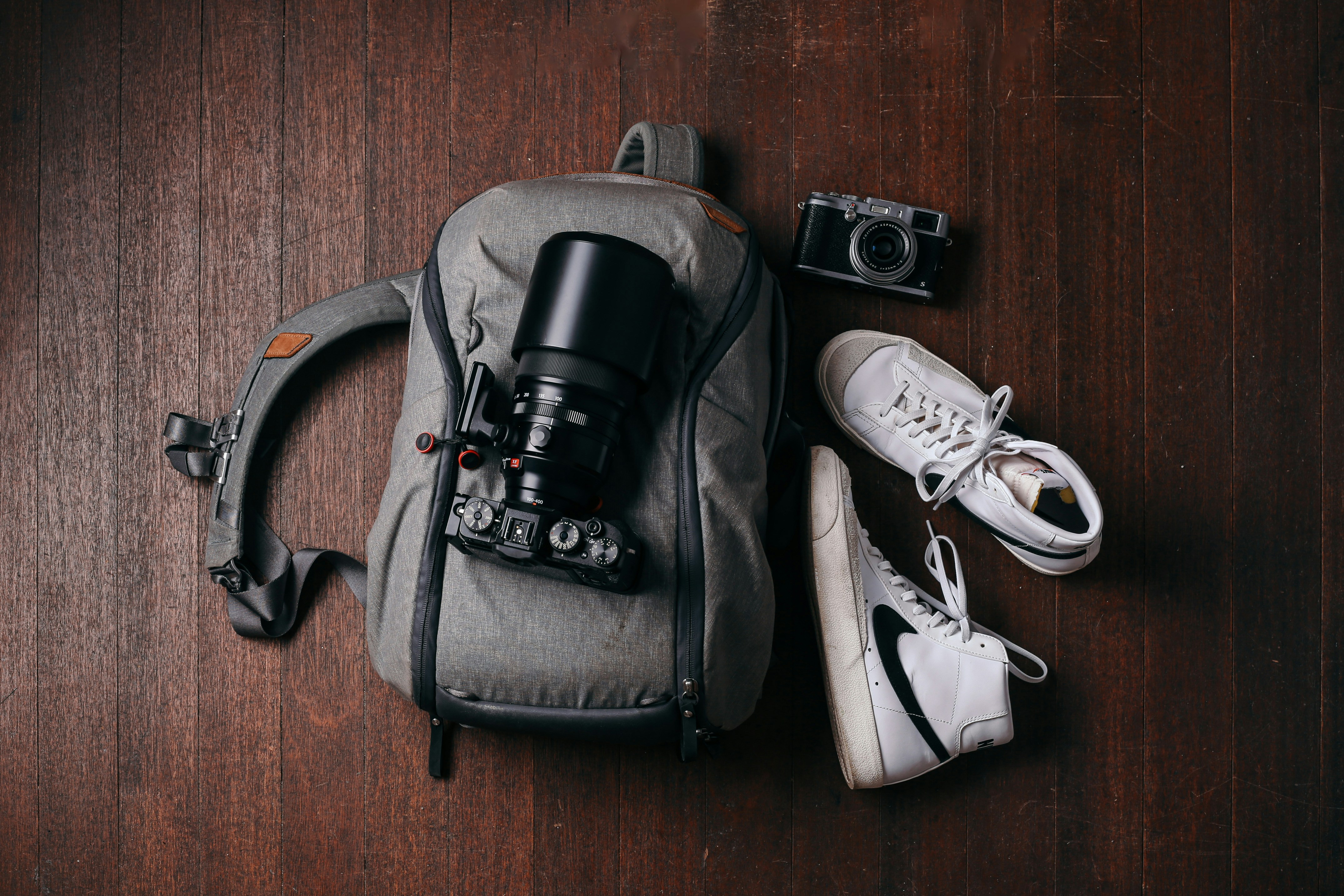
You want a bag that disappears on your back, opens the way you shoot, and doesn’t melt in a sideways rain. I’ve hauled gear through airports, trailheads, and one regrettable boat ride—these packs keep showing up ready for more.
Also Read:
- 6 Best Camera Bags (Sling, Crossbody, Hiking)
- 10 Best Camera Sling Bags (Tested & Reviewed)
- 6 Best Camera Bags for Travel: Real-World Picks I’ve Tested
Quick picks
- Peak Design Everyday Backpack v2 (20L/30L) — clean urban carry with fast top + dual side access and weatherproof zips.
- Lowepro ProTactic BP 450 AW II — tough-as-nails all-rounder with modular interior and built-in rain cover.
- Think Tank BackLight 26L — hiking-friendly; rear-panel access so you can swap lenses without taking the pack off.
- Shimoda Explore V2 35 — travel/adventure comfort, adjustable torso, carry-on friendly, uses modular Core Units.
- WANDRD PRVKE 31 (V3) — stylish travel hybrid with clamshell + quick side access and weather resistance.
Camera Backpack Comparison Table
| Pack | Size | Access | Best for |
|---|---|---|---|
| Peak Design Everyday v2 | 20L / 30L | Top + side | City/commute, fast swaps |
| Lowepro ProTactic 450 AW II | ~25L | Front + side + top | One-bag workhorse, durability |
| Think Tank BackLight 26L | 26L | Rear panel | Day hikes, dusty trails |
| Shimoda Explore V2 35 | 35L | Top + front + side | Travel/adventure, carry-on |
| WANDRD PRVKE 31 V3 | 31L | Clamshell + side | Urban travel, quick access |
Rule of thumb: match access to how you shoot. Side zips are fastest on city streets; rear access wins on trails where you don’t want mud on your straps.
Things to Consider
- Fit first: get weight on your hips (real hip belt), adjust torso if possible, and snug the load-lifters so the top pulls in—if it pinches empty, it’ll be misery loaded.
- Access style: side zips are fastest on sidewalks; rear-panel keeps straps clean on trails; top access is for jackets, snacks, and quick grabs.
- Capacity, decoded: 20L = one body + 2–3 lenses; 30–35L = two bodies + 3–5 lenses or a 70–200/drone; if you’re debating, size up.
- Dividers vs cubes: fixed dividers are “set and forget”; modular camera cubes let you yank the whole kit and use the bag as a normal backpack—gold for travel.
- Weather protection: water-resistant fabric/zips handle drizzle; for real rain you want a seam-taped cover; refresh DWR yearly if you shoot in bad weather.
- Comfort under load: look for a frame sheet, cushy straps, and a hip belt that actually bears weight; ventilated back panels help on hot days.
- Laptop/tablet bay: suspended sleeve saves drops; make sure the laptop pocket doesn’t eat half your camera space when packed.
- Tripod and bottle carry: deep side pockets beat bungees; check a tripod won’t jab your ribs or tip the bag when you set it down.
- Travel sanity: carry-on dimensions, a quick-pull laptop pocket for security, a luggage pass-through for sprints, and zipper pulls that lock if you’re train-nervous.
- Little things that add up: top stash pocket, key leash, bright liner (so bits don’t vanish), glove-friendly pulls, and a warranty that isn’t marketing fluff.
1. Peak Design Everyday Backpack v2 (20L/30L)
Best for City/commute and Fast swaps

Why it works: Clean silhouette, weatherproof zips, and those folding FlexFold dividers that actually hold lenses where you put them.
Dual side doors mean you can swing the bag off one shoulder and grab a body in three seconds. The MagLatch top lets you over-stuff a hoodie without fighting a zipper.
What fits:
- 20L: one full-frame body, 2–3 lenses (yes, a 70–200 f/2.8 laid sideways), plus a jacket and a mic kit.
- 30L: two bodies, 3–4 lenses, or a drone kit on one side and camera on the other. 16″ laptop sleeve is suspended so it doesn’t thump the floor.
Best for: City shooters and travelers who want fast side access and a bag that looks like a bag, not a spaceship.
Watch-outs: The back panel is firm; great for structure, less “pillowy” than hiking packs. Side access wins in crowds, but trails can dust your straps when you set it down—pack a small cloth.
Quick tip: set one divider as a shallow “shelf” near a side door for your most grabbed lens—no rummaging.
2. Lowepro ProTactic BP 450 AW II
Best One-bag Workhorse

Why it works: It’s the cockroach of camera bags—in the best way.
Stiff walls protect gear, the interior grid eats odd-shaped kits, and the exterior MOLLE lets you clip on pouches, tripods, or a water bottle exactly where you want them.
The All Weather cover is clutch when the sky flips.
What fits:
- Two bodies plus 3–5 lenses, or one body, 70–200, 24–70, 16–35, flash, and a compact drone. 15″ laptop slot, top hatch for quick grabs, and twin side doors for street swaps.
Best for: People who want one pack to do everything—events, weddings, small productions—without babying it.
Watch-outs: It’s not the lightest, and the armored exterior can feel boxy on smaller frames. Airflow is decent, not “hiking-pack” breezy—on hot days, pace yourself.
Quick tip: move the waist belt a hair higher than you think; this bag rides better when the belt actually takes weight off your shoulders.
3. Think Tank BackLight 26L
Best for Day Hikes and Day Trips

Why it works: Rear-panel access is the whole trick. You swing the bag around on the waist belt, open the back, and swap lenses without laying the harness in the mud.
The suspension is genuinely hike-friendly—good padding, balanced frame sheet—so it carries like a daypack, not a gadget box.
What fits:
- One DSLR/mirrorless with 70–200 attached, plus 2–3 more lenses, flash, filters, and a jacket. 10″ tablet slot and a separate 15″ laptop sleeve. Tripod rides centered so the bag doesn’t yaw side-to-side.
Best for: Trail days, dusty festivals, anywhere you might set your bag down on something you’d rather not wear.
Watch-outs: Rear access is slower on city streets; side zips are still king for fast grabs. The tripod mount is excellent, but don’t overload it with a giant video tripod unless you enjoy shoulder day.
Quick tip: set your most-used lens vertical, right behind the rear panel zipper. When you swing the bag forward, it’s the first thing your hand finds.
4. Shimoda Explore V2 35
Best for Travel/adventure and Carry-on

Why it works: It’s heavy duty but sexy. Feels like a mountain pack that happens to carry cameras.
The adjustable torso actually changes how it rides (short/regular/tall), the shoulder straps don’t cut into your neck, and the weatherproofing is more than marketing—this thing shrugs off real weather.
Core Units (camera cubes) make it easy to reconfigure for a pure photo day, a mixed travel day, or “stuff a puffy jacket and go.”
What fits:
- With a Medium DSLR Core Unit: one pro body or two smaller bodies, 3–5 lenses (fits a 70–200 upright), drone kit, layers, snacks. 16″ laptop and tablet slots, top “bucket” for non-camera gear.
Best for: Travel and adventure shooters who want carry-on compliance but real comfort when the sidewalk turns into a trail.
Watch-outs: Fully loaded, the 35L wants a hip belt—use it. Core Units add cost, so budget for the configuration you actually need rather than grabbing three “just in case.”
Quick tip: pack heavy glass close to your spine and low. You’ll feel the difference by mile two.
5. WANDRD PRVKE 31 (V3)
Best for Urban travel and Quick access

Why it works: A travel backpack that doesn’t scream “camera.”
Clamshell main access for packing, quick side door for street shooting, roll-top for overflow, and pockets placed by people who actually travel (passport, AirTag, boarding pass all have homes).
Materials are burly and weather-resistant without feeling rubbery.
What fits:
- With the Essential+ camera cube: one body, 3–4 lenses (70–200 horizontal), charger, and room up top for headphones and a light jacket. 16″ laptop sleeve, front organization panel for cables and cards.
Best for: City hopping, carry-on living, and creators who want one bag that looks good in photos and behaves on the road.
Watch-outs: The shoulder straps are comfy for daily loads, but if you routinely carry a brick of glass and a laptop, consider the waist strap upgrade. The side access is right-hand biased; lefties adjust your muscle memory.
Quick tip: stash a microfiber in the magnetic quick-access pocket—perfect for wiping lenses and phone screens at security.
Accessories that actually help
- Camera cube or extra dividers: turn one bag into three loadouts without repacking every time.
- Rain cover (seam-taped): even “weatherproof” bags need help in a sideways storm.
- Tech pouch: chargers, cards, cables in one grab—no cable salad at the gate.
- Lens wraps / pouches: protect odd-shaped items (mic, hard drive) that don’t love hard dividers.
- Tripod foot strap / keeper: stops a tripod from creeping out of a pocket mid-walk.
- Water bottle sleeve: sounds basic, saves you from jamming a bottle into a lens bay.
- AirTag/Tile in a hidden pocket: not paranoia—airports eat bags.
- Silica gel packets: toss a couple in the camera bay; swap them every few months if you shoot in rain or humidity.
- Cable lock: loop through zipper pulls on trains or in hostels; it’s about deterring “quick hands,” not Fort Knox.
- Shoulder strap keepers: tiny elastic loops that wrangle loose webbing so nothing flaps in your footage.
Quick tip: build a “grab kit” (batteries, cards, microfiber, blower) that never leaves the bag. When you switch bodies or lenses, the essentials are already there.
Best Camera Backpack FAQ
What size should I buy—20L, 26L, or 30–35L?
If you carry one body and 2–3 lenses, 20–22L is sweet. Two bodies, a 70–200, and a drone? You’re in 26–35L territory. If you’re between sizes, size up—space you don’t fill can hold a jacket.
Will these fit as airline carry-on?
Yes, in standard form. 30–35L packs are usually fine if you don’t over-stuff the exterior. For regional jets, compress the roll-top and stash the tripod.
Rear access vs side access—what’s better?
Side access is fastest in the city; rear access keeps straps clean on dirt and snow. Pick based on where you shoot most.
Do I really need a hip belt?
For city days under 15 lb, not really. For travel or hikes, absolutely—it moves the load to your hips and keeps shoulders from cooking.
How “waterproof” are these, really?
They’re water-resistant. Zips and fabrics shed showers, but seams and openings can wet out in a downpour. Use the rain cover when the sky turns mean.
Can I use one bag for cameras and daily carry?
Yes—packs with modular cubes (Shimoda, WANDRD, Peak) shine here. Pull the cube and it’s just a backpack.
Tripod carry: side or center?
Center keeps the pack balanced for hikes. Side carry is faster in the city—use a deep pocket and a strap so it doesn’t walk out.
Will a 16″ laptop fit?
Peak Design 30L, Shimoda Explore V2 35, and WANDRD PRVKE 31 take a 16″ comfortably. In smaller bags, check the sleeve height; some 16″ chassis are tall.
How do I stop zippers from popping open?
Route pulls to the same corner and hook them together (or use tiny locks) on trains and busy streets. Dirt in the teeth causes surprise openings—keep zips clean.
Can I fly with camera cubes in a non-camera backpack?
Yes. Most cubes slide into regular daypacks; just mind padding on the bottom and sides, and avoid loose metal bits near the laptop.
Quick tip: if your shoulders still ache after ten minutes, raise the pack higher on your back—then tighten the hip belt until your voice drops half a note. That’s the weight moving to your hips.
Final Picks
- City/commute, fast swaps: Peak Design Everyday v2 (20L if you travel light, 30L if you juggle a laptop and big glass).
- One-bag workhorse: Lowepro ProTactic 450 AW II—event proof, modular, built to be knocked around.
- Trails and travel days: Think Tank BackLight 26L for day hikes; Shimoda Explore V2 35 if you want proper suspension and torso adjust.
- Stylish travel hybrid: WANDRD PRVKE 31 V3—clean look, real weather resistance, easy side access.
This post contains affiliate links. If you purchase through these links, I may earn a small commission at no extra cost to you. As an Amazon Associate, I earn from qualifying purchases and stand behind all of my recommendations.




Leave a Reply