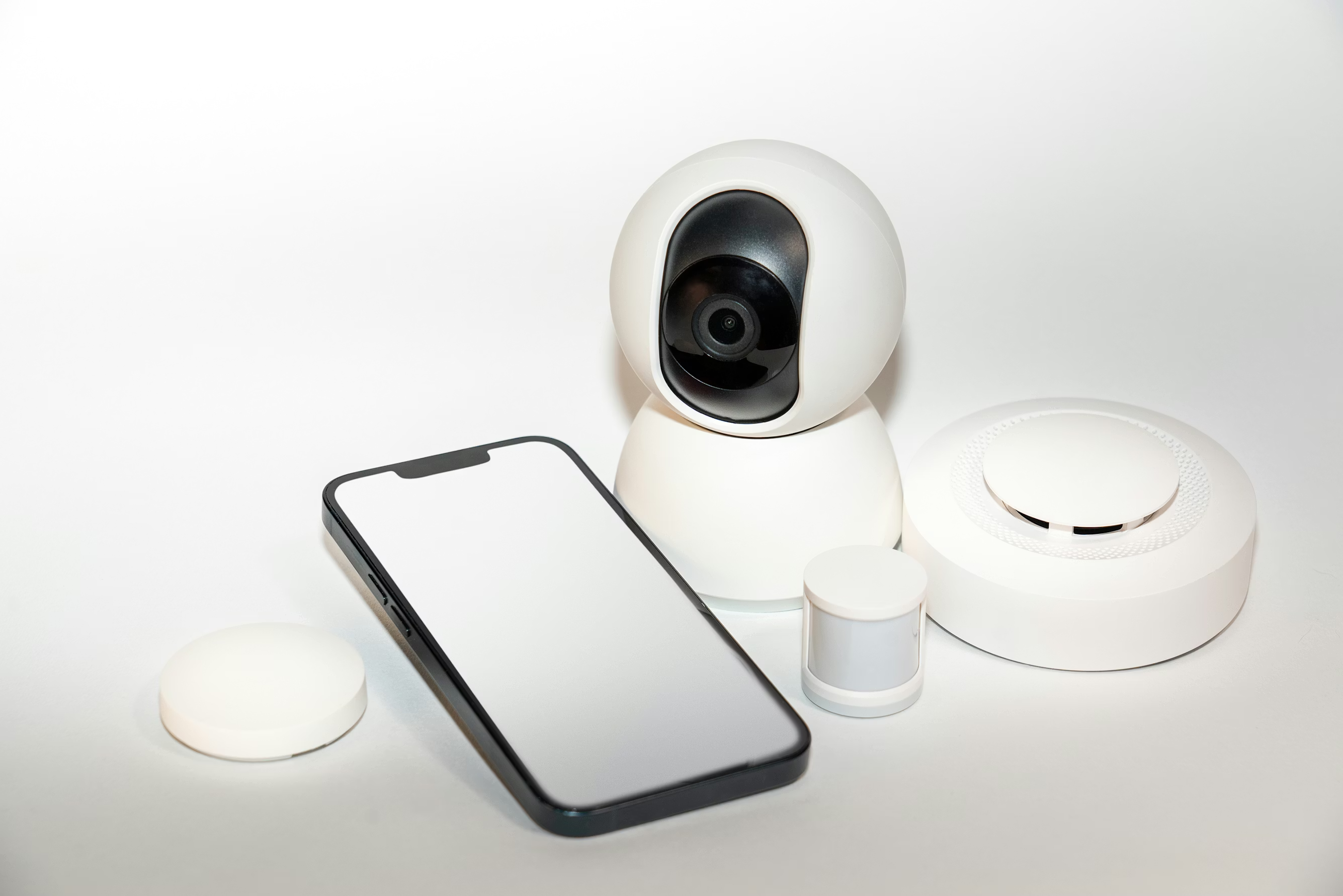
Security cameras normally rely on WiFi, but that doesn’t work everywhere. Cabins, farms, construction sites, boats, and remote properties often have no internet connection at all. That’s where a cellular security camera becomes essential.
The best cellular security camera connects using 4G LTE mobile networks instead of WiFi, allowing you to monitor locations from virtually anywhere. Many modern models also include solar panels, motion alerts, night vision, and cloud storage, making them ideal for off-grid surveillance.
These cameras are especially popular for:
- Remote cabins and vacation homes
- Farms and ranches
- Construction sites
- RVs and boats
- Wildlife monitoring
- Vacant properties
In this guide, we tested and researched the best cellular security cameras available today. The picks below balance reliability, video quality, battery life, and ease of setup.
Related Articles
- 9 Best Cameras for Landscape Photography (By Budget & Brand)
- 15 Best Cameras Under $500 (Every Niche)
- 6 Best Camera Bags for Travel: Real-World Picks I’ve Tested
Quick Comparison: Best Cellular Security Cameras
| Camera | Resolution | Power Type | Key Feature | Best For |
|---|---|---|---|---|
| Eufy 4G LTE Cam S330 | 4K | Solar | AI tracking | Best Overall |
| Arlo Go 2 | 1080p | Battery / Solar | WiFi + LTE fallback | Best Versatile Camera |
| Reolink Go PT Plus | 2K | Battery / Solar | Pan-Tilt control | Best PTZ Camera |
| SEHMUA 4G LTE Solar Camera | 2K | Solar | Affordable | Best Budget Option |
| Campark TC25 Cellular Camera | 2K | Solar | Wildlife mode | Best for Remote Land |
Best Cellular Security Cameras
1. Eufy 4G LTE Cam S330
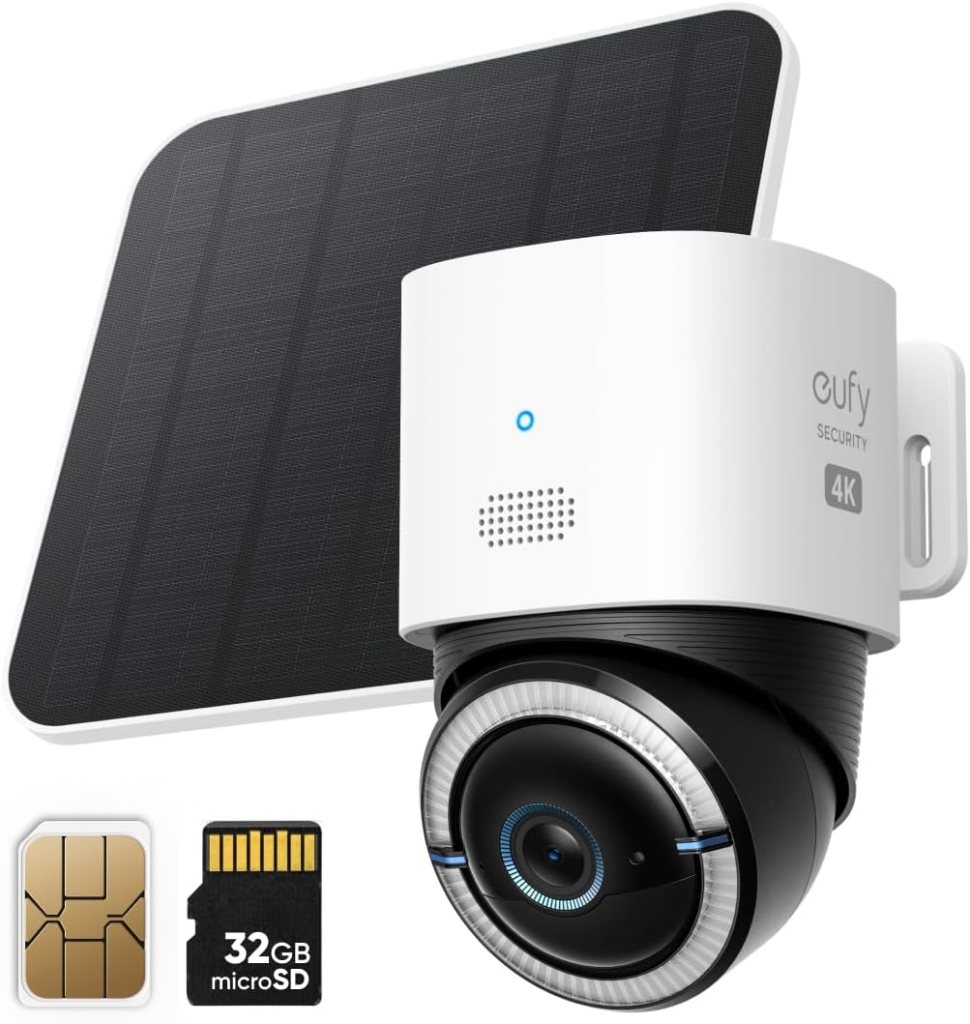
Best Overall
The Eufy S330 is one of the most advanced 4G LTE security cameras without WiFi available today. It combines ultra-sharp 4K video with solar power and intelligent motion tracking.
This camera automatically connects to a cellular network using a SIM card, so it works well in remote areas without internet access. Its built-in solar panel keeps the battery charged with minimal maintenance.
Key features include AI human detection, 360° motion tracking, and color night vision.
Pros
- 4K ultra-high-resolution video
- Built-in solar charging
- Smart AI motion detection
- Excellent night vision
- Weatherproof outdoor design
Cons
- Higher price than most competitors
- Requires a cellular data plan
Best for homeowners who want the most advanced off-grid security camera available.
2. Arlo Go 2
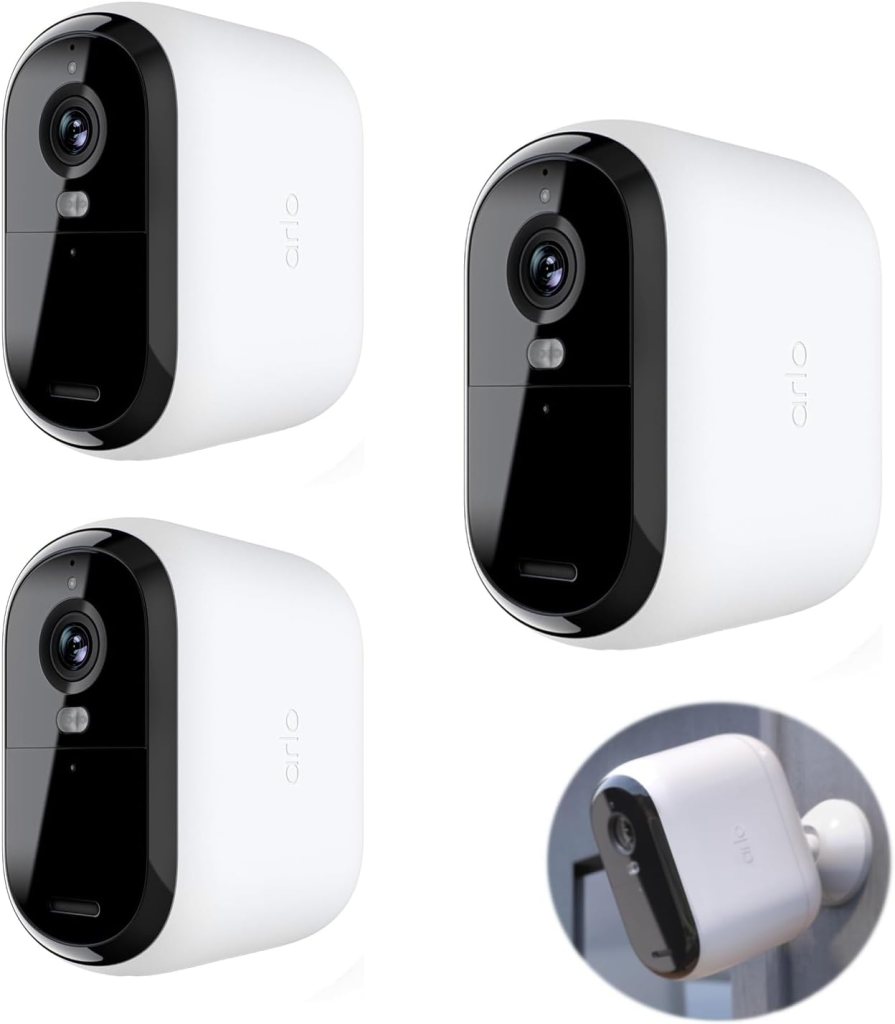
Best for Versatility
The Arlo Go 2 stands out because it supports both WiFi and cellular connectivity. That flexibility makes it ideal for people who may move the camera between locations.
If WiFi is available, it connects normally. If not, it automatically switches to LTE.
The camera records in full HD and includes smart alerts, two-way audio, and integrated spotlight night vision.
Pros
- Works with WiFi or LTE
- Reliable motion alerts
- Easy mobile app control
- Strong ecosystem and support
Cons
- Lower resolution than some competitors
- Some features require subscription plans
This is a great option for users who want a cellular security camera that can also work as a regular home camera.
3. Reolink Go PT Plus
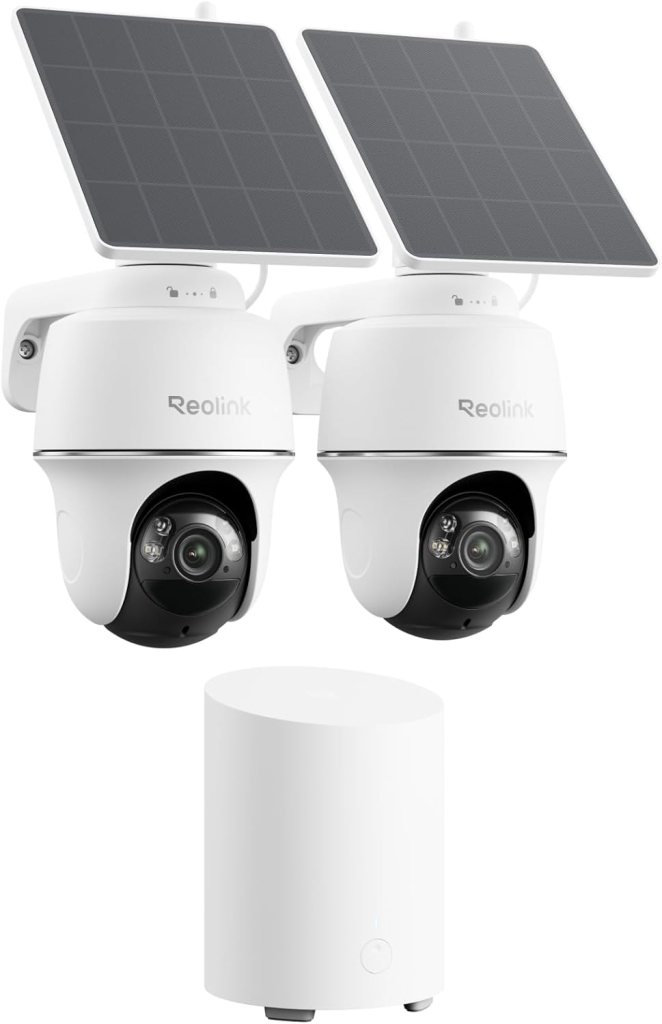
Best Pan-Tilt Camera
The Reolink Go PT Plus is ideal for monitoring large outdoor areas thanks to its pan-tilt design.
Instead of being fixed in one direction, the camera can rotate remotely using the mobile app. This allows you to cover a much wider area with a single camera.
It records in 2K resolution and works well with optional solar panels for continuous operation.
Pros
- Pan and tilt remote control
- Wide field of coverage
- Solid 2K video quality
- Works well with solar charging
- Reliable mobile app
Cons
- No 4K video
- PTZ motion can use more battery
If you want to monitor large properties, farms, or construction sites, this camera offers excellent coverage.
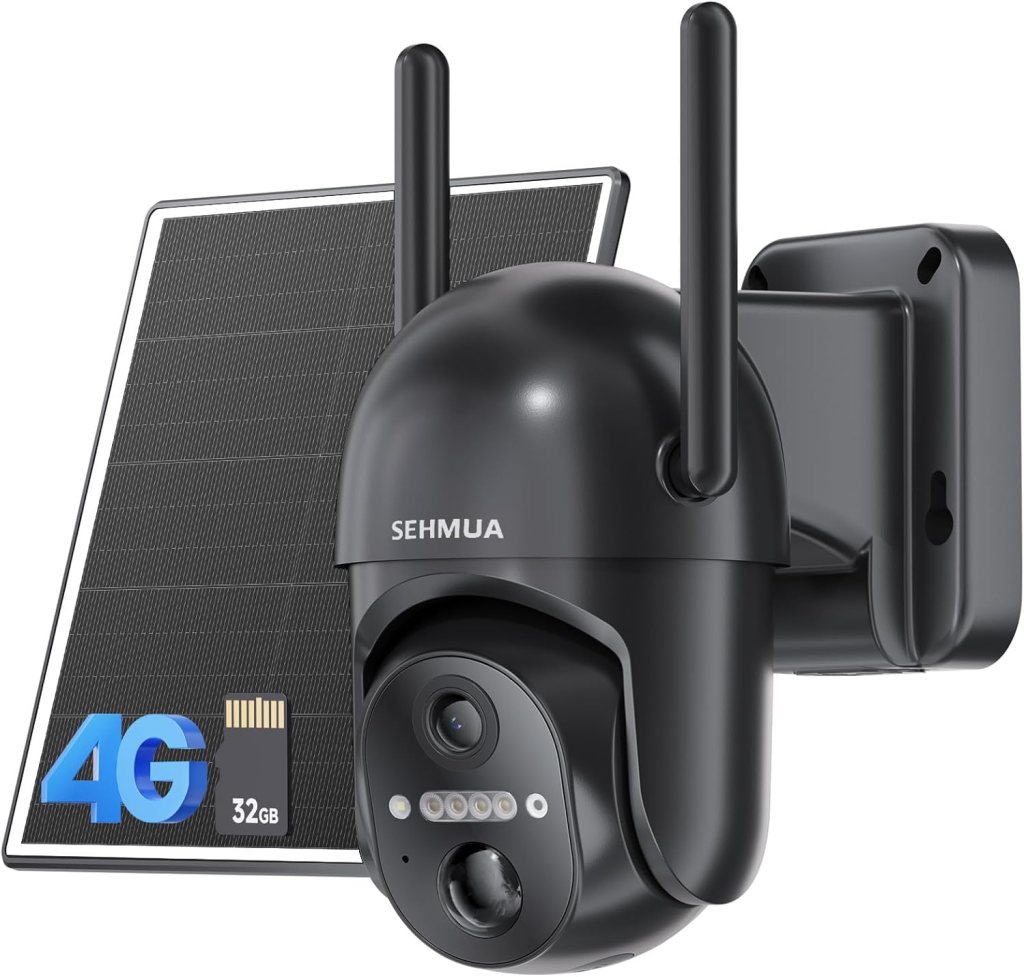
4. SEHMUA 4G LTE Solar Camera
Best Budget Cellular Security Camera
If you want a cellular security camera without spending a lot, the SEHMUA LTE Solar Camera offers surprisingly strong value.
It includes 2K video resolution, a solar panel, and motion alerts. Setup is straightforward, and the camera works well for monitoring smaller properties.
Despite the budget price, it still includes useful features like two-way audio and night vision.
Pros
- Very affordable option
- Solar powered design
- Easy installation
- Good motion detection alerts
Cons
- App interface is basic
- Build quality not as premium
For users who want a budget cellular security camera for remote monitoring, this is a strong choice.
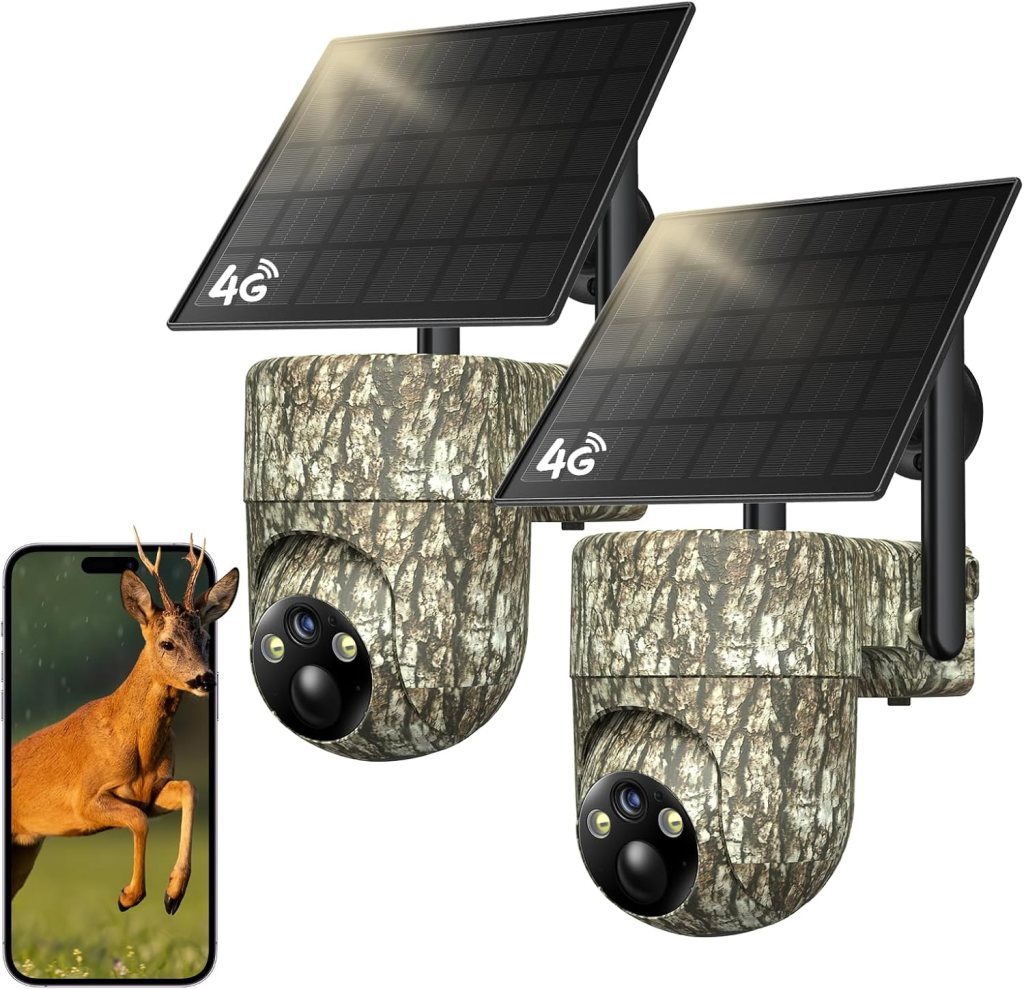
5. Campark TC25 Cellular Camera
Best for Wildlife & Remote Land
The Campark TC25 is designed with outdoor and wildlife monitoring in mind.
It functions similarly to a trail camera with cellular connectivity, allowing you to receive alerts and images when motion is detected.
Because it’s optimized for outdoor environments, it works well for monitoring:
- Hunting land
- Wildlife activity
- Remote cabins
- Property boundaries
Pros
- Excellent motion detection for wildlife
- Durable outdoor build
- Solar powered battery system
- Good night vision performance
Cons
- App features are basic
- Limited smart AI features
For rural landowners or hunters, this is one of the best cellular cameras for wildlife monitoring.
How to Choose the Best Cellular Security Camera
Cellular vs WiFi Security Cameras
A traditional security camera requires a WiFi connection to transmit footage. That limits where you can install it.
A cellular security camera uses a 4G LTE network, similar to a smartphone. This means it can operate in remote areas where internet service is unavailable.
Cellular cameras are ideal for:
- Farms
- Construction sites
- Remote cabins
- Vacant homes
- Outdoor equipment storage
The main tradeoff is that they usually require a monthly cellular data plan.
Key Features to Look For
Choosing the right cellular security camera depends on several important features.
4G LTE Compatibility
Make sure the camera supports LTE bands used in your country. Many cameras include a SIM card or support major mobile carriers.
Solar Power Options
Solar panels allow the camera to run continuously without frequent battery changes. This is especially helpful for off-grid installations.
Motion Detection and Smart Alerts
Modern cameras include AI detection that distinguishes between people, animals, and vehicles. This reduces false alerts.
Night Vision
Infrared night vision is standard, but some cameras include color night vision with built-in spotlights.
Pan-Tilt vs Fixed Cameras
Pan-tilt cameras cover a wider area, while fixed cameras typically have longer battery life.
Do Cellular Security Cameras Require a Subscription?
Most cellular cameras require a mobile data plan, similar to a smartphone plan.
The cost typically ranges from:
- $5–$15 per month for basic data plans
- Higher for cloud video storage services
Some cameras also support local storage using SD cards.
Use Cases for Cellular Security Cameras
Cellular cameras are useful in many situations where WiFi cameras fail.
Common uses include:
- Monitoring construction sites
- Protecting remote cabins
- Watching farm equipment
- Wildlife monitoring
- Securing boats and RVs
- Checking on vacant homes
Because they work independently of internet infrastructure, they’re ideal for off-grid surveillance.
Frequently Asked Questions
What is the best cellular security camera?
The best cellular security camera overall is the Eufy 4G LTE Cam S330 because it combines 4K video, solar charging, and advanced AI motion detection.
However, the best choice depends on your needs. For example, the Reolink Go PT Plus is excellent for large properties due to its pan-tilt design.
Do cellular security cameras work without WiFi?
Yes. Cellular security cameras are designed specifically to work without WiFi. They connect to mobile networks using a SIM card and transmit video through LTE data.
How much data does a cellular security camera use?
Data usage depends on how often the camera records video.
Typical usage ranges from:
- 1–2 GB per month for motion-based recording
- 5–10 GB for heavy activity areas
Using motion alerts instead of continuous recording helps reduce data usage.
Do cellular security cameras require a SIM card?
Yes. Most cellular cameras require a SIM card with an active data plan to connect to mobile networks.
Some cameras include a prepaid SIM card or offer compatible carrier plans.
Can you use a solar panel with a cellular camera?
Yes. Many of the best cellular security cameras include built-in solar panels or optional solar chargers.
Solar power helps maintain battery charge and reduces maintenance for remote installations.
Are cellular security cameras good for rural areas?
Yes. Cellular cameras are specifically designed for rural and off-grid locations where WiFi and wired internet are unavailable.
As long as there is cellular signal coverage, the camera will function normally.
What is the difference between LTE and WiFi cameras
The main difference is the internet connection.
- WiFi cameras connect to your home router
- LTE cameras connect to mobile networks using a SIM card
LTE cameras are better for remote locations, while WiFi cameras are usually cheaper for homes.
Can cellular cameras record continuously?
Some models allow continuous recording, but most rely on motion detection to conserve battery and reduce cellular data usage.
Continuous recording may require higher data plans and more frequent battery charging.
What SIM cards work with cellular security cameras?
Most cameras work with major carriers such as:
- AT&T
- Verizon
- T-Mobile
Some manufacturers also offer dedicated IoT data plans designed specifically for security cameras.
Are cellular cameras better than trail cameras?
It depends on the use case.
Traditional trail cameras store images locally on SD cards, while cellular cameras send alerts and footage to your phone instantly.
For real-time monitoring, cellular cameras are usually the better choice.
How much does a cellular security camera cost per month?
Most cellular data plans cost between $5 and $20 per month, depending on the amount of data used.
Cloud storage subscriptions may add additional costs depending on the camera brand.
Final Thoughts
Choosing the best cellular security camera depends on where you plan to install it and what features matter most.
Quick recommendations:
- Best overall: Eufy 4G LTE Cam S330
- Most versatile: Arlo Go 2
- Best for large areas: Reolink Go PT Plus
- Best budget option: SEHMUA 4G LTE Solar Camera
- Best for wildlife monitoring: Campark TC25
For remote properties, off-grid cabins, farms, and construction sites, cellular cameras provide reliable monitoring without needing WiFi.
Affiliate Disclaimer
This article may contain affiliate links. If you purchase products through these links, we may earn a small commission at no additional cost to you.






Leave a Reply