
Instant cameras are having a moment again. Once a relic of the past, they’ve become a favorite for everyone from kids discovering photography for the first time to nostalgic adults who grew up with Polaroid snaps in the family album. The appeal is simple: you click the shutter, and a tangible memory develops in your hand within minutes. No filters, no scrolling — just something real you can share, gift, or keep forever.
But choosing the right instant camera isn’t so simple. With Fujifilm, Polaroid, and Kodak all competing for attention, there’s a flood of options at different price points. Some are perfect for casual fun, while others are serious tools for creative photographers.
In this guide, we’ll cover the best instant cameras available in 2025, with a deep dive into standout models, brand comparisons, and the right choices for kids, teens, and enthusiasts.
You Can Also Read:
- Best Polaroid Cameras (New and Vintage)
- 5 Best Cameras for 10-Year-Olds (Buyer’s Guide)
- 5 Best Kids Cameras for Every Age
How We Chose the Best Instant Cameras
When putting together this list, we focused on what really matters to instant camera users:
- Image Quality – Does the camera produce sharp, well-exposed, pleasing prints?
- Ease of Use – Can beginners, kids, or casual shooters pick it up without frustration?
- Film Availability & Cost – Is film affordable and easy to find locally or online?
- Build & Features – Durability, portability, creative modes, and modern touches like Bluetooth.
- Value for Money – Whether budget-friendly or premium, does the camera deliver on its promise?
By comparing the flagship models from Fujifilm, Polaroid, and Kodak, plus looking at user-specific picks, we’ve narrowed the list down to the best cameras for every type of instant shooter.
The Best Instant Cameras Overall (Quick Comparison Table)
| Camera | Best For | Price Range | Key Features | Film Type | Rating |
|---|---|---|---|---|---|
| Fujifilm Instax Mini Evo | Creative control + hybrid features | $180–$200 | Digital preview, 100 creative effects, premium design | Instax Mini | 4.8/5 |
| Polaroid Now 3rd Gen i-Type | Classic Polaroid feel + improved autofocus | $130–$150 | Large prints, vintage tones, better flash & focus | Polaroid i-Type | 4.6/5 |
| Kodak Smile Classic | Big bold prints + hybrid printing | $150–$180 | Bluetooth, app printing, large square format | Kodak Zink | 4.5/5 |
Best Instant Cameras By Brand
Best Fujifilm Instant Camera: Fujifilm Instax Mini Evo Instant Camera
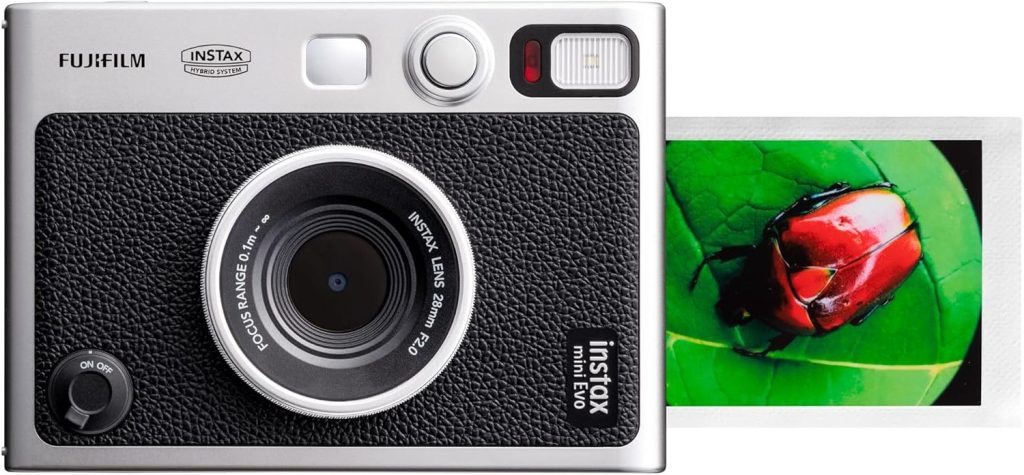
The Fujifilm Instax Mini Evo sits at the top of the Instax lineup, blending digital preview features with traditional instant printing. It’s designed for users who want creative control and premium build quality without stepping away from the tactile joy of instant photos.
Key Specs:
- Film Type: Instax Mini
- Image Preview: 3.0-inch LCD screen
- Creative Options: 10 lens modes × 10 film effects = 100 styles
- Connectivity: Bluetooth for smartphone printing & saving digital copies
- Power: Built-in rechargeable battery (USB charging)
- Price Range: $180–$200
- Weight: 285 g (light, portable)
Pros:
- Digital preview reduces wasted film
- Creative control with filters and lens effects
- Hybrid functionality (can print from smartphone via app)
- Excellent Instax Mini film availability and variety (color, monochrome, themed borders)
- Compact and stylish design
Cons:
- Higher cost compared to entry-level Instax Minis
- Film size is still small (credit-card style)
- Lacks larger print options like Instax Wide
Who it’s best for: Users who want more than point-and-shoot simplicity — creative teens, hobby photographers, and adults who appreciate having control over their images before committing them to film.
Best Polaroid Instant Camera: Polaroid Now 3rd Generation i-Type Instant Camera

The Polaroid Now Gen 3 is Polaroid’s flagship analog instant camera, and it keeps the iconic square prints alive while improving usability. It’s perfect for those who value the nostalgic Polaroid look but don’t want the quirks of older models.
Key Specs:
- Film Type: Polaroid i-Type and 600 film
- Lens: Autofocus dual-lens system (close-up & distance)
- Flash: Improved, more consistent exposure indoors and outdoors
- Battery: Rechargeable via USB-C (lasts up to 15 packs of film per charge)
- Price Range: $130–$150
- Weight: ~455 g (larger than Fujifilm cameras)
Pros:
- Large Polaroid prints with classic square format
- Unique vintage tones no other brand replicates
- Autofocus system makes it easier to use than older Polaroids
- Works with i-Type (cheaper) and 600 film (compatible with vintage cameras)
- Rechargeable USB-C battery
Cons:
- Film cost is high (~$2.50 per photo)
- Bulkier than Fujifilm and Kodak cameras
- Slower developing times compared to Instax
Who it’s best for: Photographers and enthusiasts who want the iconic Polaroid look in a modern, reliable body. Great for creating statement photos at events, parties, and portraits where the vintage feel is part of the appeal.
Best Kodak Instant Camera: Kodak Smile Classic Instant Camera
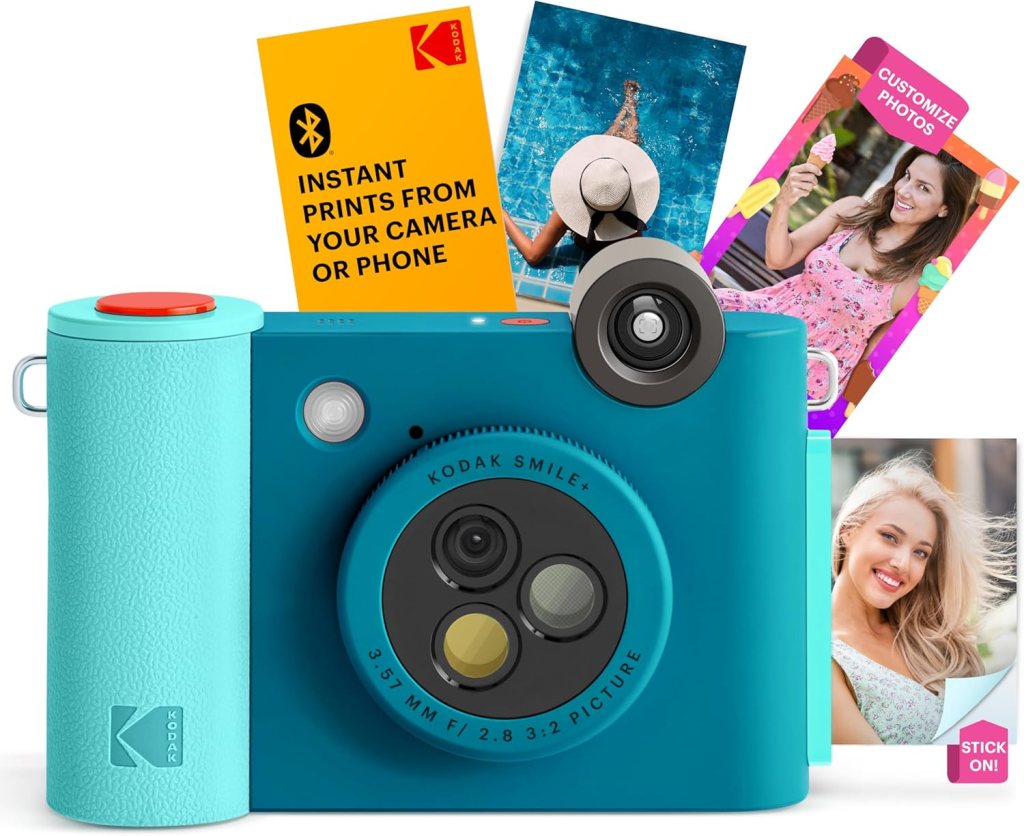
The Kodak Smile Classic is Kodak’s most premium instant camera, merging retro aesthetics with modern hybrid functionality. It produces large prints, connects to your phone, and can act as both a camera and a mini printer.
Key Specs:
- Film Type: Zink 3.5” × 4.25” photo paper
- Lens: 10 MP digital sensor with autofocus
- Screen: Small LCD for preview and menu navigation
- Connectivity: Bluetooth + Kodak app for smartphone printing
- Battery: Built-in rechargeable (prints up to 35 photos per charge)
- Price Range: $150–$180
- Weight: ~650 g (bulkier than Fujifilm or Polaroid)
Pros:
- Larger prints than Fujifilm Instax Mini or Polaroid i-Type
- Hybrid: can print from smartphone as well as camera
- Durable Zink prints (smudge-proof, water-resistant)
- Retro design with modern functionality
- Doesn’t require expensive ink cartridges
Cons:
- Print quality not as sharp or color-accurate as Fujifilm film
- Bulkier than other instant cameras, less portable
- Paper still costs ~75 cents per print — not as cheap as it sounds over time
Who it’s best for: People who want larger instant prints and like the flexibility of combining smartphone photography with instant printing. A good choice for family events, parties, or anyone who prefers bigger photos over portability.
Special Categories: Instant Cameras for Every User
| Feature | Fujifilm Instax Mini 12 | Polaroid Go |
|---|---|---|
| Best For | Kids & beginners | Teens & style-focused |
| Price | $70–$90 | $100–$120 |
| Film Type | Instax Mini | Polaroid Go Film |
| Pros | Affordable, simple, durable, easy-to-find film | Stylish, compact, rechargeable, Polaroid aesthetic |
| Cons | Small prints, no rechargeable battery | Pricier film, very small prints |
Best Instant Camera for Kids: Fujifilm Instax Mini 12
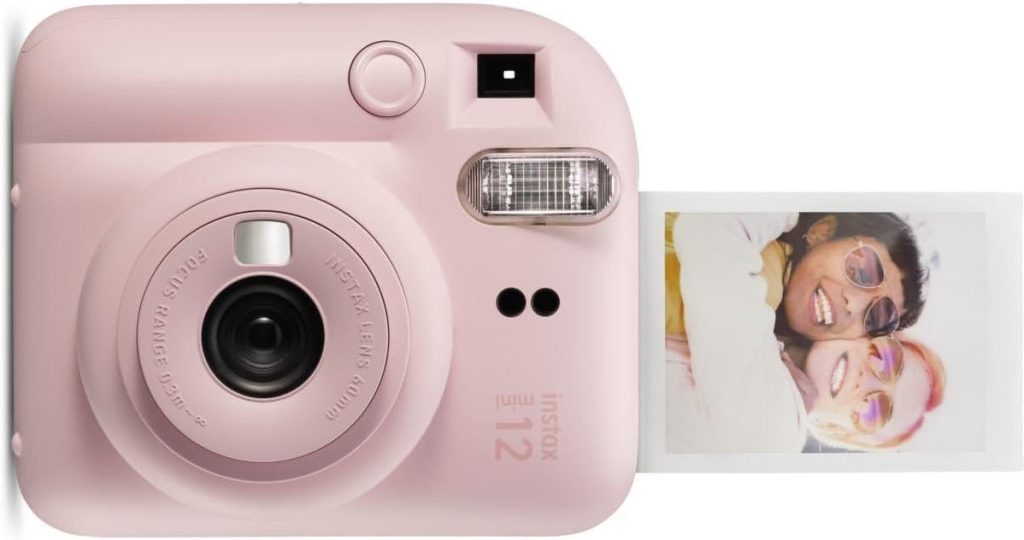
The Instax Mini 12 is Fujifilm’s entry-level model, designed with simplicity in mind. It’s colorful, durable, and easy to operate — perfect for young photographers who want the fun of instant prints without complicated settings.
Key Specs:
- Film Type: Instax Mini
- Lens: Fixed-focus lens with close-up mode
- Flash: Built-in, automatic
- Battery: 2 × AA batteries
- Price Range: $70–$90
- Weight: 306 g
Pros:
- Very easy to use — just point, shoot, and print
- Affordable camera and film compared to competitors
- Fun color options appeal to kids
- Durable enough to handle everyday use
- Widely available Instax film with fun themed borders
Cons:
- No creative control or advanced features
- Small print size (credit-card style)
- Requires disposable AA batteries rather than rechargeable
Why it’s great for kids: It balances affordability with reliability, letting children enjoy instant photography while parents don’t have to worry about wasted film or fragile design.
Best Instant Camera for Teens: Polaroid Go
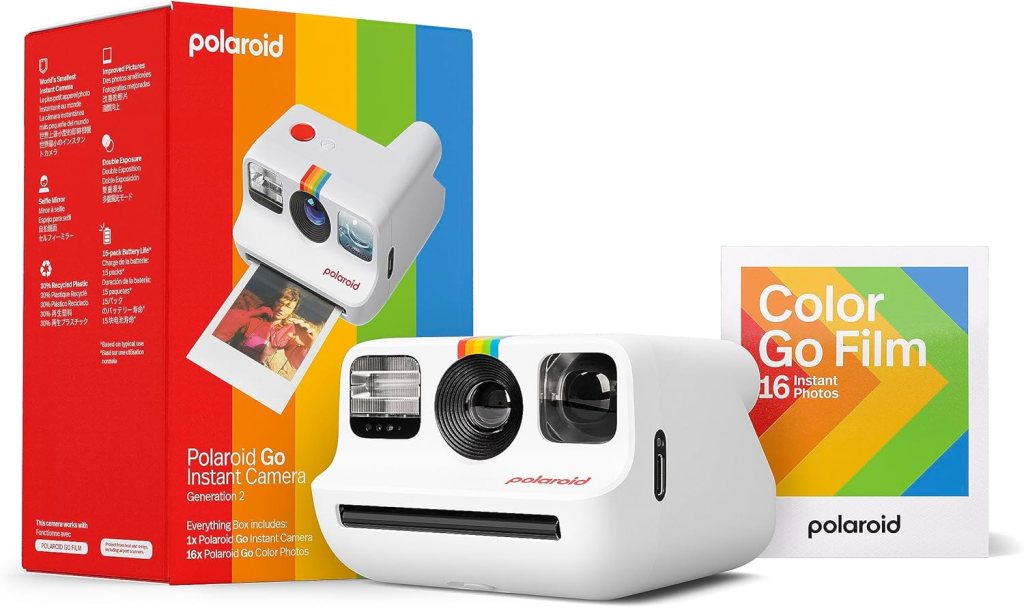
The Polaroid Go is a compact instant camera made for style-conscious and social-savvy teens. It’s the smallest Polaroid ever, designed to slip into a backpack or pocket while still delivering iconic Polaroid prints (on a slightly smaller scale).
Key Specs:
- Film Type: Polaroid Go Film (smaller square format)
- Lens: Fixed-focus lens with selfie mirror
- Flash: Built-in, automatic
- Battery: Rechargeable via USB (up to 15 packs of film per charge)
- Price Range: $100–$120
- Weight: 242 g
Pros:
- Stylish, ultra-compact design
- Unique small Polaroid prints that stand out
- Rechargeable battery — no AA swaps needed
- Fun accessories like filters and straps available
- More affordable than the larger Polaroid Now Gen 3
Cons:
- Film is expensive for the size (~$2 per tiny print)
- Limited creative options beyond point-and-shoot
- Smaller prints lack the big impact of full-size Polaroids
Why it’s great for teens: Teens love the Polaroid aesthetic, and the Go makes it portable and fun without being too bulky or complicated. It’s also rechargeable, which fits modern habits better than AA-powered options.
Film & Printing Costs
Film is often the deciding factor when buying an instant camera. While the cameras themselves are one-time purchases, film is an ongoing expense that adds up quickly. Here’s a detailed breakdown of the most common instant film options:
| Brand / Film Type | Used In | Price (per pack) | Prints per Pack | Cost per Photo | Print Size | Availability |
|---|---|---|---|---|---|---|
| Fujifilm Instax Mini | Instax Mini Evo, Instax Mini 12 | ~$14 | 20 | ~$0.70 | 2.1” × 3.4” | Very easy to find (Amazon, Target, Walmart) |
| Fujifilm Instax Wide | Instax Wide 300 | ~$18 | 20 | ~$0.90 | 3.4” × 4.25” | Moderate availability (online, specialty stores) |
| Polaroid i-Type | Polaroid Now Gen 3 | ~$20 | 8 | ~$2.50 | 3.1” × 3.1” | Limited to online + camera stores |
| Polaroid Go Film | Polaroid Go | ~$20 | 16 | ~$1.25 | 2.6” × 2.1” | Online + Polaroid specialty retailers |
| Kodak Zink Paper | Kodak Smile Classic | ~$15 | 20 | ~$0.75 | 3.5” × 4.25” | Widely available (Amazon, Best Buy) |
Key Takeaways:
- Fujifilm Instax Mini is the most budget-friendly and easiest to find.
- Polaroid film is the most expensive, but offers the most iconic look and largest traditional prints.
- Kodak’s Zink strikes a balance between affordability and print size, though image quality is less vibrant than Fujifilm’s.



Leave a Reply