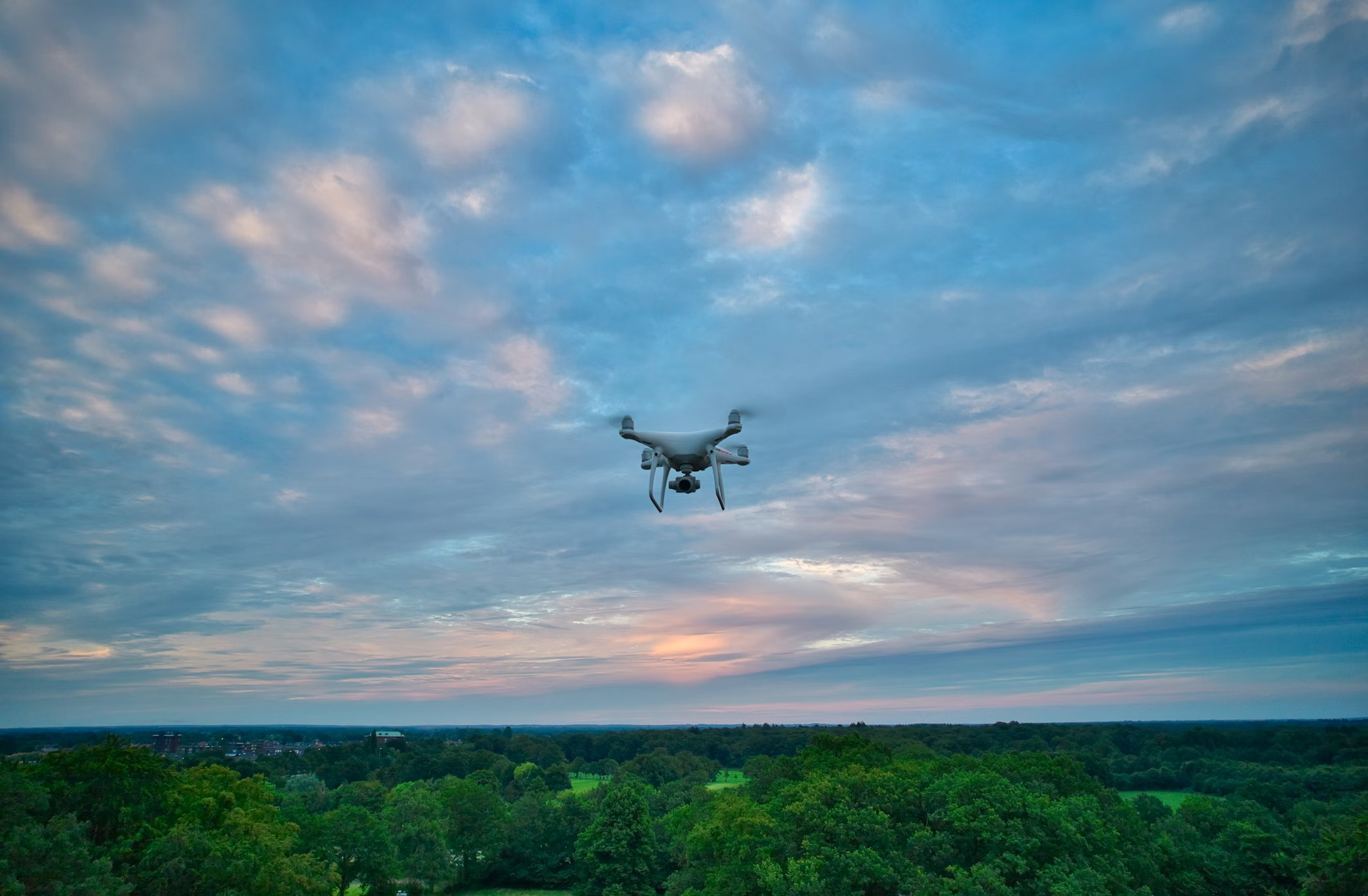
The search for the 5 best drones with camera under $500 gets messy fast. A lot of drones promise 4K. Fewer give you stable footage, decent controls, reliable GPS, and a camera that does not look like it came from an old webcam once the wind starts moving.
I care more about usable footage than spec-sheet bragging.
A drone under $500 should do three things well. It should fly predictably. It should shoot steady video. It should not punish you for being new. That sounds simple, but plenty of camera drones miss at least one of those.
There is also the legal side. In the U.S., the FAA says recreational flyers must take TRUST and carry proof, and drones that weigh 250g or more must be registered. That makes sub-249g models especially attractive for casual flyers, though local rules still matter.
This guide is based on published specs, current product availability, owner feedback patterns, and the kind of practical camera judgment I would use before spending my own money.
I am not pretending these are lab-tested with controlled wind tunnels and color charts. I looked for drones that make sense in normal use.
Short version: I would buy the DJI Mini 4K first.
Related articles
Quick Picks
| Category | Drone | Why I Picked It |
|---|---|---|
| Best Overall | DJI Mini 4K | Best mix of camera stability, flight quality, and beginner control |
| Best Lightweight Starter Drone | Potensic ATOM SE | Simple, portable, and easy to trust in the air |
| Best Camera Quality for the Price | DJI Mini 3 | Better camera potential for people who care more about image quality |
| Best for Longer Practice Flights | Holy Stone HS720G | Good for learners who want more time in the air |
| Best Feature-Rich Casual Drone | Ruko F11GIM2 | Bigger feel, long battery coverage, and useful GPS features |
Mobile-Friendly Comparison Table: Best Use Case
| Drone | Best For | My Take |
|---|---|---|
| DJI Mini 4K | Most first-time buyers | The safest recommendation here. It feels like a real camera drone, not a toy. |
| Potensic ATOM SE | New pilots and travel | Light, simple, and not overloaded with fluff. |
| DJI Mini 3 | Better image quality | The one I would stretch for if video and stills matter most. |
| Holy Stone HS720G | Practice flights | A practical pick for people who want time to learn. |
| Ruko F11GIM2 | Feature-heavy flying | Best for people who like longer sessions and a larger drone feel. |
Mobile-Friendly Specs Table
| Drone | Weight | Video | Stabilization | Flight Notes |
|---|---|---|---|---|
| DJI Mini 4K | Under 249g | 4K/30fps | 3-axis gimbal | Up to 31 minutes |
| Potensic ATOM SE | Under 249g | 4K/30fps | EIS | Up to 62 minutes with two batteries |
| DJI Mini 3 | Under 249g | 4K HDR | 3-axis gimbal | Up to 38 minutes with standard battery |
| Holy Stone HS720G | Over 249g | 4K | 2-axis gimbal + EIS | Up to 52 minutes with two batteries |
| Ruko F11GIM2 | Over 249g | 4K | Gimbal + EIS | Up to 64 minutes with two batteries |
DJI lists the Mini 4K with under-249g weight, 4K/30fps video, 10km video transmission, Return to Home, QuickShots, and up to 31 minutes of flight time. Potensic lists the ATOM SE with under-249g weight, 4K EIS video, GPS auto return, 4km FPV transmission, and 62 minutes of flight time with two batteries.
DJI lists the Mini 3 with up to 38 minutes of flight time with the standard battery, while its launch materials also note 4K video, O2 transmission, and wind resistance up to 10.7 m/s. Ruko lists the F11GIM2 with built-in FAA Remote ID, 4K camera with gimbal and EIS, 9842-foot real-time transmission distance, two batteries for 64 minutes, and Level 6 wind resistance.
What I Looked For Before Ranking These
I did not rank these by resolution alone.
That is usually how bad drone lists happen. A drone can say “4K” and still give you shaky, smeared, nervous-looking footage. Stabilization matters. So does GPS. So does the app. So does how confidently the drone hovers when your hands are still learning the sticks.
Here is what mattered most to me:
| Factor | Why It Matters |
|---|---|
| Camera stability | A stable 4K clip beats a shaky higher-resolution clip every time. |
| Beginner control | New pilots need predictable hovering, Return to Home, and clean controls. |
| Battery setup | One battery feels limiting. Two or three batteries make practice easier. |
| Weight | Sub-249g drones are easier to travel with and simpler for many recreational flyers. |
| Real owner feedback | Patterns matter more than one glowing review or one angry review. |
| Long-term usefulness | I wanted drones people would still enjoy after the first weekend. |
1. DJI Mini 4K
Best Overall
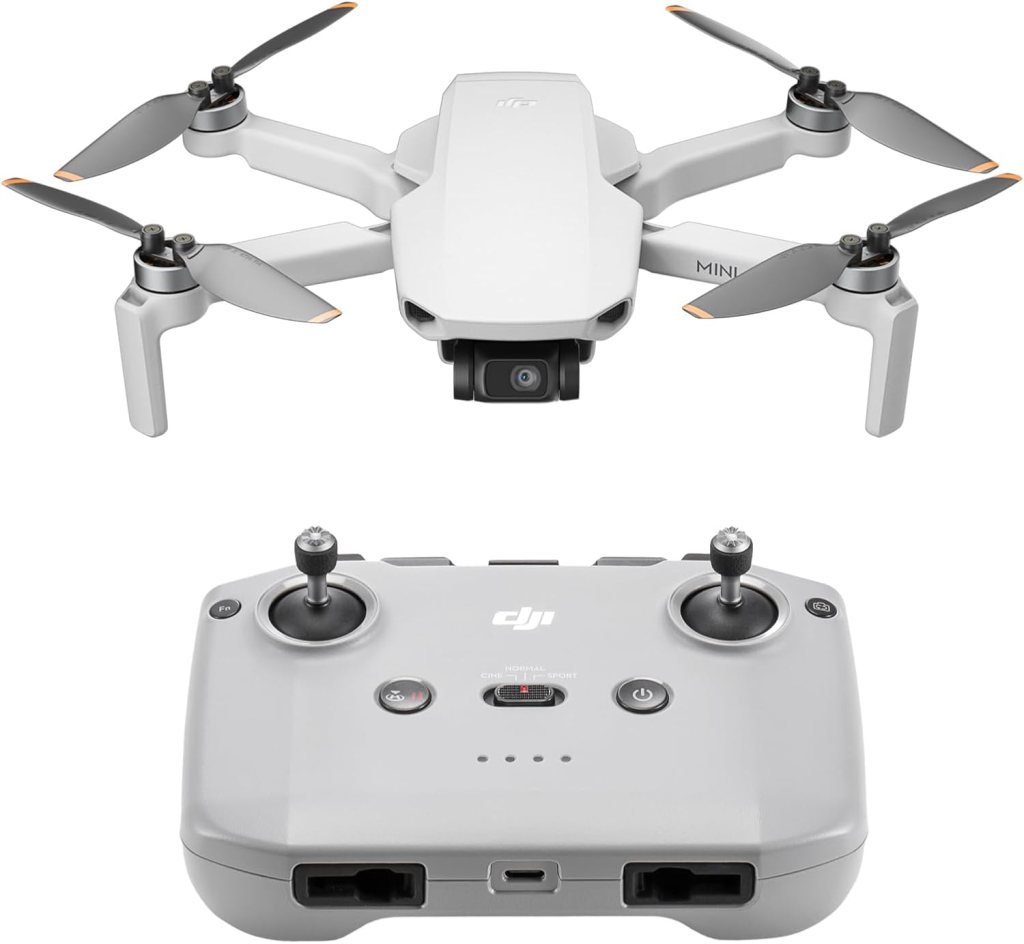
The DJI Mini 4K is the one I would hand to most people first.
It is not the flashiest drone here. That is part of the appeal. It gives you the stuff that matters: a real 3-axis gimbal, 4K video, reliable flight behavior, a light frame, and a control experience that does not feel like a science project.
A lot of camera drones under $500 make you work around their flaws. The Mini 4K mostly gets out of your way.
The 3-axis gimbal is the big reason it wins. Electronic stabilization can help, but a mechanical gimbal changes the whole feel of the footage. Pans look calmer. Forward motion looks less twitchy. Basic landscape shots look like they came from a camera drone instead of a nervous plastic insect.
DJI lists the Mini 4K with a fully stabilized 3-axis gimbal, 1/2.3-inch sensor, 4K video, and 12MP still photos in its user manual. That combination is not exotic, but it is dependable.
Review Summary
The Mini 4K is the best overall drone here because it gives beginners enough polish without asking them to become drone nerds overnight. It is compact, stable, and easy to recommend.
The camera will not replace a pro drone. The dynamic range is limited compared with more expensive models, and low-light footage can fall apart if you push it. But in daylight, for travel clips, house exteriors, beach views, farms, lakes, trails, and simple cinematic shots, it makes sense.
Public owner feedback tends to praise the flight stability, camera quality for the size, and beginner-friendly controls. The more balanced complaints usually point toward limited obstacle avoidance and the need to buy extra batteries if you plan to fly for more than a few short sessions.
That sounds fair to me.
Pros
- Best overall balance: Camera, controls, portability, and price all line up well.
- Real gimbal stabilization: This matters more than most beginners realize.
- Sub-249g design: Easier for casual recreational flyers to deal with.
- Good beginner features: Return to Home, stable hovering, and QuickShots help.
- Strong travel fit: Small enough to bring without making it a whole production.
Cons
- No full obstacle avoidance: You still need to fly with your eyes open.
- Not ideal in low light: Daylight is where it looks best.
- One battery is not enough: A bundle with extra batteries makes more sense.
Best For
This is best for beginners who want one drone that simply works.
It is also the best pick for casual content creators, real estate hobbyists, family travel, light outdoor video, and anyone who does not want to gamble on a less refined flight system.
Who Should Skip It
Skip it if you want tracking features, serious obstacle sensing, or stronger low-light video. You are then drifting into higher-priced drone territory.
Real Testimonial
The DJI Mini 4K is the strongest all-around pick because it gives you the cleanest mix of camera quality, smooth flight, portability, and beginner control under $500. The 3-axis gimbal is the real separator here. Plenty of drones advertise 4K, but this one actually gives footage a calmer, more finished look.
I like it most for first-time buyers who want a drone that feels easy without feeling disposable. It is light enough for travel, steady enough for real video clips, and simple enough that you can focus on flying instead of fighting the controls. The main drawback is the lack of full obstacle avoidance, so it still needs careful piloting.
2. Potensic ATOM SE

Best Lightweight Starter Drone
The Potensic ATOM SE earns the second spot because it respects the beginner.
That sounds like a small thing. It is not.
Some starter drones feel like they were designed by people who only read spec sheets. The ATOM SE feels more practical. It is light, foldable, simple to carry, and not buried under features most new pilots will never use correctly.
The big draw is the combination of GPS flight, 4K EIS video, under-249g weight, and long total flight time with the two-battery kit. Potensic positions it as a lightweight GPS camera drone with 4K EIS, auto return, brushless motors, and 4km FPV transmission.
The camera is not as steady-looking as the DJI Mini 4K because EIS is doing the smoothing work instead of a full 3-axis mechanical gimbal. That matters. If your top priority is polished video, DJI wins.
But the ATOM SE has a nice, unfussy personality. It is a drone you can learn on without feeling like you are babying it every second.
Review Summary
This is the drone I would suggest to someone who wants a light GPS camera drone and does not want to overthink the purchase.
The owner feedback pattern is pretty clear: people tend to like the easy setup, flight time, beginner controls, and portability. Common criticisms usually involve camera stabilization limits, app learning curve moments, or expectations that were too close to DJI-level polish.
That is the right way to judge it. It is not trying to beat the Mini 4K at camera smoothness. Its strength is a clean starter experience.
Pros
- Very beginner-friendly: GPS, Return to Home, and simple controls help build confidence.
- Lightweight design: Good for travel and casual flying.
- Long flying sessions: The two-battery package gives more practice time.
- Brushless motors: Better than brushed motors for durability and flight feel.
- Good value for learning: You get real drone features without a bloated setup.
Cons
- EIS is not a gimbal: Footage can look less smooth than DJI gimbal footage.
- Camera is best in good light: Like most drones here.
- Not the most premium controller feel: Functional, not fancy.
Best For
This is best for new pilots who want a capable starter drone with GPS and usable 4K video.
It also makes sense for people who value portability, learning time, and simple aerial shots more than cinematic perfection.
Who Should Skip It
Skip it if you know you care deeply about smooth camera movement. Get the DJI Mini 4K or DJI Mini 3 instead.
Real Testimonial
The Potensic ATOM SE is a smart starter drone for people who want something lightweight, practical, and easy to learn. It does not have the same camera polish as the DJI options, but it gives you GPS flight, 4K video, brushless motors, and a travel-friendly design that makes sense for newer pilots.
Its best quality is how approachable it feels. You can take it out, get familiar with the controls, and build confidence without feeling like you bought something overly complicated. The tradeoff is stabilization. EIS helps, but it does not create the same smooth look as a full mechanical gimbal.
3. DJI Mini 3
Best Camera Quality for the Price
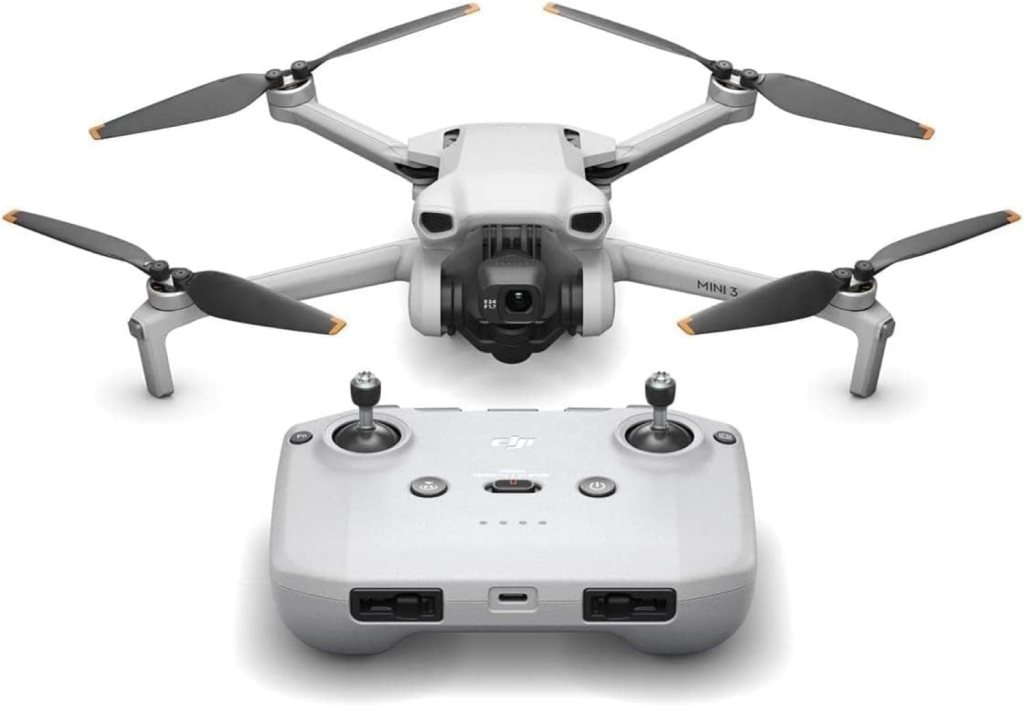
The DJI Mini 3 is the most interesting drone on this list because pricing can make it either a brilliant buy or slightly awkward.
When it lands under $500, it becomes one of the strongest camera-first choices here.
Compared with the Mini 4K, the Mini 3 gives you a better imaging platform. DJI’s Mini 3 specs list up to 38 minutes of flight time with the standard battery, and DJI’s announcement described it as a sub-249g drone with 4K video, O2 transmission, and steady flight in winds up to 10.7 m/s.
For stills and vertical content, I like the Mini 3 more than the Mini 4K.
It feels like the better pick for someone who already knows they care about the finished image. Not just flying. Not just “I got a drone.” The actual photo and video files.
That said, I still put the Mini 4K first overall because it is usually the cleaner recommendation for most buyers under $500. The Mini 3 depends more on pricing and bundle availability.
Review Summary
The Mini 3 is the drone I would pick if camera quality mattered more than saving every dollar.
It feels less like a starter gadget and more like an entry point into real aerial photography. The footage has more room to breathe, especially in daylight scenes with sky, water, buildings, and open land.
Owner feedback commonly leans positive around image quality, portability, battery life, and ease of flying. The gripes usually involve price fluctuations, missing obstacle avoidance, and the cost of adding accessories.
Fair complaints.
Pros
- Best camera-minded pick here: Stronger image potential than most drones in this range.
- Sub-249g design: Travel-friendly and easier for many recreational flyers.
- 3-axis gimbal: Smooth footage without relying only on digital correction.
- Longer standard battery rating: Up to 38 minutes under DJI’s stated test conditions.
- Good for vertical content: Nice for social video workflows.
Cons
- Pricing moves around: It needs to stay under $500 to fit this article cleanly.
- No advanced obstacle avoidance: New pilots still need discipline.
- Accessories add up: Extra batteries and cases can push the total higher.
Best For
This is best for people who want better-looking footage and are willing to watch pricing.
It is also a strong pick for travel creators, real estate walkthrough support shots, neighborhood videos, social content, and clean outdoor b-roll.
Who Should Skip It
Skip it if you just want the simplest first drone. The Mini 4K is easier to recommend without caveats.
Real Testimonial
The DJI Mini 3 is the best camera-focused option in this group when it stays under $500. It feels like a better pick for someone who already cares about image quality, vertical video, travel content, and cleaner aerial shots. It is still beginner-friendly, but the real appeal is the camera.
Compared with the Mini 4K, the Mini 3 feels more appealing for people who want better stills and more polished content. The downside is price movement. Sometimes it fits the under-$500 category cleanly, and sometimes it gets too close to the line once you add batteries or accessories.
4. Holy Stone HS720G
Best for Longer Practice Flights
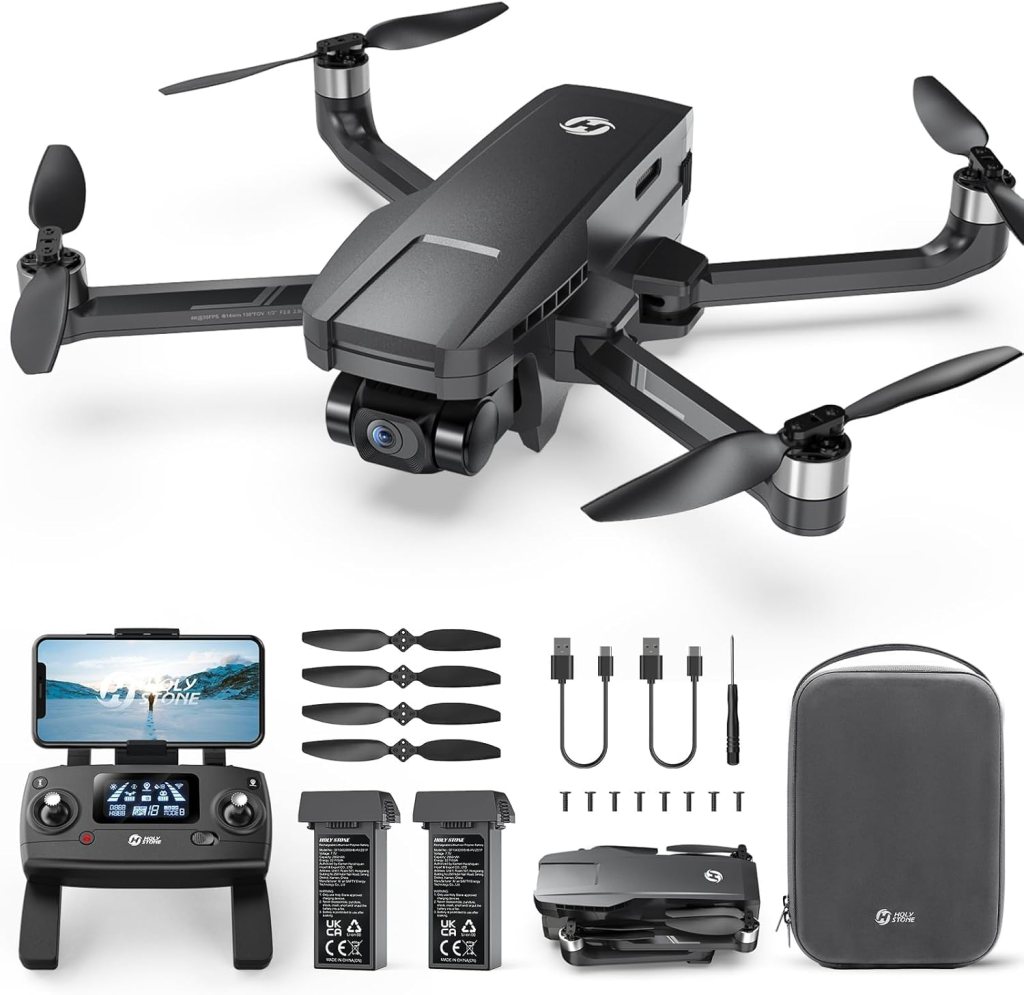
The Holy Stone HS720G is not as polished as the DJI models.
I would not buy it for the prettiest footage on this list. I would buy it for practice, GPS flying, and longer sessions where you want to get comfortable in the air.
It has a 4K camera, 2-axis gimbal, EIS, brushless motors, GPS auto return, and a two-battery setup listed at 52 minutes total flight time on its product listing.
That is useful. Flying more makes you better.
A lot of new drone owners spend half their first week charging batteries. The HS720G gives you more room to practice basic moves: slow push-ins, reveal shots, orbit-style movement, controlled climbs, and smooth returns.
The camera will not match DJI’s cleaner gimbal look. I noticed from the spec mix alone that this is more of a “learn and explore” drone than a “shoot a paid project” drone.
And that is okay.
Review Summary
The HS720G is a sensible pick for people who want a camera drone with GPS features and longer practice time.
The public feedback pattern is mixed but useful. Owners often like the stable beginner flight experience, battery setup, and feature list. Criticism tends to focus on camera expectations, app reliability, and the gap between advertised camera specs and real-world footage.
That gap is common in this price range.
Pros
- Good practice drone: More battery time helps beginners improve.
- GPS auto return: Helpful safety feature for new pilots.
- 2-axis gimbal plus EIS: Better than fixed-camera toy drones.
- Brushless motors: Stronger long-term choice than brushed motors.
- Useful feature set: Follow Me, optical flow, and GPS support add flexibility.
Cons
- Not sub-249g: Registration rules may apply depending on how and where you fly.
- Footage is not DJI-smooth: The stabilization is helpful, but not class-leading.
- App experience may feel less refined: Expect a little patience.
Best For
This is best for beginners who want to practice longer and care more about learning flight than getting the slickest possible image.
It is also a decent backyard, field, and casual landscape drone.
Who Should Skip It
Skip it if you care most about camera quality. DJI Mini 4K and Mini 3 are better fits.
Real Testimonial
The Holy Stone HS720G is best for people who want more practice time and a fuller beginner feature set. It gives you GPS support, auto return, brushless motors, a 4K camera, and a two-battery setup that makes it easier to spend real time learning how to fly.
The camera is not as refined as the DJI models, and the footage will not look as smooth in tougher conditions. Still, it has value as a learning drone. It gives newer pilots room to practice basic movements, understand GPS flying, and get comfortable before stepping into more serious camera gear.
5. Ruko F11GIM2
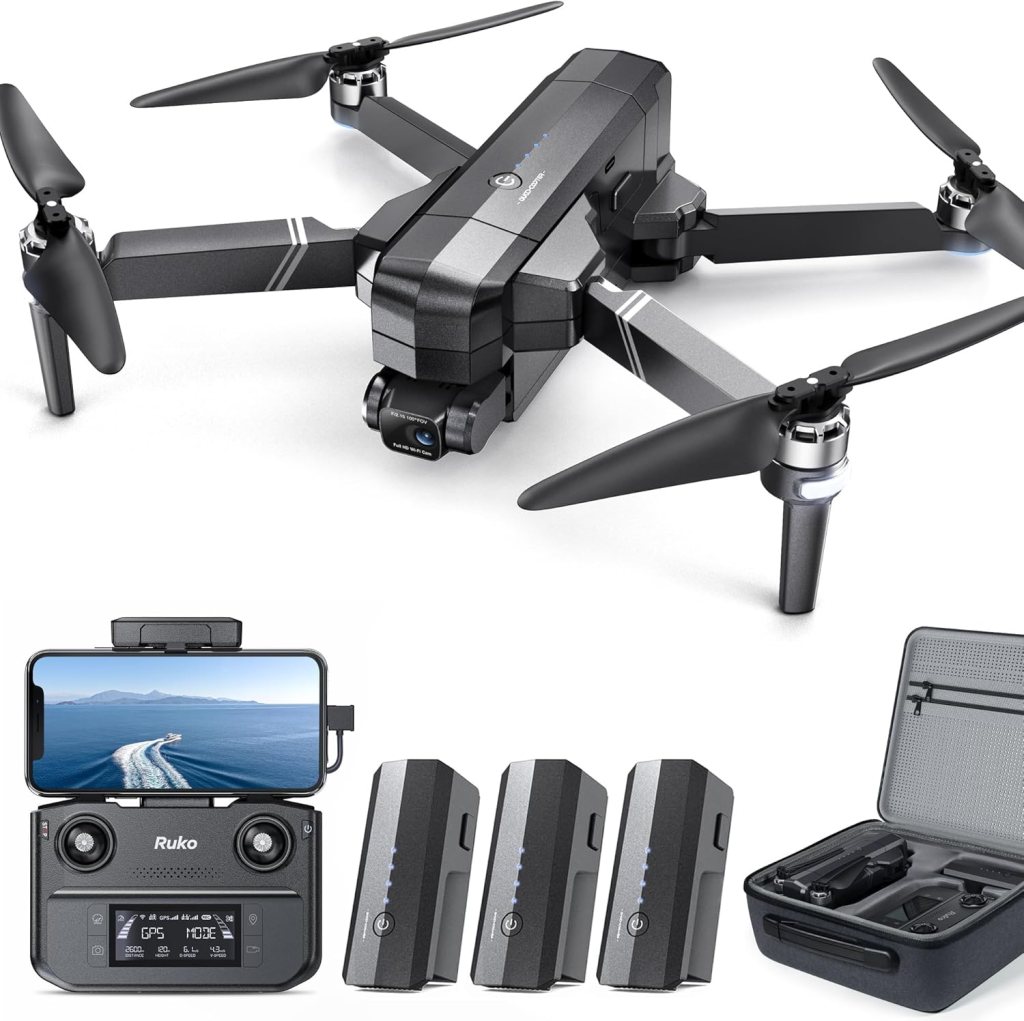
Best Feature-Rich Pick for Casual Pilots
The Ruko F11GIM2 feels like the big-feature option in this group.
It is not tiny. It is not the most elegant camera drone here. But it brings a lot to the table: 4K camera, gimbal plus EIS, two batteries, long claimed flight time, Level 6 wind resistance, GPS features, and built-in FAA Remote ID according to Ruko’s product page.
That last part matters for buyers who want fewer headaches with compliance on larger drones.
The F11GIM2 is better for someone who wants a more substantial drone, not a pocketable travel flyer. It has more of a “weekend flying machine” personality. Take it to an open area, give yourself space, and enjoy the session.
I would not choose it over DJI for pure camera output. But I understand why people like it. It gives you a lot to play with.
Review Summary
The Ruko F11GIM2 is the best pick here for casual pilots who want long sessions and a fuller feature list.
Owner feedback tends to praise battery life, range, GPS return features, and the sturdy feel. More balanced reviews mention that the image quality and app polish do not feel as refined as DJI, especially if you are picky about video.
That matches my expectations. This is not the most elegant pick. It is the loaded one.
Pros
- Long total flight time: Two batteries give you more room to fly.
- Built-in Remote ID: Useful for a drone in this size class.
- Feature-rich setup: GPS, auto return, gimbal, EIS, and wind resistance.
- More substantial feel: Some pilots prefer a larger drone in the air.
- Good for casual exploring: Works well for open-field flying and basic aerial footage.
Cons
- Not as portable: Larger than the sub-249g options.
- Camera polish trails DJI: Good enough for casual use, not my first pick for clean video.
- More to manage: Better for patient beginners than nervous first-timers.
Best For
This is best for casual pilots who want battery life, range, and features more than pocket-size portability.
It works for open outdoor flying, casual video, and people who want a drone that feels more substantial.
Who Should Skip It
Skip it if you want the lightest possible travel drone or the cleanest camera output. The DJI models are better choices there.
Real Testimonial
The Ruko F11GIM2 is the feature-heavy pick for casual pilots who want longer flight sessions, GPS tools, a larger drone feel, and a camera setup with gimbal support and EIS. It is not the most compact choice, but it feels more substantial than the small sub-249g drones.
Its biggest strength is the full package. You get long total battery coverage, built-in Remote ID, strong wind resistance claims, GPS return features, and a drone that feels built for open outdoor flying. The tradeoff is refinement. The camera and app experience do not feel as polished as DJI’s, especially if you are picky about video quality.
Pros and Cons Table
| Drone | Best Strength | Main Tradeoff |
|---|---|---|
| DJI Mini 4K | Best all-around flight and footage | Limited advanced safety sensors |
| Potensic ATOM SE | Simple, lightweight starter setup | EIS is not as smooth as a 3-axis gimbal |
| DJI Mini 3 | Best image-focused pick | Pricing can move above the sweet spot |
| Holy Stone HS720G | More practice time with GPS features | Less polished camera experience |
| Ruko F11GIM2 | Feature-heavy casual flying | Larger and less refined than DJI |
My Final Ranking Logic
I ranked the DJI Mini 4K first because it gives most people the fewest regrets.
That is different from being the most advanced drone. It is not. But under $500, I want reliability, clean footage, smooth stabilization, easy transport, and controls that do not make a new pilot sweat.
The Mini 3 has the better camera angle, but price matters. If it is comfortably under $500, it deserves serious attention. If not, the Mini 4K is cleaner.
Potensic ATOM SE gets the second slot because it makes sense for beginners. It is light, capable, and easy to live with. Not fancy. Good.
Holy Stone HS720G and Ruko F11GIM2 are here because not everyone wants the smallest drone. Some people want more batteries, more features, and more flying time. I get that. Just know what you are trading away: refinement, camera polish, and portability.
Which Drone Would I Personally Buy?
I would buy the DJI Mini 4K.
Not because it wins every category. It does not.
I would buy it because it gets the most important stuff right. The footage is stable. The drone is small. The controls feel friendly. The learning curve is reasonable. It is the one I would be least annoyed to own six months from now.
If I cared more about stills, vertical clips, and cleaner camera files, I would watch for the DJI Mini 3 under $500.
If I were buying for a teenager, a nervous beginner, or someone who mostly wants to learn, I would look hard at the Potensic ATOM SE.
Buying Advice Before You Choose
Do not buy a drone only because it says 4K.
That is the trap.
A stable 2.7K drone can look better than a shaky 4K drone. In this list, though, the best picks manage to give you 4K and enough stabilization to make it useful.
For most buyers, I would prioritize in this order:
- stable flight
- gimbal or strong stabilization
- GPS and Return to Home
- battery bundle
- camera quality
- app reliability
- portability
Obstacle avoidance is rare under $500. Do not fly like the drone will save itself. Trees do not care about your spec sheet.
FAQ
What is the best drone with camera under $500?
The DJI Mini 4K is my best overall pick. It gives you 4K video, a 3-axis gimbal, sub-249g weight, beginner-friendly controls, and reliable flight behavior. That is the mix most people should want.
What is the best 4K drone under $500?
For most buyers, the DJI Mini 4K is the best 4K drone under $500. If the DJI Mini 3 is available under $500, it is the better camera-focused choice, especially for people who care about image quality and vertical shooting.
Is a drone under $500 good enough for real aerial photography?
Yes, for casual and semi-serious work.
You can shoot clean travel clips, property exteriors, landscape shots, neighborhood videos, and social content with the right drone. Just do not expect pro-drone dynamic range, low-light quality, or obstacle sensing.
Which drone under $500 has the best camera?
The DJI Mini 3 has the best camera potential in this group when it is priced under $500. The DJI Mini 4K is the better all-around recommendation, but the Mini 3 has the edge for image-minded buyers.
Is the DJI Mini 4K better than the DJI Mini 3?
Not exactly.
The Mini 4K is the cleaner value pick. The Mini 3 is the better camera-minded pick. I would choose Mini 4K for most beginners and Mini 3 for someone who already knows they care about better image quality.
Is Potensic ATOM SE good for beginners?
Yes. The Potensic ATOM SE is one of the better beginner-friendly camera drones because it is light, GPS-equipped, foldable, and simple to fly. Its biggest limitation is camera stabilization. EIS helps, but it does not match a 3-axis gimbal.
Are Holy Stone drones good for camera work?
Holy Stone drones can be fine for casual camera work, especially learning, practice, and simple outdoor clips. I would not choose the HS720G over DJI if camera quality is the main goal.
Is Ruko F11GIM2 good for beginners?
It can be, especially for patient beginners who want GPS features, longer flight sessions, and a larger drone feel. I would not call it the easiest first drone here. That title goes to DJI Mini 4K or Potensic ATOM SE.
Do I need to register a drone under $500?
Price does not decide registration. Weight and use case do.
The FAA says recreational flyers must register drones weighing 250g or more, while drones under 250g flown under the limited recreational exception are generally exempt from registration. If you fly commercially, different rules apply.
Is a sub-249g drone better?
For many casual flyers, yes.
Sub-249g drones are easier to carry and may avoid some registration requirements for recreational use. They also feel less intimidating. That does not mean they are toys. The DJI Mini 4K and DJI Mini 3 prove that.
Do drones under $500 have obstacle avoidance?
Most do not have serious obstacle avoidance.
Some may have downward sensors or basic positioning help, but you should not expect the drone to dodge trees, poles, walls, or branches. Under $500, your best safety feature is careful flying.
What drone is best for travel videos?
The DJI Mini 4K is my pick for most travel videos. It is small, light, stable, and easy to pack. The DJI Mini 3 is better if camera quality matters more and the price fits.
What drone is best for real estate photos under $500?
The DJI Mini 3 is the strongest pick for real estate-style photos if it is under $500. The DJI Mini 4K is also a good choice for basic exterior video, neighborhood clips, and listing-adjacent content.
For paid real estate work, check local laws and licensing requirements. In the U.S., commercial drone work usually involves Part 107 rules, not just recreational flying.
Is 4K video enough for YouTube?
Yes. 4K is more than enough for YouTube, Instagram, TikTok, website clips, and basic client-facing video.
The bigger question is stabilization. Smooth 4K footage looks good. Shaky 4K footage looks amateur.
How much flight time should I expect?
Expect less than the maximum number printed on the box.
Those numbers usually come from controlled conditions. Wind, recording, movement, temperature, and battery age all cut into real flight time. I like having at least two batteries for any drone.
Should I buy a drone bundle?
Usually, yes.
Extra batteries, spare propellers, a charging hub, and a case make drone ownership easier. A single battery sounds fine until you realize one short flight session can eat it up.
What accessories should I buy first?
Start with extra batteries, spare propellers, a microSD card, a landing pad, and a basic case.
ND filters are useful once you care about smoother video motion, but they are not the first thing I would buy for a beginner.
Can I fly these drones in national parks?
Do not assume you can.
The National Park Service says launching, landing, or operating unmanned or remote-controlled aircraft in units managed by the National Park Service is prohibited in most cases. Always check the exact location before flying.
What should I avoid in a drone under $500?
Avoid drones that only brag about resolution.
Also be careful with unknown brands, vague battery claims, fake-looking review patterns, fixed cameras with no stabilization, and drones that do not clearly explain GPS, Return to Home, app support, or replacement parts.
Which drone would I recommend for a first-time buyer?
DJI Mini 4K.
It has the fewest weird compromises. That matters. A first drone should make you want to fly more, not send you into forums every weekend trying to fix connection problems.
Conclusion
The best camera drone under $500 is not the one with the loudest spec sheet. It is the one you will actually fly, trust, and bring home with footage worth keeping.
For me, that is the DJI Mini 4K. It is small, stable, easy to learn, and good enough for the kind of aerial footage most people actually shoot.
The Potensic ATOM SE is the better lightweight starter pick if you want something simple and practical. The DJI Mini 3 is the better image-first choice if the price is right. Holy Stone HS720G gives learners more practice time. Ruko F11GIM2 brings more features and a larger flying feel.
Before you fly, check the rules, check the weather, and check your location. Drone footage is only worth getting if you can get it safely and legally. National parks, local parks, neighborhoods, beaches, and public lands can all have different restrictions, so I would rather check twice than ruin a good flight day.
If I had to pick one from these 5 best drones with camera under $500, I would still pick the DJI Mini 4K. It is not perfect. It is just the one that makes the most sense.
Affiliate Disclaimer
This article contains affiliate links. We may earn a small commission if you purchase through these links, at no extra cost to you.



Leave a Reply