The phrase 5 best LTE security cameras sounds simple until you actually start comparing them. Then it gets messy.
Some cameras look great on paper but lean too hard on subscriptions. Some shoot sharp video but burn through battery if you place them where every branch, rabbit, and delivery truck triggers a clip.
Others have decent hardware but the app feels like it was built by someone who has never tried to check a gate at night from a phone with one bar.
LTE cameras are not regular outdoor cameras with a different sticker on the box. They live or die by cellular signal, battery discipline, solar placement, and motion detection that does not panic every five minutes.
The FCC points out that wireless coverage depends on things like distance from cell sites, obstacles, and interference, which is exactly why I care more about real placement than marketing range claims.
For this list, I focused on cameras that make sense for off-grid monitoring, remote property, farm entrances, vacant homes, construction sites, RV lots, and places where Wi-Fi is either unavailable or too weak to matter.
I also kept the reviews balanced. I looked at product specs, brand documentation, listing details, and repeated buyer review patterns. I am not going to pretend every product is perfect. LTE security cameras always involve tradeoffs.
That is the category.
Related articles
- 5 Best 4G LTE Cameras for Off-Grid Security
- 5 Best Outdoor Cameras Without Subscription
- 8 Best REOLINK Cameras (Buyer’s Guide)
Quick Comparison: Best LTE Security Cameras
| Camera | Best For | Video | Power |
|---|---|---|---|
| Reolink Go PT Ultra | Best Overall | 4K | Battery + solar |
| SEHMUA 4G LTE Solar Camera | Simple Smaller-Property Setup | 2K | Battery + solar |
| eufy 4G LTE Cam S330 | 4K Detail + Dual Connection | 4K | 9,400mAh battery + solar |
| Arlo Go 2 | Mainstream App Experience | 1080p | Rechargeable battery |
| Vosker VKX / V200-style LTE Camera | Gates, Land, Job Sites | Clip-based monitoring | Solar |
Quick Take Table
| Camera | What I Like Most | Main Catch |
|---|---|---|
| Reolink Go PT Ultra | Strong feature set without feeling too fragile | Setup and data plan details matter |
| SEHMUA 4G LTE | Simple, useful, practical | App polish is not top-tier |
| eufy S330 | Sharp video and Wi-Fi/LTE flexibility | Bigger feature set means more settings |
| Arlo Go 2 | Familiar brand and clean app feel | Plan costs can change the value |
| Vosker | Built for rougher remote use | Less like a home security camera |
How I Chose These LTE Security Cameras
I did not rank these by spec sheet alone.
That is how people end up with the wrong camera.
I looked for cameras that solve a real problem: watching a place where Wi-Fi is weak, missing, or not worth fighting with. That means cellular compatibility matters.
So does motion accuracy, battery life, solar support, night vision, storage, weather resistance, and how often buyers complain about setup, missed alerts, or app frustration.
I also gave extra weight to cameras that make sense outside the suburbs. A driveway camera near a router is easy. A gate camera on ten acres is not.
1. Reolink Go PT Ultra

Best Overall LTE Security Camera
The Reolink Go PT Ultra is my best overall pick because it feels like the most complete LTE camera for the widest range of real jobs.
It has 4K video, pan and tilt coverage, smart detection, night vision, solar support, and local or cloud storage options. Reolink’s listing describes 4G LTE use, 8MP video, color night vision, smart detection, and solar-powered operation.
This is the camera I would look at first for a driveway, gate, barn, detached garage, boat storage area, or rural entrance where I want more than a narrow fixed view.
The pan and tilt range is the big advantage. A fixed camera can be excellent, but only if you know exactly where action will happen.
The Go PT Ultra gives you more room to work. It can look across a larger space, and that matters on properties where people, vehicles, and animals do not politely enter from the same angle every time.
The image quality is also a real selling point. 4K does not magically solve poor placement, but it helps when you need to identify a vehicle, face, package, gate latch, or animal at a little distance.
Customer review patterns are mostly what I expect from Reolink. Buyers tend to like the image quality, solar option, and broad coverage.
The complaints usually cluster around setup, carrier compatibility, app notifications, or learning the right sensitivity settings. That does not scare me. It just means this is not a “throw it on a tree and forget it” camera.
That is true of most good LTE cameras.
Pros
- Strong 4K detail
- Pan and tilt coverage works well for open areas
- Solar support makes sense for remote placement
- Smart detection helps reduce junk alerts
- Good fit for gates, driveways, barns, and rural property
Cons
- Cellular setup needs attention
- Placement matters a lot
- 4K clips can use more battery and data
- Not the simplest option for a first-time user
My Review Summary
The Reolink Go PT Ultra is the most balanced pick here. It gives you strong video, flexible viewing, and the kind of feature set that fits real off-grid security work. I would buy it for a property where I want actual detail, not just a motion ping.
Real Testimonial
The Reolink Go PT Ultra is the strongest all-around LTE security camera in this group. It makes the most sense for rural driveways, gates, barns, vacation properties, and places where you want a wider view without relying on Wi-Fi. The 4K video gives it a real advantage over basic LTE cameras, especially when you need cleaner detail on vehicles, people, animals, or activity near an entrance.
2. SEHMUA 4G LTE Solar Security Camera
Best Simple Pick for Smaller Properties
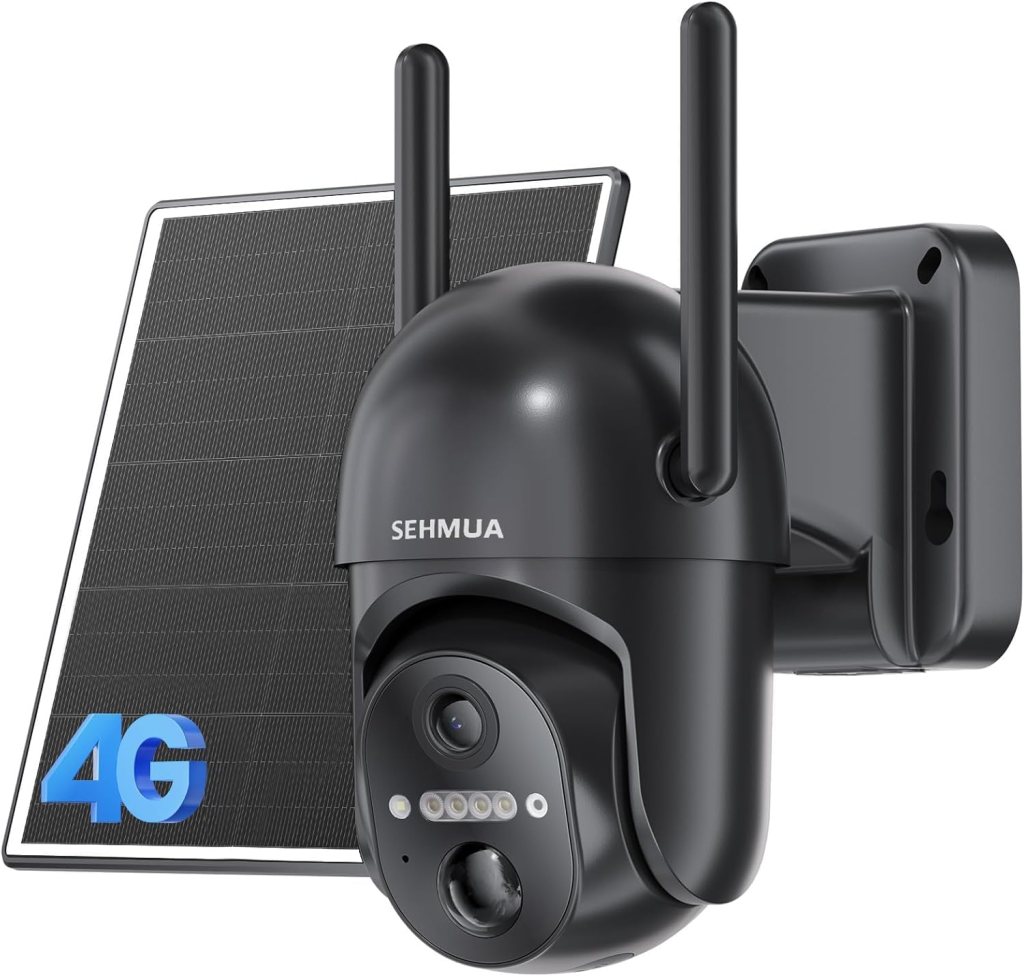
The SEHMUA 4G LTE Solar Security Camera is the one I would pick for someone who wants a useful cellular camera without turning the whole project into a hobby.
I am not calling it the cheapest pick because that usually sounds like a warning label. The better way to describe it is this: it gives you the core stuff people actually need.
LTE connectivity. Solar charging. Outdoor use. Motion alerts. Two-way audio. 2K video. Color night vision. A built-in battery. The listing mentions a 10,400mAh rechargeable battery, 6W solar panel, 4G LTE use, and true wireless setup.
That combination makes sense for side yards, small cabins, sheds, equipment areas, and secondary entrances.
I would not put this ahead of the Reolink for overall polish or long-term confidence. Reolink feels more mature. Eufy feels more refined. Arlo feels more mainstream. SEHMUA feels more practical and less precious.
That can be a good thing.
Real buyer review themes tend to lean positive around ease of mounting, solar usefulness, and basic monitoring. The complaints tend to be about app behavior, connectivity quirks, sensitivity settings, or expectations around battery life. Again, normal for the category.
A solar LTE camera still needs sunlight. A battery still drains faster if the camera records constantly. A weak signal still causes problems.
No camera cheats physics.
Pros
- Good feature mix for the money
- Solar panel and battery setup are useful for remote spots
- 2K video is enough for many property uses
- Color night vision adds practical value
- Good pick for smaller areas or secondary coverage
Cons
- App experience may feel less refined
- Not my first choice for high-detail evidence
- Buyer setup experience appears more mixed
- Carrier and location checks are still important
My Review Summary
The SEHMUA is the practical pick. It is not the most elegant LTE camera, but it covers the basics well and makes sense for buyers who want a solar cellular camera without stepping into the highest price tier.
Real Testimonial
The SEHMUA 4G LTE Solar Security Camera is the simple, practical pick. It is best for someone who wants cellular monitoring, solar charging, and motion alerts without paying for the most premium camera on the list. I would consider it for a shed, side yard, small cabin, equipment area, or secondary entrance where you want useful coverage rather than a high-end security system.
3. eufy Security 4G LTE Cam S330

Best for 4K Detail and Dual Wi-Fi/LTE Use
The eufy Security 4G LTE Cam S330 is the cleanest pick for people who want sharper video and more connection flexibility.
It supports 4G LTE and 2.4GHz Wi-Fi, which makes it more flexible than LTE-only cameras. The listing describes 4K video, cellular and Wi-Fi duo mode, pan and tilt, AI tracking, a SIM card, and a 32GB SD card. Another listing notes a 9,400mAh battery and upgraded solar panel.
That dual-mode connection is a bigger deal than it sounds.
Some buyers need LTE all the time. Others need LTE only when Wi-Fi goes down or when the camera moves between locations. The eufy S330 fits that middle ground nicely. It can work around a home, cabin, or outbuilding now, then move to a weaker location later.
The 4K image is one of the main reasons to buy it. If you care about license plates, facial detail at closer range, or cleaner footage at night, extra resolution helps. It will not turn a badly placed camera into a detective tool, but it gives you more to work with.
Real buyer review patterns are generally positive around image clarity, solar charging, and the convenience of cellular backup. The recurring complaints tend to involve setup friction, app behavior, and occasional connection issues depending on carrier strength.
That sounds familiar because LTE cameras all have the same weak point: they depend on the network around them.
Pros
- 4K video looks sharp
- LTE and Wi-Fi duo mode adds flexibility
- Solar panel and large battery suit outdoor use
- Local storage included on some listings
- Good fit for homes, cabins, and mixed-use locations
Cons
- More features means more setup decisions
- Not the smallest camera
- Cellular performance depends heavily on signal
- App settings may take a little tuning
My Review Summary
The eufy S330 is the pick I like for people who care about image quality but still want LTE backup. It feels more polished than many cellular cameras, and the Wi-Fi/LTE flexibility gives it a longer useful life.
Real Testimonial
The eufy Security 4G LTE Cam S330 is the best pick here for someone who wants sharp 4K footage and connection flexibility. The dual Wi-Fi and LTE setup gives it a useful advantage because it can work in more than one kind of environment. You can use Wi-Fi where it is available, then lean on LTE where it is not.
4. Arlo Go 2
Best App Experience from a Mainstream Brand
The Arlo Go 2 is not the flashiest camera here.
That is partly the point.
It is the one I would consider for someone who already likes Arlo, wants a familiar app, and does not want to mess with a more obscure security camera brand.
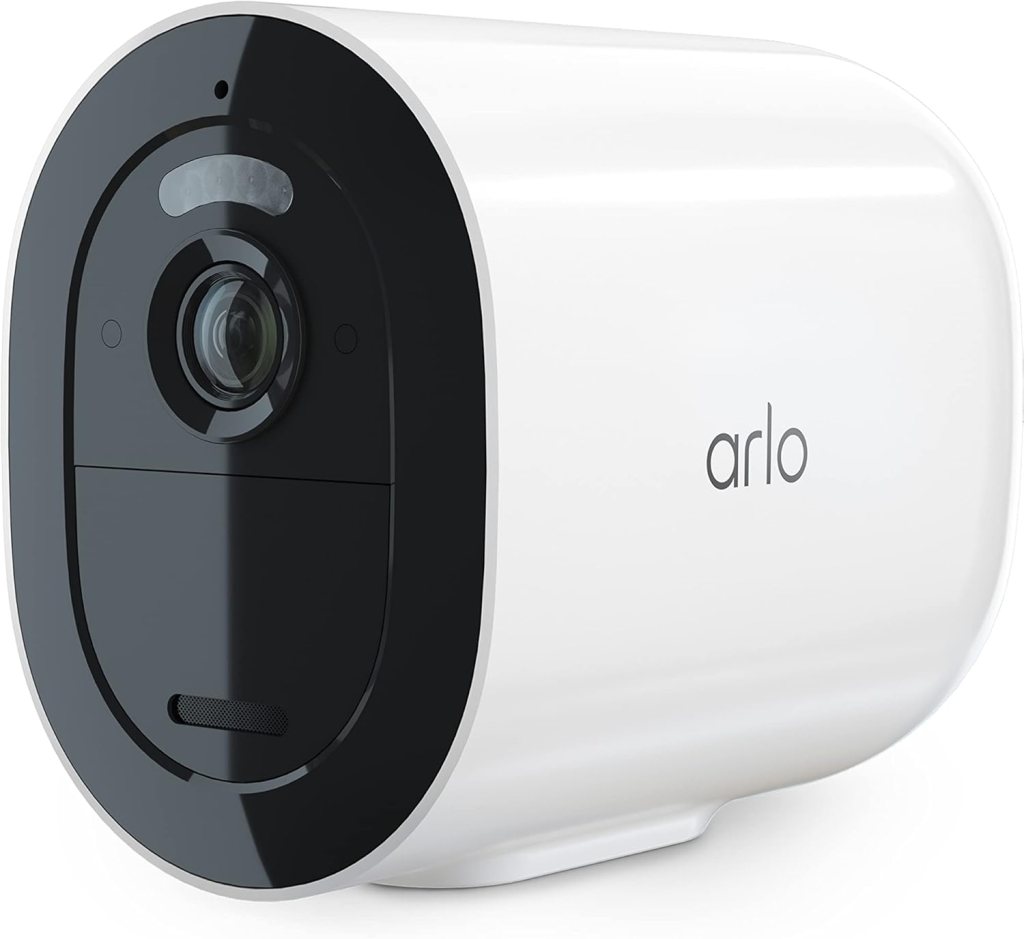
The Arlo Go 2 as a 4G LTE and Wi-Fi camera for vacation homes, RVs, boats, construction sites, camping spots, and remote locations. It also notes that a SIM card is not included.
The resolution is 1080p, which sounds modest next to the 4K options. I do not love that on paper. In real life, 1080p can still be enough if the camera is close to the action and the angle is right.
The more important part is the experience. Arlo has a cleaner ecosystem than many low-cost cellular camera brands. If you want a camera that feels closer to a normal consumer smart-home product, Arlo makes sense.
The catch is the cost structure. Arlo cameras often make more sense when you are comfortable with subscriptions and plan requirements. Some buyers are fine with that. Others hate it.
I would not buy the Go 2 if my main goal were maximum detail per dollar. I would buy it for a second home, RV, boat storage area, or remote spot where app usability and brand familiarity matter more than the sharpest possible image.
Customer review themes tend to praise convenience, remote access, and the Arlo ecosystem. Complaints often point to plan costs, battery expectations, and connectivity issues in weaker signal areas.
Pros
- LTE and Wi-Fi support
- Familiar app experience
- Good option for RVs, boats, and vacation homes
- Weatherproof wireless design
- Stronger mainstream brand recognition
Cons
- 1080p trails the 4K cameras
- Plan costs affect long-term value
- SIM and service details require attention
- Not the best pick for maximum image detail
My Review Summary
The Arlo Go 2 is the mainstream pick. It is not the most powerful camera in this list, but it is easier to recommend to someone who values app polish and brand familiarity over spec-sheet dominance.
Real Testimonial
The Arlo Go 2 is the best option for buyers who care about brand familiarity and app experience more than having the highest resolution. It records in 1080p, so it does not compete directly with the 4K cameras on image detail. Still, it makes sense for RVs, boats, vacation homes, campsites, storage areas, and other places where you want a camera that feels familiar and easy to manage.
5. Vosker VKX / V200-Style LTE Security Camera
Best for Job Sites, Gates, and Remote Land
Vosker is different from the other cameras here.
It feels closer to a cellular trail camera and remote-site monitor than a typical smart-home security camera. That is not a criticism. For the right buyer, it is exactly the point.
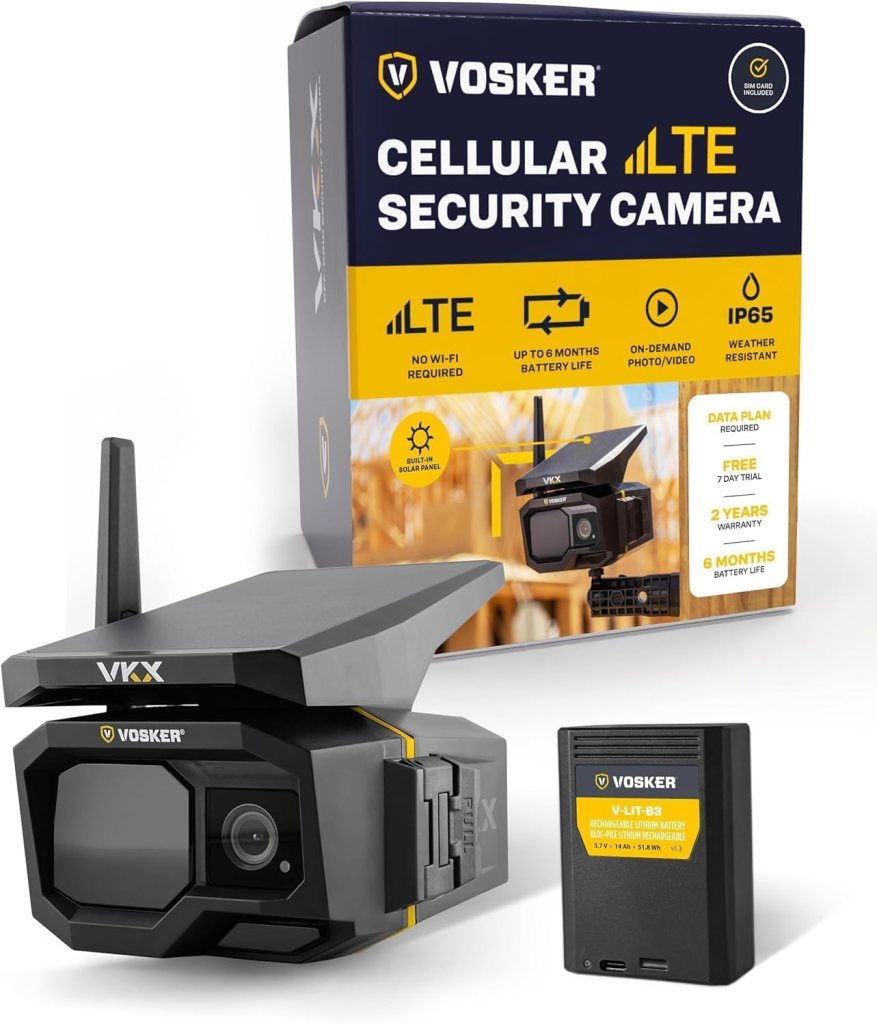
The Vosker VKX listing describes a solar-powered 4G LTE outdoor cellular security camera with no Wi-Fi needed, motion activation, night vision, a SIM card included, on-demand mode, and IP65 weather resistance. It also says the solar-powered design can support long autonomy with a larger panel.
The older V200-style product line also has a reputation around remote monitoring, job sites, rural entrances, and places where you care more about catching activity than running a polished home-security feed.
I like Vosker for gates, land, construction areas, storage yards, ranch entrances, and remote assets. It makes less sense if you want a smooth doorbell-camera-style experience.
That is the tradeoff.
This is a tool camera. Not a lifestyle camera.
Buyer review patterns often praise the ability to monitor places without Wi-Fi. Complaints tend to focus on plan limitations, app expectations, trigger behavior, and the fact that some Vosker models feel more like event cameras than full live-view security systems.
That distinction matters. A buyer expecting Arlo-style smart-home behavior may be disappointed. A buyer watching a gate on rural land may love it.
Pros
- Built for remote monitoring
- Solar LTE design fits land, gates, and work sites
- Good match for rougher outdoor use
- No Wi-Fi needed
- Useful for motion-triggered property checks
Cons
- Less like a polished home camera
- Plan details matter
- Not ideal for constant live viewing
- Clip-based workflow may not suit everyone
My Review Summary
Vosker is the rugged pick. I would not choose it for a suburban front porch. I would consider it for a gate, job site, or rural property where the camera needs to survive weather, distance, and imperfect conditions.
Real Testimonial
The Vosker VKX is the rugged remote-monitoring pick. It is less like a polished smart-home camera and more like a serious field camera for gates, job sites, rural land, storage yards, farms, and areas where Wi-Fi is not part of the conversation. That makes it very useful for the right buyer and a poor fit for the wrong one.
Which LTE Security Camera Should You Buy?
Here is my honest breakdown.
Choose the Reolink Go PT Ultra if you want the best overall LTE security camera. It has the strongest balance of detail, coverage, smart detection, solar support, and real property usefulness.
Choose the SEHMUA 4G LTE Solar Security Camera if you want a straightforward cellular solar camera for a smaller area. It is practical, not fancy.
Choose the eufy 4G LTE Cam S330 if you want sharp 4K video and the option to use Wi-Fi or LTE. It is a strong pick for homes, cabins, and flexible placements.
Choose the Arlo Go 2 if app experience and brand familiarity matter more than raw specs.
Choose the Vosker VKX or V200-style LTE camera if you are monitoring a gate, job site, storage area, or remote land.
Buying Guide: What Actually Matters With LTE Security Cameras
Check the Carrier Before the Camera
This is the step people skip.
Do not start with the camera. Start with signal.
Check the carrier coverage where the camera will be mounted. Not where your house is. Not where your truck gets signal. The exact mounting spot.
A camera on a metal gate post, under trees, near a hill, or inside a shed may behave very differently from your phone in the driveway.
Solar Helps, But It Does Not Fix Bad Placement
Solar is great.
It is not magic.
A solar LTE security camera still needs sun exposure. Shade, winter weather, heavy alert volume, and poor cellular signal all drain battery faster. If the camera wakes up constantly because grass, branches, or animals keep triggering it, solar may struggle to keep up.
4K Is Useful Only If the Signal and Battery Can Keep Up
I like 4K on LTE cameras.
I also think people overbuy it.
Higher resolution helps with detail, but it can use more data and battery. If you mainly need to know whether someone entered a gate, 2K or even 1080p can be fine. If you need identifying detail, 4K is worth paying for.
PTZ Cameras Are Great, But Fixed Views Can Be More Reliable
Pan and tilt cameras give you flexibility.
They also add decisions.
A fixed camera pointed at one gate may catch the same view every time. A PTZ camera can cover more ground, but you need to think through presets, motion tracking, and what view the camera returns to after movement.
I like PTZ for open areas. I like fixed views for choke points.
Storage Matters More Than People Think
Check local storage, cloud storage, clip limits, and subscription rules before buying.
Some cameras include microSD support. Some lean on cloud plans. Some offer live view but limit recorded clips. None of that is exciting, but it matters the first time you need footage.
Subscription Costs Can Change the Real Price
The camera price is only part of the story.
LTE cameras may require data plans, cloud plans, or brand-specific subscriptions. A camera that looks affordable upfront can become annoying if the monthly plan feels high for what you get.
Privacy and App Security Should Not Be an Afterthought
Security cameras are internet-connected devices. Treat them that way.
Use strong passwords. Turn on security features. Keep firmware updated. Be careful with shared access. The FTC’s home security camera guidance recommends steps like researching before you buy, securing the network, updating software, and using strong passwords.
FAQ
What is the best LTE security camera overall?
The Reolink Go PT Ultra is my best overall pick because it gives the best blend of 4K video, pan and tilt coverage, solar support, smart detection, and outdoor usefulness. It fits more real-world placements than most LTE cameras.
Do LTE security cameras work without Wi-Fi?
Yes. LTE security cameras can work without Wi-Fi by using a cellular connection. Most require a SIM card and compatible service plan.
Do LTE security cameras need a SIM card?
Most LTE security cameras need a SIM card or built-in cellular service. Some include a SIM card. Others require you to provide one.
How much data does an LTE security camera use?
It depends on clip length, resolution, motion frequency, live viewing, and upload settings. A 4K camera with frequent alerts will use more data than a 1080p camera recording short clips.
Can I use an LTE camera on a farm or rural property?
Yes, if the cellular signal is strong enough at the mounting location. Farms, barns, gates, livestock areas, fuel tanks, and equipment sheds are common uses.
Are solar LTE security cameras reliable?
They can be reliable if placed well. Solar performance depends on sunlight, battery size, camera activity, temperature, and cellular signal strength.
What is better, LTE or Wi-Fi for security cameras?
Wi-Fi is usually better for homes with strong internet. LTE is better for remote areas, gates, cabins, job sites, RVs, boats, and places without dependable Wi-Fi.
Can LTE security cameras record 24/7?
Some can, but many LTE cameras are designed around motion-triggered clips to save battery and data. Always check the recording mode before buying.
Which LTE security camera has the best image quality?
The Reolink Go PT Ultra and eufy 4G LTE Cam S330 are the strongest image-quality picks here because both offer 4K video.
Which LTE security camera is best for a gate or driveway?
The Reolink Go PT Ultra is my pick for most driveways because of its pan and tilt coverage. For rural gates or remote land, Vosker may make more sense.
Do LTE security cameras work in bad weather?
Most outdoor LTE cameras are weather resistant, but not all are built equally. Look for weather ratings, sealed ports, strong mounts, and real buyer feedback about rain, snow, and heat.
Can I use an LTE security camera for a construction site?
Yes. LTE cameras are useful for construction sites because they do not need job-site Wi-Fi. Vosker, Reolink, Arlo, and eufy all have models that can fit that use case.
Are LTE cameras good for RVs or boats?
Yes. Arlo Go 2 is especially easy to recommend for RVs and boats because it supports LTE and Wi-Fi and comes from a familiar smart-camera ecosystem.
Do LTE cameras have night vision?
Yes, most LTE security cameras include night vision. Some offer infrared night vision, while others add color night vision with spotlights or low-light sensors.
Do I need a subscription for an LTE security camera?
Often, yes. You may need a cellular data plan, cloud storage plan, or brand service plan. Some cameras also support local storage, which can reduce cloud dependence.
What carrier works best for LTE security cameras?
The best carrier is the one with the strongest signal at your exact camera location. Do not assume the best carrier in town is the best carrier at your gate, cabin, or barn.
Are LTE security cameras secure?
They can be, but setup matters. Use strong passwords, update firmware, avoid shared weak logins, and check privacy settings.
What should I avoid when buying an LTE security camera?
Avoid buying based only on resolution. Signal strength, plan costs, app reliability, battery life, and motion detection matter just as much.
Is 4G LTE still good enough for security cameras?
Yes. 4G LTE is still useful for security cameras, especially for motion clips, alerts, live view, and remote monitoring. Signal quality matters more than the label.
What is the best LTE security camera for remote land?
For remote land, I would compare the Reolink Go PT Ultra and Vosker first. Reolink is better for a more camera-like experience. Vosker feels more purpose-built for remote monitoring.
Conclusion
The best LTE security camera is not always the one with the biggest spec list.
It is the one that works where you actually need it.
For most people, I would start with the Reolink Go PT Ultra. It gives the strongest mix of video quality, coverage, solar support, and smart detection.
The eufy S330 is close behind if you want 4K video and Wi-Fi/LTE flexibility. SEHMUA makes sense for a simpler solar setup. Arlo Go 2 is the safer mainstream pick. Vosker is the one I would trust more for gates, rougher land, and job-site-style monitoring.
Before buying, check signal first. Then check plan costs. Then think about where the camera will sit all year, not just on the day you install it.
A good LTE camera should feel boring after setup. It should wake up, record the right things, ignore most nonsense, and let you see what happened without turning property security into a second job.
That is the real test.
For privacy and device security, I would also follow the FTC’s guidance on securing home security cameras, especially around strong passwords, updates, and camera security features.
Affiliate Disclaimer
This article contains affiliate links. We may earn a small commission if you purchase through these links, at no extra cost to you.






Leave a Reply