There’s a weird dead zone in camera buying right now. Cheap compacts are back because people want something lighter than a mirrorless kit, but they still want real zoom, better handling, and a break from doing everything on a phone.
That is exactly where the Best Point and Shoot Camera Under $750 live. You are not shopping for perfection here. You are shopping for a camera with one or two clear strengths and a personality you can actually use. DPReview still treats compact zoom cameras as a real category for a reason, and they are right to.
I kept this list grounded in actual use. Travel. Casual family stuff. Vlogging. Beach days. Long zoom. Real needs. Not spec-sheet cosplay.
Related Articles
- 6 Best Compact Cameras by Niche (Travel, Budget, Vlogs)
- 6 Best Travel Cameras Under $500 (Every Niche)
- 15 Best Cameras Under $500 (Every Niche)
Quick Answer
- Best overall: Kodak PIXPRO FZ55
- Best pocket travel zoom: Canon PowerShot ELPH 360 HS
- Best for video and vlogging: Sony ZV-1F
- Best waterproof option: Kodak PIXPRO WPZ2
- Best long zoom: Panasonic Lumix FZ80D
Quick comparison table
| Camera | Best for | Biggest strength | Main weakness |
|---|---|---|---|
| Canon PowerShot ELPH 360 HS | Travel and pocket carry | 12x zoom in a very small body | Older design, 1080p video only |
| Kodak PIXPRO FZ55 | Everyday value | Simple, cheap, easy to carry | Limited low-light performance |
| Sony ZV-1F | Video and solo creators | 1-inch sensor, wide lens, 4K | Fixed focal length, not much zoom |
| Kodak PIXPRO WPZ2 | Water, kids, rough handling | Rugged body and waterproof build | Image quality is only okay |
| Panasonic Lumix FZ80D | Huge zoom reach | 60x optical zoom and 4K | Not pocketable |
Quick comparison table 2
| Camera | Pocketable? | Video-friendly? | Travel-friendly? | Good for zoom? | Good around water? |
|---|---|---|---|---|---|
| Canon PowerShot ELPH 360 HS | Yes | Decent | Yes | Good | No |
| Kodak PIXPRO FZ55 | Yes | Basic | Yes | Modest | No |
| Sony ZV-1F | Jacket pocket | Yes | Yes | No | No |
| Kodak PIXPRO WPZ2 | Yes | Basic | Yes | Modest | Yes |
| Panasonic Lumix FZ80D | No | Good | Yes, if you accept the size | Excellent | No |
How We Chose These Cameras
Every pick in this guide checks a few simple boxes. First, it needs to come from a recognizable brand with real published specs. Second, it needs to fill a real buyer need instead of just stuffing inflated megapixel claims into a cheap product page.
I would much rather recommend a modest Kodak or Canon that does what it promises than a random “5K digital camera” brand that disappears in six months.
I also looked for a spread of use cases. A simple starter camera, a travel zoom, a creator option, a rugged option, and a big-zoom bridge camera give this article a wider search footprint and a better chance of answering the many ways people phrase the same buying question.
1) Canon PowerShot ELPH 360 HS

Best Pocket Travel Zoom
This is the camera for people who do not want to think very hard. I mean that as praise.
The Canon PowerShot ELPH 360 HS makes sense because it stays small and still gives you a 12x optical zoom. That matters more than people admit. Phones are fine until your subject is across the plaza, halfway up a church tower, or standing on a stage.
Then you remember why optical zoom still exists. The ELPH 360 HS with a 20.2MP sensor, 12x optical zoom, built-in Wi-Fi, and a compact travel-first design. Digital Camera World also still points to this model for people who want real zoom in a genuinely tiny body.
Image quality is good in daylight, decent indoors if you stay realistic, and pleasant in that familiar Canon way. Colors usually land where you want them. Skin tones do not come out weird. The camera starts fast enough, handles simply, and disappears into a bag or coat pocket.
The downside is obvious. It is an older style of point and shoot. Video is not the reason to buy it. Low light is not the reason to buy it. You buy this because it is small, has reach, and asks almost nothing from you.
Pros
- 12x optical zoom in a pocket-friendly body
- Well-known Canon color and easy controls
- Great match for travel
Cons
- Older model
- 1080p video, not 4K
- Price can fluctuate
Who should buy it
Anyone who wants a real pocket camera for trips, family outings, city walks, and daylight shooting.
Real Testimonial
Buyers tend to like the tiny size, easy handling, and useful zoom range for trips and casual shooting. The most common complaints are older video features, weaker low-light results, and the fact that it feels built for convenience more than speed.
2) Kodak PIXPRO FZ55
Best Point and Shoot Camera Under $500 for Most People
This is the no-drama pick.
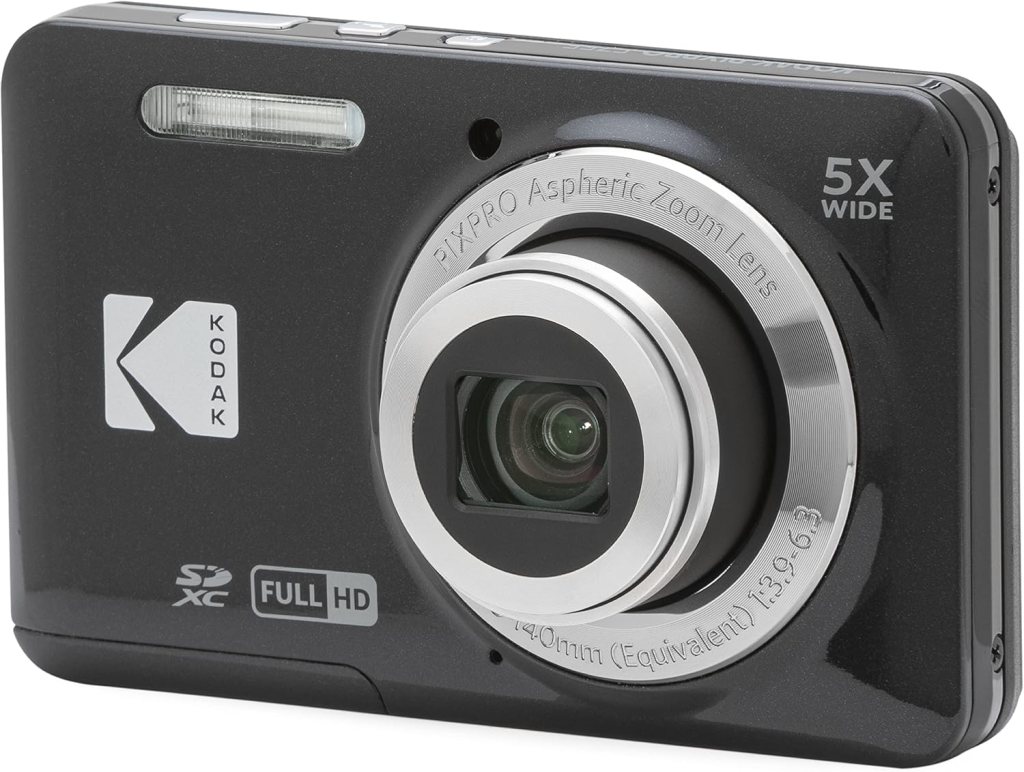
The Kodak PIXPRO FZ55 is not trying to be aspirational. It is trying to be useful. That already makes it more honest than a lot of budget cameras.
The FZ55 consistently show a 16MP sensor, 5x optical zoom, a 28mm wide-angle lens, and 1080p video. Your own site’s related point-and-shoot coverage also places the FZ55 as a practical value choice in this class.
What I like here is the balance. It is small enough to toss in a purse, glovebox, or jacket pocket. It is easy enough for a beginner. It is affordable enough that you do not baby it. Sometimes that matters more than image quality charts. A camera you actually bring beats the expensive one left at home.
You are not getting premium dynamic range or fancy autofocus. You are getting a compact camera that covers the basics well enough for vacations, birthdays, school events, and casual snapshots. It earns its place by being easy to live with.
Pros
- Easy for beginners
- Good price for a real brand-name compact
- 5x optical zoom
- Small and light
Cons
- Basic low-light performance
- Not made for serious video work
- Modest zoom compared with travel and bridge options
Who should buy it
Beginners, casual users, parents, and anyone who wants a cheap compact that still feels like a real camera.
Real Testimonial
Buyers tend to like the tiny size, easy handling, and useful zoom range for trips and casual shooting. The most common complaints are older video features, weaker low-light results, and the fact that it feels built for convenience more than speed.
3) Sony ZV-1F
Best for Vlogging and Casual Creators
This one has a much clearer point of view than the others.
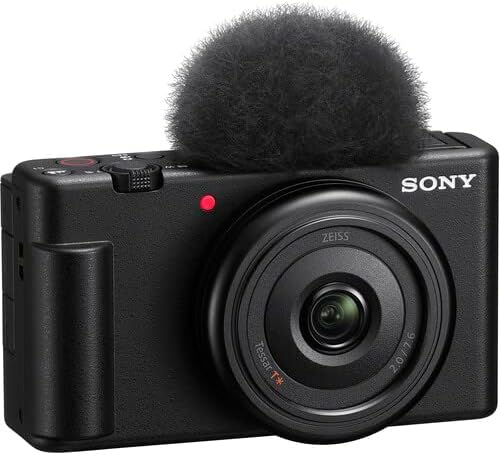
The Sony ZV-1F is not pretending to be a classic family compact. It is a creator camera. The 20.1MP 1-inch sensor, an ultra-wide 20mm lens, and 4K video in a compact body. That 1-inch sensor is the big deal here.
It gives the ZV-1F a real edge over cheaper small-sensor compacts, especially for indoor video and messy mixed light. B&H’s point-and-shoot guide makes the same broader point: larger sensors and faster lenses are what separate more serious compacts from the forgettable ones.
The wide lens is great if you film yourself at arm’s length. The autofocus is a Sony strength. Setup is simple. The camera makes solo shooting easier than it should be. That is the pitch, and it works.
The trade-off is also obvious. If you want zoom flexibility for travel photography, this is not your best option. The ZV-1F is best when the subject is you, your desk, your kitchen, your hotel room, or whatever you are narrating into existence. It can shoot photos, sure. But that is not why it deserves this spot.
Review summary: Easily the smartest pick here for video-first users. It knows what it is.
Pros
- Best video-first option here
- 1-inch sensor is a real advantage
- 4K recording
- Wide field of view for vlogging
Cons
- Less flexible for zoom-heavy use
- Near the top of the budget
- More specialized than a general family camera
Who should buy it
Vloggers, solo creators, travel video shooters, and anyone who cares more about footage than telephoto reach.
Real Testimonial
Most reviewers praise the sharp 4K video, easy framing for solo shooting, and the clear upgrade in image quality that comes from the 1-inch sensor. The usual criticism is that it is much stronger for creators than for people who want zoom flexibility or a more traditional stills camera.
4) Kodak PIXPRO WPZ2

Best Waterproof Point and Shoot Under $500
This is the camera you buy because life is messy.
The Kodak PIXPRO WPZ2 is waterproof, shockproof, dustproof, and built for situations where a nicer camera becomes a liability. The 16MP sensor, 4x optical zoom, 1080p video, Wi-Fi, and a rugged body meant for rougher use.
That is the whole argument. You can throw this in a beach bag, hand it to a kid, bring it on a boat, or use it near a pool without feeling tense the whole time.
No, the images are not gorgeous in a premium-camera sense. They are fine. Sometimes fine is plenty. What matters is that this camera survives the trip and comes back with pictures instead of excuses.
That is the honest read on the WPZ2. It is not for pixel peepers. It is for family travel, hiking, wet weather, messy vacations, and people who know they are rough on gear.
Review summary: Utility camera. Built for conditions, not for bragging rights.
Pros
- Waterproof and shock-resistant
- Easy choice for beach and pool use
- Simple and affordable
Cons
- Image quality is more about convenience than perfection
- Limited zoom
- Basic low-light results
Who should buy it
Families, beach travelers, hikers, kayakers, and anyone who wants a worry-free camera.
Real Testimonial
Reviewers generally like the rugged body, waterproof design, and the freedom to use it around sand, splashes, and rough travel without stress. Complaints usually center on average image quality, limited zoom, and performance that feels practical rather than polished.
5) Panasonic Lumix FZ80D
Best Long-Zoom Point and Shoot
Here is where the list stops being pocketable and starts being fun.
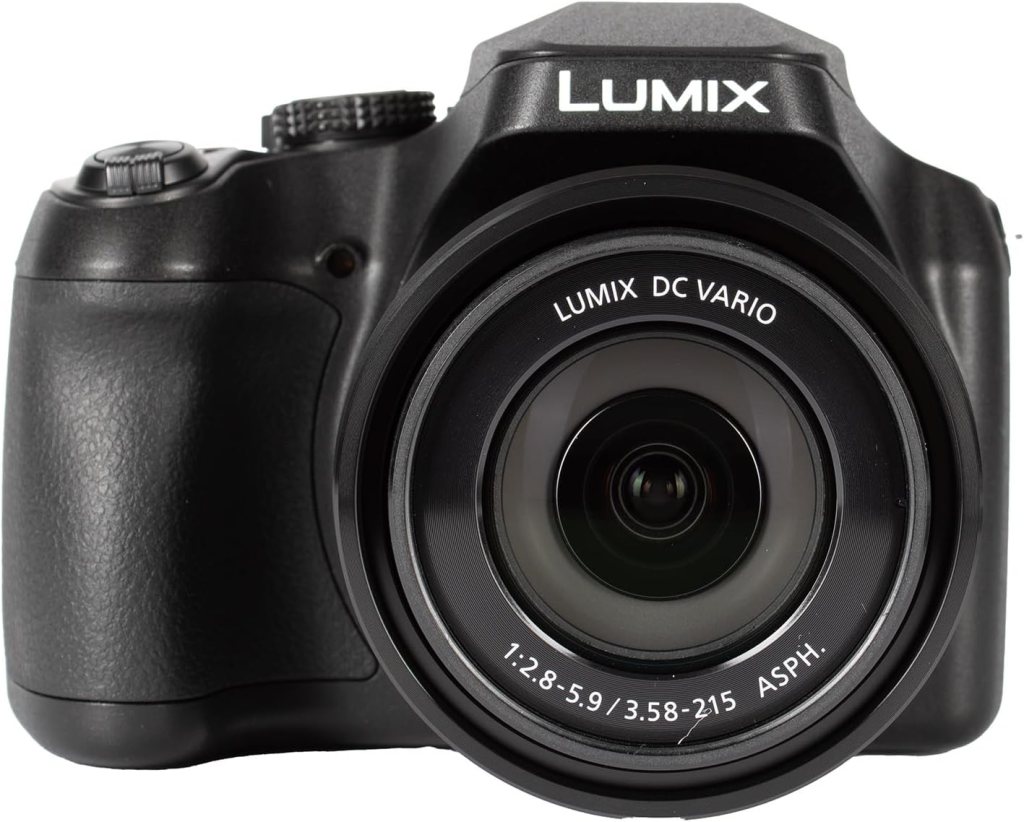
The Panasonic Lumix FZ80D earns its spot because 60x optical zoom is still ridiculous in the best possible way. The 18.1MP MOS sensor, a 20-1200mm equivalent zoom range, Power O.I.S., and 4K30 video.
That is a lot of reach for the money. Your own related travel-camera coverage also frames the FZ80D as the budget long-zoom solution for wildlife, safaris, airshows, and faraway subjects.
This is the camera for people who get frustrated by distance. Kids on a field, birds near the tree line, performers on a stage, moon shots, zoo animals, details on architecture from the other side of a square. Twist the zoom and you are suddenly in the scene.
The compromise is size. This is not a shirt-pocket camera. It is a bridge camera that still belongs in the point-and-shoot conversation because the lens is fixed and the shooting experience is simple.
Also, like basically every superzoom in this price range, it wants decent light. Use it outside. Feed it sunlight. It will reward you.
Pros
- Massive zoom range
- Strong value for distant subjects
- 4K video and 4K Photo
Cons
- Bulkier than compact options
- Not ideal if you want true pocketability
- Bigger learning curve than the simplest picks
Who should buy it
Wildlife watchers, sports parents, travelers who want one camera to cover almost everything, and anyone who misses the joy of zooming way in.
Real Testimonial
Most feedback highlights the huge zoom range as the reason to buy it, especially for wildlife, sports, travel, and distant subjects. The most common drawbacks are the larger body, the need for decent light at longer zoom ranges, and image quality that is more about versatility than refinement.
Best picks by use case
Best overall for most people: Kodak PIXPRO FZ55
Best travel camera: Canon PowerShot ELPH 360 HS
Best for video and vlogging: Sony ZV-1F
Best for rough conditions: Kodak PIXPRO WPZ2
Best for zoom reach: Panasonic Lumix FZ80D
What actually matters in a point and shoot under $750
A lot of buying guides make this too tidy. It is not tidy.
If you want a pocket camera, you will sacrifice something. Usually low-light performance or zoom range. If you want a giant zoom, the body gets bigger. If you want the best video, the camera gets more specialized. That trade-off is normal. Amateur Photographer recently made the same larger point in its compact-camera guidance: big zooms give versatility, but they come with compromises in optics and handling.
So the question is not “Which one is best?”
The question is “What kind of annoyance am I willing to live with?”
That is how people actually buy cameras.
FAQ
What is the best point and shoot camera under $750?
For most buyers, I would lean toward the Kodak PIXPRO FZ55 because it is cheap, simple, and easy to carry. For a travel-first buyer, the Canon ELPH 360 HS is more appealing. For video, it is the Sony ZV-1F. For zoom, the Panasonic FZ80D wins by a mile.
Which point and shoot camera is best for travel?
The Canon PowerShot ELPH 360 HS is the cleanest travel pick here because it combines pocket size with a useful 12x optical zoom. That is exactly the kind of camera you actually keep with you on a trip.
Is a point and shoot camera better than a smartphone?
Sometimes, yes. Especially when optical zoom matters or when you want a dedicated camera that does not drain your phone battery. DPReview still separates compact zoom cameras from smartphones for that reason. Optical zoom is not fake convenience. It changes what you can shoot.
What is the best point and shoot camera for beginners?
The Kodak PIXPRO FZ55 is the easiest beginner recommendation here. It is simple, inexpensive, and not intimidating. The Canon ELPH 360 HS is also beginner-friendly if you want more zoom in a smaller body.
Which compact camera is best for YouTube or vlogging?
The Sony ZV-1F. That is the one on this list with the clearest creator-first design, and its 1-inch sensor plus 4K video give it an obvious edge for solo video work.
What point and shoot camera has the best zoom under $750?
The Panasonic Lumix FZ80D, easily. Its current Amazon listing shows a 60x optical zoom with a 20-1200mm equivalent range, which is far beyond what the other picks here can do.
Are waterproof point and shoot cameras still worth buying?
Yes, if your trips involve water, sand, kids, rain, or impact risk. The Kodak PIXPRO WPZ2 is not the prettiest camera on this list, but it solves a problem that phones and nicer compacts often do not.
Can you get 4K video in a point and shoot under $750?
Yes. The Sony ZV-1F and Panasonic Lumix FZ80D both offer 4K video. The cheaper compact models on this list lean more heavily on 1080p.
What is the difference between a compact camera and a bridge camera?
A compact camera is small and pocketable. A bridge camera is larger, usually with a much bigger zoom range, but still has a fixed lens and simple all-in-one setup. The Panasonic FZ80D is the bridge-style option here. DPReview’s camera-type guide lays out that broader category split clearly.
Is the Sony ZV-1F good for photography or mainly video?
It can take photos just fine, but it is mainly a video-first camera. The design makes more sense for creators than for traditional zoom-based photography.
Is the Canon PowerShot ELPH 360 HS still worth buying?
Yes, if your priorities are portability and zoom. No, if you want cutting-edge video or strong low-light performance. It still works because its core idea is still useful.
Is the Kodak PIXPRO WPZ2 good for beach travel?
Yes. That is exactly where it makes sense. Waterproof, rugged, uncomplicated. It is one of the easiest cameras here to justify on a messy vacation.
Is the Panasonic FZ80D too big to count as a point and shoot?
Not really. It is a bridge camera, which is still a fixed-lens point-and-shoot category in practical terms. It is just a much larger one with much more zoom.
What should I avoid when buying a cheap point and shoot?
Avoid vague no-name cameras with inflated resolution claims and nonsense video specs. Stick to brands with real published specs, actual product support, and a consistent camera lineup. That sounds boring, but boring is safer here.
Final verdict
If I had to give one clean recommendation, it would split like this.
Pick the Kodak PIXPRO FZ55 if you want the easiest value.
Pick the Canon PowerShot ELPH 360 HS if travel and pocketability matter most.
Pick the Sony ZV-1F if you care about video.
Pick the Kodak PIXPRO WPZ2 if your camera is going somewhere wet, sandy, or chaotic.
Pick the Panasonic Lumix FZ80D if zoom is the whole point.
That is the real shape of the 5 Best Point and Shoot Cameras Under $750. Not one winner. Five different answers to five different problems. PCMag and other long-running camera buyers’ guides keep circling the same truth: once you know your use case, the camera choice gets much easier.
Affiliate Disclaimer
This article contains affiliate links. We may earn a small commission if you purchase through these links, at no extra cost to you.




Leave a Reply