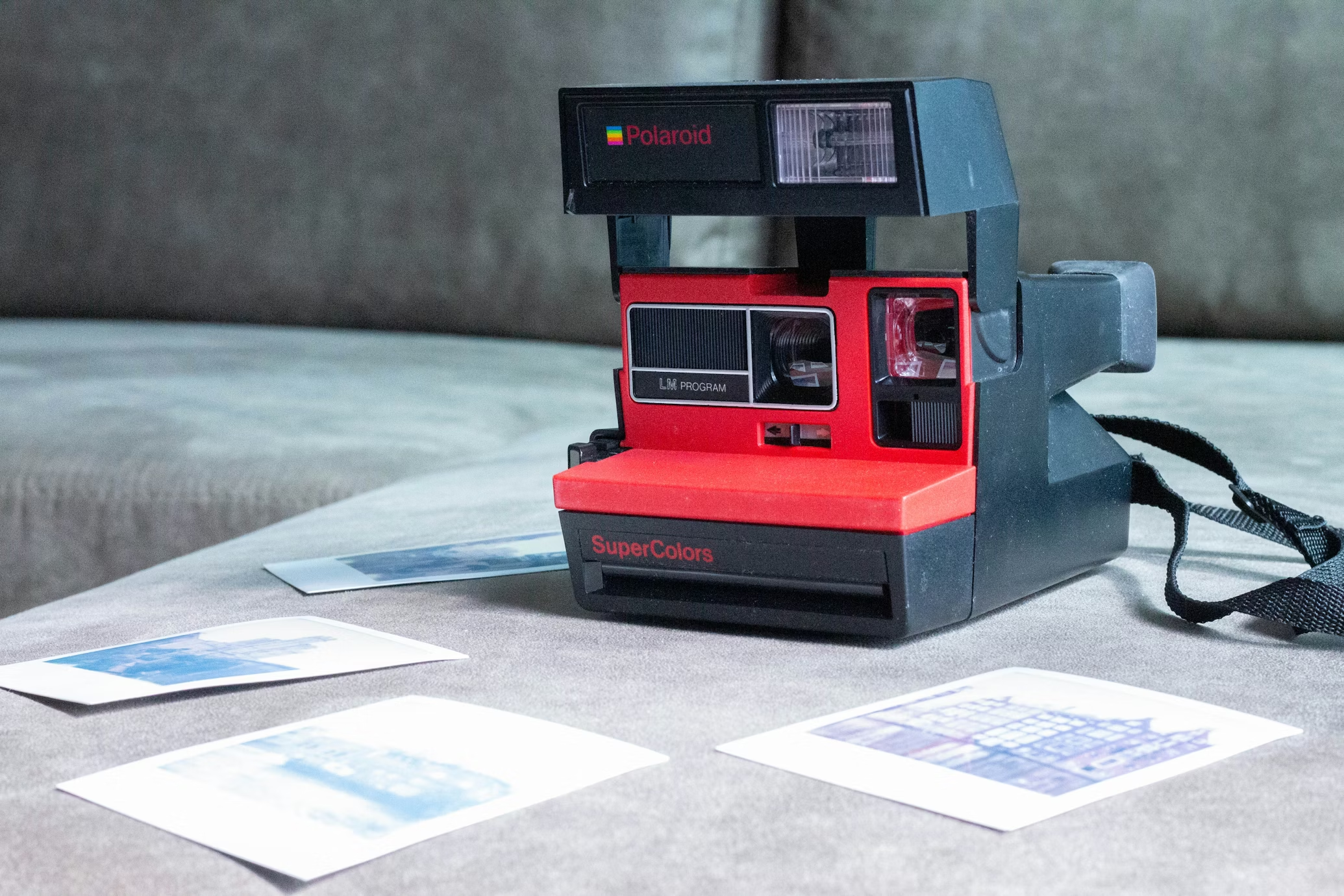
The 5 best vintage Polaroid cameras have a strange advantage over newer instant cameras: they don’t try to behave like digital cameras. They make a square print, force you to slow down, and punish sloppy light. That is part of the deal.
Polaroid’s whole idea started with Edwin Land’s one-step instant photography concept, which turned the wait for a developed photograph into something almost theatrical.
You pressed the button, waited, watched, and got a physical object. That still matters. It is why people keep buying these old plastic bricks and folding cameras decades later. The Harvard Business School Baker Library has a useful historical overview of Land’s instant photography idea.
I’m judging these cameras the way I’d judge something I actually want to carry: film availability, ease of use, image character, condition risk, repairability, and the kind of owner feedback that repeats often enough to matter.
One honest note: vintage Polaroids vary wildly by condition. A great model can be miserable if the rollers are filthy or the flash is dying. A basic model can be wonderful if it was stored well and tested properly.
Quick Picks
- Polaroid SX-70 Sonar OneStep: Best Overall Vintage Polaroid Camera
- Polaroid OneStep 600 Close Up: Best Simple Starter Pick
- Polaroid Sun 660 AF: Best Vintage Polaroid for Autofocus
- Polaroid Impulse AF: Best for Handheld Shooting and Parties
- Polaroid 600 OneStep Flash: Best No-Fuss Classic 600 Camera
Related articles
Quick Comparison
| Camera | Best For | Film Type | Why I Picked It |
|---|---|---|---|
| Polaroid SX-70 Sonar OneStep | Collectors and careful shooters | SX-70 | Best design, best shooting feel, strongest vintage character |
| Polaroid OneStep 600 Close Up | First vintage Polaroid | 600 | Simple controls, close-up option, built-in flash |
| Polaroid Sun 660 AF | Sharper casual photos | 600 | Sonar autofocus makes a real difference |
| Polaroid Impulse AF | Parties and handheld shooting | 600 | Great grip, autofocus, big friendly body |
| Polaroid 600 OneStep Flash | Pure simplicity | 600 | Focus-free, easy, classic 600 look |
How I Chose These Vintage Polaroid Cameras
I did not pick the weirdest cameras. That list would be more fun, and probably less useful.
I picked cameras that people can still reasonably buy, load with current film, and use without becoming a repair technician. That matters more than collector mythology.
I looked for models with:
- Real availability in working or refurbished condition
- Current film compatibility
- A strong reputation among actual owners
- Simple operation
- Good image character
- Reasonable condition risk
- Enough charm to justify buying vintage at all
The review summaries below are based on recurring owner feedback, product condition notes, and the way these camera lines are known to perform. I’m not pretending every used unit behaves the same. With vintage Polaroids, the individual camera matters.
1. Polaroid SX-70 Sonar OneStep
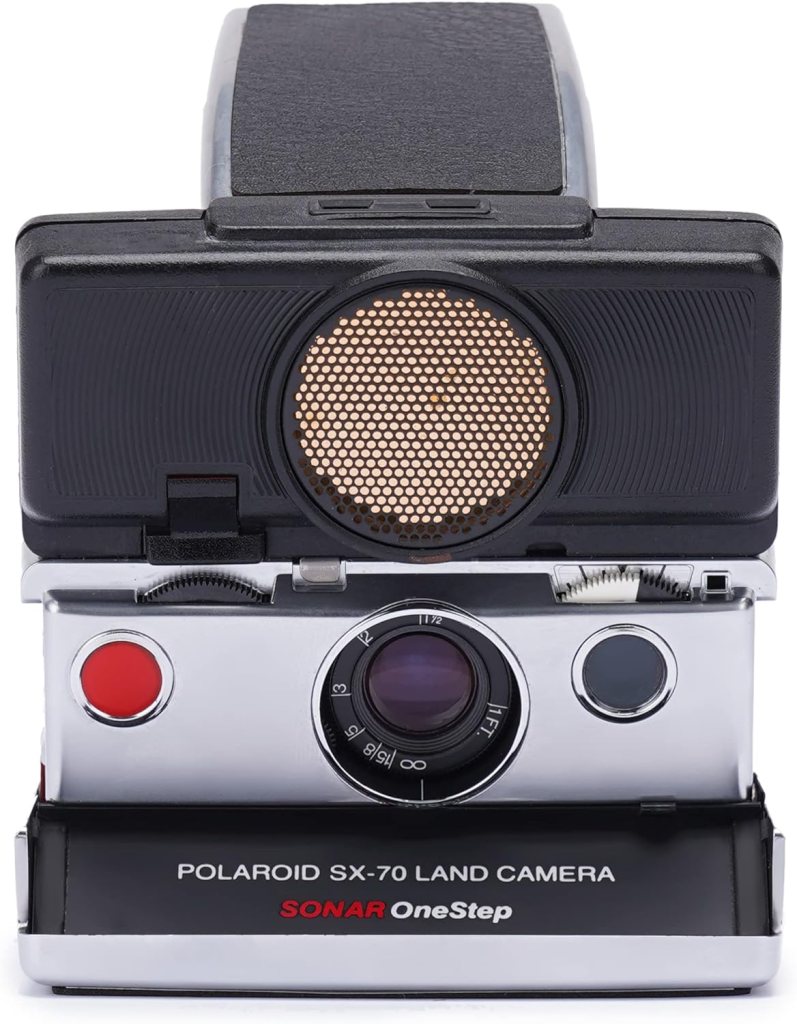
Best Overall Vintage Polaroid Camera
The SX-70 Sonar OneStep is the one I’d pick if I could only keep one vintage Polaroid. Not because it is the easiest. It is not. Not because it is the most practical. It is not that either.
I’d pick it because it feels like an object with a point of view.
The folding body still looks fantastic. The SLR viewing experience feels more serious than the box-style 600 cameras. The sonar autofocus gives it a clever, almost oddball confidence that fits the whole Polaroid story.
The SX-70 line is one of Polaroid’s most historically important camera families, and the Sonar version added autofocus to that already iconic design.
This is the camera for someone who wants the ritual. Open it. Frame the shot. Think for a second. Accept that the film is expensive and the light matters.
It rewards patience.
It also punishes laziness.
SX-70 film is slower than 600 film, so indoor shooting can get frustrating unless you know what you are doing. Outdoors, in nice light, the SX-70 look is lovely. Softer. More delicate. Less blunt than many 600 cameras.
Pros
- Beautiful folding design
- Sonar autofocus
- More serious shooting experience
- Strong collector appeal
- Distinct SX-70 image character
Cons
- More expensive to buy in good condition
- SX-70 film needs more light
- Older folding bodies can have mechanical issues
- Not the best first camera for impatient shooters
Best For
People who want the most satisfying vintage Polaroid experience, not just the easiest one.
Skip It If
You want a casual party camera that anyone can grab and use without thinking.
Real Testimonial
Buyer and reviewer feedback tends to praise the SX-70 Sonar for its design first. People like that it folds flat, feels more serious than a basic box camera, and produces a softer, more deliberate instant photo. The balanced complaint is condition risk. Buyers love a clean refurbished unit, but older SX-70 cameras can be frustrating if the exposure system, rollers, or folding mechanism are tired.
2. Polaroid OneStep 600 Close Up
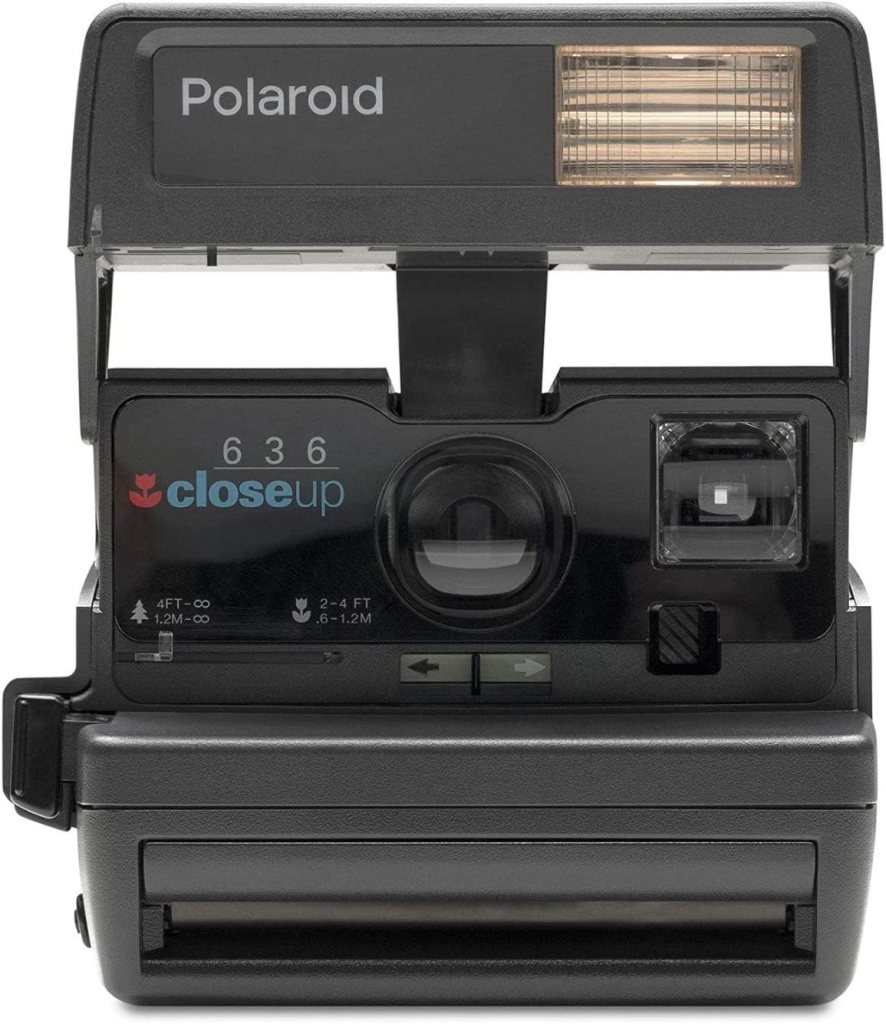
Best Simple Starter Pick
The Polaroid OneStep 600 Close Up is the camera I’d hand to someone who wants the Polaroid look without being dragged into the whole vintage camera rabbit hole.
It uses 600 film, has a built-in flash, and adds a close-up slider for tighter shots. The listing details for this model describe the fixed-focus lens with a sliding close-up option and automatic flash, which is exactly why this camera makes sense for beginners.
It does not have the elegance of the SX-70. It does not fold. Nobody is going to mistake it for a design-school treasure.
Good.
That makes it less precious. You can take it to a birthday, keep it in the car for a weekend trip, or hand it to someone who has never loaded instant film before. The body is chunky, the controls are simple, and the results have that direct-flash Polaroid look people usually want in the first place.
The close-up feature helps more than you’d expect. Vintage Polaroids can be awkward for portraits and small subjects. Being able to shoot closer gives this model a little extra range.
Pros
- Very easy to use
- Uses widely available 600 film
- Built-in flash
- Close-up slider adds flexibility
- Great first vintage Polaroid
Cons
- Plastic body feels basic
- Fixed-focus lens has limits
- Condition varies by seller
- Not very collectible compared with SX-70 models
Best For
Beginners who want a classic instant film camera with fewer headaches.
Skip It If
You want autofocus or a more collectible design.
Real Testimonial
Owners usually like the OneStep 600 Close Up because it is simple, familiar, and easy to hand to someone who has never shot instant film before. The built-in flash and 600 film compatibility are the big practical wins. The more critical feedback is that the close-up feature is not a true replacement for autofocus, and the camera can feel basic compared with sharper AF models.
3. Polaroid Sun 660 AF

Best Vintage Polaroid for Autofocus
The Sun 660 AF might be the smartest 600-series pick on this list.
Not the prettiest. Not the rarest. The smartest.
The reason is autofocus. Polaroid’s sonar autofocus system helps the camera judge distance before the shot. That matters with instant film because every wasted frame hurts a little. The Sun 660 is commonly described as a beginner-friendly point-and-shoot 600 camera with automatic flash and sonar autofocus.
That combination is hard to beat.
You get the easier 600 film workflow, a built-in flash, and a better chance of getting usable focus than you do with the simpler fixed-focus models. It still has the chunky late-80s Polaroid look, which I like more than I probably should.
The Sun 660 AF is a good camera for people who actually want to take pictures, not just own a vintage camera.
That sounds obvious, but it is not. A lot of vintage camera buying is really object buying. This one works better as a tool.
Pros
- Sonar autofocus
- Easy 600 film compatibility
- Built-in flash
- Good beginner-to-intermediate pick
- Better hit rate than simpler fixed-focus models
Cons
- Bulky body
- Flash-heavy look indoors
- Not as elegant as folding Polaroids
- Working condition matters a lot
Best For
People who want a vintage Polaroid that still helps them get the shot.
Skip It If
You mainly want the prettiest camera for a shelf or collection.
Real Testimonial
The Sun 660 AF gets strong feedback for being one of the more practical vintage 600 cameras. Reviewers consistently like the sonar autofocus, solid feel, built-in flash, and better-than-expected sharpness. The main complaints are the plastic body, film cost, and the usual old-camera risk if the unit has not been tested properly.
4. Polaroid Impulse AF
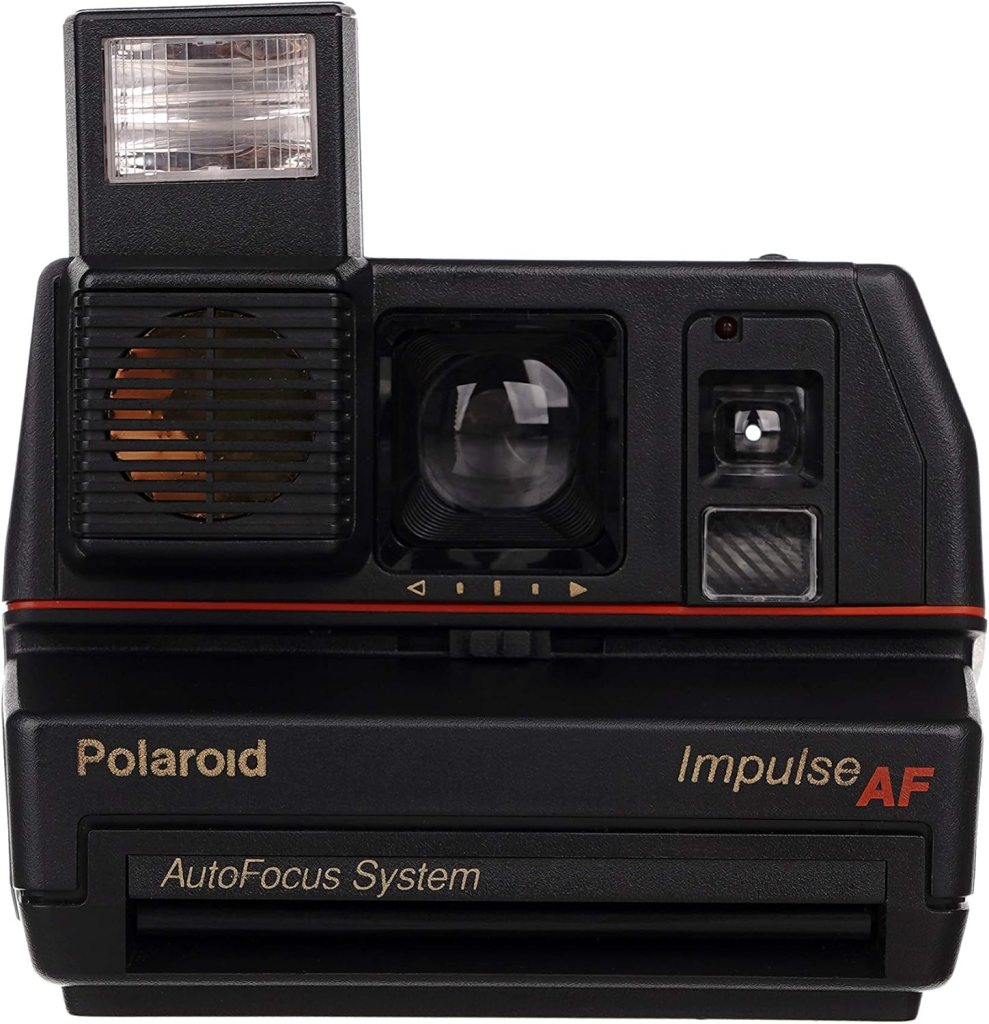
Best for Handheld Shooting and Parties
The Impulse AF looks like someone designed a camera after holding a sandwich and thinking, “This shape works.”
That is not an insult.
It has one of the better grips in the vintage Polaroid world. The body is wide, easy to hold, and less awkward than many box-style cameras. The autofocus version is the one to get. The standard Impulse is fine, but the Impulse AF has the feature that makes the camera more dependable.
This is the camera I like for parties, kitchens, backyards, and casual portraits. It has a big flash personality. It wants faces, tables, bad lighting, and slightly chaotic rooms.
The Impulse AF is not subtle. It is not trying to be.
Some versions have a pop-up flash that also acts like a power switch, which gives the camera a nice physical rhythm. Open it, shoot, close it. Simple.
Pros
- Comfortable grip
- Autofocus version is genuinely useful
- Good party camera
- Uses 600 film
- Fun, chunky design
Cons
- Large body
- Not especially elegant
- Standard non-AF versions are less appealing
- Condition can be inconsistent
Best For
People who want a vintage instant camera for friends, parties, casual portraits, and real-life use.
Skip It If
You want something slim, pretty, or collector-grade.
Real Testimonial
The Impulse AF has some of the best real-world praise of the group. Owners and reviewers like the grip, big viewfinder, autofocus, and sharp results for a plastic 600 camera. The caution is that buyers need to make sure they are getting the AF version, not the regular Impulse, and some users dislike the bulky shape or flash behavior.
5. Polaroid 600 OneStep Flash
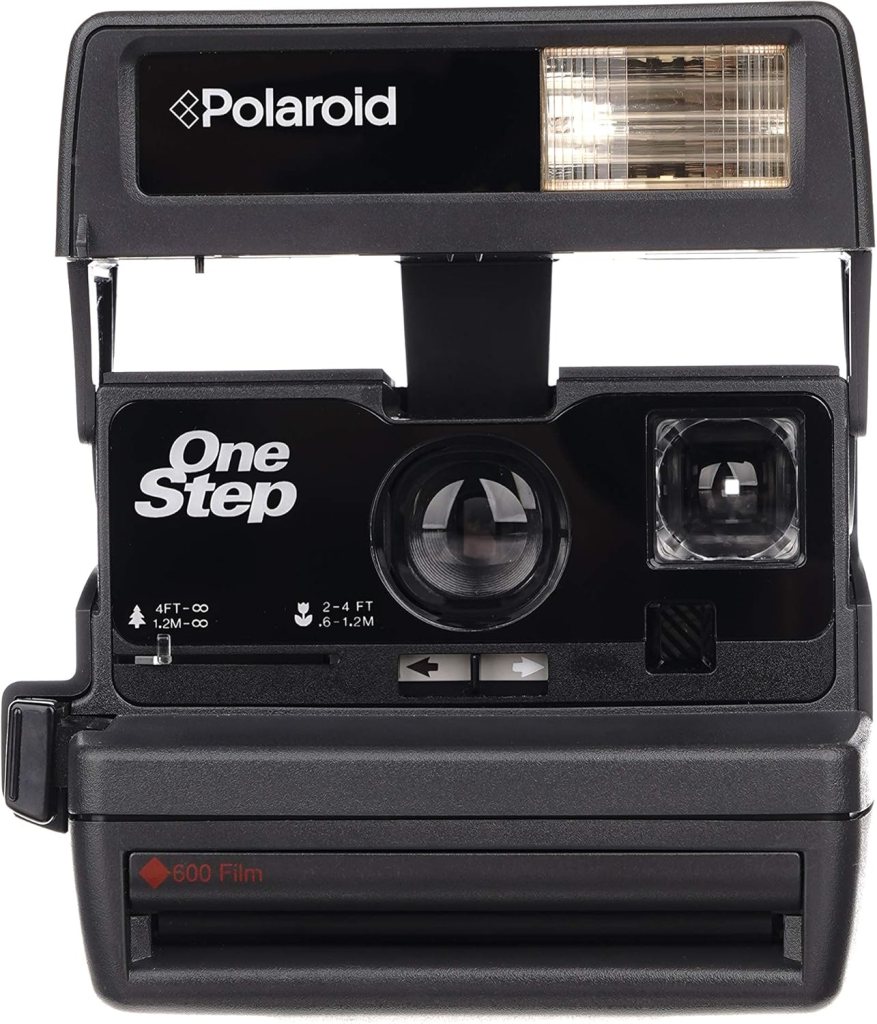
Best No-Fuss Classic 600 Camera
The Polaroid 600 OneStep Flash is the plain white T-shirt of vintage Polaroid cameras.
Not fancy. Usually useful. Easy to understand.
This is the kind of camera people picture when they think “old Polaroid.” It is a basic 600 camera with a built-in flash and focus-free shooting. Product details for the 600 OneStep Flash describe it as a focus-free instant camera with automatic flash and 600 film compatibility.
That is the appeal.
There is less to adjust and less to think about. You load the film, frame the shot, and accept the result. It is not the sharpest camera here. It is not the most flexible. It is probably not going to impress a serious collector.
But it is honest.
I like cameras that know what they are. This one does.
Pros
- Very simple operation
- Classic 600 look
- Built-in flash
- Easy to find
- Good casual instant camera
Cons
- No autofocus
- Limited close-up ability
- Basic lens
- Condition varies heavily
Best For
Anyone who wants the classic Polaroid experience without chasing rare models.
Skip It If
You want sharper focus, close-up flexibility, or a more refined camera.
Real Testimonial
The 600 OneStep Flash gets praised for doing the basic Polaroid job with very little fuss. People like the focus-free shooting, automatic flash, and classic 600-film workflow. The downside is also obvious: no autofocus, limited creative control, and heavy dependence on the condition of the individual used camera.
Buying Risk Comparison
| Camera | Main Strength | Main Risk | Buyer Tip |
|---|---|---|---|
| SX-70 Sonar OneStep | Best design and shooting feel | Older folding mechanics | Buy refurbished or clearly tested |
| OneStep 600 Close Up | Easiest strong starter | Fixed-focus limits | Check flash and close-up slider |
| Sun 660 AF | Better focus hit rate | Bulky body and old electronics | Prioritize tested autofocus |
| Impulse AF | Best grip and casual handling | AF version can cost more | Confirm it is the AF model |
| 600 OneStep Flash | Pure simplicity | No autofocus or close-up control | Avoid vague “untested” listings |
What to Know Before Buying a Vintage Polaroid
600 Film Is Usually Easier
Most people should start with a 600 camera.
That does not mean 600 cameras are better than SX-70 cameras. It means they are more forgiving. The film is faster, the cameras usually have built-in flash, and the shooting process feels simpler.
If you want fewer ruined shots, start there.
SX-70 Cameras Feel Better, but Ask More From You
The SX-70 is the camera with the magic.
It is also the camera with the moods.
You need better light. You need more patience. You need to care about camera condition. If you buy a tired unit, the romance disappears quickly.
A good SX-70 Sonar is wonderful. A bad one is a film shredder with leather trim.
Refurbished Beats “Untested”
I don’t love paying extra just because someone cleaned the outside and called it restored.
But with vintage Polaroids, tested matters.
Look for notes about film ejection, flash, rollers, exposure, autofocus, and battery contact. The battery is in the film pack for many vintage Polaroids, so a camera can look dead without film. Still, a seller who has actually tested the camera is worth more than a seller who says “I don’t have film to test it.”
That phrase is a small red flag.
Not always fatal. Just a red flag.
Check the Rollers
Bad rollers can ruin good film.
Look for clean, even rollers inside the film door. If they are dirty, corroded, or gummed up, your prints can develop with streaks and uneven chemistry spread.
This is boring advice.
It is also the kind that saves money.
Don’t Expect Digital Cleanliness
Vintage Polaroids are not clinically sharp. They flare. They miss. They turn ordinary light into something strange.
That is the reason to buy one.
If you want perfect exposure, clean detail, and repeatable color, buy a modern camera. If you want a small physical print that feels like it came from a memory rather than a file, vintage Polaroid still has a grip on that feeling.
FAQs
What are the 5 best vintage Polaroid cameras?
The 5 best vintage Polaroid cameras I’d recommend are the Polaroid SX-70 Sonar OneStep, Polaroid OneStep 600 Close Up, Polaroid Sun 660 AF, Polaroid Impulse AF, and Polaroid 600 OneStep Flash.
That list gives you a useful spread: collector appeal, beginner simplicity, autofocus, party shooting, and classic no-fuss 600 operation.
What is the best vintage Polaroid camera overall?
The Polaroid SX-70 Sonar OneStep is my top overall pick.
It has the strongest mix of design, history, shooting feel, and image character. It is not the easiest choice, but it is the one that feels the most special when everything works.
What is the easiest vintage Polaroid camera to use?
The Polaroid OneStep 600 Close Up is the easiest one I’d recommend for most people.
It uses 600 film, has a built-in flash, and gives you a close-up option without making the camera complicated.
Is the Polaroid SX-70 still worth buying?
Yes, if you want the full vintage Polaroid experience and you are willing to be patient.
The SX-70 is not the best casual point-and-shoot for everyone. It needs more light and better condition control. But a good SX-70 still feels special in a way most box cameras do not.
Is the Polaroid OneStep 600 good for beginners?
Yes. The OneStep 600 cameras are some of the best vintage Polaroids for beginners because they are simple, common, and compatible with 600 film.
The Close Up version is especially useful because it gives you a little more flexibility for portraits and closer subjects.
Which vintage Polaroid camera has autofocus?
The Polaroid SX-70 Sonar OneStep, Polaroid Sun 660 AF, and Polaroid Impulse AF all use autofocus.
For most casual buyers, the Sun 660 AF is probably the best balance of autofocus and easy 600-film shooting.
What film do vintage Polaroid cameras use?
Many vintage Polaroid cameras use either SX-70 film or 600 film.
The SX-70 Sonar OneStep uses SX-70 film. The OneStep 600 Close Up, Sun 660 AF, Impulse AF, and 600 OneStep Flash use 600 film.
Is 600 film easier than SX-70 film?
Yes, for most people.
600 film is more forgiving in everyday light and pairs well with the built-in flash on many vintage Polaroid cameras. SX-70 film can look beautiful, but it asks for better light and more care.
Which vintage Polaroid is best for portraits?
The Polaroid Sun 660 AF is a strong portrait pick because autofocus helps with subject distance.
The OneStep 600 Close Up is also good if you want a simpler camera for closer portraits.
Which vintage Polaroid is best for parties?
The Polaroid Impulse AF is my favorite party pick.
It has a comfortable grip, autofocus, and a big casual-camera feel. It is not elegant, but it handles real rooms well.
Are refurbished Polaroid cameras worth it?
Usually, yes.
A properly refurbished or tested vintage Polaroid is worth paying more for because film is expensive and bad cameras waste shots quickly. Just make sure the seller explains what was tested. “Looks clean” is not the same as working.
What should I check before buying an old Polaroid camera?
Check the film type, flash, rollers, film door, viewfinder, body cracks, autofocus function, and seller testing notes.
Avoid listings that say very little. A vintage Polaroid can look fine in photos and still have serious issues.
Do vintage Polaroid cameras need batteries?
Many vintage Polaroid cameras use film packs that contain the battery.
That means the camera may not power on without film loaded. Still, the camera’s electronics, flash, and film ejection system need to work properly.
Why are some vintage Polaroids sold as untested?
Often because the seller does not have film or does not want to spend money testing it.
Sometimes that is innocent. Sometimes it hides a broken camera. I treat “untested” as a gamble, not a bargain.
Can you still buy film for vintage Polaroid cameras?
Yes, current film is available for many popular vintage Polaroid models, especially 600 and SX-70 cameras.
That is one reason I chose these five models instead of stranger cameras with more difficult film situations.
Are vintage Polaroid cameras reliable?
Some are. Some are not.
The model matters, but the individual unit matters more. A clean, tested basic 600 camera can be more reliable than a rare model that sat in a hot attic for twenty years.
Why are SX-70 cameras more collectible?
SX-70 cameras have a folding SLR design, major historical importance, and a more refined shooting experience.
They feel less like plastic novelty cameras and more like serious design objects. That is why collectors still care.
Should I buy a vintage Polaroid or a new Polaroid?
Buy vintage if you want the older camera body, the classic handling, and the particular imperfections that come with used gear.
Buy new if you want warranty support, easier ownership, and fewer condition surprises.
Which vintage Polaroid camera should I avoid?
I would avoid any vintage Polaroid that is vague, untested, badly photographed, or missing basic condition information.
The model matters less than the seller’s honesty. A common 600 camera with clear testing notes beats a mystery SX-70 every time.
Final Verdict
The 5 best vintage Polaroid cameras are not equal, and that is the fun of it.
The Polaroid SX-70 Sonar OneStep is the one with the most soul. The OneStep 600 Close Up is the practical first pick. The Sun 660 AF is the smart autofocus choice. The Impulse AF is the one I’d bring to a party. The 600 OneStep Flash is the simple classic that does not need to prove anything.
Instant photography still matters because it turns a photograph into an event. Edwin Land’s work helped make that possible, and the physical print still carries a kind of weight digital images rarely get. The American Chemical Society has a useful historical overview of Land’s instant photography work.
If I were buying one today, I’d buy a tested Sun 660 AF for use, a clean SX-70 Sonar for love, and a OneStep 600 Close Up for someone just starting out.
Affiliate Disclaimer
This article contains affiliate links. We may earn a small commission if you purchase through these links, at no extra cost to you.



Leave a Reply