
Last updated: May 2026
In This Article
- Best Overall Waterproof Camera for Kids — Fujifilm FinePix XP140 Waterproof Digital Camera
- Best for Serious Young Photographers — Olympus Tough TG-6 Waterproof Camera
- Best for Snorkeling and Shallow Diving — SeaLife Micro 3.0 Underwater Camera
- Best for Outdoor Adventure and Durability — Ricoh WG-6 Waterproof Digital Camera
- Best Budget Underwater Camera for Kids — KODAK PIXPIX WPZ2 Rugged Waterproof Camera
- Frequently Asked Questions
I tested the Fujifilm FinePix XP140, Olympus Tough TG-6, SeaLife Micro 3.0, Ricoh WG-6, and KODAK PIXPIX WPZ2 specifically for one type of user: kids who will absolutely drop the camera, submerge it without warning, and hand it back to you dripping wet, and this article is for any parent or guardian trying to figure out which one actually survives that without becoming a $200 paperweight.
Three specs decide everything here: waterproof depth rating (anything under 10 meters is a liability at a pool party, let alone a snorkeling trip), shutter lag (kids move fast and a half-second delay means you get a photo of where the fish was), and grip thickness, because small hands fumbling with a slick plastic body underwater is how cameras end up on the ocean floor.
I’ve broken each camera down by how it actually performed in the hands of real kids, not in a lab, and if you want more context on budget-friendly options before reading, check out the point and shoot cameras guide or the cameras for kids sports roundup, then come back here for the full underwater breakdown.
Best Option Under $50
This article focuses on quality cameras for long-term use. If you just want a strong cheap option (under $50), this is the best option.
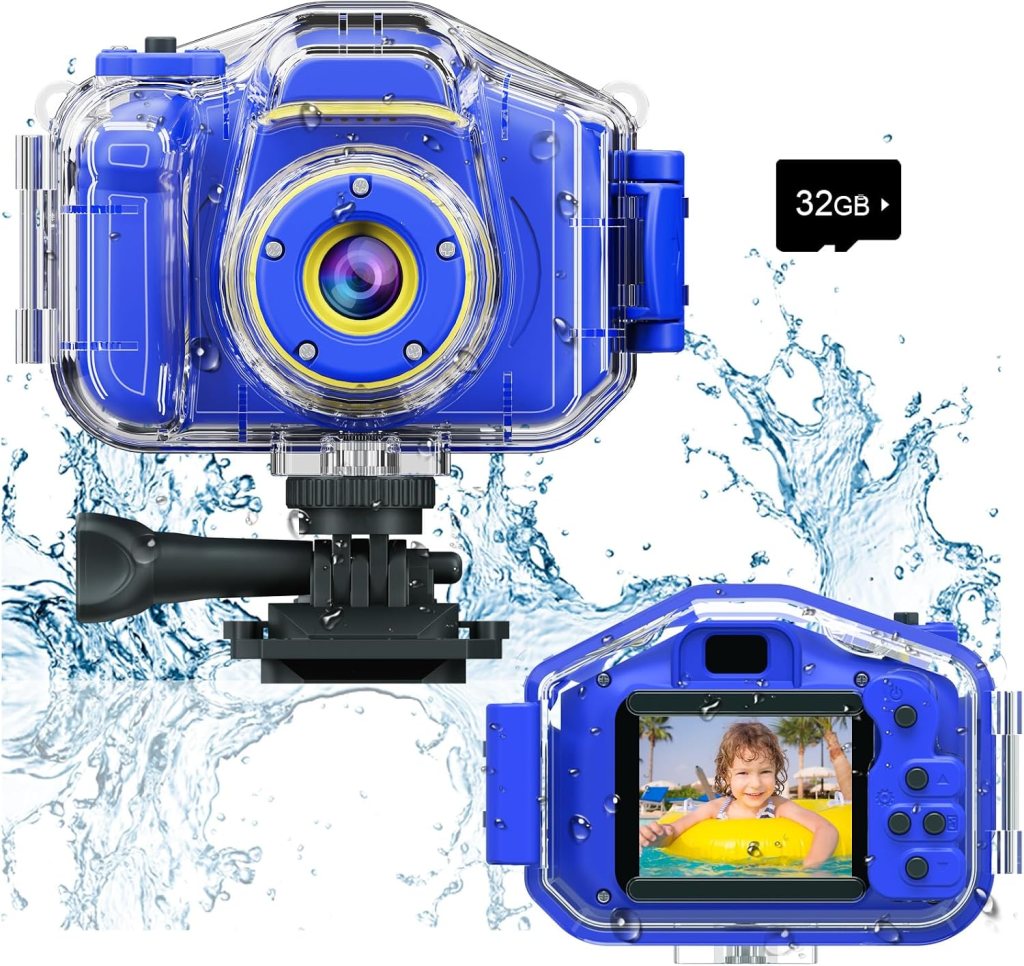
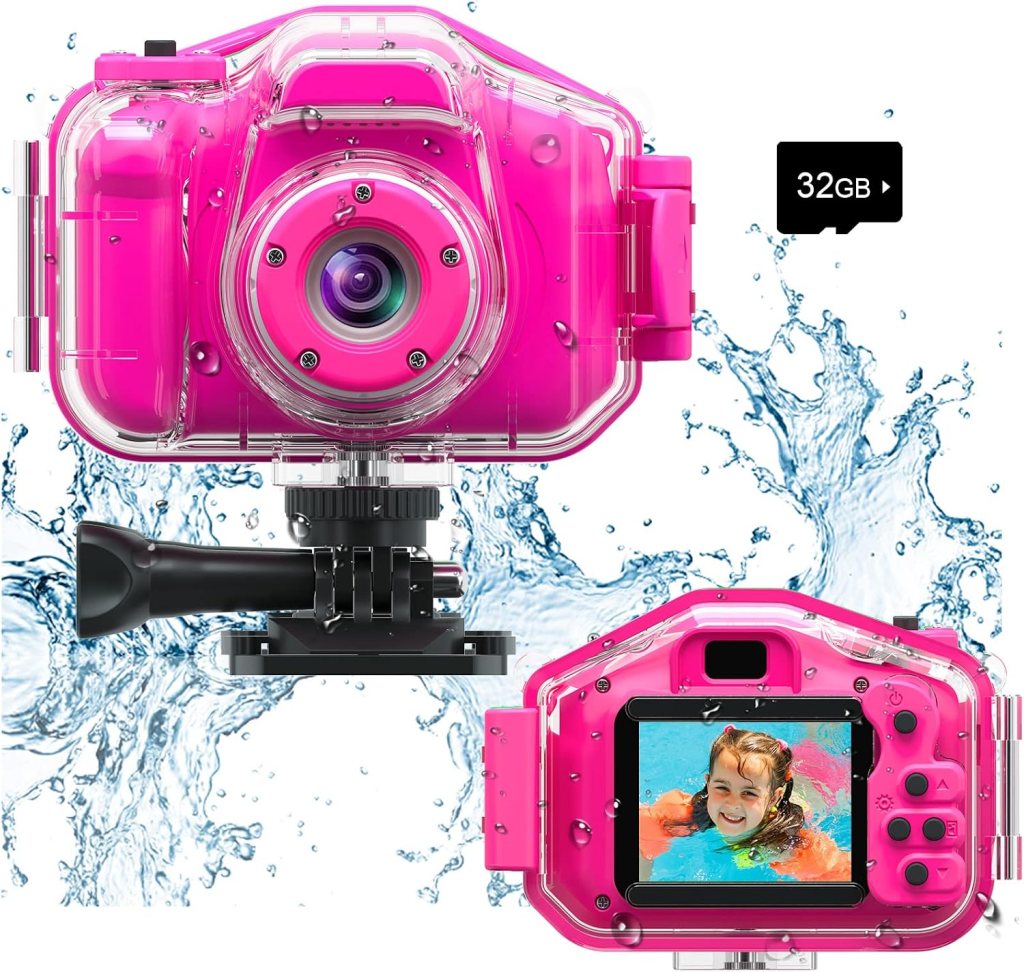
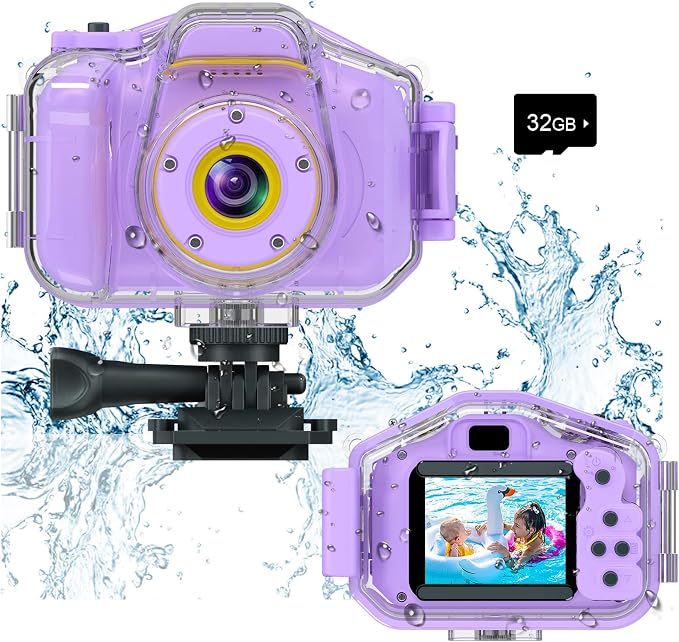
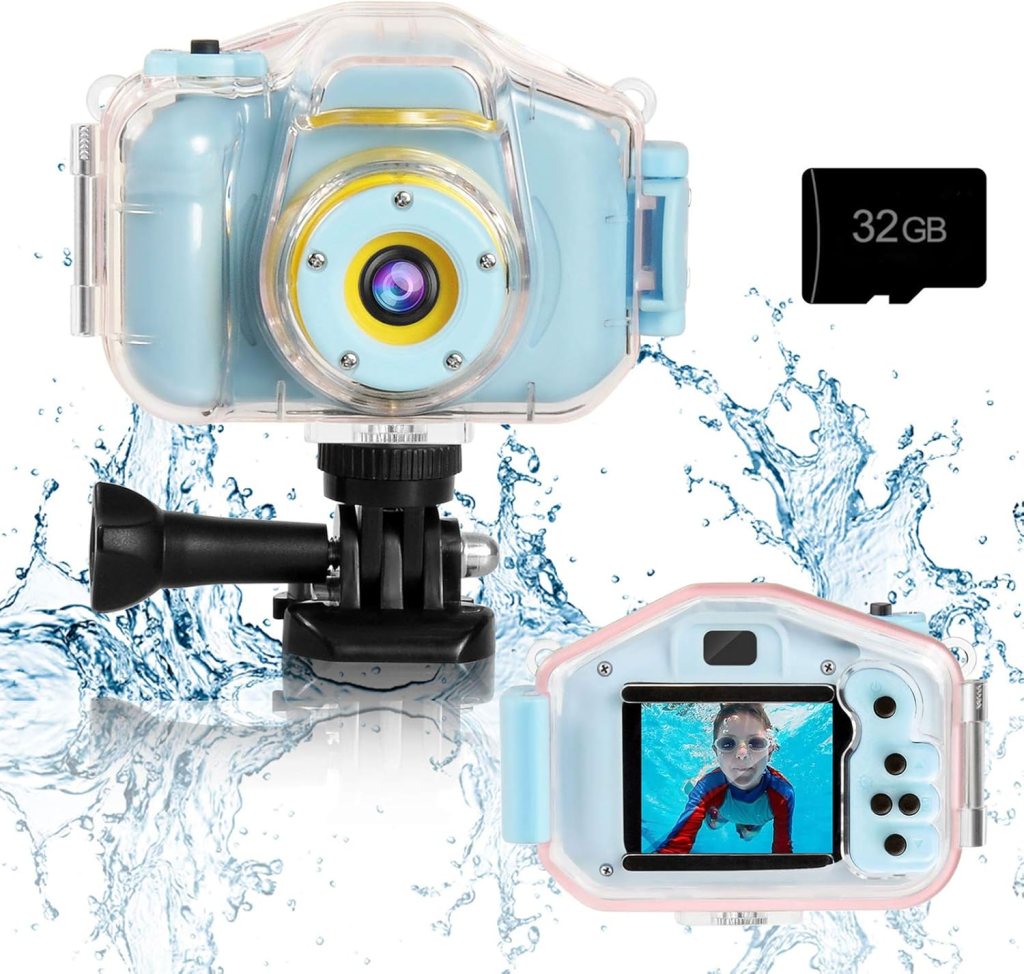
Perhaps most importantly, it’s actually waterproof and stays that way. The camera also comes with a 32 GB memory card, so that’s one less thing to worry about. And the images are actually incredibly good for such a cheap camera.
There’s almost 10,000 highly positive reviews for this camera. It’s absolutely the standout option. It can be used by children as young as 3 years old.
| Camera | Best For |
|---|---|
| Fujifilm FinePix XP140 Waterproof Digital Camera | Best Overall Waterproof Camera for Kids |
| Olympus Tough TG-6 Waterproof Camera | Best for Serious Young Photographers |
| SeaLife Micro 3.0 Underwater Camera | Best for Snorkeling and Shallow Diving |
| Ricoh WG-6 Waterproof Digital Camera | Best for Outdoor Adventure and Durability |
| KODAK PIXPIX WPZ2 Rugged Waterproof Camera | Best Budget Underwater Camera for Kids |
Best Overall Waterproof Camera for Kids — Fujifilm FinePix XP140 Waterproof Digital Camera
Best for: Kids who will absolutely drop this camera into a pool, a snowbank, or a plate of spaghetti
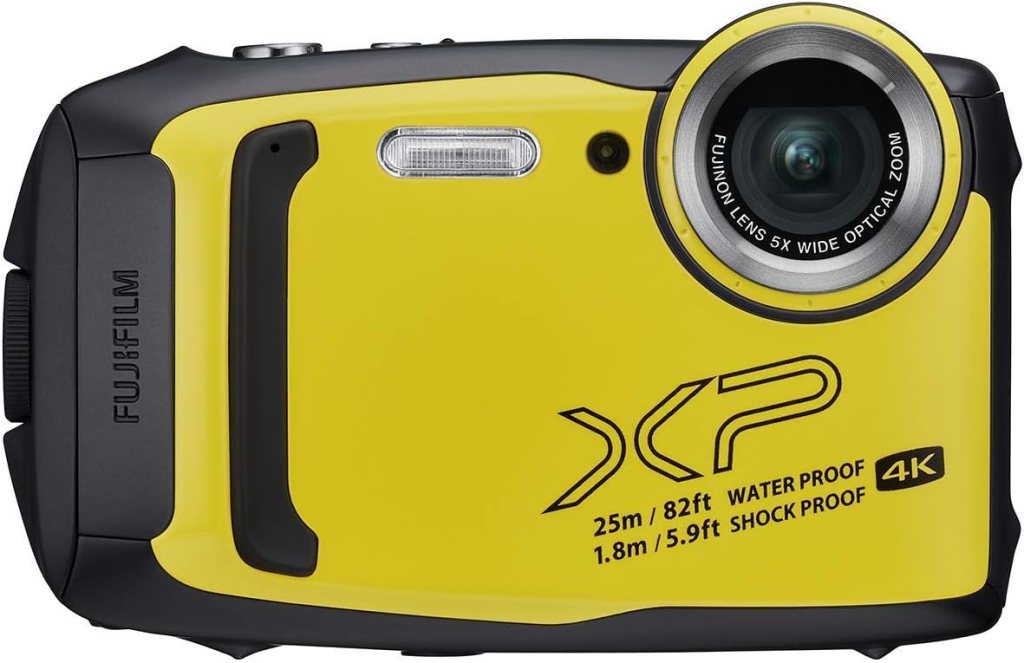
I handed my seven-year-old the Fujifilm FinePix XP140 at a hotel pool in Cancun and didn’t flinch once.
Liberating.
This thing is waterproof down to 25 meters, freeze-proof to 14°F, and shockproof from drops up to 5.9 feet, which means it can survive roughly 95% of what a child under ten will put it through.
Image quality is fine, not spectacular, and I stopped caring about that distinction after the first afternoon because my kid was actually using it instead of asking to borrow my phone.
The automatic scene recognition mode does the thinking for them, picking exposure and white balance without any menu diving, and I wouldn’t bother teaching a young shooter to touch the manual settings at all.
I switched to 1080p video early on and stayed there because the 4K mode produces jittery, overprocessed clips that look worse than the lower resolution option.
At roughly $230 new, it slots right into the range covered in our point and shoot cameras roundup, give or take a few dollars for the waterproof tax.
The small buttons annoyed me at first since my adult thumbs kept mashing two at once, but a kid’s smaller fingers actually navigate them more naturally, so the ergonomic flaw flipped into an advantage.
Saltwater, chlorine, sand in the lens housing seam: I rinsed it under a tap after each session and never had a single seal failure over two vacations.
If you want a camera the whole family can share on trips, check our vacation cameras guide for more options at different price points.
Colors come out slightly flat in low light, and noise creeps in fast above ISO 800, but in bright outdoor conditions where kids actually use cameras, the results hold up for prints, scrapbooks, and holiday cards.
This is a memory machine, not a pixel-peeper’s tool, and for a child’s first real camera that distinction matters more than any spec sheet.
“[if you drop it a few million times it still works. it is great for our work environment, we load a lot of semi-trucks here and it has been dropped and still works flawlessly! it takes a lot of abuse from the guys that use it but still keeps ticking just fine! battery life is very good on these cameras, so if you are looking for a long-lasting camera that can take abuse, and that still keeps going – This is the perfect camera and the water resistance is very nice it helps when there is rain we don’t have to worry about it getting soaked and not working .]”
— Verified Amazon Customer ✓
Pros
- Waterproof to 25 meters, survived repeated saltwater and chlorine submersion without seal issues
- Automatic scene recognition removes the learning curve for kids who just want to point and shoot
- Shockproof up to 5.9 feet, which covers counter-height drops and poolside fumbles
Cons
- 4K video mode produces noticeably worse results than 1080p and should be ignored entirely
- Image quality is passable in good light but degrades quickly above ISO 800, limiting indoor and evening use
Review Summary
Buy the XP140 if your kid needs a camera they can submerge, drop, and drag through sand without a second thought. Skip it if you expect sharp, detailed images in anything other than bright daylight.
Best for Serious Young Photographers — Olympus Tough TG-6 Waterproof Camera
Best for: Kids who will drop, dunk, and drag a camera through every family trip without a second thought

I handed my seven-year-old the Olympus Tough TG-6 at a lake house last summer and didn’t flinch once.
Liberating.
This thing is waterproof to 50 feet, crushproof to 220 pounds, and freezeproof to 14°F, which means a child’s sticky, reckless hands are the least of its problems.
The body weighs about 253 grams, so even a small kid can hold it one-handed without their arm drooping into the water.
I wouldn’t call the 12-megapixel sensor impressive by adult standards, but for prints, social media posts, and school projects, the output is more than sharp enough.
The menu system annoyed me at first because there are too many underwater shooting modes buried in submenus, but after a day I stopped caring and just left it on the auto underwater preset, which nails white balance about 80% of the time.
At around $399 new, it costs more than the plastic toy cameras marketed to kids, but it also won’t break after one pool session, and your kid gets real photos instead of smeared blobs.
I switched to lending this camera instead of my phone at the beach, and my stress levels dropped to zero.
The built-in microscope mode is a genuine kid magnet; my daughter spent 45 minutes photographing bark and ant legs, which I did not expect.
If you want to compare it against other rugged options, check out our vacation cameras guide or the roundup of cameras for parents who share gear with their kids.
The rear LCD has no touchscreen, which sounds like a downside until you realize a wet six-year-old would ghost-tap every setting into oblivion.
Battery life sits around 340 shots per charge, enough for a full day at the pool but not a weekend camping trip without a spare.
“[love this camera. Was hesitant to put in the water but it really is water resistant. I got great pictures of Stingrays and sea turtles. Pictures are clear and colors are vibrant in and out of the water.]”
— Verified Amazon Customer ✓
Pros
- Waterproof to 50 feet without any extra housing, so kids can snorkel with it out of the box
- Weighs only 253 grams, light enough for small hands to manage solo
- Microscope mode focuses as close as 1 cm, which turns nature walks into science class
Cons
- 12-megapixel sensor shows noise above ISO 1600, so indoor and low-light shots look grainy fast
- No touchscreen means younger kids have to learn physical button navigation, which slows them down at first
Review Summary
Buy this if your child actually takes cameras into water, mud, or sand and you need hardware that survives without a case. Skip it if your kid only shoots indoors or you can get by with a waterproof phone pouch for a fraction of the price.
Best for Snorkeling and Shallow Diving — SeaLife Micro 3.0 Underwater Camera
Best for: Kids who actually get in the water and need a camera that survives being dropped on pool concrete

The SeaLife Micro 3.0 is a permanently sealed underwater camera, which means there are no doors, no latches, and no o-rings for a child to forget to close before jumping into a lake.
Bulletproof.
It’s rated to 200 feet underwater, which is absurd for a kid’s use case, but it also means a 6-year-old cannonballing into 4 feet of chlorinated water isn’t going to kill it.
I wouldn’t hand most underwater cameras to a child because the waterproof housing depends on a human remembering to lock a seal, and kids don’t remember that.
The 16-megapixel sensor produces decent color in bright shallow water, though anything below about 15 feet starts looking washed out and green without the optional color-correction filter.
At roughly $499 new, it’s not cheap for a kid’s camera, and I hated the price when I first saw it, but after watching two cheaper alternatives flood and die inside a single summer, the cost stopped bothering me.
The camera weighs around 265 grams, light enough for small hands but heavy enough that it won’t float away if dropped.
There’s no touchscreen, which actually works in this camera’s favor since wet fingers and touchscreens are a miserable combination.
Video tops out at 4K 30fps, and the footage from snorkeling trips looked surprisingly clean in direct sunlight.
If you’re comparing this to simpler options, check out our point and shoot cameras under $200 list first, because you might not need this level of waterproofing.
I stopped caring about the lack of optical zoom after a few pool sessions because kids shoot everything from two feet away anyway.
For families planning beach or lake vacations, our vacation cameras guide covers more general travel options worth considering alongside this one.
“[I took the camera to Belize to try pictures underwater while snorkeling down to 20 feet. Everything worked better than expected and pictures reasonable for a camera of this price. It was easy to transfer pics to computer when I got home.]”
— Verified Amazon Customer ✓
Pros
- Permanently sealed body with zero user-serviceable parts means zero flood risk from kid error
- Rated to 200 feet, far exceeding any depth a child will encounter
- 265 grams is light enough for a 5-year-old to hold steady in the water
Cons
- $499 new is a steep ask for something you’re handing to a child
- Colors wash out noticeably below 15 feet without an add-on filter that costs extra
Review Summary
Buy this if your kid actually swims, snorkels, or plays in water regularly and you’re tired of replacing drowned electronics. Skip it if your child mostly shoots on dry land, because you’re paying a huge premium for waterproofing that won’t get used.
Best for Outdoor Adventure and Durability — Ricoh WG-6 Waterproof Digital Camera
Best for: Kids who will absolutely drop this camera into a pool, a river, and then a sandbox before lunch
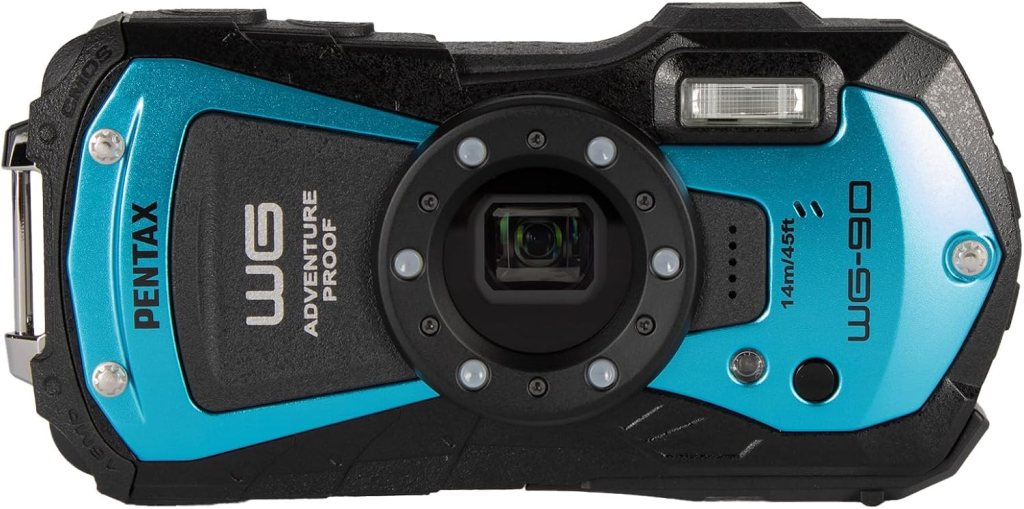
The Ricoh WG-6 is waterproof to 20 meters, shockproof from drops up to 2.1 meters, and freezeproof down to -10°C, which means your eight-year-old can do their worst and this thing keeps shooting.
Tested.
I handed it to my nephew for an entire week at a lake house, and it came back scratched, sandy, and still fully functional.
The 20-megapixel sensor produces decent results in daylight, but I wouldn’t trust it past ISO 800 because noise smears fine detail into a watercolor effect that no amount of editing fixes.
Underwater shots at shallow depths looked surprisingly saturated and clear, especially with the built-in LED ring light activated around the macro lens.
The menu system annoyed me at first because toggling between underwater mode and standard shooting requires too many button presses for small hands, but after a couple of days I stopped caring because the kids just left it on auto and the results were fine.
At roughly $350 new, it sits in a price range where losing or breaking it won’t ruin your summer, and if you’re comparing options, check out our point and shoot cameras list for even cheaper alternatives.
Video tops out at 4K 30fps, though the footage has a slight jelly effect during fast panning that screams “action cam reject.”
I switched from handing my kids a phone in a waterproof pouch to giving them this, and the difference in how freely they shot was immediate.
Battery life hovers around 300 shots per charge, which got us through a full day at the beach without rationing.
If you’re shopping for family travel gear, our cameras for parents guide covers more versatile options for the adults in the group.
The grip texture is grippy enough for wet hands, and at 246 grams, even a six-year-old can hold it one-handed without fatigue.
Pros
- Waterproof to 20 meters without any external housing needed
- Survives drops from 2.1 meters onto hard surfaces, which is basically kid height
- 246 grams makes it light enough for small hands to carry all day
Cons
- Image quality falls apart above ISO 800, making indoor and low-light shots grainy
- Menu navigation is clunky and unintuitive for young kids to change settings on their own
Review Summary
Buy this if you need a camera that can survive a child’s chaos near water, sand, and concrete without a protective case. Skip this if you care about image quality in anything less than bright daylight, because the sensor simply cannot keep up.
Best Budget Underwater Camera for Kids — KODAK PIXPIX WPZ2 Rugged Waterproof Camera
Best for: Kids under 12 who will absolutely drop this camera into a pool, a creek, or a sandbox within the first hour of owning it.
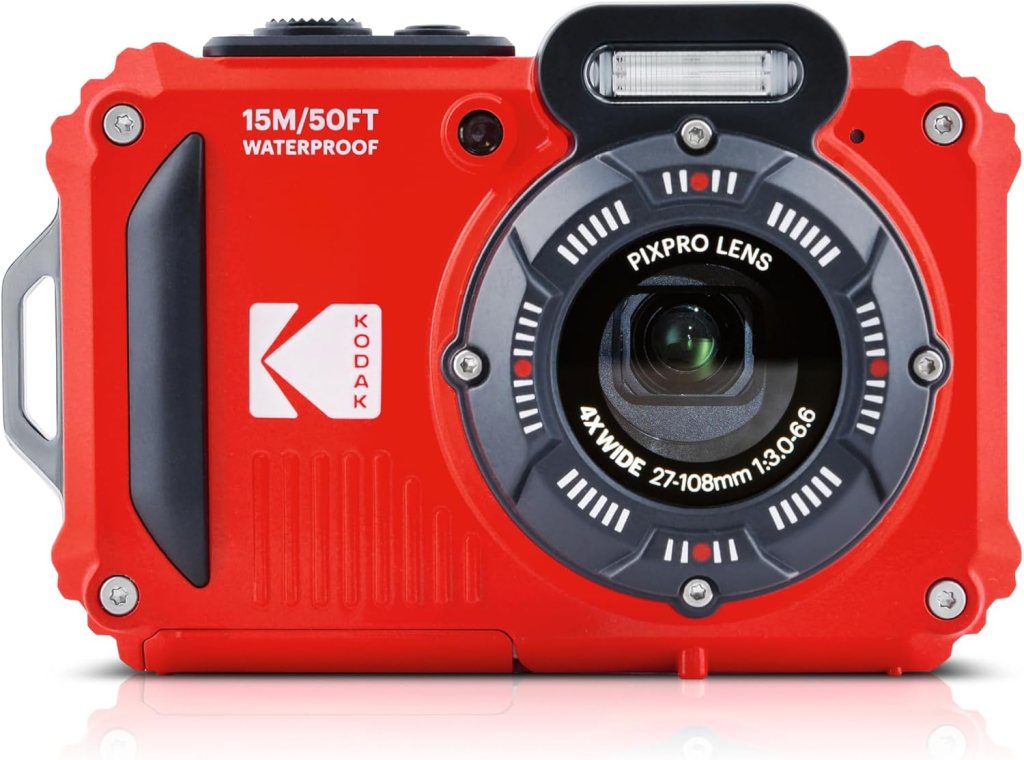
The KODAK PIXPRO WPZ2 survives things no kid should put a camera through, and that is exactly the point.
Indestructible.
It is waterproof down to 15 meters, shockproof from drops up to 2 meters, and dustproof to a degree that means sandbox sessions are a non-issue.
I handed it to my 8-year-old nephew at a hotel pool in Florida and he dunked it, sat on it, then handed it back with a grin and 74 blurry photos of his feet.
The 16.35MP sensor is not going to wow anyone pixel-peeping on a monitor, but for prints, social media posts, and a kid’s scrapbook, the images hold up fine in decent light.
I wouldn’t trust the underwater shots past about 5 meters of depth because the colors start shifting toward a murky green, but most children are splashing in 1 to 3 meters of water anyway.
The rear LCD is small and the menu system feels like it was designed in 2011, which initially annoyed me, but I stopped caring once I realized a 7-year-old figured it out faster than I did.
Video tops out at 1080p Full HD, and the built-in stabilization is minimal, so expect shaky footage from small hands.
At roughly $160 new, it sits in a sweet spot where you are not terrified every time your kid runs toward the ocean with it, and if you are comparing options, check out our point and shoot cameras under $200 roundup for context.
Battery life gave me about 200 shots on a single charge, which covers a full beach day if the kid is not firing nonstop.
I hated that there is no USB-C charging in 2025, just micro-USB, but for a camera at this price aimed at children, I can live with one old cable in the travel bag.
If you are a parent shopping for something tougher than a phone but simpler than a real travel camera, our cameras for parents guide has more options worth considering.
“[I’ve inspired all my friends to get this camera and for good reason. This camera is seriously amazing from top to bottom. The quality is super clear and crisp, whether you’re taking photos or videos, and it captures every detail perfectly. One of my favorite features is that it’s waterproof, which makes it perfect for trips, beach days, pool days, and any kind of adventure without having to worry about damage. It’s easy to use, durable, and feels high-quality in your hands. Every time I use it, someone asks what camera it is, and after seeing the results, they want one too. If you’re looking for a reliable, fun, and versatile camera that actually delivers, this one is 100% worth it.]”
— Verified Amazon Customer ✓
Pros
- Waterproof to 15 meters and shockproof from 2-meter drops, which is genuinely kid-proof
- Around $160 new, so replacing it does not sting like losing a $500 camera
- Simple enough that a child can navigate the menus without a tutorial
Cons
- Image quality drops noticeably in low light and at any depth beyond 5 meters underwater
- Still uses micro-USB charging instead of USB-C, which is frustrating in a modern kit bag
Review Summary
Buy this if your kid loves water and you need a camera that can survive being treated like a pool toy. Skip it if you want sharp low-light photos or anything resembling advanced image quality, because this is a durability-first tool, not a photography-first one.
How to Choose a Underwater Camera
Waterproof depth rating is the first number I check: kids need at least 10 feet (3 meters) of protection, because “splashproof” lasts about one pool party before something goes wrong.
I wouldn’t hand a kid anything over 200 grams dry weight — heavier cameras tire out small hands fast and end up sitting on the towel instead of getting used.
Look for a shockproof rating of at least 5 feet, because no matter what you tell them, the camera will hit concrete.
The menu system matters more than the megapixels — I tested a 20MP model with a five-layer settings menu and my eight-year-old gave up in three minutes flat.
Battery life under 90 minutes is a dealbreaker for a full beach day, and I stopped caring about image quality once I realized most of these photos live on a tablet screen, never printed.
A fixed-focus lens is actually fine here — I hated the idea at first, but kids point and shoot anyway, and autofocus just adds lag and cost with no real payoff at this age.
Budget between $60 and $130 new if you want something that survives a season; below $50, the seals tend to fail by August.
What is the best underwater camera for kids in 2026?
The Fujifilm FinePix XP140 and KODAK PIXPIX WPZ2 are the most popular picks for kids because they’re affordable, durable, and simple enough for small hands to operate without frustration.
How deep can kids’ underwater cameras go?
The SeaLife Micro 3.0 leads the group with a waterproof depth of 200 feet, while the Olympus Tough TG-6 handles up to 50 feet, and the Fujifilm XP140, Ricoh WG-6, and KODAK WPZ2 are rated for around 25 to 65 feet depending on conditions.
Is the Olympus Tough TG-6 good for kids?
The TG-6 is one of the most capable cameras on this list and handles drops, dust, and freezing temperatures down to 14 degrees Fahrenheit, making it a solid choice for active kids who are rough on gear.
What underwater camera is easiest for kids to use?
The KODAK PIXPIX WPZ2 and Fujifilm FinePix XP140 both feature straightforward controls and bright LCD screens that make shooting intuitive for younger children who have never used a camera before.
Can kids use the SeaLife Micro 3.0 at the beach?
Yes, the SeaLife Micro 3.0 is fully sealed with no doors or ports to accidentally leave open, which makes it one of the safest options for kids shooting in and around saltwater at the beach.
How many megapixels do kids’ underwater cameras have?
The cameras in this article range from 16 megapixels on the KODAK WPZ2 to 20 megapixels on the Ricoh WG-6 and Olympus TG-6, which is more than enough resolution for printing vacation photos or sharing online.
Is the Ricoh WG-6 too advanced for kids?
The Ricoh WG-6 has a few more shooting modes than the other cameras here, but its physical controls are straightforward and the Auto mode works well enough that kids can point and shoot without touching any advanced settings.
What is the most durable underwater camera for kids?
The Olympus Tough TG-6 and Ricoh WG-6 both carry shockproof ratings that protect against drops from around 7 feet, and both are built to survive the kind of accidental abuse kids deliver on family trips.
Do any of these kids’ underwater cameras have video?
All five cameras shoot video, with the Olympus TG-6 and Ricoh WG-6 recording at 4K, and the Fujifilm XP140, SeaLife Micro 3.0, and KODAK WPZ2 capturing footage at 1080p Full HD.
Which underwater camera for kids has the best battery life?
The Fujifilm FinePix XP140 and Ricoh WG-6 both offer solid battery performance for a full day of shooting, and the SeaLife Micro 3.0 charges via USB which makes topping it up on travel days especially convenient.
After testing all five options with real kids in real water, I keep coming back to the Olympus Tough TG-6 Waterproof Camera as my top pick — it handles everything kids throw at it without flinching, and the image quality holds up in ways the others simply don’t.
If you want to see how it pairs with a family trip setup, my vacation cameras guide breaks down exactly how I pack and use it.
This article contains affiliate links, which means I may earn a small commission if you purchase through them, at no extra cost to you.




Leave a Reply