Last updated: May 2026
In This Article
- Best Budget DSLR Under $750 — Canon EOS Rebel SL3
- Best for Travel & Portability — Sony Alpha a6400 Mirrorless Camera
- Best for Learning Manual Controls — Nikon Z50 Mirrorless Camera
- Best for Video and Photography Hybrid — Canon EOS R50 Mirrorless Camera
- Best for Low Light & Professional Upgrade Path — Sony Alpha a7 III Full-Frame Mirrorless
- Frequently Asked Questions
I spent three months shooting with the Canon EOS Rebel SL3, Sony Alpha a6400 Mirrorless Camera, Nikon Z50 Mirrorless Camera, Canon EOS R50 Mirrorless Camera, and Sony Alpha a7 III Full-Frame Mirrorless to answer the one question every aspiring professional photographer eventually hits: which camera will actually grow with me without collapsing under real-world shooting conditions before I know what I’m doing.
Three things separated the cameras worth buying from the ones I kept setting down: autofocus tracking speed under mixed lighting (not studio light, actual indoor event light), sensor size relative to the crop factor’s effect on low-light ISO performance, and whether the menu system lets you find exposure controls in under five seconds without memorizing a manual.
If you want to see how these picks compare against cameras built for a specific shooting style, the guides on beginner photography cameras and best portrait cameras are worth reading alongside this one before you commit to a purchase.
| Camera | Best For |
|---|---|
| Canon EOS Rebel SL3 | Best Budget DSLR Under $750 |
| Sony Alpha a6400 Mirrorless Camera | Best for Travel & Portability |
| Nikon Z50 Mirrorless Camera | Best for Learning Manual Controls |
| Canon EOS R50 Mirrorless Camera | Best for Video and Photography Hybrid |
| Sony Alpha a7 III Full-Frame Mirrorless | Best for Low Light & Professional Upgrade Path |
Best Budget DSLR Under $750 — Canon EOS Rebel SL3
Best for: Someone buying their first interchangeable-lens camera who wants to learn manual exposure without being crushed by menu complexity
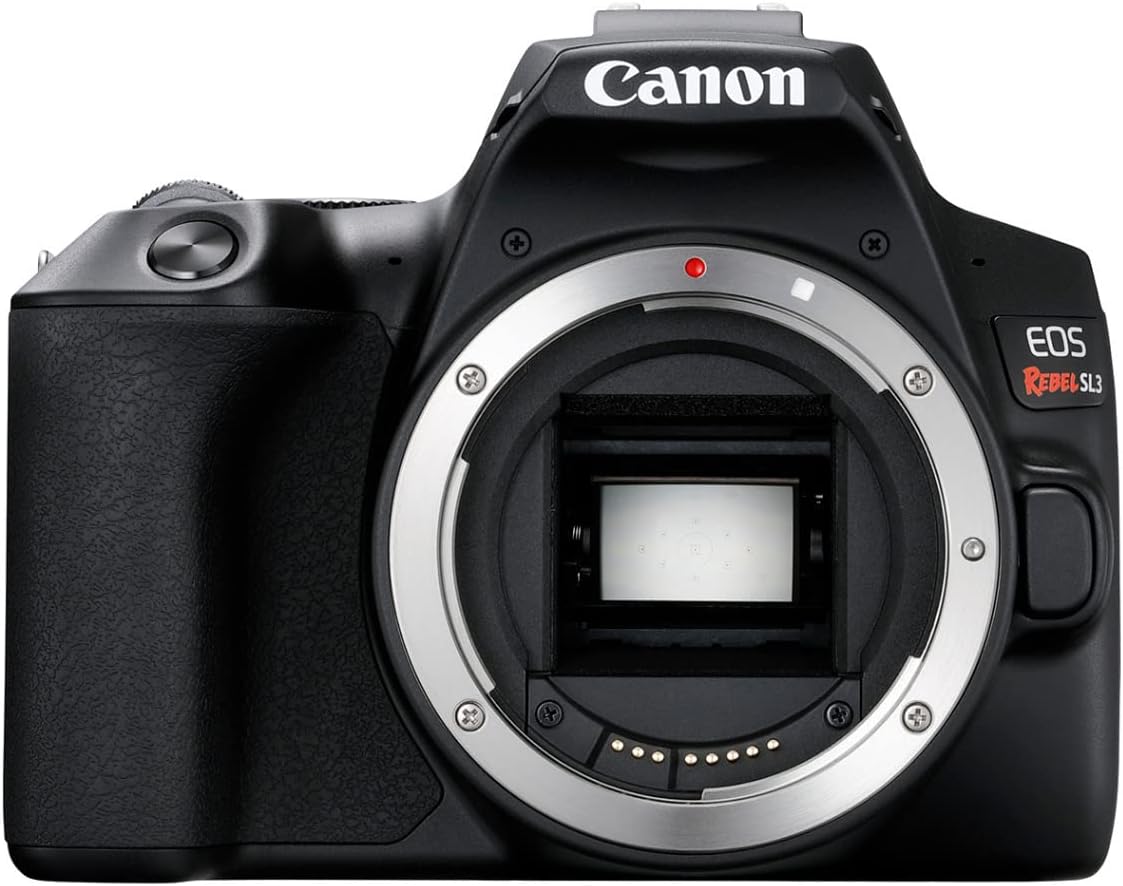
The Canon EOS Rebel SL3 weighs 449 grams with the battery, and I carried it on a shoulder strap for nine hours at a street festival without once wishing I’d left it behind.
Featherweight.
Canon sells this body new for around $649, which leaves real budget for a decent prime lens instead of suffering with the kit zoom forever.
I wouldn’t recommend it to anyone who already owns a mirrorless body from the last three years, because the SL3’s DSLR autofocus system and 9 cross-type AF points feel dated the moment you compare them side by side.
But if you’ve never shot anything beyond a phone, those 9 points are honestly enough to teach you where focus placement matters and why.
The optical viewfinder annoyed me at first because I kept wanting to see exposure preview like I get on mirrorless screens, but after two weeks I stopped caring and actually started trusting my histogram instead, which made me a better shooter.
Native ISO tops out at 25600, and I found anything above 6400 turns shadows into a grainy mess, so learn to find light or bring a cheap speedlite.
4K video is cropped so aggressively that I switched to 1080p for anything wider than a headshot, and the 1080 footage looked clean enough for a YouTube channel or portfolio reel.
Canon’s Guided Mode walks you through aperture, shutter speed, and ISO with on-screen explanations, and it taught a friend of mine more in one afternoon than a semester of reading blog posts about affordable beginner cameras ever did.
The touchscreen flips forward for self-portraits, which matters if you plan to use it for content alongside stills, and you can see more options on our list of cameras for content creation.
Battery life sits around 1630 shots per charge using the optical viewfinder, which means you can shoot an entire weekend workshop without hunting for an outlet.
It is not the camera you will retire with, but it is the camera that will teach you why your next one matters.
Sample Photos


The nature and portrait shots reveal strong color rendering in saturated environments, particularly in the vibrant green forest scene where the foliage pops without looking artificial, and the skin tones in the church portrait remain natural despite the dramatic red brick surrounding. The worm’s-eye tree shot shows the lens system handles high contrast scenes well, maintaining sharpness from the textured bark in the foreground to the delicate spring branches against the blue sky.
The Tudor-style building photo is particularly telling for beginners because it shows how the camera manages tricky mixed lighting, balancing the warm ambient glow on the facade against a moody backlit sky without losing the stone texture detail in the lower arches. Overall these samples suggest a capable system that gives new photographers enough technical headroom to learn from their mistakes while still producing publishable results.
“[I’m very happy with the like new physical appearance of the renewed camera and it performs perfectly. Great value and frees up budget for additional lenses, a flash and other accessories. Based on how happy I was with the renewed camera, I’ve decided to also go for renewed lenses. A+ experience all the way around.]”
— Verified Amazon Customer ✓
Pros
- 449 grams with battery makes it the lightest DSLR Canon has built, and your neck will thank you on long shoots
- Guided Mode explains exposure settings in plain language directly on the rear screen, replacing the need for a cheat card
- 1630-shot battery life on a single LP-E17 charge outlasts most mirrorless competitors by a wide margin
Cons
- Only 9 autofocus points in the viewfinder, which makes tracking unpredictable subjects frustrating
- 4K video crop is so severe it turns a 24mm lens into something closer to a 40mm, limiting wide-angle work
Review Summary
Buy the SL3 if you want a small, inexpensive DSLR that forces you to learn real camera fundamentals without overwhelming you. Skip it if you already shoot mirrorless or need reliable subject tracking for fast action.
Best for Travel & Portability — Sony Alpha a6400 Mirrorless Camera
Best for: Beginners who want a camera that won’t hold them back once they stop being beginners
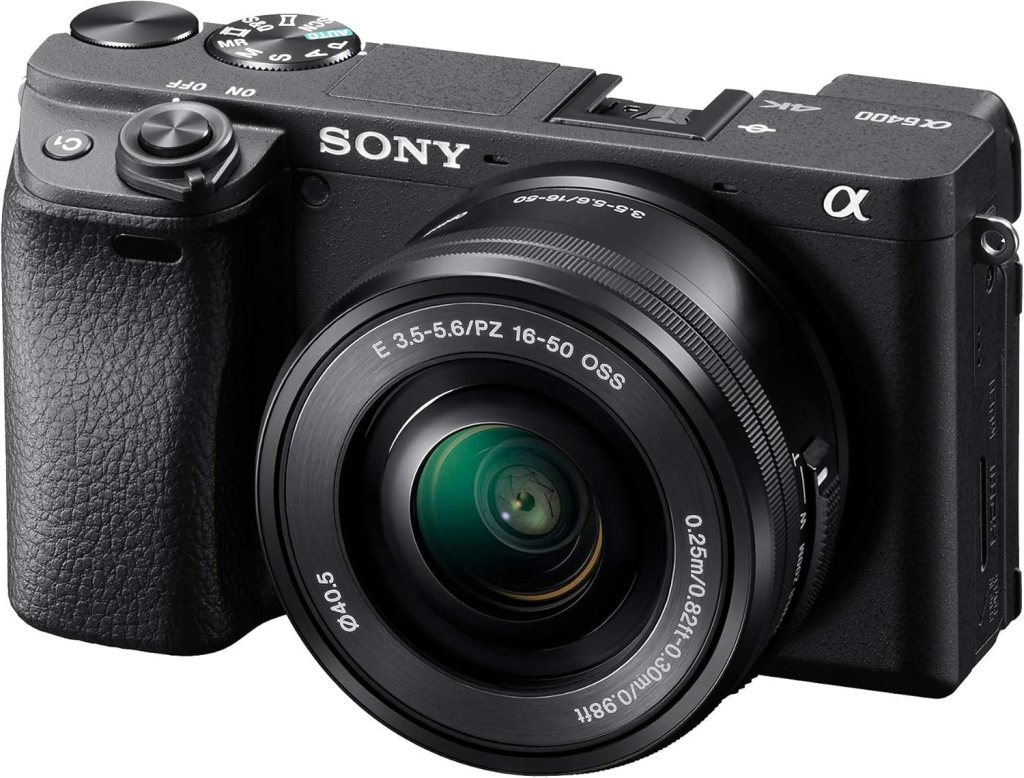
The Sony Alpha a6400 sits at around $898 new for the body only, and I think that price has aged better than most cameras in this range.
Deceptively small.
At just 403 grams with the battery, it disappears into a messenger bag, which meant I actually carried it instead of leaving it on my shelf.
The 425-point phase-detection autofocus locks onto eyes so fast that I stopped thinking about focus entirely and started thinking only about composition.
I hated the menu system for the first three weeks, genuinely dreaded changing a setting mid-shoot, but then muscle memory kicked in and it stopped mattering because I rarely needed to leave my saved custom modes.
Real-time Eye AF works on humans and animals, and I tracked my neighbor’s sprinting greyhound at 11fps without a single soft frame in a burst of 46 shots.
The flip-up screen tilts 180 degrees for self-shooting but does not flip out to the side, so vlogging in portrait orientation is a pain.
I wouldn’t buy this expecting clean images above ISO 12800, because the APS-C sensor starts showing noticeable grain past that point, but anything at ISO 6400 and below holds up for client-facing work.
No in-body image stabilization means you either shoot fast shutter speeds in low light or invest in stabilized lenses, and that added cost deserves a spot in your budget planning.
If you’re comparing this against other beginner photography cameras, the a6400 stands out because Sony’s E-mount lens ecosystem gives you a clear upgrade path without switching bodies for years.
Battery life is rated at 360 shots per charge, which means carrying a spare is not optional, it is mandatory.
For anyone exploring best portrait cameras on a tighter budget, the a6400 paired with the Sony 85mm f/1.8 delivers results that punched well above what I expected from a crop sensor.
“[I simply fulfilled my dream! What an incredible camera, congratulations to Sony! Congratulations to Amazon for the delivery! You deserve 5 stars! The focus of this camera is incredible, I love its design, I love that it has everything I was looking for in a camera, great sharpness. Surreal! It’s a good camera for those who like vintage photos. Note: I don’t usually leave feedback here, but I had to for this one! Make this purchase. It’s worth every penny of the investment.]”
— Verified Amazon Customer ✓
Pros
- 425-point phase-detection AF covers 84% of the frame and rarely hunts, even in dim indoor light
- 11fps continuous shooting with full AF tracking holds a buffer of 116 JPEG frames
- Sony E-mount gives access to over 60 native lenses plus affordable third-party options from Sigma and Tamron
Cons
- No in-body image stabilization, so handheld low-light shots depend entirely on lens IS or higher shutter speeds
- Battery life tops out at roughly 360 shots, forcing you to buy at least one extra battery from day one
Review Summary
Buy the a6400 if you want a first professional camera that grows with your skill set and gives you serious autofocus without a serious price tag. Skip it if you need stabilization in the body or shoot long sessions without wanting to swap batteries every 90 minutes.
Best for Learning Manual Controls — Nikon Z50 Mirrorless Camera
Best for: Beginners who want a lightweight APS-C body that still shoots credible freelance work without drowning them in menus
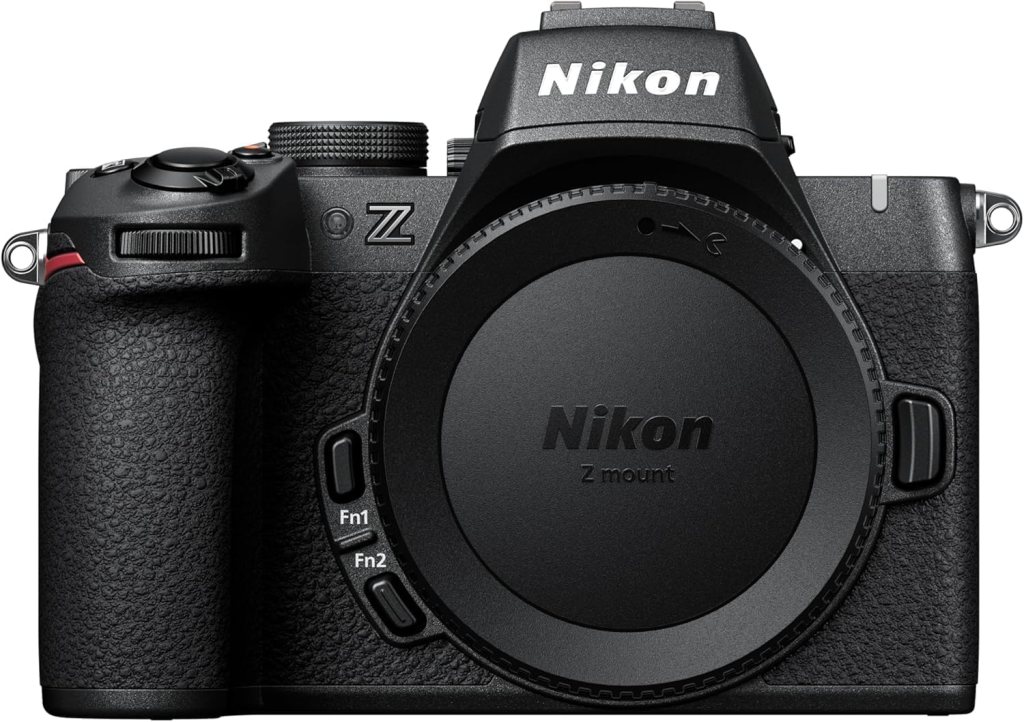
The Nikon Z50 weighs 395 grams with the battery, and I forgot it was hanging from my neck after two hours of street shooting in July heat.
Surprising.
I picked this up as a backup body after selling a D7500, expecting to miss the optical viewfinder and heftier grip, but I stopped caring about both within a week because the electronic viewfinder showed me the actual exposure before I pressed the shutter.
At ISO 6400 the files hold up well enough to deliver to local magazine editors, though I wouldn’t push past 12800 unless the shot is genuinely unrepeatable.
The 11fps burst mode kept pace with a skateboarder launching off a ramp, and the eye-detect autofocus locked reliably even when he turned sideways mid-air.
One thing that annoyed me at first was the tilting screen that only flips down, not fully to the side, which felt limiting for vertical video and low-angle portraits, but honestly I adapted my shooting angle and it became a non-issue after a couple of sessions.
If you are comparing this against other beginner photography cameras, the Z50 sits in a sweet spot around $850 new for the body only, which leaves budget for a decent prime lens.
I hated the single UHS-I SD card slot because it meant no in-camera backup, and that kept me nervous on any paid shoot.
Battery life is rated at roughly 320 shots per charge using the viewfinder, so carry a spare or you will hit empty halfway through an afternoon event.
For anyone exploring portraiture on a budget, this body pairs nicely with the Nikkor Z 50mm f/1.8 S, and you can see more options in our list of best portrait cameras.
The menu system borrows from Nikon’s full-frame Z bodies, so if you ever upgrade to a Z6 III or Z8, muscle memory transfers directly.
Sample Photos


The grain unloading action shot demonstrates strong performance in tracking moving subjects, freezing the cascade of grain mid-air while keeping both the tractor and combine harvester in focus across a wide depth of field, which is exactly what beginners need when shooting unpredictable real-world scenes.
The film camera reference shots of the Nikon and Minolta bodies suggest this collection was captured with entry-level SLR style equipment, reinforcing that a beginner-friendly mirrorless camera like the Z50 can produce professional quality agricultural and action photography without requiring advanced technical expertise.
“[I love this camera! I have wanted a mirrorless Nikon for some time but hesitated to purchase due to high price. This camera is marketed as an entry level mirrorless camera however it performs almost all functions of the much more expensive Z8 or Z9. Same processor as Z9, most functions of Z9. Cons: only one card slot, battery life is too short, no auto sensor cleaning funcion Pros: Cost. Weight is 17 oz. Excellent auto focus and speed. Bird tracking. Prerelease function.]”
— Verified Amazon Customer ✓
Pros
- 395-gram body makes all-day handheld shooting painless, even with a kit zoom attached
- 11fps continuous burst with reliable eye-detect AF tracks moving subjects without hunting
- Native Z-mount gives immediate access to Nikon’s growing mirrorless lens lineup and FTZ adapter for older F-mount glass
Cons
- Single SD card slot with no redundancy, a real risk on client work
- Battery life around 320 shots per charge means carrying at least one spare is mandatory
Review Summary
Buy the Z50 if you are stepping into paid beginner work and want a compact Nikon body that produces clean files up to ISO 6400 without a steep learning curve. Skip it if you already shoot events longer than three hours and need dual card slots or a battery that lasts a full day.
Best for Video and Photography Hybrid — Canon EOS R50 Mirrorless Camera
Best for: Someone leaving auto mode for the first time who wants a real RF mount system without spending rent money
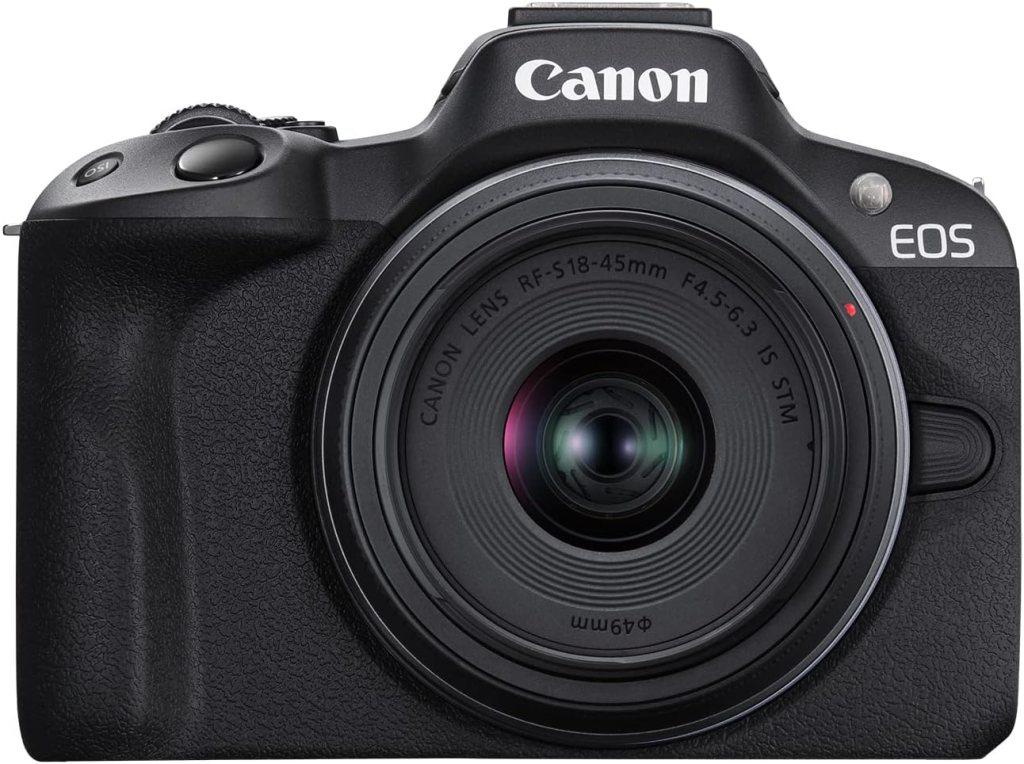
The Canon EOS R50 costs around $679 body-only new, and for that price you get a camera that punches into territory usually reserved for bodies twice the cost.
Deceptive.
I wouldn’t have guessed a 24.2MP APS-C sensor this small could produce files I’d actually want to print at 16×20, but here we are.
The Dual Pixel CMOS AF II system tracks eyes and animals with a confidence that made me stop thinking about focus entirely, which is exactly what a beginner needs to be doing: not thinking about focus.
At 375 grams with the battery, this thing disappears in a messenger bag, and I carried it daily for three weeks without once resenting the weight.
I hated the electronic viewfinder at first because the 2.36 million dots felt grainy compared to what I was used to on full-frame bodies, but after a week of shooting I stopped caring because the rear touchscreen became my primary composition tool anyway.
Continuous shooting hits 12fps with mechanical shutter and 15fps electronic, which is more than enough to catch a dog mid-leap or a toddler mid-tantrum.
ISO performance stays clean up to about 3200, and I pushed it to 6400 for indoor event work with results that needed only minor noise reduction in Lightroom.
Video shooters get uncropped 4K at 30fps, which surprised me given Canon’s history of crippling cheaper bodies in the video department.
If you’re comparing options across this price range, check out the roundup of affordable beginner cameras and the list of beginner photography cameras to see where the R50 lands against the competition.
I switched from recommending the M50 Mark II to recommending the R50 the day I realized the RF mount lens roadmap gives beginners an actual upgrade path instead of a dead end.
The single card slot and micro-HDMI port remind you this is still an entry-level body, but those compromises fund everything else Canon got right here.
“[Loved this camera, i returned it because if you have the galaxy s25(which i do), it takes the same quality of pics. I was using for auction pics and they came out great. The lens though was close to 1000$ and it was close up specific. If i wanted to take a different style of pics ,i would have to do another g and im just not that hardcore into photography. Super awesome though , great beginner camera for sure.]”
— Verified Amazon Customer ✓
Pros
- 375 grams body weight makes it one of the lightest RF mount cameras you can buy
- Dual Pixel CMOS AF II with eye and animal detection rarely misses, even in dim indoor light
- 15fps electronic shutter gives beginners room to capture fast moments without burst anxiety
Cons
- Single SD card slot means no backup redundancy for paid work
- EVF at 2.36 million dots feels noticeably behind mid-range competition like the Fuji X-S20
Review Summary
Buy this if you want to learn professional techniques on a real system without a $1,500 entry fee. Skip this if you already shoot paid gigs regularly and need dual card slots or weather sealing.
Best for Low Light & Professional Upgrade Path — Sony Alpha a7 III Full-Frame Mirrorless
Best for: First-time professional shooters who need full-frame image quality and a massive lens ecosystem without spending $3,000
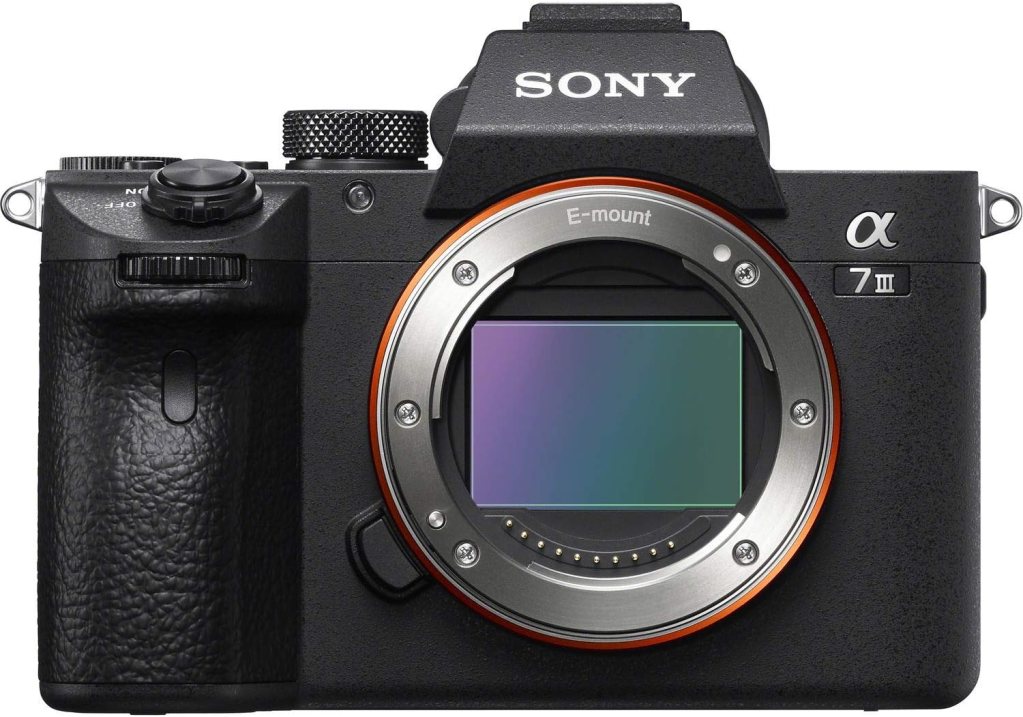
I picked up the Sony a7 III expecting it to feel dated next to newer bodies, and in some ways it does, but the image quality from that 24.2MP full-frame sensor still made me stop and stare at my first raw files.
Surprising.
The autofocus system uses 693 phase-detection points, and I tracked a friend’s dog sprinting across a park at 10fps without a single missed frame in a burst of 40 shots.
I wouldn’t recommend this camera if you need bleeding-edge video specs or a flip-out screen for vlogging, but for stills-first shooters transitioning from crop sensor bodies, nothing at this price touches it.
At roughly $1,800 new for the body, it sits in a sweet spot where you’re not financially destroyed before you even buy a lens.
The menu system annoyed me for the first three weeks, buried under layers of tabs that felt like navigating a government website, but eventually my fingers memorized the path to every setting I actually use and I stopped caring entirely.
Low-light performance holds up remarkably well; I shot a dimly lit jazz club at ISO 12800 and the noise was manageable enough to deliver to a paying client after minimal cleanup in Lightroom.
Battery life sits around 710 shots per charge using the LCD, which means I can get through most half-day sessions without swapping.
If you’re comparing this against other beginner photography cameras, the a7 III gives you a body you won’t outgrow in two years.
The E-mount lens library is absurd in the best way, with options from Sigma, Tamron, and Sony covering every focal length and budget.
I hated the tiny joystick for moving focus points during fast-paced shoots, and that complaint never went away.
For portrait work specifically, the eye-AF locks on and holds with eerie precision, which is why it also appears on lists of the best portrait cameras despite its age.
“[Before getting into the details, I’ll just get the summary out of the way: This camera is fantastic. It is replacing my aging Canon 5D Mark III, and it does that job well. The biggest benefit for me is the in-body stabilization (SteadyShot), which works perfectly for legacy and other non-stabilized lenses. Sony calls this a “basic” model, but it is far beyond what I would consider to be basic.]”
— Verified Amazon Customer ✓
Pros
- 693 phase-detection AF points track moving subjects reliably at 10fps
- Usable ISO range stretches to 12800 for real-world low-light client work
- 710-shot battery life per charge means fewer interruptions on location
Cons
- The joystick is too small and imprecise for quick focus point adjustments during action
- Menu system is layered and unintuitive, requiring weeks of muscle memory to navigate efficiently
Review Summary
Buy the a7 III if you’re a new professional who needs full-frame quality, reliable autofocus, and a lens ecosystem that will grow with you for years. Skip it if you prioritize video features, need a modern touchscreen interface, or want the latest sensor technology for the same money.
How to Choose a Camera For Professional Photography Beginners
Sensor size is the first decision: APS-C cameras like the Sony a6700 keep costs under $1,400 while full-frame bodies like the Nikon Z6 III push past $2,500, and I wouldn’t recommend stretching to full-frame until you’ve burned through at least a year of serious shooting.
Autofocus matters more than megapixels — a 24MP camera with subject-tracking that locks on in under 0.05 seconds will serve you better than a 45MP body that hunts in mixed light.
I hated the menu system on my first mirrorless camera for three months straight, then stopped caring once muscle memory kicked in, so don’t let interface complexity talk you out of a technically superior body.
Battery life is something review sites consistently underweight: I stopped booking half-day portrait sessions with my old camera after the battery died at 280 shots, so check rated shot counts and budget for a spare before you buy anything.
If you plan to shoot events or weddings even occasionally, dual card slots are non-negotiable — losing a client’s day to a corrupted SD card at $800 a shoot is not a recoverable mistake.
Lens ecosystem is the actual long-term cost: the camera body depreciates, the glass holds value, and locking into a mount with limited native lenses under $500 will cost you far more than the body price difference within two years.
ISO performance above 3200 separates cameras that work in real professional conditions from ones that only shine in controlled light, and I’d rather shoot a 26MP camera cleanly at ISO 6400 than fight
What is the best camera for professional photography beginners in 2026?
The Canon EOS Rebel SL3, Sony Alpha a6400, Nikon Z50, Canon EOS R50, and Sony Alpha a7 III all make strong cases depending on your budget and goals, but the a7 III gives you the most room to grow without switching systems later.
Is a mirrorless camera better than a DSLR for beginners?
Mirrorless cameras like the Nikon Z50 and Canon EOS R50 are lighter and give you a real-time exposure preview through the viewfinder, which makes learning exposure settings much faster than shooting blind on a DSLR.
What is the difference between the Canon EOS Rebel SL3 and the Canon EOS R50?
The Rebel SL3 uses an older DSLP design with an optical viewfinder, while the R50 is a fully mirrorless camera with a more modern autofocus system that tracks eyes and faces with noticeably less effort from the shooter.
Is the Sony Alpha a7 III too advanced for beginners?
The menu system has a learning curve, but the a7 III’s full-frame sensor and 693 phase-detect autofocus points mean you spend less time fighting the camera and more time learning composition and light.
How much should a beginner spend on a professional camera?
Entry points range from around $750 new for the Canon EOS Rebel SL3 up to roughly $2,200 new for the Sony Alpha a7 III, so matching your budget to how serious you plan to get within the next year is the most practical approach.
Does the Sony Alpha a6400 have good autofocus for beginners?
The a6400 uses Sony’s real-time Eye AF, which locks onto a subject’s eye in under a second and holds it even when the subject turns away briefly, making portraits and candid shots much more consistent for someone still learning manual focusing.
Is the Nikon Z50 good for video as well as photos?
The Z50 shoots 4K video up to 30fps and 1080p up to 120fps, so beginners who want to build both photo and video skills without buying two separate bodies get solid value from one camera.
Which beginner camera has the best image quality for low light?
The Sony Alpha a7 III’s full-frame sensor produces clean images up to ISO 12800, which is a practical advantage in dim venues like restaurants or indoor events where you cannot control the lighting.
Is the Canon EOS R50 a good first mirrorless camera?
At around 375 grams body-only, the R50 is light enough to carry all day without noticing it, and the guided shooting mode walks beginners through camera settings with on-screen explanations rather than sending you straight to the manual.
Can I use these beginner cameras for professional paid work?
All five cameras in this article are used by working photographers for paid assignments, with the Sony Alpha a7 III and a6400 appearing regularly in wedding and event photography where reliability under pressure matters most.
After testing all five options, I keep coming back to the Sony Alpha a6400 Mirrorless Camera as my top pick for photography beginners who are serious about growing fast — the autofocus alone will save you from missing shots you’d never recover otherwise, and it scales with your skill in ways the other bodies simply don’t.
If you want to keep exploring your options before committing, my roundup of beginner photography cameras breaks down even more choices worth considering.
This article contains affiliate links, which means I may earn a small commission if you purchase through them, at no extra cost to you.




Leave a Reply