
Sewer cameras are one of those tools that sound simple until you start shopping. Then it turns into a swamp of cable lengths, self-leveling heads, 512Hz locators, distance counters, and screens that all claim to be “HD.” Some of them are solid.
Some are not. I built this list around the stuff that actually changes the experience in the field, not the stuff that looks good in a product title.
If you care about proper pipe assessment, there is a reason the inspection world leans on standardized CCTV workflows through programs like NASSCO’s PACP. That part is real. The hardware still needs taste.
Related articles
Quick picks
| Pick | Best for | Cable | Locator | Self-leveling | Screen |
|---|---|---|---|---|---|
| VEVOR Sewer Camera with 512Hz Locator | Best overall | 165 ft | Yes | Yes | 9″ |
| Sanyipace Sewer Camera 66FT | Best for quick home drain checks | 66 ft | No | No | 7″ |
| Anysun Self Leveling Sewer Camera | Best for longer runs | 200 ft | Yes | Yes | 9″ |
| HBUDS Sewer Camera with Locator | Best for locating trouble fast | 165 ft | Yes | Yes | 9″ |
| VEVOR Sewer Camera 100 ft | Best for tighter jobs | 100 ft | Yes | No listed on main 7″ version | 7″ |
1. VEVOR Sewer Camera with 512Hz Locator, 165 ft

Best overall
This is the one I’d start with for most buyers. Not because it’s perfect. Nothing in this category is. It wins because the mix makes sense: 165 feet of reach, a 512Hz locator, self-leveling, a 9-inch screen, DVR support, and a setup that feels like a real sewer camera instead of a dressed-up inspection scope.
VEVOR’s listing calls out a 165 ft cable, 9-inch 1080P screen, 36x zoom, 12 LEDs, self-leveling, and a 32GB card. That is enough meat on the bone to justify the top spot.
Review summary: This is the best overall sewer camera because it covers the features most people regret skipping. The locator matters. Self-leveling matters. A bigger screen matters more than you think once you’re outside squinting at pipe walls.
Pros
- Strong feature set for real drain and sewer work
- 512Hz locator adds actual diagnostic value
- Self-leveling keeps the image upright
- 9-inch screen is easier to live with than smaller displays
- 165 feet is enough for a lot of residential and light commercial runs
Cons
- Still bulky compared with shorter systems
- More tool than some homeowners really need
- VEVOR listings can read like a feature pile, so you still need to know what you’re buying
Real Testimonial
This is the easiest one to recommend first because the feature mix is right. You get 165 feet of reach, a 9-inch screen, DVR support, and a built-in 512Hz locator, which is the kind of feature people skip once and then wish they hadn’t. It feels like a serious all-purpose sewer camera, not a stripped-down compromise. Best for buyers who want one tool that can handle most real residential inspection jobs without feeling underbuilt.
2. Sanyipace Sewer Camera 66FT
Best for quick home drain checks
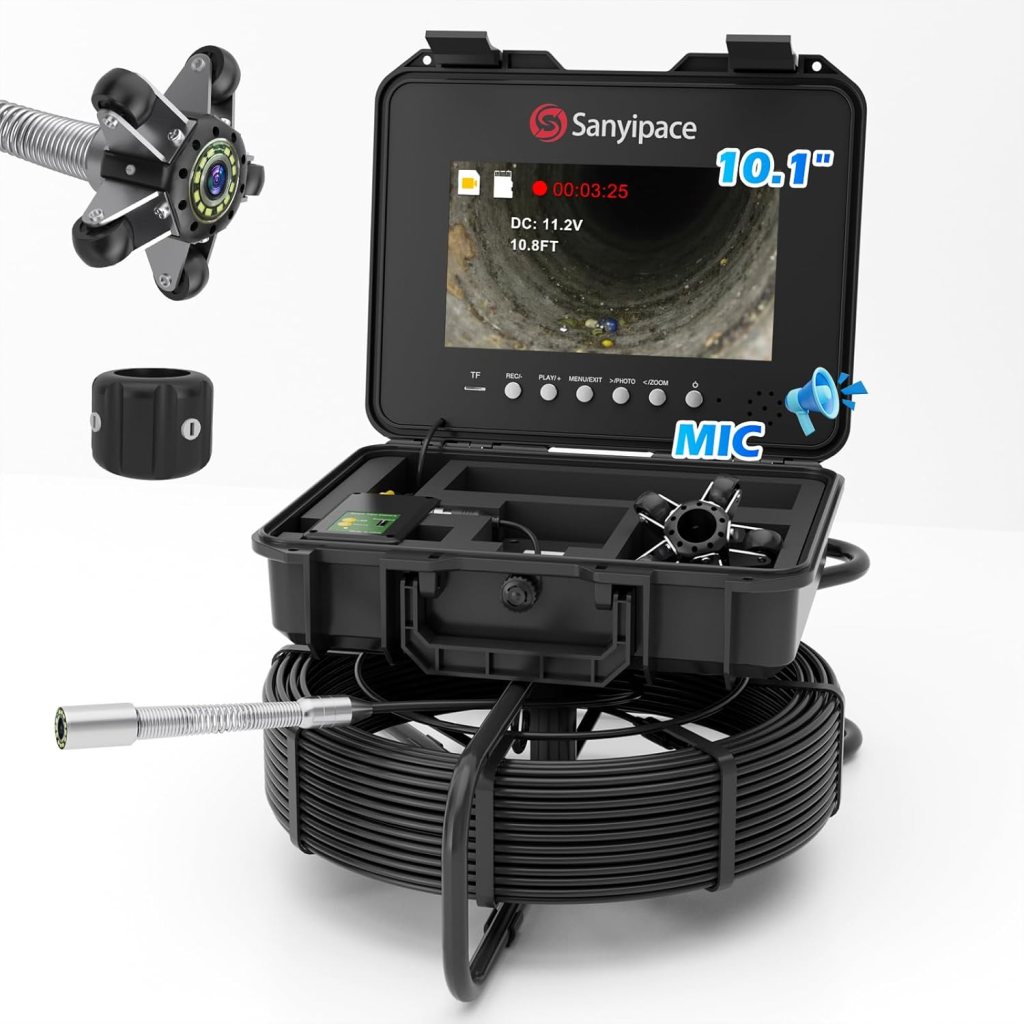
A lot of people do not need a giant reel. They need something they can carry, power on, and push into a line without feeling like they borrowed a municipal inspection rig. That is where the 66-foot Sanyipace makes sense.
The listing points to a 7-inch IPS pop-up screen, 66 ft cable, 20x digital zoom, distance counter, mic and speaker, and 32GB card support. That is a cleaner, more manageable setup for short residential jobs.
Review summary: This is the practical pick for short runs, branch lines, and quick problem checks around a house. The appeal is not only size. It is friction. Lower friction means you actually use it.
Pros
- Easier to handle than a full-size 165 ft or 200 ft system
- 7-inch IPS screen keeps things readable without getting awkward
- Distance counter is genuinely useful at this size
- Good fit for homeowners, handymen, and lighter inspection work
Cons
- Limited reach compared with full sewer rigs
- No locator in this version
- Not the right tool for longer mainline work
Real Testimonial
This one makes sense for people who want a more manageable system without giving up the important stuff. The current Amazon listing highlights self-leveling, a 100-foot cable, 1080P output, a distance counter, DVR, and a 32GB card. That is a smart setup for shorter home drain inspections, tighter storage, and buyers who care more about usability than brute length.
3. Anysun Self Leveling Sewer Camera with Locator, 200 ft
Best for longer runs
Here is the thing about longer cable. It sounds great until the reel gets heavy, the push gets tougher, and you realize you only needed half of it. Still, if you do need more reach, you need more reach.
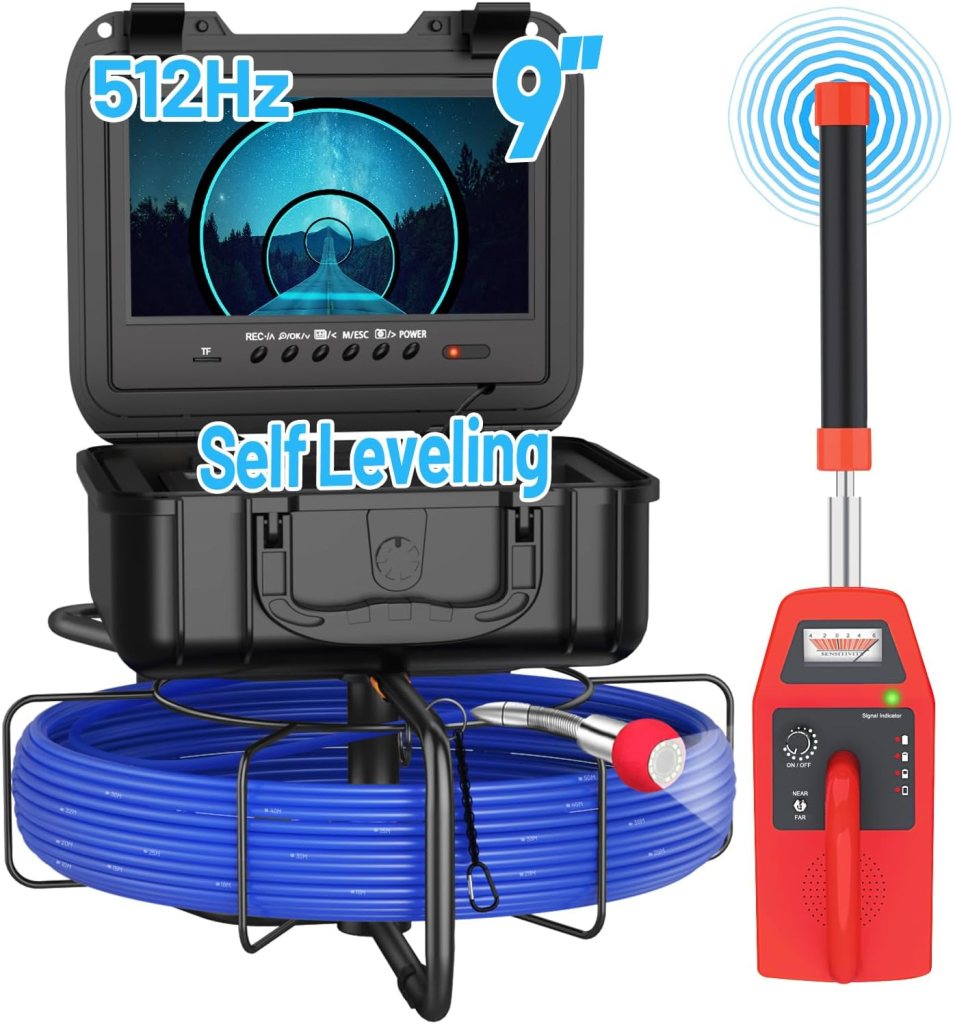
The Anysun 200-foot model earns its spot because it pairs that longer cable with the features that keep a long inspection usable: self-leveling, a 512Hz locator, meter marking, DVR, a 9-inch monitor, adjustable lights, and a 32GB card. That is a serious long-run setup.
Review summary: This is the long-run pick for buyers who know they’ll inspect farther lines and do not want to hit the wall at 100 or 165 feet. It is not subtle. It is purpose-built.
Pros
- 200 feet gives you more room for mainline and longer property runs
- Self-leveling helps a lot during extended inspections
- Locator support makes longer jobs less guessy
- Meter marking is useful when you need to communicate where the issue sits
Cons
- Bigger and heavier to move around
- Overkill for casual or one-off household use
- Longer cable does not automatically mean easier inspections
Real Testimonial
The Anysun is the long-run pick. Its listing calls out a built-in 512Hz transmitter, self-leveling, a 9-inch HD display, meter markings, DVR support, a thicker 7 mm cable, and 8 to 10 hours of battery life. That combination makes it a better fit for longer property runs and more demanding inspection work, where extra distance actually matters and you do not want to hit the limit halfway through a job.
4. HBUDS Sewer Camera with Locator, 165 ft

Best for locating trouble fast
Some cameras help you see the problem. Some help you find it again from above ground. That second part is where time gets lost. HBUDS leans hard into the locating side with a built-in 512Hz transmitter, a locator, self-leveling, distance counter support, and a 9-inch HD display.
The product listing also mentions detection distance up to 23 feet for the locator. That makes it a strong fit for buyers who care less about “nice video” and more about reducing guesswork before digging or repair.
Review summary: This is the pick for finding and tracing trouble with less wandering around the yard pretending to remember where the head stopped.
Pros
- Locator is the headline feature here, and it is a good one
- Self-leveling keeps the view sane
- 165 ft is plenty for many residential sewer inspections
- Strong diagnostic feature stack
Cons
- Not meaningfully simpler than other full-size rigs
- Best value shows up only if you will actually use the locator
- Bigger setup than many homeowners expect
Real Testimonial
HBUDS looks strongest when locating is the priority. Amazon’s listing snippet highlights a built-in 512Hz sonde transmitter, while other current HBUDS listings in the same line emphasize self-leveling, a 9-inch 1080P display, and distance-counter style functionality. So the appeal here is pretty clear: this is the one you buy when “seeing the blockage” is only half the job and you also want to trace where it sits.
5. VEVOR Sewer Camera with 512Hz Locator, 100 ft
Best for tighter jobs
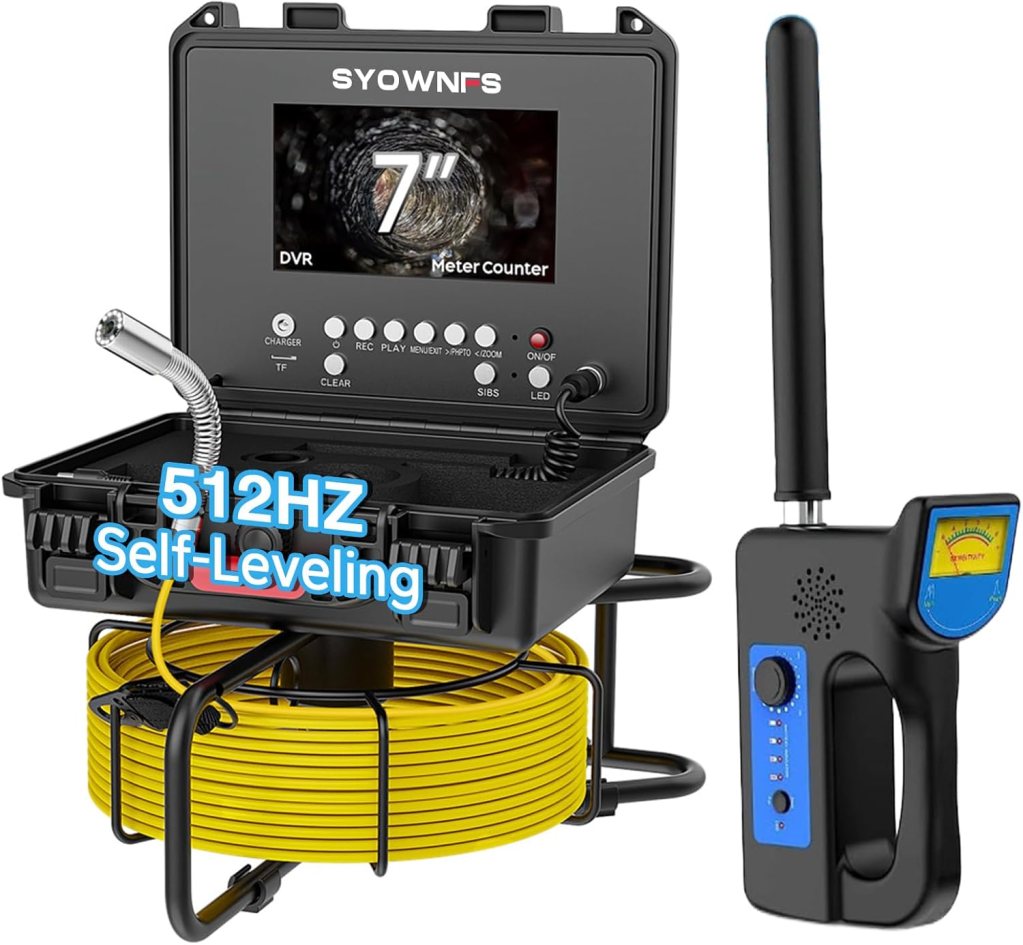
This is the one for buyers who want a real sewer camera but do not want to wrestle a 165-foot coil every time. VEVOR’s 100-foot model brings a 512Hz locator, 7-inch DVR monitor, meter counter, IP68 camera, adjustable LEDs, and a 16GB card.
That shorter cable changes the feel of the tool more than the spec sheet suggests. Less reel. Less drag. Less annoyance.
Review summary: A shorter reel is not a downgrade by default. Sometimes it is the smarter choice. This model keeps the core utility and trims the bulk.
Pros
- Easier to transport and deploy than larger rigs
- 512Hz locator is still included
- 100 feet is enough for a lot of practical work
- Good middle ground between toy-grade tools and oversized systems
Cons
- 7-inch screen is serviceable, not luxurious
- Less reach than the top overall pick
- Shorter cable can become the limiting factor on bigger properties
Real Testimonial
This is the tighter, less cumbersome VEVOR option. Amazon’s current listing snippet says it includes a 512Hz signal for compatible pipe locators, which is a big deal on a shorter reel because it keeps the tool useful instead of just portable. Best for buyers who want a real drain inspection camera with locator support but do not want to drag around a 165-foot setup every time they open the case.
Comparison table by core features
| Product | Screen | Recording | Distance counter | Best use |
|---|---|---|---|---|
| VEVOR 165 ft | 9″ | Yes | Yes | Best overall |
| Sanyipace 66FT | 7″ | Yes | Yes | Short home drain checks |
| Anysun 200 ft | 9″ | Yes | Yes | Long runs |
| HBUDS 165 ft | 9″ | Yes | Yes | Fast locating |
| VEVOR 100 ft | 7″ | Yes | Yes | Tighter jobs |
Comparison table by handling and field fit
| Product | Reel length feel | Portability | Who it suits |
|---|---|---|---|
| VEVOR 165 ft | Full-size | Moderate | Most buyers who want one serious tool |
| Sanyipace 66FT | Lightest here | Strong | Homeowners and short-run work |
| Anysun 200 ft | Largest here | Lower | Longer property lines and heavier use |
| HBUDS 165 ft | Full-size | Moderate | Buyers who want locating strength |
| VEVOR 100 ft | Compact for the category | Strong | Shorter runs and tighter storage |
This table is partly about specs and partly about common sense. The point is simple: buying more cable than you need is not automatically smart. Sometimes it is just harder to carry.
What actually matters in a sewer camera
Cable length
Most buyers fixate on length first. I get it. It is the easiest number to compare. But length only matters if you can push the camera far enough to use it well. A shorter, stiffer, easier reel often beats a giant setup for normal residential work.
Self-leveling
This one is not fluff. When the image stays upright, it is easier to interpret roots, offsets, cracks, and grease buildup without mentally rotating the world in your head. That gets old fast on non-self-leveling cameras.
512Hz locator
A locator changes the tool from “I saw something” to “I can probably mark where it is.” That gap matters. Especially outside.
Screen size
Bigger screens are not only about comfort. They reduce dumb mistakes. A 9-inch display is easier to read in the field than a cramped little panel, especially when pipe walls are wet and every blemish wants to look like a defect.
Distance counter
Worth having. Not glamorous. Still worth having. If you need to tell someone where a blockage or crack sits, a counter saves a lot of bad estimates.
Camera head size and cable stiffness
People forget these. Then the head is too big for the line or the cable is too soft to push where it needs to go. Specs on paper do not tell the whole story, but they do hint at whether a system is built for real pipe work or just easy marketing.
My real buying advice
If you want one answer, take the VEVOR 165 ft and move on.
If you know your jobs are short and local, take the Sanyipace 66FT.
If you need longer reach, buy the Anysun 200 ft and accept the extra bulk.
If locating matters most, HBUDS has a strong case.
If you want a more manageable serious tool, the 100 ft VEVOR is the sleeper pick.
That is the honest version. Not every list needs fake drama.
FAQ
What is the best sewer camera for homeowners?
For most homeowners, the best sewer camera is not the biggest one. It is the one you will actually use without dreading setup. The Sanyipace 66FT is the easiest home-use pick in this list. If you want something more serious that still stays manageable, the 100 ft VEVOR makes more sense.
Is a self-leveling sewer camera worth it?
Yes. I would not call it optional if you plan to use the camera more than once or twice. A self-leveling image is easier to read, less tiring, and better for showing another person what you found.
Do I need a 512Hz locator?
Not always. But it is one of those features that feels unnecessary right up until you need it. If you expect to trace a line from above ground or mark where a problem sits, a 512Hz locator is worth real money.
How much cable length do I really need in a sewer camera?
For many residential checks, 66 to 100 feet is enough. If you are inspecting longer runs, main lines, or larger properties, 165 feet gives you breathing room. Go to 200 feet only if you know why you need it.
Can a sewer camera find roots or cracks?
It can help you identify roots, buildup, standing water, obvious offsets, and some cracks. It cannot magically diagnose everything. The camera shows you the line. You still need judgment to interpret what you are seeing.
Is a 100-foot sewer camera enough?
Often, yes. Especially for tighter jobs, branch lines, and many home inspections. It is not enough for every property. But it is enough more often than people assume.
What is the difference between a sewer camera and an endoscope?
A true sewer camera is built for pipe inspection with longer push cable, a tougher camera head, better sealing, and often features like self-leveling, DVR, and locators. An endoscope is usually smaller, lighter, and better for short inspection tasks in tighter spaces.
Are sewer cameras hard to use?
Not really, but they are easier to misuse than people think. The learning curve is less about buttons and more about pushing the cable properly, understanding what you are looking at, and not mistaking every stain for a disaster.
Can I record video and photos during an inspection?
Yes, the models in this list all include recording support through DVR and storage card features in their listings. That is useful for documenting problems, reviewing footage later, or showing findings to a client or contractor.
What should I look for before buying a sewer inspection camera?
Start with the real questions:
- How far do you need to inspect?
- Do you need a locator?
- Do you care about self-leveling?
- Will you actually carry this around often?
- Is the screen big enough to work with comfortably?
Everything else comes after that.
Are these cameras useful for septic and drain inspections too?
Yes, many are marketed for drains, ducts, sewers, and related inspection work. More broadly, regular inspection and maintenance matter because wastewater problems get expensive fast. EPA guidance on septic care is pretty blunt about that. U.S. Environmental Protection Agency septic care guidance
Conclusion
The best sewer camera is not the one with the wildest product title. It is the one that matches the job. My pick for most people is still the VEVOR 165 ft because it hits the right balance of reach, usability, and real diagnostic features.
If you want a smaller setup, go shorter on purpose. That is not settling. That is buying with a brain. And if the camera helps you catch a problem before it turns into a bigger failure, that is the whole game.
The EPA’s homeowner guidance on wastewater care makes the same larger point from a different angle: inspection and maintenance cost less than waiting for a mess.
Affiliate Disclaimer
This article contains affiliate links. We may earn a small commission if you purchase through these links, at no extra cost to you.




Leave a Reply