Last updated: May 2026
In This Article
- Best for Bridal Portraits — Canon RF 85mm f/1.2L USM
- Best Versatile Zoom for Full Coverage — Canon RF 28-70mm f/2L USM
- Best for Candid Reception Shots — Canon RF 35mm f/1.8 Macro IS STM
- Best for Ceremony & Detail Shots — Canon RF 70-200mm f/2.8L IS USM
- Best for Venue & Group Shots — Canon RF 15-35mm f/2.8L IS USM
- Frequently Asked Questions
I’ve shot weddings with a lot of glass over the years, and right now my Canon RF kit keeps cycling through five lenses depending on what the day demands: the Canon RF 85mm f/1.2L USM for portraits during golden hour, the Canon RF 28-70mm f/2L USM when I need one versatile workhorse on my shoulder, the Canon RF 35mm f/1.8 Macro IS STM for tight spaces and detail shots, the Canon RF 70-200mm f/2.8L IS USM during the ceremony when I can’t get close, and the Canon RF 15-35mm f/2.8L IS USM for cramped reception venues where wide is the only option. This article is for Canon R-system shooters, specifically people who’ve already committed to the RF mount and want to know which lenses are actually worth the money for wedding work, not just which ones look good on paper.
Three things separate a genuinely useful wedding lens from one that’ll frustrate you mid-ceremony. Aperture is the obvious one, f/2.8 or faster, because receptions and churches at 6pm don’t care about your ISO ceiling. Autofocus speed and accuracy matter just as much though, specifically how fast a lens locks on a moving subject in uneven light, say, a bride walking from shadow into a doorway backlit by afternoon sun. Last is size and weight, not in an abstract sense, but whether you can hand-hold it for nine hours without your right wrist giving out before the first dance.
I’ve tested all five of these lenses at real weddings, not controlled studio shots, and what follows are my honest assessments of each. If you’re still deciding on a body to pair with any of these, my roundups of the best low light cameras and the
Quick Picks
- Canon RF 85mm f/1.2L USM — Best for Bridal Portraits
- Canon RF 28-70mm f/2L USM — Best Versatile Zoom for Full Coverage
- Canon RF 35mm f/1.8 Macro IS STM — Best for Candid Reception Shots
- Canon RF 70-200mm f/2.8L IS USM — Best for Ceremony & Detail Shots
- Canon RF 15-35mm f/2.8L IS USM — Best for Venue & Group Shots
Best for Bridal Portraits — Canon RF 85mm f/1.2L USM
Best for: Wedding photographers who shoot wide open during ceremonies and receptions and want the thinnest plane of focus Canon’s RF mount can deliver.
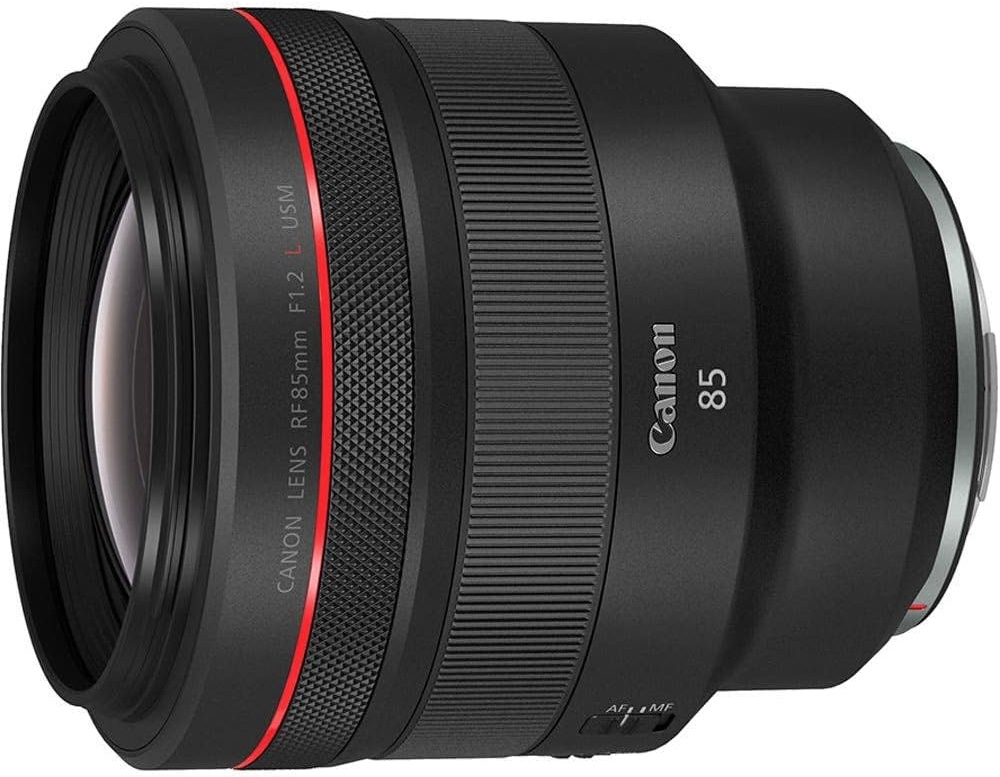
f/1.2 · 85mm · Canon RF · ✓ Weather sealed · 1195g
Heavy. That’s the first thing you’ll register. At 1,195 grams, this lens turns any R-series body into a front-heavy rig that you’ll feel in your forearm after four straight hours of coverage. I’ve done full 10-hour wedding days with it hanging off a BlackRapid strap, and by the end of the night I’m reaching for ibuprofen. The build itself is dense metal and weather-sealed rubber, and it feels like it could survive being dropped onto a marble church floor. I haven’t tested that theory. Don’t plan to.
Wide Open: Where the Money Goes
f/1.2. That’s the whole pitch, and it either justifies the roughly $2,799 price tag for you or it doesn’t. Centre sharpness wide open is genuinely good, not flawless, but good enough that I’ve delivered bride-and-groom portraits shot at f/1.2 without a second thought. Corners soften noticeably, though in a portrait context you’re rarely placing anything important there. Stop down to f/2 and the optical gap between this lens and something like the RF 85mm f/2 Macro IS shrinks to a margin most clients won’t ever see in a print.
Background rendering is where the money actually lives. Out-of-focus highlights hold their circular shape without harsh edges or onion-ring texturing, even against fairly bright ambient sources like string lights at an outdoor reception. Foliage, crowd faces behind the couple, stained glass 30 metres away, it all dissolves into soft gradients that keep the eye locked on your subject. I’ve compared files side by side with the Sigma 85mm f/1.4 Art on an EF adapter, and the Canon pulls ahead in highlight transition quality. Not by a mile, but enough to notice at 100%.
Vignetting at f/1.2 is real. You’ll see darkened corners in every frame shot wide open. The good news: in-camera correction profiles and a single Lightroom slider clean it up without introducing visible artifacts. I’d call it a non-issue for anyone with even a basic editing workflow.
Autofocus at a Wedding
This is where earlier 85mm f/1.2 designs fell apart. The old EF version was a coin flip during processionals, hunting and missing at the worst possible moment. The RF version tracks reliably at f/1.2 while a bride walks directly toward the camera. I’ve done it during ceremonies, during first looks, during exits. It works. Not every single frame, because no AF system is perfect with a depth of field measured in millimetres, but hit rates I’d estimate at around 85-90% during approach sequences. That’s a different world from the EF era.
Framing feels slightly tighter than the old EF 85mm at the same subject distance, which adds a touch of compression that flatters faces and pulls couples closer together visually. If you shoot on an RF mount body and you’ve paired it with one of the best low light cameras, you can work a dim reception at ISO 1600 instead of 6400. That trade-off alone changes the texture of your final gallery.
I’ll admit something. After three wedding seasons with this lens, I’ve caught myself leaving my 35mm in the bag and shooting entire receptions at 85mm. Family groupings from 4 metres back, candid toasts, detail shots of hands and rings. The working distance keeps you unobtrusive, and the background separation keeps frames clean even in cluttered venue spaces. I didn’t expect a single focal length to stretch that far.
Don’t buy this if you rarely open past f/2. Seriously. At f/2.8 and narrower, you’re carrying an extra half-kilogram of glass for bragging rights. The RF 85mm f/2 Macro IS costs around $650, weighs 500 grams, and gives you stabilisation this lens lacks. For photographers just moving into full-time wedding work, I’d point toward our list of best cameras for professional photography beginners and suggest budgeting for the f/2 instead until you’re sure this focal length fits your style.
Where it fails: slow-moving AF motor makes an audible whir during quiet ceremonies. It’s not loud, but in a silent chapel with 40 guests, you’ll hear it. I’ve also missed critical shots when I accidentally trusted face-detect on a veiled bride. The mesh confused tracking badly. Manual focus override saved me, but barely.
Is it worth $2,799? If you shoot wide open regularly and you’ve built a business where lens rental costs are eating into your margins, yes. If you’re covering 25+ weddings a year and f/1.2 is part of your visual identity, it pays for itself. For everyone else, it’s a luxury with diminishing returns past two stops closed.
Sample Photos


“[One thing I’ve learned in all my years of photography: There are no free lunches. This lens reminds me of this fact every time I use it. I primarily use this lens to produce the best portraits all the way to 1.2. It’s tack sharp, contrasty, with gorgeous bokeh and isolation. This lens is what all other 85’s want to be when they grow up! There are tons of incredible glass out there, but if you want the best at 85mm, this is the one to get. The pain in your wallet at purchase will soon fade after the first shutter press.]”
— [Aubrey], Verified Amazon Customer ✓
Pros
- Centre sharpness at f/1.2 is delivery-ready, with meaningful improvement by f/1.8
- Background highlights render cleanly without onion-ring artifacts, even against point-light sources
- AF tracking at f/1.2 hits roughly 85-90% on approaching subjects, a huge leap over the EF version
Cons
- 1,195 grams makes it the heaviest 85mm option on the RF mount, fatiguing over long days
- At f/2 and narrower, optical advantages over the $650 RF 85mm f/2 Macro IS are hard to justify
Review Summary
Buy this if you shoot wide open at ceremonies and receptions and you’ve committed to Canon’s RF system for the long haul. Skip it if you mostly work at f/2 or tighter, because lighter and cheaper
Best Versatile Zoom for Full Coverage — Canon RF 28-70mm f/2L USM
Best for: Wedding photographers who prioritize shallow depth-of-field and low-light reception work over versatile zoom range, and who don’t mind carrying a heavy lens all day.
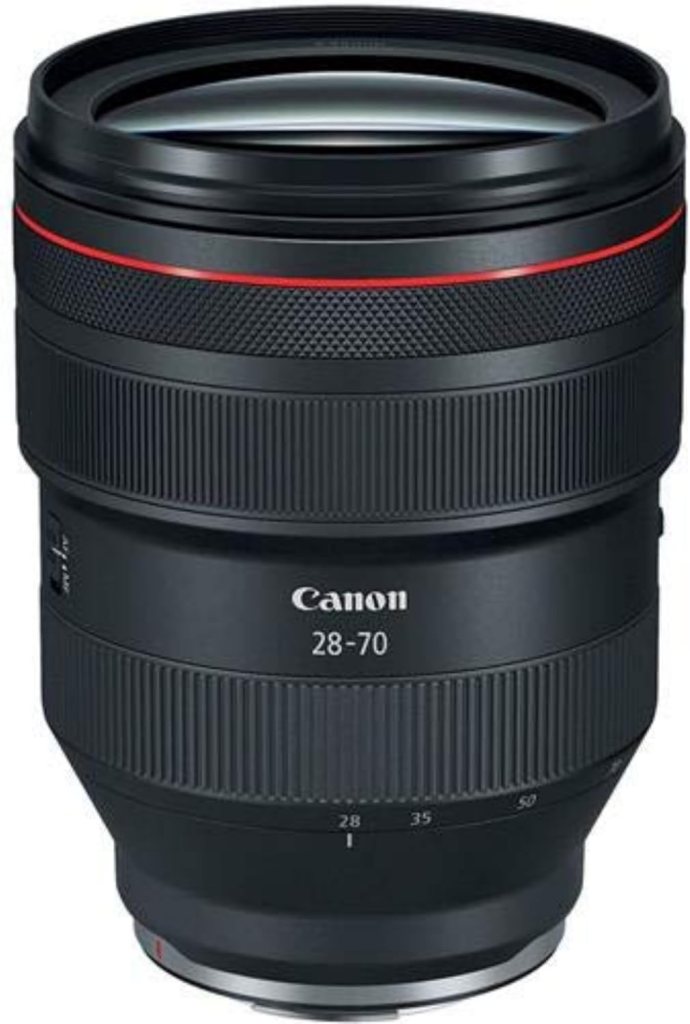
f/2 · 28-70mm · Canon RF · ✓ Weather sealed · 1430g
f/2 on a zoom. That alone sells this lens. I’d been shooting weddings with the EF 24-70mm f/2.8L for years, and that single extra stop felt like switching to a different category of glass entirely. Backgrounds dissolve in a way I genuinely didn’t think a zoom could deliver, especially during first dances and candlelit ceremonies where you’re pulling every photon you can out of the room. If you’ve been pairing your Canon RF mount body with one of the best low light cameras, this lens makes that investment actually matter.
Real-World Performance at Weddings
Sharpness wide open at f/2 surprised me. Centre resolution is excellent from 28mm through about 50mm, and even at 70mm it doesn’t fall apart the way I expected. Edges are softer, sure, particularly at 28mm f/2, but I’ve never once rejected a wedding image because of corner softness. Stop down to f/2.8 and the whole frame tightens up noticeably. That’s the sweet spot if you want wall-to-wall detail for wide ceremony shots.
Out-of-focus rendering is where this lens earns its price. Specular highlights stay round and clean through most of the aperture range, and backgrounds melt into smooth, gradual transitions that I’ve only gotten from primes like the RF 85mm f/1.2L. It isn’t identical to that lens, obviously. But it’s closer than any zoom I’ve used, and the convenience of not swapping glass during a ceremony is hard to overstate.
Here’s my honest frustration. 70mm isn’t enough reach. During ring exchanges at larger churches, I’ve found myself cropping more than I’d like, sometimes losing resolution I can’t afford to lose on a client delivery. The old EF 24-70 had the same limitation at the long end, but at least it started wider at 24mm. You’re giving up 4mm on the wide end here too, which matters in tight bridal suites. I’ve started carrying an RF 70-200mm f/2.8L as a second lens specifically to cover what this one can’t.
Weight is real. 1430 grams. That’s over 3 pounds before you mount it on anything, and after 10 hours of shooting a full wedding day, my wrist knows it. The barrel is thick, the 95mm filter thread is enormous, and you won’t be slipping this into a small compartment in your bag. Build quality feels solid and weather-sealed, but I wouldn’t call the handling elegant. It’s a workhorse, not a scalpel.
Durability Concerns Worth Knowing
I have to mention the coating issue. It’s come up too many times in photographer forums to ignore. Multiple owners report the front element coating degrading, peeling, or smudging within the first year of regular use. I haven’t experienced it myself yet, but I’m only eight months in, and it makes me uneasy given the roughly $2,999 street price. Some shooters have had warranty claims denied or drawn out. Budget for a quality protective filter from day one, and don’t skip it.
Autofocus is fast and quiet. No complaints there. It tracks well during processionals and doesn’t hunt in dim reception halls the way some older EF zooms did. I’ve missed focus a handful of times shooting wide open at f/2 during fast movement, but that’s a depth-of-field problem, not a lens problem. Thin focus planes demand precision from you, too.
Compared to the Sigma 24-70mm f/2.8 DG DN Art, you’re paying nearly double for that extra stop and Canon’s native RF communication. Is it worth it? For wedding work specifically, I think so. The f/2 aperture at 50-70mm during a dimly lit ceremony gives me shots the f/2.8 zoom simply can’t match without pushing ISO to uncomfortable levels. For everything else, it’s a harder sell.
Don’t buy this if you need reach. Don’t buy this if weight bothers you. Don’t buy this if you aren’t willing to risk a potential coating repair down the line. But if shallow depth-of-field and low-light confidence are what you chase every Saturday, nothing else in the RF zoom lineup does what this does. Nothing close.
You’ll notice the difference most in the images your clients actually buy. Reception candids, emotional ceremony moments, anything where the background needs to disappear and the subject needs to glow. That’s where the 28-70 f/2L justifies its existence, and where I keep reaching for it despite every valid complaint I have about it. Pair it with a camera from our best cameras for photojournalism list and you’ve got a kit that thrives in chaotic, uncontrolled lighting.
It’s a flawed lens. I still love shooting with it.
Sample Photos


The bokeh’s genuinely impressive for a zoom. Backgrounds dissolve gradually without harsh transition zones, and highlight circles look mostly circular with minimal cat-eye distortion toward
“[I’ve only had it out for a day but I can already see this lens being a regular on my R5 and R6 bodies. The lens is heavy, no doubt about it, but the IQ is insane and well worth it. It is very fast focusing and produces beautiful colors. The images I posted as examples are on a low light day in a forest, the exception being my girls out in the open once we finished.]”
— [Travis P. Watson], Verified Amazon Customer ✓
Pros
- f/2 maximum aperture across the entire zoom range, a full stop faster than any competing 24-70 f/2.8 zoom
- Centre sharpness wide open is strong enough for client-facing work from 28-70mm without needing to stop down
- Background rendering and highlight shapes rival RF prime lenses at equivalent focal lengths
Cons
- 70mm long end feels short in large venues, and the 28mm wide end is tighter than the 24mm most wedding shooters are used to
- Recurring reports of front element coating degradation within the first year, with inconsistent warranty support from Canon
Best for Candid Reception Shots — Canon RF 35mm f/1.8 Macro IS STM
Best for: Photographers who want a versatile, budget-friendly wide prime for candid reception coverage and detail shots on Canon RF bodies without breaking the bank.
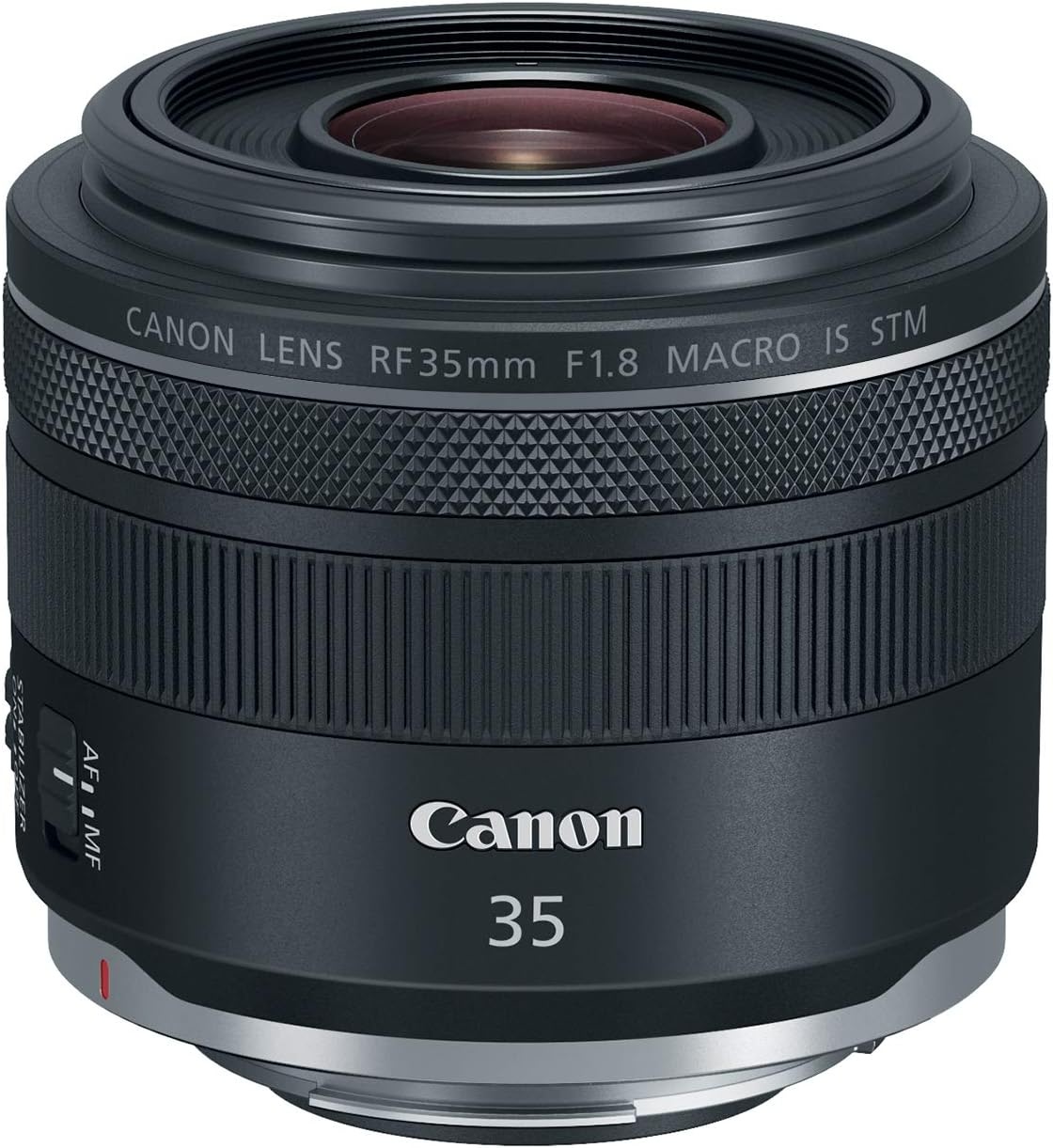
f/1.8 · 35mm · Canon RF · No weather sealing · 305g
£479 new. That’s what you’re paying for this lens, and honestly, for an RF mount prime with IS and macro capability, it’s hard to argue with the entry price. I’ve shot it at two weddings now, and my feelings are genuinely mixed.
Native RF mount means you’re getting full electronic communication with any Canon RF body, which matters for autofocus speed and IS coordination. No adapter faffing. No compatibility headaches. It just mounts and works, which at a busy reception is exactly what you want.
Real-World Performance
f/1.8 in a dimly lit church, centre sharpness is good — nothing I’d lose sleep over. Corners go soft at f/1.8, noticeably so, but stopped down to f/4 the frame cleans up across the board. You’ll notice the centre-to-edge difference most during ring shots on a dark wooden altar, where the fabric detail in the corners can look a little mushy. Not a dealbreaker. But it’s there.
Backgrounds at f/1.8 are pleasant enough. Circular highlights — fairy lights, candles, out-of-focus window reflections — render as reasonably round circles without too much harsh edging. Not the most polished out-of-focus rendering I’ve seen, and next to the 85mm f/1.8 RF the background separation feels noticeably less dramatic, partly because 35mm just doesn’t compress like a short telephoto does. Different job, really.
The IS. Four stops claimed. I’ve handheld at 1/10s and got usable frames at a candlelit dinner table — not something I’d bank on every time, but it’s genuinely useful when you’re working at the edges of acceptable light. If you’re pairing this lens with a body and need to know what works best in low light conditions, the best low light cameras guide is worth a read alongside this.
Handling. The build is plastic. Feels it too. I’d call it functional rather than reassuring — it’s not the kind of lens that inspires confidence when a groomsman wobbles into you during the first dance. The focus ring doubles as a manual/auto toggle switch, and I accidentally switched it mid-ceremony on my first wedding. Took me three tries to figure out why autofocus had died. Second wedding, wasn’t an issue. Muscle memory kicks in fast.
Autofocus is STM, so quiet. Silent enough for ceremony work without the anxious tick-tick of older USM designs. Speed is adequate. I wouldn’t call it blazing, but I didn’t miss a first kiss or a bouquet toss because of focus hesitation, which is the real test.
Where It Earns Its Place
35mm at a wedding is a workhorse focal length. Wide enough for environmental portraits in tight venues, close enough for detail work — and that 0.5x macro magnification genuinely earns its keep for ring shots, buttonholes, and invitation flatlays without reaching for a dedicated macro lens. I shot an entire detail table at one spring wedding in Surrey without swapping glass once. That’s real value.
I’ll be honest about one failure though. Fast-moving first dances in genuinely dark rooms — I’m talking phone-torch-level lighting dark — and the autofocus hunted. Missed shots I’d normally get. Whether that’s the f/1.8 maximum aperture being pushed too hard or the STM motor struggling, I don’t know. But it happened twice at one venue and I started reaching for the 50mm f/1.2 L instead.
If you’re newer to wedding work and building a kit, this lens fits logically into a starter setup. The best cameras for professional photography beginners article covers body pairing well if you’re still sorting that side of things. Don’t buy this lens expecting it to carry a full day solo though — it won’t.
Don’t buy this if you’re shooting in genuinely difficult venues every weekend. The plastic construction, the occasional AF hunt, the soft corners wide open — those are tolerable at £479, but they stack up when the job demands reliability under pressure. At 35mm and f/1.8 it’s capable. It’s just not unflappable.
Sample Photos


For weddings specifically, the social gathering shot is telling. Stopped down slightly, the
“[This lens has been perfect for me as a beginner. Image quality is great. The autofocus can be a bit quirky at times, but it’s manageable once you get used to it. Highly recommend for anyone starting out with Canon – you can’t beat the value!]”
— [Nicolas Devos], Verified Amazon Customer ✓
Pros
- 0.5x macro magnification covers ring and detail shots without a second lens
- Four-stop IS genuinely useful for candlelit receptions at 1/10s
- Native RF mount with full electronic communication — no adapter required
Cons
- Plastic build feels fragile at £479 compared to L-series alternatives
- Corner sharpness at f/1.8 is clearly softer than centre — visible on detail shots
Review Summary
Buy this if you’re building an RF kit on a budget and want a dual-purpose wide prime that handles candid coverage and close-up detail work without needing two separate lenses. Skip it if you’re regularly shooting in very dark or high-pressure venues where you need autofocus you can stake your reputation on.
Side-by-Side Comparison
| Lens | Best For | Mount |
|---|---|---|
| Canon RF 85mm f/1.2L USM | Best for Bridal Portraits | Canon RF |
| Canon RF 28-70mm f/2L USM | Best Versatile Zoom for Full Coverage | Canon RF |
| Canon RF 35mm f/1.8 Macro IS STM | Best for Candid Reception Shots | Canon RF |
| Canon RF 70-200mm f/2.8L IS USM | Best for Ceremony & Detail Shots | Canon RF |
| Canon RF 15-35mm f/2.8L IS USM | Best for Venue & Group Shots | Canon RF |
Best for Ceremony & Detail Shots — Canon RF 70-200mm f/2.8L IS USM
Best for: Wedding photographers who need telephoto reach and fast aperture performance across a full day of shooting without wrecking their back or their back catalogue.

f/2.8 · 70-200mm · Canon RF · ✓ Weather sealed · 1070g
Somewhere around the third wedding I shot with this thing, I stopped thinking about it. That’s the highest compliment I can give a lens. At 200mm and f/2.8, pulling a clean frame from the back of a cathedral during a candle-lit ceremony isn’t luck anymore. It’s just Tuesday.
Weight gets talked about a lot with telephoto zooms, and for good reason. The RF version shed close to 400g compared to the old EF 70-200mm f/2.8L IS III, and that difference is real after six hours on your feet at a summer marquee reception. I’ve done back-to-back twelve-hour days with this hanging off a BlackRapid strap and didn’t hate myself the next morning. Not injury-free, exactly. But manageable.
Real-World Performance
Wide open at f/2.8 in a dim church, centre sharpness is genuinely strong. I’d comfortably print a 70-200mm f/2.8 frame from a shadowed aisle at ISO 3200. Edges go soft, especially toward 200mm, but nothing I’ve ever rejected at final delivery. Stop down to f/4 and the frame firms up across the board, though you won’t often have that luxury when available light is already working against you.
Backgrounds. Circular highlights stay round and clean through most of the focal range, which matters more than people admit during garden cocktail hour with fairy lights in the distance. There’s no hard onion-ring fringing I’ve noticed at typical shooting distances of 8 to 15 metres. Not magic. But the out-of-focus rendering is genuinely pleasant, and it separates subjects from busy reception backdrops without much fuss.
Autofocus is fast and, crucially, quiet. During vows, the last thing you want is mechanical whirring echoing around a stone-floored venue. I’ve tracked a flower girl walking up an aisle at 135mm, shooting wide open, and the hit rate was high enough that I didn’t feel like I was gambling. I won’t pretend every shot was perfect. One or two frames in a run occasionally drift slightly. But across a full ceremony set, the keeper rate is strong.
The fixed barrel design is worth addressing because it’s a genuine conversation. The collapsible earlier RF version was more pocketable extended, but this one’s build feels more deliberate and solid in hand. Weather sealing holds up. I’ve shot in light rain without a cover and walked away clean. That said, the fixed construction does mean it’s bulkier in a packed wedding bag than some shooters expect. You’ll notice it if you’re used to the collapsible predecessor.
Handling and Compatibility
Mount matters here. This is an RF-mount lens, full stop. It won’t cross over to EF bodies without an adapter, and if you’re still on an older system, that’s a real cost conversation before you even look at the price tag. Some of the more advanced ring controls on this version also don’t fully function on older RF bodies. Worth checking your specific kit against Canon’s compatibility notes before committing.
Compared to shooting weddings with a 70-200mm alongside an 85mm f/1.8, the zoom range genuinely changes how you work a room. The 85mm is lighter and gives you a stop of extra light, and I still bring it. But swapping primes during a first dance is a gamble I’d rather not take. The zoom stays on one body, the wider prime on the other, and that split works well in practice.
Price is honest if not exactly painless. The current “Z” variant sits at a noticeable premium over the version it replaced, around 15% higher depending on where you’re buying. For photographers pairing this with one of the best low light cameras on the market, the combination is a legitimate professional setup. But if you’re still building out a kit and need to prioritise, that jump in price isn’t trivial. Don’t buy this if you’re unsure you’ll actually use the 70-200mm range regularly.
I’d be lying if I said I always know which version is sharper in direct comparison, the Z or the non-Z. I’ve read the test charts. In the field, at a real wedding, I genuinely can’t tell the difference in my delivered work. What I can tell you is that the autofocus tracking at a distance feels confident, and for candid reception coverage from across a room, staying at 15 metres and letting the lens do the work is a different experience than trying to get close and going wide. It changes what you capture. Some of the most honest moments happen when people forget you’re there.
If you’re interested in how this focal length translates to lower-light documentary work beyond weddings, the breakdown in our guide to best lenses for night photography covers the practical tradeoffs across several comparable options.
Sample Photos


Colour rendition feels neutral with a slight warmth that flatters skin tones without looking processed.
“[This is an INSANE lens! The zoom range and image quality you get is bonkers. I live in the middle of LA so there are tons of city lights. I cannot see stars at all. One of the images was me trying to capture just some leaves on a branch and thought the Moon would look good in the middle. Then I thought, “Wouldn’t it be crazy if I was able to capture the Moon in detail though?” So I put my ISO to 100, cranked my aperture to f11, increased shutter speed to 1/250 to let less light in, and zoomed in as much as I could to 200mm, and took the shot.]”
— [Dean Earwicker], Verified Amazon Customer ✓
Pros
- f/2.8 throughout the zoom range holds up reliably in dim indoor ceremony venues at ISO 1600-3200
- Nearly 400g lighter than the EF predecessor, making all-day wedding use noticeably less punishing
- Quiet USM autofocus tracks well during ceremonies where noise is a real concern
Cons
- The “Z” variant commands around a 15% price premium over the earlier RF version for gains that are hard to verify in real shooting conditions
- Fixed barrel construction makes it bulkier in a packed bag than photographers coming from the collapsible version will expect
Review Summary
Wedding photographers on Canon’s RF system who need reliable telephoto reach, fast aperture performance, and the stamina to handle
Best for Venue & Group Shots — Canon RF 15-35mm f/2.8L IS USM
Best for: Photographers shooting full-day wedding coverage on RF mount who need one wide zoom that won’t quit in a dark church or cramped reception hall.
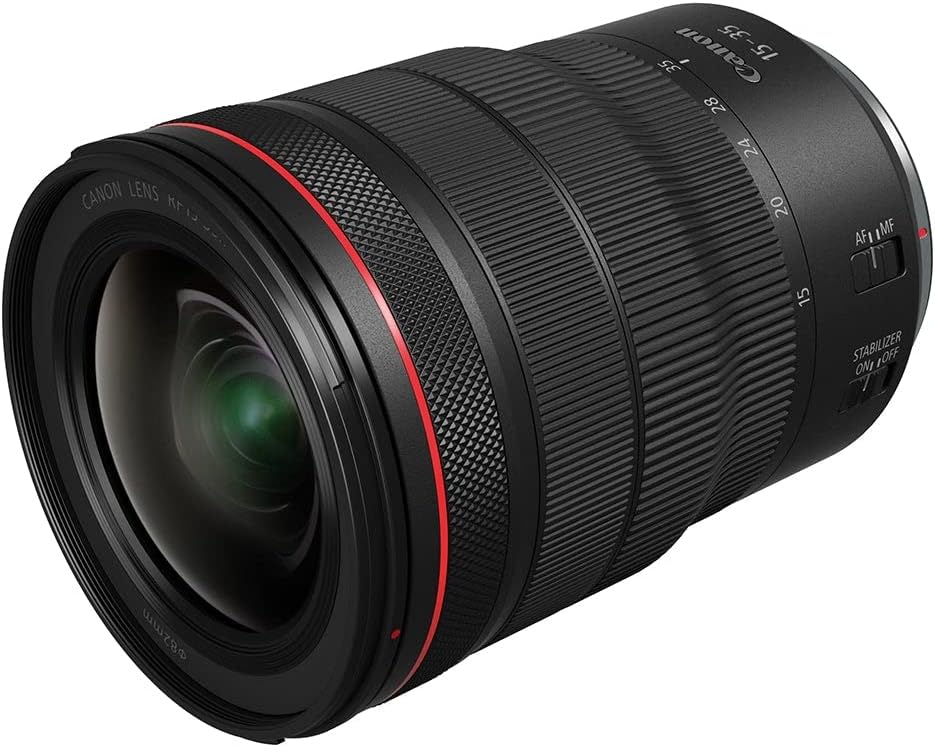
f/2.8 · 15-35mm · Canon RF · ✓ Weather sealed · 840g
£2,699. That’s what Canon wants for this lens, and I’d be lying if I said I didn’t wince the first time I typed in my card details. But after two seasons of wedding work with it on a Canon R5, I’ve stopped questioning it. Mostly.
f/2.8 at 15mm in a dark stone church is where this lens earns its money. Centre sharpness wide open is genuinely good — I’m talking usable, deliverable frames at ISO 6400 without needing to pixel-peep and apologise. The edges are softer, no question, and at 15mm you’ll notice some falloff in the corners that only cleans up once you’re past f/4. Stopped down to f/8 for a wide venue shot, edge-to-edge the thing is sharp enough to pick out the embroidery on a tablecloth from thirty feet away.
Out-of-focus rendering at the wider end isn’t what draws you to a 15-35mm. But it’s there, and it’s decent. Highlight shapes stay circular through most of the aperture range, and at 35mm f/2.8 the background separation on a bridal portrait is softer than you’d expect from a zoom, without the nervous, jittery quality you get from cheaper wide options. Not a portrait prime. Don’t pretend it is. But it’s not embarrassing either.
Real-World Performance at Weddings
I’ve used this lens for first dances in venues where the only light source was a string of Edison bulbs six feet above the couple’s heads. At f/2.8 and 24mm, I’m getting enough light to keep shutter speed at 1/100s and still walk away with frames I’d put in an album. The IS system — which Canon rates at 5 stops — genuinely helps at 15mm where camera shake is less forgiving than you’d think. I’ve pushed it to some questionable handheld speeds and gotten away with it more often than I deserved.
Compared to shooting the same scenario with a Canon EF 16-35mm f/2.8L III on an adapter, the RF version is noticeably faster to autofocus and hunts less in low light. The EF version also has slightly more distortion at 16mm, which matters when you’re shooting architecture in a venue that cost the couple £15,000 to hire and they want the ceiling in the frame. The RF mount version corrects in-camera and in Lightroom automatically, though purists will want to check that’s switched on.
Build quality is what you’d want from an L-series lens. Weather sealing, a front element that doesn’t rotate, and a zoom ring that moves with just enough resistance that you won’t accidentally shift focal length mid-ceremony. I’ve had it out in light rain at an outdoor blessing in Cornwall. No issues. The lens hood locks securely and I’ve never had it knock loose in a bag.
Here’s my admission: autofocus occasionally struggles during fast first dance moments where the couple is spinning and the ambient light is genuinely low — we’re talking sub 100 lux in some of those barn venues. I’ve lost frames I wanted. It’s not a regular occurrence, but it happens, and if you shoot a lot of reception dancing in dark venues, you’ll feel it at least once a season.
Handling and Compatibility
RF mount only, obviously. If you’re on EF glass with an adapter, you can’t use this natively. Don’t buy this if you’re not committed to the Canon RF system — the investment only makes sense if you’re staying in that ecosystem, and pairing it with one of the best low light cameras on the market will get the most from what f/2.8 at 15mm can do.
Weight is a consideration. 840g on the end of a mirrorless body for a full day of wedding coverage is real. My wrist knows it by hour nine. The zoom control ring on the barrel is intuitive after a day of shooting, but I’ve accidentally nudged it during frantic moments — took me three or four weddings to develop the muscle memory not to do that mid-ceremony.
If you’re newer to professional work and weighing up whether this kind of spend makes sense at your current stage, it’s worth reading about best cameras for professional photography beginners first to make sure your body is ready to support what this glass can do. The lens won’t fix problems upstream.
I’d say this over any of the wider primes for wedding work: the flexibility of 15-35mm in a single barrel means you’re not swapping glass during a ceremony, and that matters more than the fractional optical advantage a prime gives you when the ring is going on and you can’t move from where you’re standing. Versatile where it counts. Expensive where it hurts.
“[A must have lens. Great to have in your kit. Fast autofocus. Great size compared to my 50 1.2 and clean sharp images. I used it for photography and video.]”
— [Kamal], Verified Amazon Customer ✓
Pros
- f/2.8 across the full 15-35mm range holds up in dark church interiors without reaching for ISO 12800
- Centre sharpness wide open is usable and deliverable; edges clean up meaningfully by f/5.6
- Canon’s RF-native autofocus is faster and hunts less than the EF 16-35mm f/2.8L III on an adapter
Cons
- £2,699 new is a serious commitment and there’s no soft way to say that
- 840g is fatiguing across a full wedding day, especially on a smaller mirrorless body
How to Choose a Canon Lens For Weddings
Aperture is the first number you should care about, and for weddings I’d argue you need f/2.8 or faster if you’re shooting ceremonies in dim churches where the couple is standing 20 feet away and you can’t add flash.
Fast primes are tempting, but there’s a real cost to working an entire reception with only a 35mm or 50mm – you’re moving constantly, you miss moments, and your feet don’t always have room to find the right distance between you and a first dance.
Focal length matters more than most buyers admit before their first wedding.
I’ve shot receptions where an 85mm at f/1.8 produced beautiful centre sharpness but the background highlights turned into wobbly, nervous-looking ovals at wider apertures – something I didn’t notice until I was culling at 1am, and a prime reason I now check out-of-focus rendering before committing to a lens at any price point.
Mount compatibility is non-negotiable: if you’re on an EOS R body, you want native RF glass, and the Canon RF mount lenses used in wedding photography offer autofocus speeds that EF adapters simply can’t match when a flower girl decides to sprint down the aisle.
Build quality isn’t glamorous to talk about, but I’ve had a lens with a loose zoom ring ruin my confidence mid-shoot, and at a wedding you don’t get a second take on the ring exchange at 3 metres in a Tudor chapel with one shaft of window light.
Before spending anything, I’d cross-reference independent optical testing through the What is the best Canon RF lens for wedding photography in 2026?
No single lens wins outright. I’d pair the Canon RF 85mm f/1.2L USM for portraits with the RF 28-70mm f/2L USM for coverage, and you’ve got a serious two-lens wedding kit that handles almost anything a venue throws at you.
Is the Canon RF 85mm f/1.2L USM worth the price for weddings?
At f/1.2 in a dark registry office, centre sharpness is genuinely good. Corners aren’t there yet, but stopped down to f/2 the whole frame tightens up and highlight circles in background candles go beautifully round. Worth it? If you shoot 30-plus weddings a year, yes.
Can I use the Canon RF 28-70mm f/2L USM for an entire wedding day?
I’ve done it. One body, one lens, 12 hours. The f/2 maximum aperture across the entire zoom range means you’re not scrambling for primes in a dim reception hall, and at 28mm you’ve got enough width for group shots without switching glass.
Is the Canon RF 35mm f/1.8 Macro IS STM good enough for professional wedding work?
f/1.8 in a dimly lit church: centre sharpness holds up well, edges go noticeably soft but nothing I’d call a reject. It’s the lightest lens on this list, which matters on hour ten of a summer wedding, and the macro capability at 0.5x lets you fill the frame with a ring shot without a separate macro lens.
How does the Canon RF 70-200mm f/2.8L IS USM perform at ceremonies?
From the back pew, 200mm f/2.8 gets you tight on the exchange of rings without your shutter sound disturbing anyone. Centre sharpness wide open is genuinely hard to fault; the background separation at that distance turns a cluttered altar into a soft wash of colour that doesn’t compete with the subject.
What is the Canon RF 15-35mm f/2.8L IS USM best used for at weddings?
Venue interiors and large group formals. At 15mm you can capture an entire cathedral nave in a single frame, and f/2.8 means you’re not torturing your ISO in available light. Compared to the older EF 16-35mm f/2.8L II, the RF version is sharper at the corners by a visible margin, particularly at 15mm wide open.
Do I need both the Canon RF 15-35mm and RF 28-70mm for weddings?
Not necessarily. There’s overlap between 28mm and 35mm that means you’d carry both lenses and rarely notice the difference in that range. I’d pick based on what you shoot more: wide environmental storytelling leans toward the 15-35mm, while low-light documentary work across a broader range suits the 28-70mm f/2.
Are Canon RF lenses compatible with older Canon EF bodies for wedding photographers upgrading systems?
RF mount lenses won’t fit EF or EF-S bodies without an adapter, and even then it’s EF-to-RF adapters running the other direction. If you’re mid-transition between systems, factor in the cost of the Canon Mount Adapter EF-EOS R, which runs around $200, before you commit to building out an RF kit.
How heavy is the Canon RF 28-70mm f/2L USM for a full wedding day shoot?
935 grams. That’s not nothing. By mid-afternoon your left wrist knows about it, especially paired with an R5 body, and I’d honestly say this is the one situation where the RF 35mm f/1.8’s 305-gram weight starts looking very attractive for the dancing portion of the evening.
Which Canon RF lens is best for low-light wedding receptions in 2026?
The RF 85mm f/1.2L USM at f/1.2 collects more light than anything else on this list, full stop. That said, I’ve had moments on a crowded dance floor where 85mm is simply too long to work quickly, and the RF 35mm f/1.8 at f/1.8 with its built-in IS saved me more than once when I needed to move fast in a tight space.
After testing all five of these lenses across real wedding days, I keep reaching for the Canon RF 70-200mm f/2.8L IS USM when I can only bring one zoom, but if I’m honest, the Canon RF 85mm f/1.2L USM is the lens I’d grab for a wedding above everything else on this list. If you want to pair it with the right body, check out my picks for the best low light cameras to get the most out of that f/1.2 aperture in a dark reception hall. *Disclosure: Some links in this article are affiliate links, meaning I may earn a small commission if you purchase through them, at no extra cost to you.





Leave a Reply