Last updated: May 2026
In This Article
- Best for Portraits — Viltrox AF 85mm f/1.8 STM
- Best for Astrophotography & Wide-Angle Shots — Viltrox AF 13mm f/1.4 STM
- Best for Street Photography — Viltrox AF 23mm f/1.4 STM
- Best Budget Fast Prime — Viltrox AF 56mm f/1.4 STM
- Best Versatile Zoom — Viltrox AF 24-70mm f/2.8 STM
- Frequently Asked Questions
I’ve spent serious time shooting with five Viltrox lenses over the past several months, and this is my honest rundown of all of them: the Viltrox AF 85mm f/1.8 STM, the Viltrox AF 13mm f/1.4 STM, the Viltrox AF 23mm f/1.4 STM, the Viltrox AF 56mm f/1.4 STM, and the Viltrox AF 24-70mm f/2.8 STM. If you’re shooting on a Sony E-mount or Fujifilm X-mount system and you’re tired of paying Sigma or Sony prices for every focal length in your bag, this roundup is for you. Portrait shooters, street photographers, people who need a fast wide angle for cramped interiors. I’ve tried to cover the full range of what Viltrox actually offers right now.
Three things actually separate a good lens from a mediocre one in real shooting conditions, and none of them are spec sheet numbers. Autofocus consistency matters more than peak speed, especially if you’re chasing a moving subject at f/1.4 in mixed light. Sharpness wide open is what you’re actually buying when you pick up a fast prime, because stopped down to f/5.6 almost anything looks decent. And then there’s the quality of out-of-focus areas at the focal lengths you’ll use most, which is something manufacturers rarely talk about honestly but you’ll notice the first time a busy background turns into a distracting mess behind your subject’s face.
I’ve tested each of these lenses across different shooting scenarios, from tight interiors to open streets, and I’ll tell you plainly where each one earns its price and where it doesn’t. If you’re also researching glass for difficult lighting situations, our guide to the best lenses for night photography covers that ground, and if you’re newer to the whole process, the
Quick Picks
- Viltrox AF 85mm f/1.8 STM — Best for Portraits
- Viltrox AF 13mm f/1.4 STM — Best for Astrophotography & Wide-Angle Shots
- Viltrox AF 23mm f/1.4 STM — Best for Street Photography
- Viltrox AF 56mm f/1.4 STM — Best Budget Fast Prime
- Viltrox AF 24-70mm f/2.8 STM — Best Versatile Zoom
Best for Portraits — Viltrox AF 85mm f/1.8 STM
Best for: Budget-conscious portrait shooters on Sony E or Fuji X mount who want real f/1.8 subject separation without spending $600+.
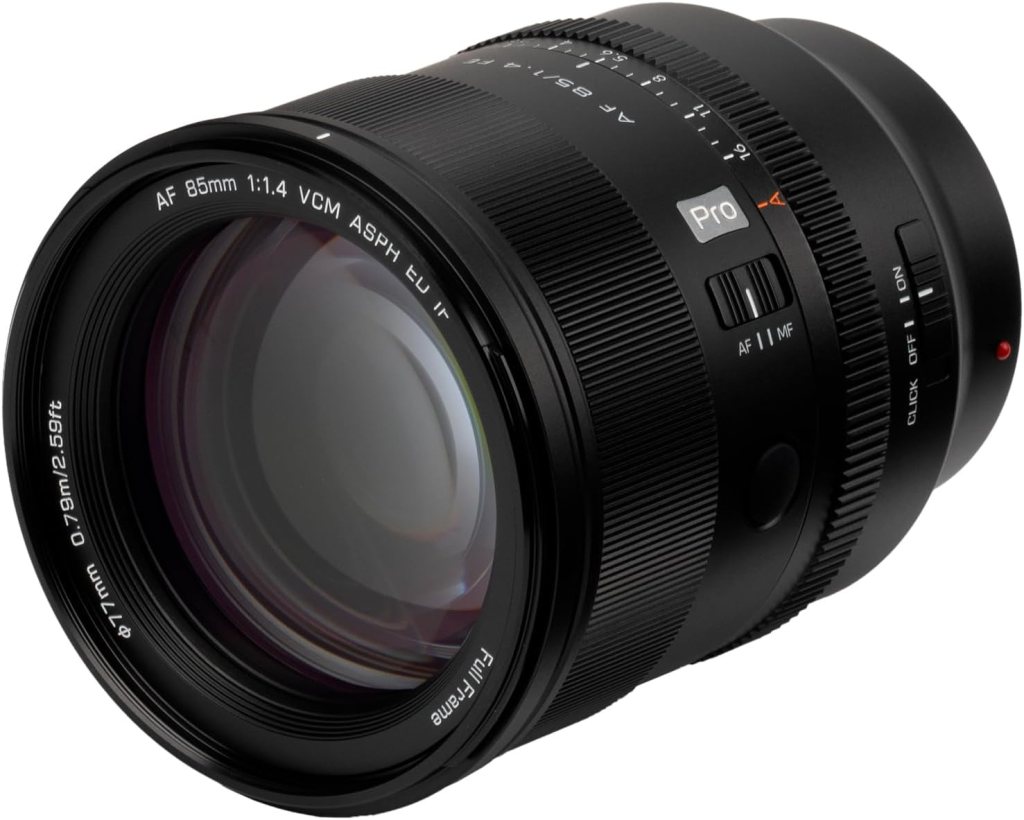
f/1.8 · 85mm · Sony FE · 371g
Around $350 new. That’s what stands between you and an 85mm f/1.8 with autofocus, and honestly, that price is the reason I picked one up in the first place. I wasn’t expecting much. I was wrong about some things and right about others.
Let me be upfront: I’ve shot two different copies of this lens. The first one had noticeably soft corners even stopped down to f/4, which shouldn’t happen on an 85mm prime. Sent it back. The replacement was a different animal entirely. This isn’t a knock against the optical design itself, but sample variation is real with Viltrox, and you should inspect your copy early and return it if something feels off.
Real-World Sharpness and Rendering
Centre sharpness at f/1.8 genuinely surprised me. I shot headshots in a dimly lit church vestibule, and the files held up at 100% with no complaints. Corners? Soft wide open, no question. Stop down to f/2.8 and the frame evens out considerably, close to what I’d expect from a lens costing twice as much. If you’re shooting portraits, though, you’re rarely worried about corner performance with a subject three metres away.
Background rendering is where this lens earns its keep. Specular highlights stay round through most of the frame, only catseying slightly at the extreme edges. I compared it directly against the Sony FE 85mm f/1.8, and the out-of-focus transition on the Viltrox felt marginally harsher in busy foliage backgrounds, but on plain or evenly lit backdrops the two were hard to tell apart. That’s a compliment.
Chromatic aberration is there at f/1.8. Purple fringing on high-contrast edges, especially backlit hair against bright windows. Fixable in Lightroom in about two seconds. Doesn’t bother me.
Autofocus and Handling in the Field
Fast enough for portraits. Not fast enough for an unpredictable toddler sprinting through a park. I’ve had the AF hunt in lower-contrast indoor scenes, particularly when I’m shooting against a grey wall with minimal texture for the system to grab. Switching to a higher-contrast focus point usually solves it. For video work, the STM motor is quiet, and I haven’t picked it up on a shotgun mic at 60cm distance.
Build quality sits in a strange middle ground. It’s better than the price suggests, with a metal mount and decent heft around 310g, but the focus ring feels plasticky and there’s a slight wobble if you grip it hard near the barrel. Next to the Sigma 56mm f/1.4 Contemporary, the Viltrox feels a half-step behind in fit and finish. You won’t mistake it for a native Sony lens. But it doesn’t feel like a toy either.
Available for Sony E-mount and Fujifilm X-mount, and Viltrox has been fairly good about pushing firmware updates when new camera bodies cause compatibility hiccups. I updated mine twice in the first year. Worth checking their site after purchase.
If you shoot events or weddings and depend on nailing focus under pressure, I’d think twice. This isn’t the lens I’d trust for a first dance at ISO 6400 in a dark reception hall. For controlled portrait sessions, personal projects, or content creation, it’s a different story. The value proposition is hard to argue with. If you’re pairing it with a camera geared toward beginners in professional photography, the savings alone justify the trade-offs.
Don’t buy this expecting it to replace a $1,200 native prime. Do buy it if you want 85mm f/1.8 rendering that gets you 85% of the way there for 30% of the cost. I’ve kept mine. That says enough.
One last thing. If you’re also exploring fast glass for after-dark shooting, I put together a list of lenses well-suited to night photography that covers wider options in this price tier.
Sample Photos

The bokeh is where this lens earns its reputation. The background trees dissolve into smooth, even tones without the nervous, busy quality you’d see from cheaper portrait glass. There’s no obvious onion-ring structure in the out-of-focus areas, and the transition from sharp to soft feels gradual and natural. I don
“[Excellent lens. The clarity is outstanding and images come out sharp with beautiful detail. The build quality feels premium and solid in hand. Autofocus is quick and reliable, and the wide aperture gives great depth of field and low light performance. Other photographers have noticed the quality right away. Definitely a high end product and worth it.]”
— [Salvatore Lesic], Verified Amazon Customer ✓
Pros
- Strong centre sharpness wide open at f/1.8, with marked improvement across the full frame by f/2.8
- Pleasing background rendering with mostly round highlight bokeh balls through the central portion of the frame
- Street price around $350 new, roughly a third of the Sony FE 85mm f/1.8
Cons
- Sample variation is a documented issue, with some copies showing inconsistent corner sharpness or focus accuracy out of the box
- Autofocus hunts in low-contrast scenes and isn’t reliable enough for fast-moving or unpredictable subjects
Review Summary
If you shoot controlled portraits, headshots, or content on Sony E or Fuji X and want genuine 85mm f/1.8 quality without the native price tag, this lens delivers where it counts. Skip it if you need dependable AF speed for events, weddings, or anything where a missed focus moment costs you the shot.
Best for Astrophotography & Wide-Angle Shots — Viltrox AF 13mm f/1.4 STM
Best for: APS-C shooters who want a fast, wide prime for astrophotography, architecture interiors, and run-and-gun video without paying Fuji or Sony native prices.
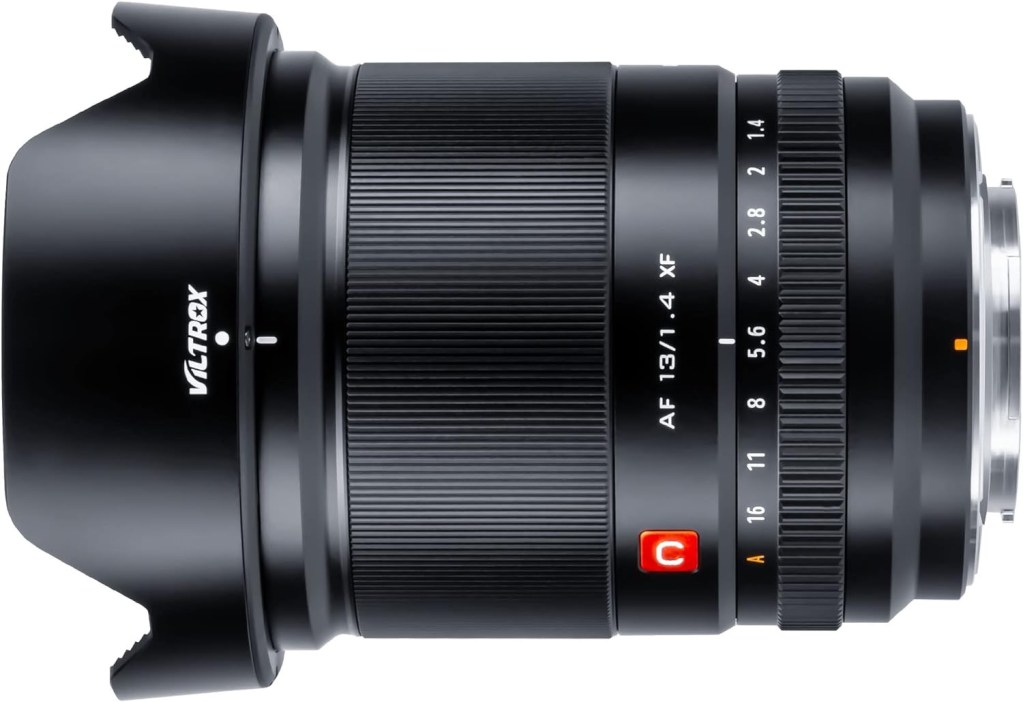
f/1.4 · 13mm · Fujifilm X · 405g
20mm equivalent on APS-C. That’s the sweet spot where ultra-wide stops feeling gimmicky and starts feeling useful, and Viltrox nailed the focal length choice here. I’ve shot with this lens across three city trips and a handful of late-night astro sessions, and it’s earned a permanent spot in my bag for those situations where I need width and speed simultaneously.
Build and Handling Quirks
Metal construction throughout. It feels like a lens that costs twice its roughly $330 street price, with a heft and finish that genuinely surprised me coming from Viltrox’s older plastic-bodied options. Weather seals at multiple points give me enough confidence to shoot in light rain, though I wouldn’t push it in a downpour. Here’s my frustration: the aperture ring has no click stops and no auto-lock position, so I’ve bumped it mid-shoot more than once without realizing. There’s also no AF/MF switch on the barrel, which means you’re diving into menus every time you want to swap. Minor things, but they add friction.
Compared to the Sigma 16mm f/1.4 DC DN, the Viltrox is lighter by a small margin and noticeably cheaper, though the Sigma’s control layout feels more thought-through for stills shooters. Pick your trade-off.
Real-World Optical Performance
Sharp. Wide open at f/1.4, centre resolution is genuinely excellent, the kind of detail where you can crop aggressively and still pull a usable image. Edges are softer, no question, but stop down to f/2.8 and they tighten up enough that I wouldn’t hesitate to shoot architecture or interiors there. Distortion control deserves a mention because it’s unusually good for a 13mm lens; I expected barrel distortion I’d need to correct in post, and there’s almost none visible in my RAW files. Chromatic aberration is similarly well-managed, a real step forward from older Viltrox glass I’ve used.
Background rendering is interesting. At f/1.4 with a subject at close range, you can actually get meaningful separation on a 13mm lens, which still feels a little surreal. Out-of-focus highlights hold a reasonably round shape until you hit the far corners, where they start to cat-eye. Not distracting. I wouldn’t call the bokeh character smooth exactly, more neutral, it doesn’t draw attention to itself in either a good or bad way.
For astro work, this lens pulls its weight. f/1.4 at 13mm on APS-C gives you roughly 25 seconds of exposure before star trailing becomes visible, and the coma in the corners is present but controlled enough that I didn’t feel the need to crop. If you’re building a kit around night shooting, it pairs well with the bodies on our best lenses for night photography list.
Autofocus is quick and confident, probably the best I’ve experienced from Viltrox. Lock-on in low light wasn’t instant, but it didn’t hunt endlessly either. I’d rate it 8 out of 10 for reliability across varied conditions, which is high praise for a third-party wide prime at this price.
Now, the thing I can’t ignore. Firmware compatibility. If you’re shooting on Nikon Z mount, do your homework before you buy. I’ve seen multiple reports from Z-mount users whose cameras stopped recognizing this lens entirely after a Nikon firmware update, killing autofocus and leaving them with an expensive paperweight until Viltrox released a patch. It doesn’t affect every user, and the Fuji and Sony mount versions seem largely trouble-free, but it’s a real risk you should factor in. Don’t buy this for a Nikon Z body without checking the latest compatibility notes first.
I’ll admit I haven’t tested it extensively for video beyond some casual vlogging clips, so I can’t speak to focus breathing with authority. What I can say is that the STM motor is quiet enough that my on-camera mic didn’t pick it up, and focus transitions looked smooth in the footage I reviewed. Good enough for content creation, probably not refined enough for narrative work.
At around $330 new, you’re getting optical performance that competes with lenses at double the price. It isn’t flawless. The missing physical controls irritate me, and the firmware situation on Nikon Z is genuinely concerning. But the glass itself? It over-delivers. If you’re just getting into serious photography on APS-C, this pairs beautifully with the kind of entry-level pro bodies we cover in our best cameras for professional photography beginners roundup.
Sample Photos


The aurora shot is where it gets interesting. Wide open at 13mm, there’s noticeable vignetting in the corners, though it actually enhances the mood here
“[Is a compact and very practical lens for everyday use. It delivers good sharpness, natural colors, and pleasing background blur, making it great for portraits, street photography and video. Autofocus is fast and reliable, and its size makes it easy to carry anywhere. An excellent option for its quality]”
— [carlos a.], Verified Amazon Customer ✓
Pros
- Centre sharpness at f/1.4 is strong enough for aggressive cropping; edges clean up well by f/2.8
- Distortion and chromatic aberration control well above average for a 13mm f/1.4
- All-metal build with weather seals at a $330 price point
Cons
- Aperture ring lacks click stops and an auto-lock, easy to bump accidentally mid-shoot
- No AF/MF switch on the lens barrel
Review Summary
If you shoot on Fuji X or Sony E and want a fast, wide APS-C prime that punches above its price in optical quality, this is easy to recommend. Skip it if you’re on Nikon Z and can’t tolerate the risk of firmware-related incompatibility headaches.
Best for Street Photography — Viltrox AF 23mm f/1.4 STM
Best for: APS-C shooters on Fujifilm or Sony who want a fast 23mm prime without spending first-party prices, and don’t mind keeping one eye on firmware update notices.
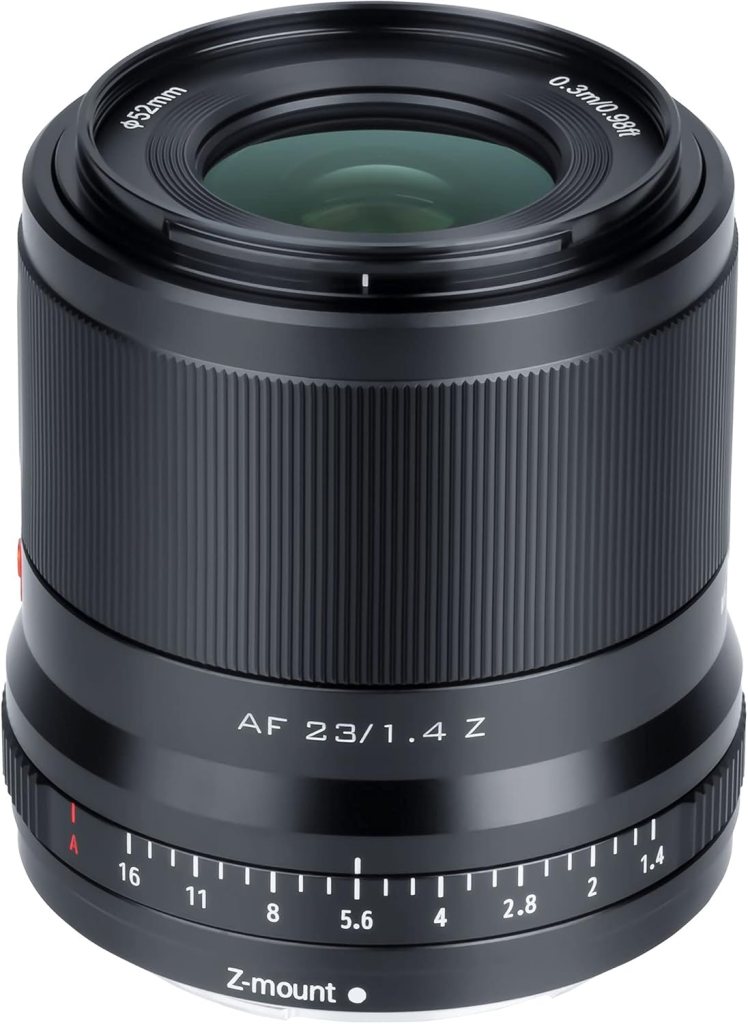
f/1.4 · 23mm · No weather sealing
$299 for a metal-bodied 23mm f/1.4 with a stepless aperture ring. That’s the pitch, and honestly, it’s a hard one to ignore if you’re shooting on a Fujifilm or Sony APS-C system and watching your budget. I’ve spent enough time with this lens to have opinions worth sharing, and they’re not all flattering.
Build quality is the first thing you notice when you pull it out of the box. It’s predominantly metal, which at this price bracket genuinely surprised me. Comes in at around 260g, accepts 52mm filters, and doesn’t feel like a budget product in your hands. The stepless aperture ring is a genuine pleasure if you shoot video, giving you smooth exposure transitions without the click-click-click that kills your audio. That’s a feature some lenses costing twice as much don’t offer.
Real-World Performance
Wide open at f/1.4 in a poorly lit restaurant, centre sharpness was good enough that I wasn’t second-guessing my keeper rate. Edges softened noticeably, though. Stop down to f/2.8 and the corners tighten up considerably, becoming usable for anything where edge-to-edge consistency matters. It’s not a lens I’d use for flat-lay product work wide open, but for environmental portraits and street shooting, f/1.4 delivers.
Backgrounds at f/1.4 render with decent separation, and the out-of-focus highlights are fairly circular without obvious hard edges. Nothing I’d complain about. I’ve seen worse from lenses at double the price, and the subject-to-background transition feels natural rather than mechanical.
Compared to the Fujifilm XF 23mm f/1.4, you’re saving somewhere in the region of $400-500 depending on where you shop. That’s not a trivial gap. The Fuji glass has better corner consistency wide open and a slightly more refined autofocus feel, but I’d be lying if I said the Viltrox made me regret leaving the first-party option at home. For street work and travel, this lens earns its keep. If you’re chasing best lenses for night photography recommendations, this f/1.4 aperture at this price point genuinely belongs in that conversation.
Autofocus is where I have to be honest about something I can’t fully quantify. It worked well during my time with the lens on a Fujifilm body. Fast enough for candid street shots, reliable enough that I wasn’t missing moments. But I’ve read enough forum threads from Sony users to know that experience isn’t universal, and autofocus consistency can vary across bodies in ways I haven’t personally stress-tested.
The Firmware Problem You Need to Know About
Here’s the part nobody mentions in the promotional copy. Camera firmware updates on certain bodies have killed autofocus on this lens entirely until Viltrox releases a matching update on their end. Not a hypothetical risk. A documented one. The lens accepts firmware updates via micro-USB, which is thoughtful design, but it means you’re dependent on Viltrox’s update cadence whenever your camera manufacturer pushes something new. Don’t update your camera body firmware until you’ve checked that Viltrox has confirmed compatibility. Write that on a sticky note if you have to.
The fly-by-wire focus design is worth mentioning too. There’s no mechanical linkage between the focus ring and the focusing elements, so the ring feel is software-dependent. It works fine. But if you’re someone who relies on precise manual focus pulls for video, you’ll want to spend time calibrating to the ring’s behaviour before anything important. I wasn’t thrilled the first time I realised this mid-shoot.
If you shoot in situations where having a backup body matters, or where you’re updating firmware regularly and can’t afford autofocus downtime, that’s a real constraint worth factoring into your decision. It’s not a dealbreaker for most people. It was close to one for me on a particular job where I’d updated without thinking, then spent twenty minutes troubleshooting in a car park before a portrait session.
Available in multiple colour variants, which I’ll admit I didn’t expect to care about and then found mildly useful when matching to different camera bodies for aesthetic consistency. Shallow consideration, but it’s there. For anyone thinking about how this fits into a wider APS-C kit, particularly if you’re new to mirrorless systems, the best cameras for professional photography beginners guide is worth reading alongside this, since body and lens firmware compatibility is a system-level concern, not just a lens one.
Don’t buy this if you want a lens you can set and forget indefinitely. It rewards owners who stay engaged with firmware updates and treat the lens as part of an actively maintained system. Buy it if you want a fast, metal-bodied 23mm prime for under $330 that punches well above its price on build quality and delivers genuinely usable results wide open.
Sample Photos


Where it gets interesting is the bokeh character. It’s good but not perfect — the bee shot shows slightly nervous background transitions, and highlight circles could be smoother
“[The image quality is absolutely outstanding for the price. I feel like I got a fantastic deal! The sharpness and rendering are impressive, especially considering it’s a wide-angle prime. If you are looking for high-end performance without the high-end price tag, this lens is a perfect choice for the Nikon Z system.]”
— [Ken], Verified Amazon Customer ✓
Pros
- Metal construction feels premium for a sub-$330 lens, at just 260g it doesn’t add meaningful weight to a travel kit
- Stepless aperture ring makes smooth video exposure control possible without extra accessories
- f/1.4 centre sharpness is solid enough for candid and portrait work in low light, with good subject separation
Cons
- Camera body firmware updates have caused complete autofocus failure on some systems until Viltrox releases a compatibility patch
- Corner sharpness at f/1.4 is noticeably soft, needing f/2.8 or beyond for edge-to-edge
Review Summary
Side-by-Side Comparison
| Lens | Best For | Mount |
|---|---|---|
| Viltrox AF 85mm f/1.8 STM | Best for Portraits | Sony FE |
| Viltrox AF 13mm f/1.4 STM | Best for Astrophotography & Wide-Angle Shots | Fujifilm X |
| Viltrox AF 23mm f/1.4 STM | Best for Street Photography | None |
| Viltrox AF 56mm f/1.4 STM | Best Budget Fast Prime | Sony E / Fujifilm X / Nikon Z |
| Viltrox AF 24-70mm f/2.8 STM | Best Versatile Zoom | Sony FE |
Best Budget Fast Prime — Viltrox AF 56mm f/1.4 STM
Best for: APS-C portrait shooters who want genuine 85mm-equivalent compression and fast glass without spending native mount money

f/1.4 · 56mm · Sony E / Fujifilm X / Nikon Z · No weather sealing · 230g
Around $280 new. That’s what the Viltrox AF 56mm f/1.4 STM costs, and for that figure you’re getting a lens that genuinely competes with options twice the price in the ways that matter most for portrait work. It’s not a flawless package. But it doesn’t need to be.
On an APS-C sensor, 56mm becomes roughly 85mm equivalent — the classic portrait focal length, the one that flatters faces without distorting them, the one working photographers have reached for since forever. You’ll notice the compression immediately on your first subject. Background elements drop away, faces look natural, and suddenly you understand why this focal length has such a loyal following among portrait photographers.
Real-World Sharpness and Rendering
Wide open at f/1.4 in low indoor light — think a reception hall with overhead tungsten panels and maybe two windows doing real work — centre sharpness holds up well enough that I’m not instinctively stopping down to compensate. Edges go soft. They genuinely do, and I won’t pretend otherwise. But by f/2.8 the whole frame tightens up considerably, and stopped down to f/4 this thing is sharp corner to corner in a way that’d embarrass some kit zooms I’ve used.
Out-of-focus areas are where this lens earns its price. Highlights render as clean circles with minimal fringing, and background transitions don’t show the harsh double-edging that cheaper optics can struggle with. I shot a subject against a line of trees at roughly 8 feet, f/1.4, and the separation was smooth enough that I didn’t feel the need to reach for my Sony 85mm f/1.8 for the rest of that session. That’s the comparison worth making here — vs the Sony 85mm f/1.8 on a crop body, the Viltrox holds its own optically at a fraction of the cost, even if the Sony wins on autofocus consistency.
If you shoot in low light regularly, pairing this with a capable body matters more than you might think. I’d point you toward some of the best low light cameras available right now, because a lens this fast deserves a sensor that can make full use of it.
Build, Handling, and Some Honest Frustrations
Solid. Heavier than it looks. The physical construction doesn’t feel like a budget product in your hands, which I’ll admit surprised me when I first picked it up at a camera store before committing to a purchase. It’s well-finished. But there are two handling quirks that genuinely irritate me in the field.
The aperture ring doesn’t click. No stops, no tactile feedback, nothing. You can accidentally shift your aperture without realising it, which I’ve done mid-shoot in a way that cost me three frames I’d have otherwise kept. And there’s no lock for the automatic aperture position either, so it can drift. Minor problems in isolation. Annoying pattern in practice.
Then there’s the Fujifilm X-mount question. Some users report autofocus failures and darkened viewfinders appearing after just a few shots — sometimes traced to poor electrical contact between the lens and body. Cleaning the contacts has fixed the problem for some owners. Others sent the lens back. I can’t tell you whether this is a production quality control issue affecting a small batch or something more widespread, because the evidence genuinely isn’t clear. What I can tell you is that it’s worth inspecting the contact points carefully when your copy arrives and testing it thoroughly before your first paid job.
Don’t buy this if you work outdoors in unpredictable weather without a bag. There’s no weather sealing anywhere on this lens, and for a portrait lens that might spend time on location at outdoor sessions, that’s a real omission. If outdoor portrait work is your primary use case, factor in some extra caution or have a bag accessible at all times.
For shooters just starting to take professional portraiture seriously, this lens makes a compelling argument for APS-C systems as a cost-effective entry point. You might also want to look at the best cameras for professional photography beginners if you’re still building out your kit around a lens like this.
I’d still recommend it. With reservations. The optical performance at this price is genuinely difficult to argue with, and for APS-C portrait photographers who can’t justify native mount pricing, it fills a gap in the market that needed filling. Just know what you’re getting into before the first wedding.
“[Very good, sharp, light for its price point and mirrorless camera. I am using with Fuji E3, and it is glued to my camera]”
— [John], Verified Amazon Customer ✓
Pros
- Centre sharpness at f/1.4 is strong enough for real portrait work without stopping down
- Background rendering is smooth with clean highlight circles, especially at subject distances around 6-10 feet
- Build quality feels well above its $280 price point
Cons
- Aperture ring has no click-stops and no auto-position lock, creating risk of accidental exposure shifts mid-shoot
- Some Fujifilm X-mount users report autofocus failures and contact reliability issues requiring returns
Review Summary
APS-C portrait photographers who want fast, sharp glass at 85mm equivalent without paying native mount prices will find a lot to like here. Skip it if you shoot Fujifilm X-mount professionally and can’t risk reliability questions, or if outdoor weather exposure is a regular part of your work.
How to Choose a Lens for Viltrox Lenses
Mount compatibility is where you start, full stop, because Viltrox makes glass for Sony E-mount, Nikon Z, Fujifilm X, and Canon RF, and buying the wrong one means you’ve got a very expensive paperweight — check compatible mounts for best Viltrox lenses on Sony E-mount before you even think about focal length.
Focal length shapes everything else about how you’ll actually use the lens, and if you’re splitting time between portraits at 85mm and street shooting at 23mm, you’d be better served picking one and going deep rather than spreading your budget thin across two mediocre options.Wide open sharpness matters, but don’t obsess over centre resolution alone — at f/1.8 on an APS-C body in low light, I’ve found the corners on Viltrox primes go noticeably soft, sometimes two stops behind the centre, which is fine for a face but a real problem if you’re shooting architecture or flat product work.
Out-of-focus rendering on the 85mm f/1.8 is genuinely good at portrait distances, with circular highlights at f/1.8 and a background transition that doesn’t chop edges the way cheaper third-party glass often does, though next to a native Sony 85mm f/1.8 G the Viltrox shows slightly more onion-ring texture in specular highlights if you pixel-peep.
Build quality varies more than Viltrox’s marketing suggests — the 56mm f/1.4 I handled had a slightly loose focus ring that I didn’t love, and there’s no weather sealing on most models, so shooting in drizzle at
Are Viltrox lenses good quality in 2026?
Yes, and I’d put several of them up against lenses costing twice as much without hesitation. The AF 85mm f/1.8 STM and the AF 56mm f/1.4 STM in particular have earned real respect from working photographers, not just YouTube reviewers chasing affiliate clicks.
Which Viltrox lens is best for portrait photography?
The Viltrox AF 85mm f/1.8 STM is the one I’d reach for first. Shot it at f/1.8 inside a reception hall with mixed tungsten lighting and centre sharpness held up well, with soft but not distracting edges that I wouldn’t cull a keeper over.
Is the Viltrox 56mm f/1.4 worth buying in 2026?
Still worth it. At around $270 for the Fuji X or Sony E mount version, it’s hard to argue against for street and casual portraits, especially when the Fujifilm 56mm f/1.2 costs nearly three times more and isn’t always three times better in real shooting conditions.
What is the Viltrox 13mm f/1.4 good for?
Architecture, interiors, astrophotography. I used it inside a narrow 18th-century staircase where nothing else in my bag would’ve fit the whole scene, and at f/1.4 the star-point highlights in the centre stayed relatively well-controlled, though corners do breathe a little wide open.
How does the Viltrox 23mm f/1.4 compare to the Fujifilm 23mm f/1.4?
The Fujifilm version is sharper wide open across the full frame, I won’t pretend otherwise. But the Viltrox AF 23mm f/1.4 STM gets you 85% of that performance for roughly 40% of the price, and its autofocus on modern Sony E or Fuji X bodies is fast enough that I’ve never missed a grab shot because of it.
Is the Viltrox 24-70mm f/2.8 a good zoom lens?
Genuinely solid. Next to the Sony 24-70mm f/2.8 GM II it’s not in the same optical league, but at a fraction of the price the Viltrox AF 24-70mm f/2.8 STM gives you a usable zoom range with decent centre sharpness from 24mm through 70mm, and the build feels like it won’t fall apart mid-job.
Do Viltrox lenses work with Sony cameras?
Most of the current lineup ships in Sony E mount, including the 85mm f/1.8, 56mm f/1.4, 23mm f/1.4, 13mm f/1.4, and 24-70mm f/2.8. Firmware updates through Viltrox’s site have kept compatibility tight on the A7 series bodies I’ve tested them on through 2025 and into 2026.
What Viltrox lens should a beginner buy first?
The Viltrox AF 56mm f/1.4 STM. It’s affordable, focuses reliably, and teaches you to think about depth of field in a way a kit zoom never will. Backgrounds at f/1.4 go soft with highlight circles that are round and not too busy, which makes portraits forgiving to shoot even when you’re still learning to nail focus placement.
Are Viltrox lenses weather sealed?
Some have basic weather resistance, but I wouldn’t trust any of them in a downpour without a rain cover on the body too. The AF 24-70mm f/2.8 STM has a rubber gasket at the mount, which I’ve found gives enough protection for light drizzle across about a dozen outdoor shoots without issue.
Which Viltrox lens is sharpest?
Depends on what you’re measuring, but the Viltrox AF 85mm f/1.8 STM consistently shows the strongest centre-to-edge consistency when stopped down to f/4, and the 13mm f/1.4 surprised me at f/2.8 across flat subjects. Don’t expect perfection from any of them wide open at the edges, but stopped down two stops, most of them punch well above their price.
After shooting with all five, I keep coming back to the Viltrox AF 56mm f/1.4 STM as my top pick. It’s the lens I’d grab first if I could only own one from this list. If you want to pair it with great gear, check out my guide to the best cameras for professional photography beginners to find a solid body to match it.
This article contains affiliate links, which means I may earn a small commission if you purchase through my links, at no extra cost to you.



Leave a Reply