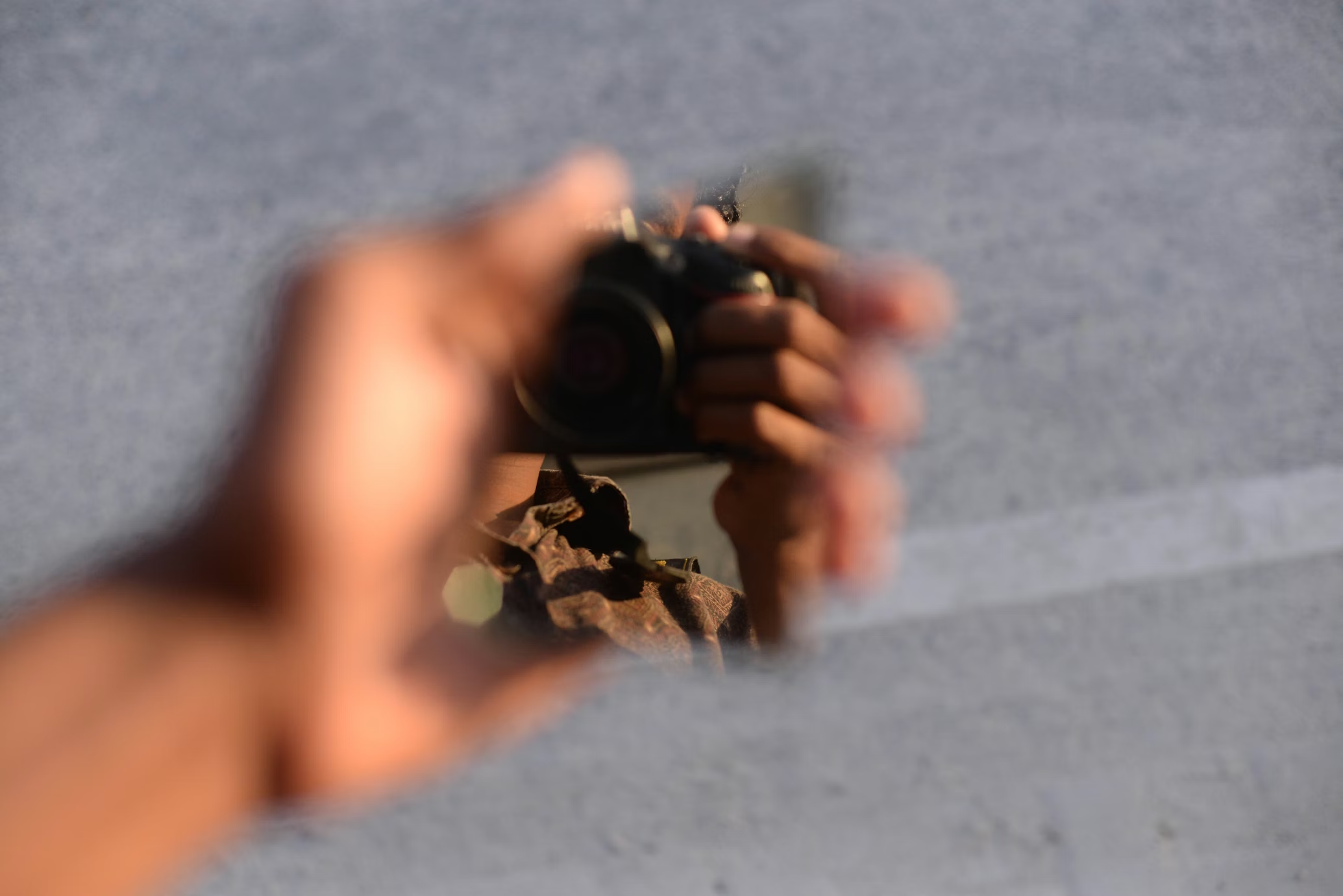
If the phrase best selfie cameras pushed you here, fine. The wording is ugly. The question underneath it is not. A good selfie camera should frame fast, focus on your face without drama, and give you files that look like they came from a camera, not a smoothing algorithm with commitment issues.
DPReview’s current vlogging guide still circles the same basic truth: once you care about framing, stabilization, and autofocus, phones stop being the obvious answer.
The best selfie cameras right now are not all trying to do the same job. Some are built for walking around and filming yourself. Some are better if you care about still photos too. One of them is barely a camera in the old sense and still makes more sense than half the compacts people keep forcing into these lists.
That matters.
A bad selfie camera wastes your time in tiny ways. Slow focus. Cropped framing. Weird skin tones. Audio that makes your voice sound like it was recorded inside a cereal box. You can live with one flaw. You cannot live with five.
Related articles
- 5 Best Cameras for TikTok (Every Budget)
- 7 Best Vlogging Cameras by Niche (YouTube, Budget, Etc)
- 5 Best Digital Cameras for Instagram (Every Budget)
Quick Picks
| Camera | Best for | Why it stands out |
|---|---|---|
| DJI Osmo Pocket 3 | Best overall | Tiny body, 1-inch sensor, rotating screen, and real stabilization |
| Canon PowerShot V10 | Best for simple grab-and-go shooting | Built-in stand, small body, wide lens, low friction |
| Sony ZV-1F | Best for arm’s-length framing | 20mm view, 1-inch sensor, creator-first controls |
| Canon PowerShot G7 X Mark III | Best for selfies and better photos | Flip screen, strong stills, bright zoom lens |
| Nikon Z30 | Best for growing into a real camera system | APS-C sensor, flip screen, interchangeable lenses |
How I picked these
I cared less about spec-sheet theater and more about the stuff that actually changes the experience.
A selfie camera needs a screen you can trust, autofocus that locks on a face quickly, and a field of view that does not force you to hold your wrist like a broken coat hanger.
Sensor size matters too, especially once the light gets bad, which is why 1-inch and APS-C models have a real edge over the bargain-bin junk still floating around the internet.
I also cared about whether a camera feels like something you would actually carry. A theoretically excellent camera that stays at home is not excellent. It is furniture.
Comparison Table by Use Case
| Camera | Screen style | Sensor | Best use case | Main tradeoff |
|---|---|---|---|---|
| DJI Osmo Pocket 3 | 2-inch rotating touchscreen | 1-inch CMOS | Walking video, travel, daily use | Less natural for traditional still photography |
| Canon PowerShot V10 | Flip-up screen | 1-inch CMOS | Desk videos, casual shooting, simplicity | More limited as a do-everything camera |
| Sony ZV-1F | Vari-angle screen | 1-inch CMOS | Wide selfie video, beginner creators | No optical zoom |
| Canon G7 X Mark III | Flip-up screen | 1-inch CMOS | Photos plus selfies | Older design, stabilization not on DJI level |
| Nikon Z30 | Fully articulating screen | APS-C / DX | Long-term upgrade path | Larger kit, lens choices add cost |
1. DJI Osmo Pocket 3
Best Overall
This is the one I would buy first.
Not because it wins every category on paper. It does not. It wins because it solves the whole problem in one move.
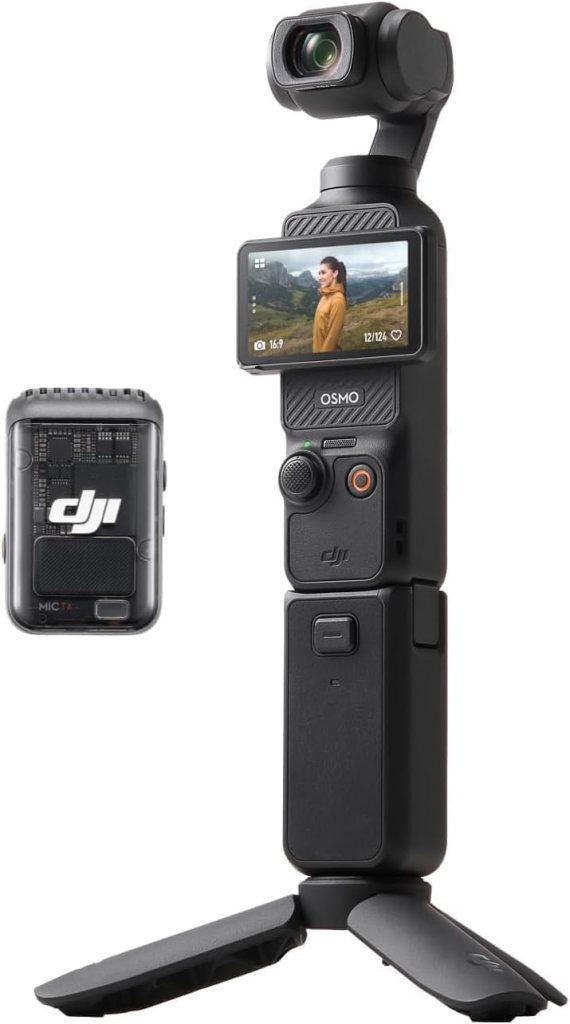
The Osmo Pocket 3 gives you a 1-inch sensor, a 20mm equivalent lens, a 2-inch rotating touchscreen, full-pixel fast focusing, and 3-axis mechanical stabilization in a body small enough to disappear into a jacket pocket. That combination is ridiculous in the best way.
For selfie video, it is almost unfair. You do not need to think about shaky hands the same way. You do not need to fuss with framing as much.
Walking footage looks calmer. Face tracking feels more like a useful tool than a marketing line. If you mostly care about talking to camera, travel clips, casual handheld shooting, or vertical content, this is the cleanest answer.
There is a catch. It is not the camera I would pick if your real priority is classic still photography. The shape is built around motion.
That is the whole point. But if your idea of a selfie camera includes video, which it probably should in 2026, this thing is absurdly hard to beat. DPReview currently names it the best vlogging camera on the move, and that tracks with real use.
Pros
- Strong 1-inch sensor
- Excellent stabilization for handheld use
- Small enough to carry constantly
- Rotating touchscreen works well for vertical and horizontal shooting
- Fast autofocus and tracking
Cons
- Not ideal if you mostly want traditional still photos
- Fixed lens limits flexibility
- More video-first than photo-first
Real Testimonial
The Osmo Pocket 3 is the best pick here if selfie content means video as much as stills. The 1-inch sensor, rotating 2-inch screen, fast focusing, and 3-axis mechanical stabilization make it unusually easy to get clean handheld footage without fuss. It feels less like a tiny camera and more like a problem solver. The tradeoff is that it is still a motion-first tool, so if you mainly care about traditional photos, one of the more conventional compact cameras may fit better.
2. Canon PowerShot V10
Best for Simple, Grab-and-Go Shooting
The PowerShot V10 is one of those cameras that makes more sense the longer you look at it.
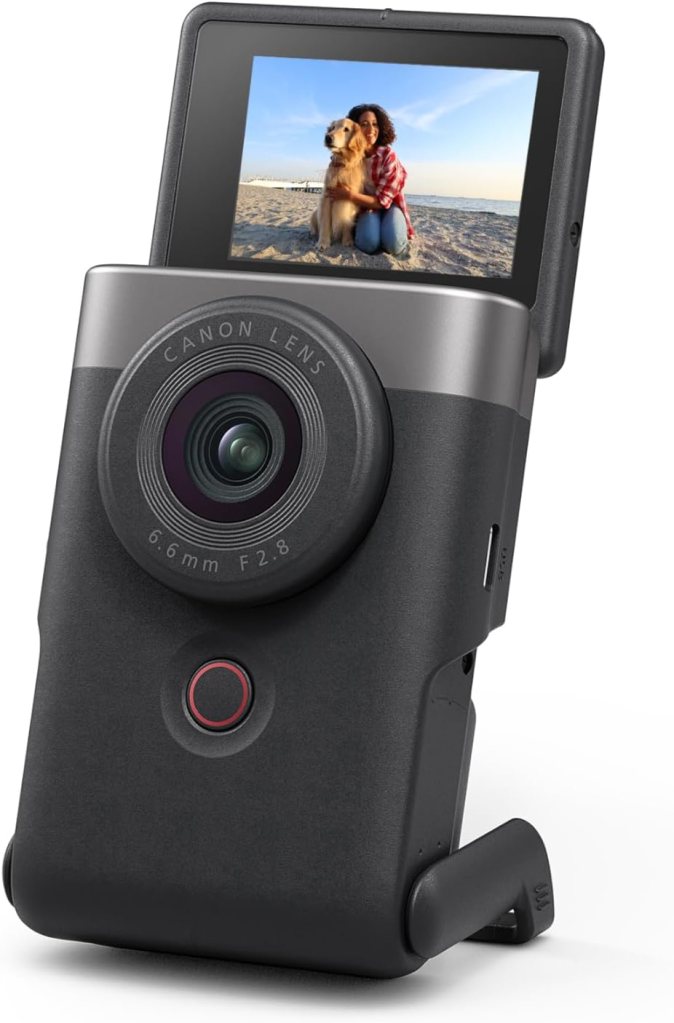
At first glance, it seems odd. It is vertical. It is tiny. It has a built-in stand, which sounds like a gimmick until you actually set it on a table and realize Canon saved you from digging around for a tripod.
Canon’s own specs lean into exactly that use case: 4K UHD, wide-angle lens, stereo microphones, compact 211g body, and the stand built into the camera itself.
This is the easiest camera on this list to recommend to someone who does not want to “learn a camera.” You pull it out, tilt the screen, set it down, and shoot. That is its whole charm. It removes friction.
For desk videos, quick selfie clips, casual travel updates, and simple day-to-day use, that matters more than people admit.
It is not the most flexible pick. It is not the most serious-feeling tool here either. But I like that about it. Too many cameras try to be everything and end up feeling annoying. The V10 knows exactly what it is.
A compact, low-hassle camera for people who want better results without carrying a whole rig. Canon also positions it as a beginner-friendly vlogging option, and for once the marketing lines up with reality.
Pros
- Built-in stand is genuinely useful
- Small, light, and easy to carry
- 1-inch sensor is respectable for the size
- Wide lens works well for selfie framing
- Stereo microphones are better than expected
Cons
- Less versatile than a traditional compact camera
- Design is very video-first
- Not the strongest pick for people who care more about still photos
Real Testimonial
The PowerShot V10 is the simplest camera in the group, and that is its whole appeal. Canon built it around quick setup, a wide-angle view, built-in microphones, and a built-in stand, which makes it far easier to use on a desk, hotel table, or kitchen counter than most small cameras. It is not the most flexible option here, but it is one of the least annoying to live with. For someone who wants a dedicated selfie camera without turning it into a hobby, this is a smart choice.
3. Sony ZV-1F
Best for Wide Framing and Easy Self-Recording
The ZV-1F understands one thing better than a lot of “creator cameras.” Arm length is finite.
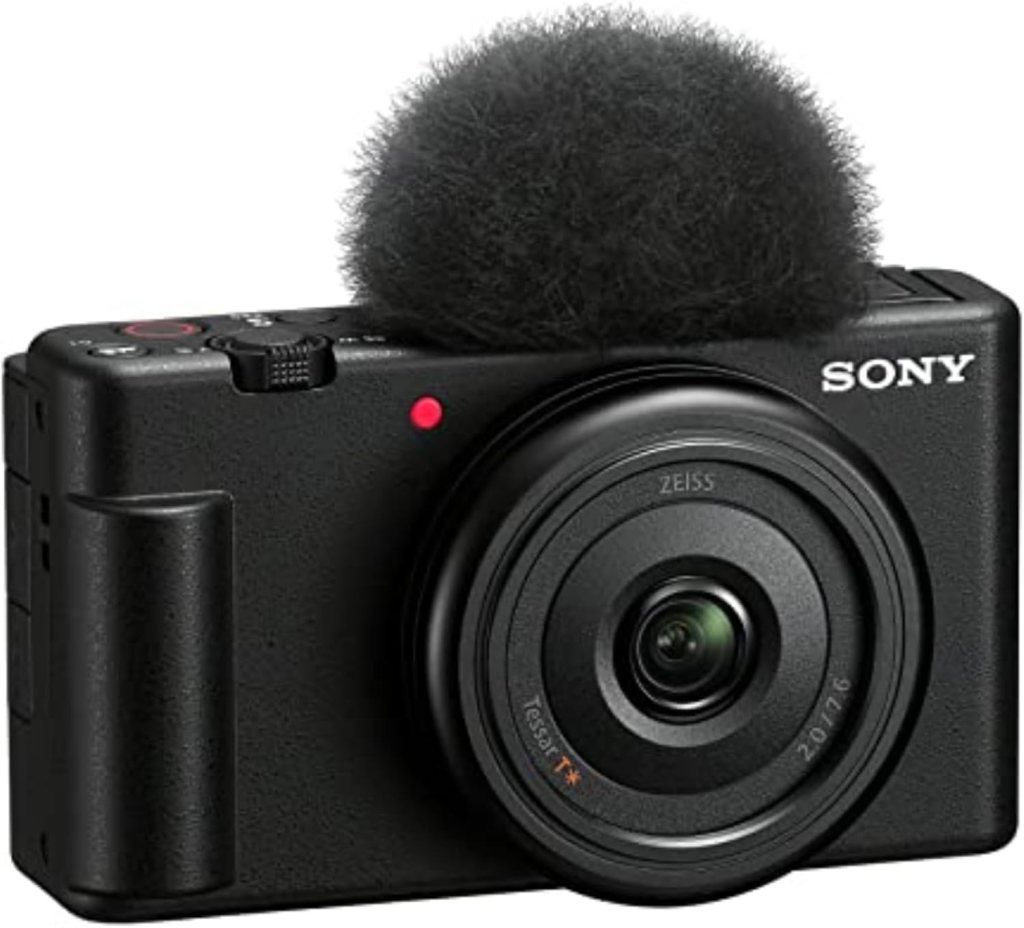
Sony gave it a 20mm equivalent ultra-wide lens on top of a 1-inch sensor and a vari-angle screen. That is a smart combo for selfie shooting.
You get more room in frame without holding the camera halfway across the room, and the side-opening screen is easier to work with than old-school upward tilts when you are shooting video or using a small grip.
This camera feels built for the person stepping up from a phone who wants something simple but not toy-like. Sony also bakes in features that make solo shooting easier, including eye autofocus and creator-focused settings.
The body stays compact, the interface is less hostile than many older point-and-shoots, and the footage has more depth than what most phones give you straight out of camera.
Its weakness is obvious. No optical zoom. If you hate fixed wide views, this is not your camera. But for selfies, casual vlogs, desk content, and wide talking-head clips, that fixed 20mm view is not a compromise. It is the point.
Pros
- 20mm equivalent view is excellent for selfies
- 1-inch sensor gives a noticeable quality jump
- Vari-angle screen is easy to use
- Compact body with creator-focused features
- Simple learning curve
Cons
- No optical zoom
- More specialized than a do-everything compact
- Better for video-led users than photo-led users
Real Testimonial
The ZV-1F is a very good fit for people who shoot at arm’s length and do not want to fight framing. Its 1-inch sensor and 20mm equivalent lens are the key reasons it works so well for selfies and casual vlogging, because that wider field of view gives you breathing room without making the camera awkward to hold. It is more specialized than a do-everything compact, but Sony made the right compromises for solo creators. If wide framing and ease matter more than zoom, this is one of the strongest options on the list.
4. Canon PowerShot G7 X Mark III
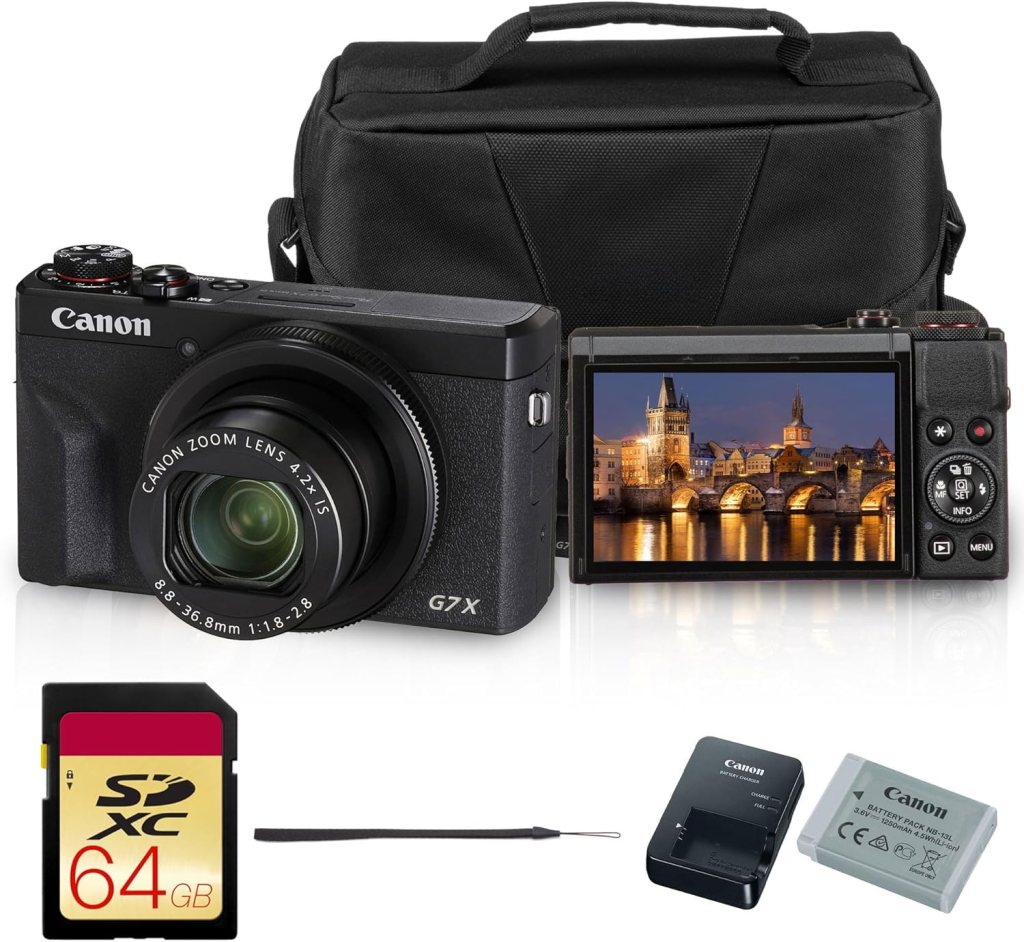
Best for Selfies and Better Stills
The G7 X Mark III is older now, but it still has a real case.
Canon gave it a 1-inch 20.1MP stacked CMOS sensor, a bright 24mm equivalent zoom lens at f/1.8-2.8, 4K video, a microphone input, and a flip screen. That is a lot of useful hardware in a compact body.
Here is why it stays on the list. It feels more like a real compact camera than a stripped-down vlogging gadget. If you want selfies, yes, it handles that. But it also gives you stronger still-photo flexibility than the V10 or ZV-1F.
The zoom lens helps. Canon color is still pleasant. The camera has enough photographic range that you can carry one thing instead of juggling a selfie tool and a separate photo camera.
I would not call it the most exciting pick. I would call it one of the safest. It is good at more than one job, which is rare in this category.
If your life is split between selfies, short video, travel photos, and casual portraits, the G7 X Mark III still earns its keep. And yes, the flip-up display matters. You see yourself. You frame quickly. You move on.
Pros
- Better still-photo flexibility than most selfie-first cameras
- Bright zoom lens
- Flip screen works well
- 1-inch sensor still holds up
- Good hybrid choice for photos and video
Cons
- Older camera at this point
- Not as stable handheld as the Pocket 3
- Less purpose-built for solo video than the V10 or ZV-1F
Real Testimonial
The G7 X Mark III still makes sense because it is the most balanced compact here for people who want better selfies and better everyday photos. Canon pairs a 20.1MP 1-inch stacked sensor with a bright 24-100mm equivalent zoom lens, 4K video, a mic input, and a tilt-up screen, which gives it more range than the more stripped-down creator cameras. It feels like a real camera first, which is exactly why some people will prefer it. The only real knock is that it is an older design, so it does not feel as purpose-built for solo video as the DJI or Sony options.
5. Nikon Z30
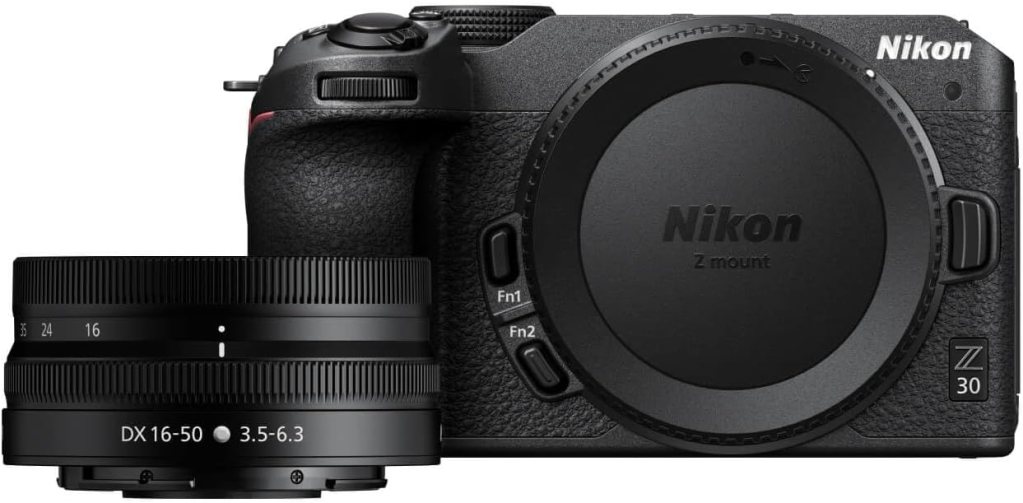
Best for Growing Into a Real Camera System
This is the pick for someone who already knows they are going to get more serious.
The Nikon Z30 uses a 20.9MP APS-C, or DX-format, sensor, has a fully articulating touchscreen, supports 4K/30p video, and works with Nikon Z lenses. Nikon also leans hard into the vlogging angle with eye-detection AF and a creator-friendly screen setup.
An APS-C sensor gives you more room to work with than the 1-inch compacts here, especially once the light gets messy or you want more control over background blur. That does not automatically make it the best selfie camera.
Bigger sensors are only part of the story. But it does make the Z30 the best long-term camera in this list if you think today’s selfies will turn into tomorrow’s proper content setup.
The downside is obvious too. It is larger. Once you add lenses, it stops being a grab-and-go pocket tool. That is the trade. You get room to grow, but you carry more stuff. For some people, that is a good deal. For others, it is exactly how nice cameras end up forgotten on a shelf.
Pros
- APS-C sensor gives stronger image potential
- Fully articulating screen
- Interchangeable lenses add room to grow
- Good autofocus for solo shooting
- Better long-term system value
Cons
- Bigger and less pocketable
- Lenses complicate the setup
- More camera than some casual users actually need
Real Testimonial
The Nikon Z30 is the best choice for someone who wants a selfie camera now but knows they are heading toward a larger content setup later. Its 20.9MP APS-C sensor, fully articulating screen, face and eye-detection autofocus, and interchangeable-lens system give it more long-term upside than the compact models here. The image quality ceiling is higher, especially once light gets worse, but the setup is also larger and less casual. This is the camera for people who are fine carrying a little more in exchange for room to grow.
What actually matters in a selfie camera
A flip screen is not optional. Not really. If you cannot check framing easily, the whole process slows down. That is why all five picks here lean heavily on some kind of front-friendly screen design.
A wide lens matters more than zoom for most people. Sony understood that with the ZV-1F’s 20mm equivalent view. DJI did too. Selfie cameras need space. A too-tight lens makes the entire experience annoying.
Autofocus matters more than megapixels. I would take reliable face focus over a hollow spec bump every time. If the camera misses your eyes, nobody cares how many pixels it recorded. DPReview’s autofocus guide exists for a reason.
And then there is stabilization. You can fake a lot in editing. You cannot fake comfort. Smooth footage just feels more expensive.
Who should skip a dedicated selfie camera
Some people should stick with a good phone.
If all you do is take occasional selfies in bright light and post them unedited, a dedicated camera may be overkill. If you hate carrying anything extra, same answer.
Cameras pay off when you care about consistency, low-light results, framing control, or better-looking video. Otherwise, your phone is still the lowest-friction tool in the room.
That is not a glamorous answer. It is just true.
FAQ
What is the best selfie camera overall?
The DJI Osmo Pocket 3 is the best overall pick here because it combines a 1-inch sensor, strong autofocus, a rotating screen, and true mechanical stabilization in a body you will actually carry. For handheld selfie video, nothing else on this list is as complete.
Is a selfie camera better than a smartphone?
Sometimes. A good selfie camera usually gives you better framing control, cleaner low-light performance, more natural background separation, and better audio options. But if convenience is all you care about, a phone still wins on speed.
Which camera has the best flip screen for selfies?
The Nikon Z30 has the most traditional fully articulating screen setup here, while the Sony ZV-1F is also very easy to frame with. The DJI Osmo Pocket 3 is different, but its rotating touchscreen works surprisingly well in practice.
Is the DJI Osmo Pocket 3 good for selfies?
Yes. It is one of the best selfie-video tools on the market because of its stabilization, face tracking, compact body, and 20mm equivalent view. If you mostly shoot video, it makes more sense than many larger cameras.
Is the Canon PowerShot V10 worth it for casual creators?
Yes, especially if you value simplicity. The V10 is not trying to be a full photographic system. It is trying to be easy, fast, and compact. For casual creators, that can be the smarter design.
Which selfie camera is easiest for beginners?
The Canon PowerShot V10 is probably the easiest, followed closely by the Sony ZV-1F. Both are less intimidating than an interchangeable-lens camera and quicker to understand than older compacts.
What sensor size is good for selfies?
A 1-inch sensor is a strong sweet spot for selfie cameras because it balances image quality with portability. APS-C is better if you want more image potential and do not mind a larger setup.
Do I need image stabilization for selfies?
If you shoot handheld video, yes, it matters a lot. For still selfies, less so. But once you start walking, talking, or moving around, stabilization stops feeling optional.
Which selfie camera works best in low light?
The Nikon Z30 has the biggest sensor here, so it has the most upside in low light. The DJI Osmo Pocket 3 and the 1-inch compacts still do well for their size, though, and they are easier to carry.
Are compact cameras still worth buying for selfies?
Yes, if they are the right compact cameras. The market is full of bad ones. But models like the ZV-1F and G7 X Mark III still make sense because they pair useful screens with larger sensors and better optics than throwaway budget compacts.
What should I buy if I want better selfies and regular photos too?
The Canon G7 X Mark III is the best balance if you want selfies, casual video, and stronger still-photo flexibility. If you want a longer runway and do not mind size, the Nikon Z30 is the better system choice.
Final take
If I had to narrow this down without pretending every reader is the same person, it goes like this.
Buy the DJI Osmo Pocket 3 if you want the best overall tool and you care about selfie video as much as, or more than, still photos.
Buy the Canon PowerShot V10 if you want the least annoying camera to carry and use.
Buy the Sony ZV-1F if wide framing matters most.
Buy the Canon G7 X Mark III if you still think in photos first.
Buy the Nikon Z30 if you are already halfway into becoming a camera person and should stop fighting it.
Canon’s own creator resources keep pointing back to the same core ideas here: ease of use, front-facing framing, and the right balance between sensor size and portability. That part is not marketing fluff. It is the whole game.
Affiliate Disclaimer
This article contains affiliate links. We may earn a small commission if you purchase through these links, at no extra cost to you.



Leave a Reply