
TikTok rewards speed. Not perfection. Not giant rigs. Not gear that makes you feel serious while it quietly kills your momentum. The best camera for TikTok is the one that get out of your way, hold focus, handle vertical shooting without drama, and make your videos look cleaner than a phone when the light gets ugly.
TikTok’s own guidance leans hard toward full-screen vertical video and at least decent resolution, which tells you a lot about what actually matters here.
A lot of camera lists miss the point. They chase sensor size, lens ecosystems, and spec-sheet theater. That is not how most people make TikToks. Most people are filming in a kitchen, a car, a hotel room, a store aisle, or on a sidewalk while trying not to look ridiculous.
So I picked cameras that fit real short-form habits. Fast setup. Good autofocus. Clean audio. Sensible stabilization. A screen that does not fight you.
Quick picks
- Best overall: DJI Osmo Pocket 3
- Best for action and travel TikToks: Insta360 Ace Pro 2
- Best for beginners: Sony ZV-1F
- Best for creators who want room to grow: Sony ZV-E10 II
- Best for simple, no-fuss shooting: Canon PowerShot V10
Related Articles
- 7 Best Vlogging Cameras by Niche (YouTube, Budget, Etc)
- 6 Best Camera for OnlyFans (Every Budget)
- 5 Best Drones for Real Estate Photography
Comparison table: the fast version
| Camera | Best for | Video highlight | Screen | Stabilization | Main tradeoff |
|---|---|---|---|---|---|
| DJI Osmo Pocket 3 | Best overall | 4K up to 120 fps | 2″ rotatable touchscreen | 3-axis mechanical gimbal | Not ideal if you want interchangeable lenses |
| Insta360 Ace Pro 2 | Action and travel TikToks | 8K up to 30 fps, 4K60 Active HDR | 2.5″ flip screen | Action-cam stabilization | Small-sensor look still feels action-cam-ish |
| Sony ZV-1F | Beginners who want better video fast | 4K | Vari-angle screen | Electronic only | No optical zoom |
| Sony ZV-E10 II | Creators who want room to grow | 4K up to 60p | Vari-angle screen | Electronic active mode | Lens system adds cost |
| Canon PowerShot V10 | Easy everyday use | 4K UHD | Fixed-style front-facing design | Digital movie stabilization | Niche form factor |
The core specs above come straight from the manufacturers. Pocket 3 has the 1-inch sensor, rotating screen, and 4K/120 headline.
ZV-1F pairs a 1-inch sensor with a 20mm equivalent lens. ZV-E10 II brings a 26MP APS-C sensor and 4K/60p. Ace Pro 2 pushes up to 8K/30 and uses a 2.5-inch flip screen. PowerShot V10 gives you 4K, stereo mics, and a built-in stand in a tiny body.
Comparison table: real-world TikTok fit
| Camera | Where it shines | Best creator type | Why it works |
|---|---|---|---|
| DJI Osmo Pocket 3 | Walking clips, food, daily life, events | Daily poster | The gimbal makes motion look expensive |
| Insta360 Ace Pro 2 | Outdoor clips, workouts, POV, travel | Active creator | Rugged body and strong stabilization |
| Sony ZV-1F | Talking-head videos, desk setup, beginner lifestyle clips | New creator | Wide lens and simple controls |
| Sony ZV-E10 II | Beauty, fashion, product shots, creator-business content | Serious creator | Better depth and image flexibility |
| Canon PowerShot V10 | Casual vertical updates, simple sit-down videos | Minimalist creator | Tiny, odd, and easy in a good way |
How I picked these
I did not rank these like cinema cameras. I ranked them like TikTok tools.
That means I cared more about vertical practicality than abstract image quality. More about autofocus than megapixels. More about how likely you are to actually carry the thing than how impressive it looks in a forum signature.
Adobe’s vertical-video guidance makes a simple point that a lot of creators learn the hard way: shooting for vertical from the start gives you better framing control and less pain later. That matters a lot more than people admit.
1. DJI Osmo Pocket 3

Best overall for TikTok
This is the one I would hand to most people without a speech.
The Osmo Pocket 3 gets the basics right and then adds the thing most TikTok cameras still cannot fake: a real gimbal. That changes the feel of your footage immediately. Walking clips look calmer.
Quick pans look intentional. Little everyday videos stop looking like they were shot during a mild earthquake.
DJI pairs that with a 1-inch sensor, a 2-inch rotatable touchscreen, full-pixel fast focusing, and 4K up to 120 fps. The rotating screen is not a gimmick here. It makes vertical shooting feel native instead of adapted. That matters when you are shooting a lot and moving quickly.
Best for
- Lifestyle creators
- Food and travel TikToks
- Walking commentary clips
- Event recap videos
- People who want smooth footage without learning much
Pros
- Gimbal stabilization looks great in motion
- 1-inch sensor helps in rougher light
- Vertical shooting feels natural
- 4K/120 gives you clean slow motion
- Compact enough for daily carry
Cons
- Not cheap
- Less flexible than a lens-based system
- Still not magic in very dark scenes
Bottom line
For most people, this is the best camera for TikTok. Not because it wins every spec war. Because it wins the actual job.
Real Testimonial
Pocket 3 feels like a camera built by someone who has actually made short-form videos in public. It starts fast. It tracks well. It does not need much babysitting. And because it is small, you will use it more often than a bigger “better” camera. That counts for a lot.
2. Insta360 Ace Pro 2
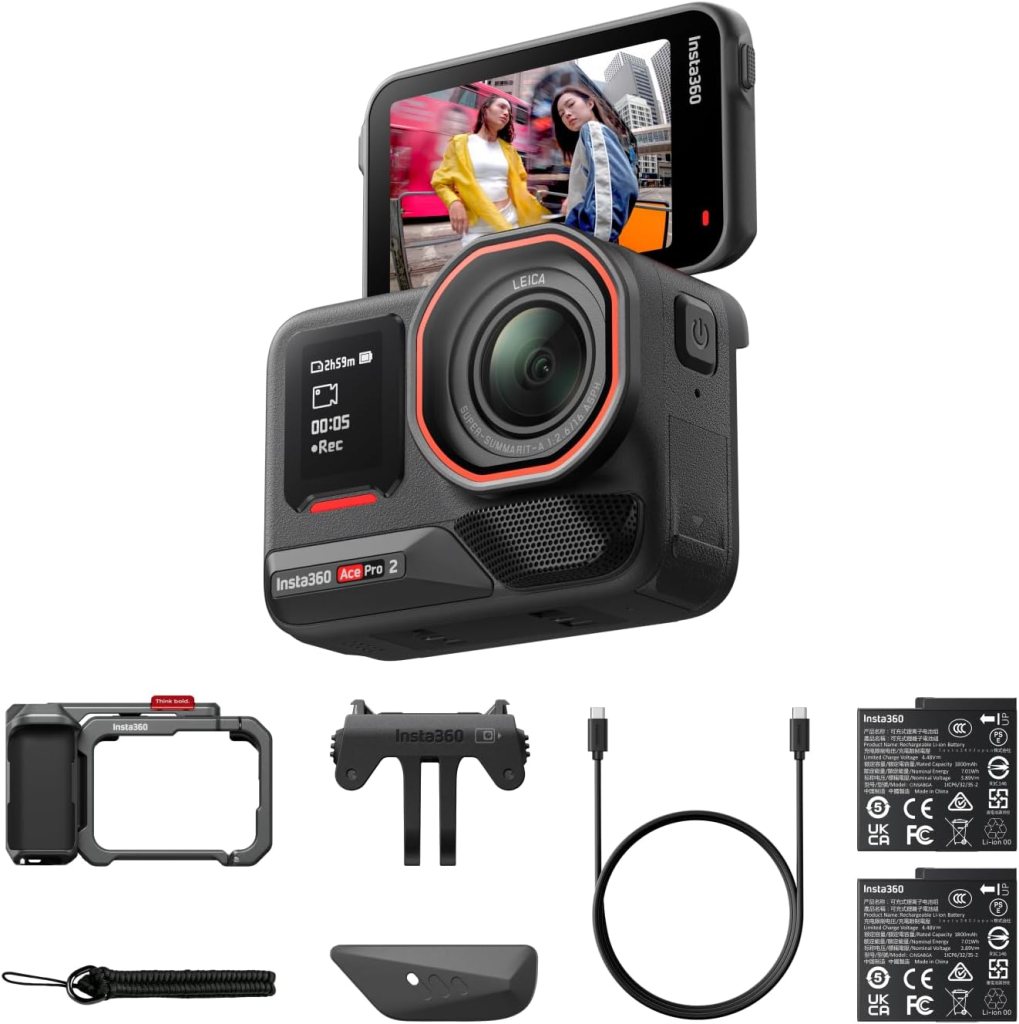
Best for action, travel, and outdoor TikToks
Some creators do not stand in front of a mirror ring light and talk. Some are on bikes, trails, boats, ski lifts, city streets, gym floors, or just moving all the time.
That is where the Ace Pro 2 earns its spot. Insta360 gives it a 1/1.3-inch 8K sensor, 8K/30 recording, 4K60 Active HDR, a 2.5-inch flip screen, and the rugged action-cam body that lets you stop treating your gear like a crystal goblet.
This camera is not trying to mimic a mirrorless camera. Good. It should not. It is for creators who need speed, durability, and movement.
Best for
- Travel creators
- Fitness content
- Outdoor clips
- POV videos
- Fast-moving lifestyle accounts
Pros
- Tough, travel-friendly body
- Flip screen is genuinely useful
- Great fit for action-heavy content
- 8K gives cropping freedom
- Strong stabilization for movement
Cons
- The action-cam look is still the action-cam look
- Overkill for simple indoor talking videos
- Tiny-body audio is never perfect without help
Bottom line
If your TikTok account lives outdoors or in motion, this makes more sense than babying a compact camera.
Real Testimonial
The Ace Pro 2 is for people whose content happens in motion. It will not give you the same image character as an APS-C camera, but it makes up for that with versatility, durability, and a much lower chance that you leave it at home because it feels annoying to carry.
3. Sony ZV-1F
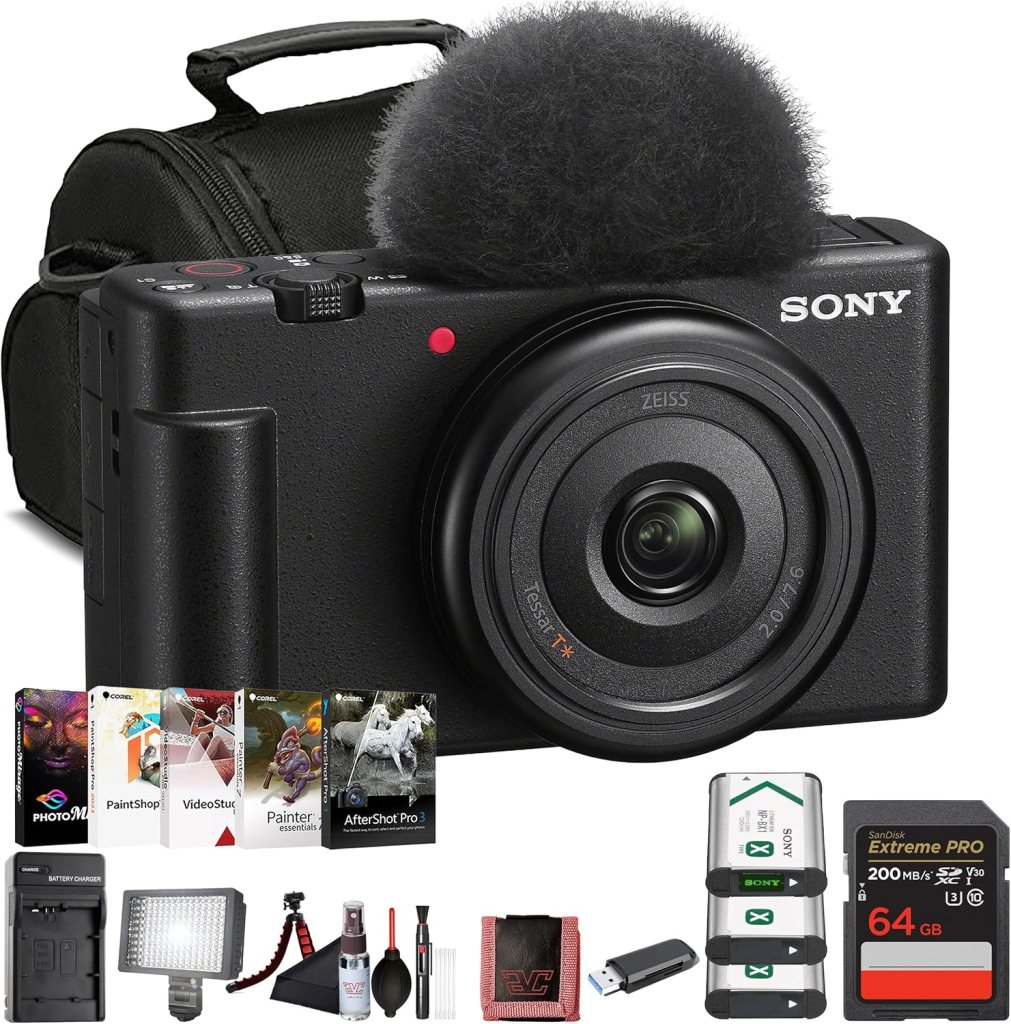
Best for beginners
This is the budget pick I would choose before I started getting “smart” with bargain-bin alternatives.
The ZV-1F uses a 1-inch sensor and a 20mm equivalent wide-angle lens, which is a very useful combo for selfie-style video, desk shots, and talking-head clips. The lens is wide enough that you do not need to stretch your arm into another zip code to fit yourself in frame. Sony also built this thing for creators, so the interface and framing logic are much less annoying than older compacts.
It is not a powerhouse. That is fine. It is supposed to be simple.
Best for
- Beginners
- Budget-minded creators
- Beauty and skincare clips at home
- Talking videos
- Everyday social content
Pros
- Usually the most sensible lower-cost pick
- 1-inch sensor still looks legit
- Wide lens suits arm’s-length shooting
- Easy to learn
- Small and light
Cons
- No optical zoom
- Stabilization is not the star here
- Less room to grow than a mirrorless body
Bottom line
If your budget matters and you still want a real camera, start here. This is the cheapest option on this list that I would recommend without apologizing for it.
Real Testimonial
The ZV-1F is a good example of a camera knowing what it is. It does not pretend to be a mini cinema rig. It gives you better image quality and nicer background rendering than a lot of phones, keeps the workflow simple, and avoids the interchangeable-lens rabbit hole.
4. Sony ZV-E10 II

Best for creators who want room to grow
This is where the list turns from “good TikTok camera” into “actual content setup.”
The ZV-E10 II gives you a 26.0-megapixel APS-C sensor, 4K up to 60p, 5 GHz Wi-Fi, USB-C connectivity, and the obvious advantage of interchangeable lenses. That last part cuts both ways. It is the reason this camera can outgrow the others here, and it is also the reason it can get expensive fast if you have poor impulse control.
Still, for creators who want prettier background separation, stronger low-light results, and more visual range for beauty, fashion, product work, or client content, it makes sense.
Best for
- Creators building a brand
- Beauty and product videos
- TikTok plus YouTube Shorts
- People who may start caring about lenses
- Service businesses making polished social content
Pros
- APS-C sensor gives you more image flexibility
- 4K/60p is useful
- Flip screen works well for self-shooting
- Better long-term system potential
- Strong creator-friendly connectivity
Cons
- Costs more once lenses enter the chat
- Bigger than true pocket options
- Less grab-and-go than Pocket 3
Bottom line
Buy this if TikTok is part of a bigger content plan and you want something that can grow with you instead of getting replaced in a year.
Real Testimonial
The ZV-E10 II is not the best choice for everyone. It is the best choice for people who know they will keep going. It gives you a more camera-like image than the smaller all-in-one options, and Sony’s creator focus keeps it from feeling too nerdy for short-form work.
5. Canon PowerShot V10

Best for fast, no-fuss shooting
The PowerShot V10 is a little weird. I mean that as praise.
Canon built it around creator convenience instead of traditional camera design. It records 4K UHD, uses a 1-inch sensor, includes stereo microphones, has a built-in stand, and weighs just 211g. That built-in stand sounds like a minor detail until you actually start filming quick videos on tables, counters, desks, hotel furniture, and whatever else is nearby. Then it starts to look like a smart one.
Best for
- Casual creators
- Daily updates
- Sit-down TikToks
- People who hate bulky gear
- New creators who want simplicity first
Pros
- Tiny and light
- Built-in stand is genuinely useful
- 1-inch sensor is respectable
- Good simple-audio setup
- Easy to carry daily
Cons
- Niche design will not click for everyone
- Less flexible than a mirrorless body
- Not the best choice for heavy movement
Bottom line
This is the “I want something easier than a real camera but better than my phone” pick.
Real Testimonial
The PowerShot V10 is not for everyone, and that is exactly why some people will love it. It is compact, direct, and less intimidating than a more traditional camera. If you care more about ease than expansion, it has a real lane.
Which camera is best for your type of TikTok?
Best for talking-head videos
Sony ZV-1F or Canon PowerShot V10.
Best for walking and everyday footage
DJI Osmo Pocket 3. Pretty easily.
Best for beauty, skincare, and product shots
Sony ZV-E10 II.
Best for travel, workouts, and movement
Insta360 Ace Pro 2.
Best if you want one camera that just makes sense
DJI Osmo Pocket 3 again.
What actually matters in a TikTok camera
Vertical shooting matters. Stabilization matters more than most people think. A shaky clip feels cheap fast. Audio matters even more than that. People will forgive imperfect image quality long before they forgive ugly sound.
Portability matters because the best camera is still the one you will carry. That old cliché survives because it is annoyingly true.
And no, you do not need 8K for TikTok. You barely need 4K for TikTok. But shooting above the platform minimum can help with reframing, cropping, and holding detail after edits.
TikTok’s own ad specs recommend vertical 9:16 and at least 540 x 960 for vertical placement, while its creator guidance says top-performing videos are overwhelmingly 720p or higher. That is the practical target. Clean vertical footage, decent sound, good framing. Not gear cosplay.
FAQ
What is the best camera for TikTok right now?
The DJI Osmo Pocket 3. It balances image quality, smooth movement, portability, and vertical usability better than anything else in this group. For actual day-to-day TikTok shooting, that mix is hard to beat.
Is a camera better than a phone for TikTok?
Sometimes yes, sometimes not. A good phone is still enough for a lot of creators. But a dedicated camera can give you cleaner low-light footage, better subject separation, better built-in or attachable audio options, and more intentional stabilization.
The difference shows up most when the lighting is bad or you are filming often.
What is the best cheap camera for TikTok videos?
The Sony ZV-1F. It is the budget pick here because it still gives you a 1-inch sensor, a useful 20mm lens, 4K recording, and a creator-friendly design without forcing you into a lens system.
Do I need 4K for TikTok?
No. But it is nice to have. TikTok supports lower resolutions, and its own materials emphasize that top-performing videos are usually 720p or higher rather than insisting on 4K. Still, 4K gives you more flexibility for cropping and editing before upload.
Is the DJI Osmo Pocket 3 good for TikTok?
Yes. Very good. It is one of the few cameras that feels almost purpose-built for short-form social shooting because of the rotating screen, compact body, tracking, and mechanical gimbal.
Is the Sony ZV-1F worth it for beginners?
Yes, especially if you want a real camera without making “learning cameras” your new hobby. It is one of the cleanest upgrades from a phone because it stays simple.
What camera is best for beauty or makeup TikToks?
The Sony ZV-E10 II. Beauty content benefits from the larger APS-C sensor, better lens flexibility, and more polished overall image when lighting and framing are controlled.
What camera is best for TikTok in low light?
The DJI Osmo Pocket 3 and Sony ZV-E10 II are the strongest picks here. Pocket 3 uses a 1-inch sensor in a very compact body, while the ZV-E10 II’s APS-C sensor gives it more headroom if you build out the setup well.
Are action cameras good for TikTok?
Yes, if your content involves movement. No, if your content is mostly indoor talking-head video and controlled beauty shots. The Insta360 Ace Pro 2 makes sense for travel, fitness, POV, and outdoor clips because the rugged form factor and stabilization fit that style better.
What camera should I buy for TikTok and YouTube Shorts?
The DJI Osmo Pocket 3 if you want simplicity. The Sony ZV-E10 II if you want long-term growth and more creative control.
Can I shoot vertical video directly on these cameras?
Yes, though some handle it much more naturally than others. The Osmo Pocket 3 stands out because its rotating touchscreen is clearly built with vertical capture in mind. Adobe’s vertical-video guidance also supports the general idea that shooting vertically from the start is the cleanest workflow.
Which camera has the best stabilization for TikTok?
The DJI Osmo Pocket 3 for normal creator use, because it uses a 3-axis mechanical gimbal. The Insta360 Ace Pro 2 is also strong if your content is more action-heavy.
Which camera is easiest to carry every day?
The Pocket 3 and the Canon PowerShot V10. The V10 is especially light at 211g, and the Pocket 3 is tiny enough that it does not feel like a commitment.
What accessories do I actually need for a TikTok camera?
A small tripod or grip, decent light, spare battery, fast card, and maybe an external mic if you talk a lot on camera. That is it. Most people buy too many accessories and too little consistency.
Final verdict
If I were buying one camera for TikTok, I would get the DJI Osmo Pocket 3. It is the cleanest match for how short-form video actually gets made. Fast. Vertical. Handheld. Out in the world. It does not ask for much from you, and that is part of its charm. DJI built a camera that behaves like a good tool instead of a needy one.
If money is tighter, the Sony ZV-1F is the best cheap option. If you want something more ambitious, the Sony ZV-E10 II is the step-up pick. And if your content happens outdoors, the Ace Pro 2 deserves a real look.
For creators thinking about framing and vertical delivery, Adobe’s advice is still the right instinct: shoot for the format you actually plan to publish. That sounds obvious. People still ignore it.
Affiliate Disclaimer
This article contains affiliate links. We may earn a small commission if you purchase through these links, at no extra cost to you.


Leave a Reply