
If you want the best digital camera for Instagram, you do not need the biggest sensor, the most buttons, or a camera that makes you feel like you should also own a drone and a color grading monitor. You need a camera that fits the way Instagram actually works.
Fast autofocus. Good skin tones. Clean vertical video. A screen you can trust. Something you’ll carry instead of “meaning to bring.” Instagram’s own guidance still centers on strong image resolution for photos and vertical-friendly video for Reels, which is exactly why these five picks lean practical rather than theatrical.
This list is built for people posting portraits, travel, food, outfits, behind-the-scenes clips, short talking videos, and everyday life without wanting their gear to become a second hobby. Some cameras here are compact and dead simple.
Some leave room to grow. One is almost unfairly good for motion. All of them make sense for social media in 2026 because they combine current creator-friendly features like 4K video, smartphone connectivity, fast subject detection, or flip-up framing with bodies small enough to live in the real world.
The quick picks
- Best overall: Sony ZV-1 II
- Best value for new creators: Canon EOS R100
- Best for creators who want room to grow: Canon EOS R50
- Best for Reels and handheld video: DJI Osmo Pocket 3
- Best pocket camera for everyday Instagram shooting: Canon PowerShot G7 X Mark III
Related articles
Comparison table 1
| Camera | Best for | Sensor | Lens setup |
|---|---|---|---|
| Sony ZV-1 II | Best overall | 1-inch, 20.1MP | Built-in 18-50mm equivalent |
| Canon EOS R100 | Best value for new creators | APS-C, 24.1MP | Interchangeable RF mount |
| Canon EOS R50 | Best for growth | APS-C, 24.2MP | Interchangeable RF mount |
| DJI Osmo Pocket 3 | Best for Reels | 1-inch CMOS | Built-in lens on gimbal |
| Canon PowerShot G7 X Mark III | Best pocket stills camera | 1-inch, 20.1MP | Built-in 24-100mm equivalent |
Comparison table 2
| Camera | Screen style | Mic input | Top video note | Why it matters for Instagram |
|---|---|---|---|---|
| Sony ZV-1 II | Vari-angle | Yes | 4K up to 30p | Easy solo framing |
| Canon EOS R100 | Fixed screen | Yes | 4K available | Strong value if you mostly shoot photos |
| Canon EOS R50 | Vari-angle | Yes | 4K UHD 30p, Full HD 120p | Better hybrid creator tool |
| DJI Osmo Pocket 3 | 2-inch rotatable touchscreen | Supported via ecosystem/accessories | 4K/120, 3-axis stabilization | Strongest moving footage here |
| Canon PowerShot G7 X Mark III | Tilt-up screen | Yes | 4K, Full HD 120p | Pocketable and quick |
How I picked these
I kept the list narrow on purpose.
Instagram cameras fail in familiar ways. They focus slowly. They look great on paper and annoying in your hand. They ask too much from beginners. Or they are technically “better” but so bulky that your phone wins by default.
So the cut came down to six things: image quality for feed posts, fast face tracking, usable video, solo-friendly framing, carry comfort, and how easy it is to move from capture to posting. That last part matters more than camera forums usually admit.
1) Sony ZV-1 II
Best overall
This is the one I’d hand to most people without a speech.
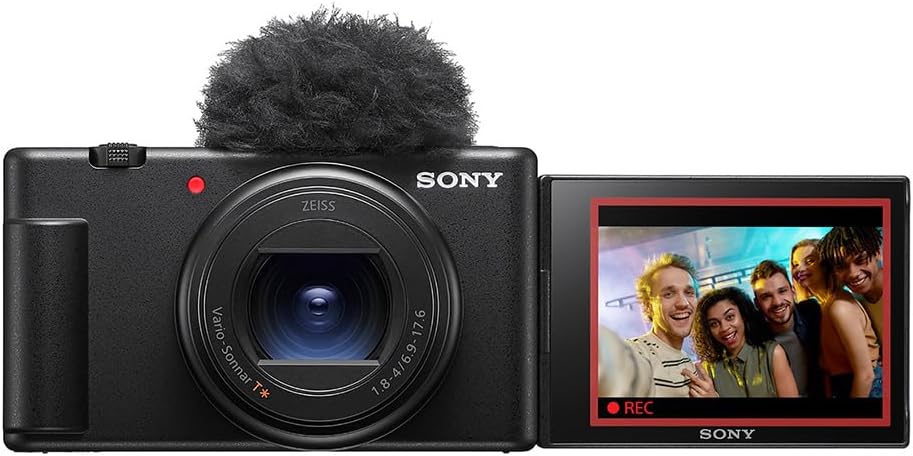
The Sony ZV-1 II gets the overall spot because it stays focused on the right problem. You want a real camera upgrade from a phone, but you do not want to manage lenses, weight, or a huge bag.
Sony built this around a 1-inch sensor, a built-in 18-50mm equivalent zoom, 4K recording, a vari-angle screen, and a 3.5mm mic input. That is a very smart mix for Instagram creators who shoot themselves, friends, food, travel, or casual lifestyle content.
What I like most is the balance. The lens starts wide enough for handheld framing. The body stays small. The screen flips. The mic option is there if you want cleaner audio later. Nothing about it feels like overkill, and that’s the point. For Instagram, overkill is usually just another way to slow yourself down.
Review summary: The ZV-1 II is the cleanest all-around answer for someone who wants a creator-first camera that travels light and does not force a lens decision on day one.
Pros
- Built-in zoom keeps the setup simple
- 1-inch sensor is a real jump from most phones
- Flip screen works well for solo shooting
- Mic input gives it longer legs than a casual compact
- Small enough to carry often
Cons
- No interchangeable lenses
- 4K tops out at 30p
- Price can feel high for a fixed-lens camera
Real Testimonial
This is the easiest camera on the list to recommend without a long speech. The 1-inch sensor, built-in 18-50mm equivalent lens, flip screen, fast hybrid autofocus, 4K up to 30p, and 3.5mm mic input give it the cleanest balance of simplicity and real-world creator features. It feels purpose-built for Instagram instead of adapted to it later.
2) Canon EOS R100
Best value for new creators
The EOS R100 is not flashy. Good. It doesn’t need to be.
This is the pick for someone who wants a real camera, wants better depth and cleaner files than a phone, and wants an actual upgrade path without spending big money right away.
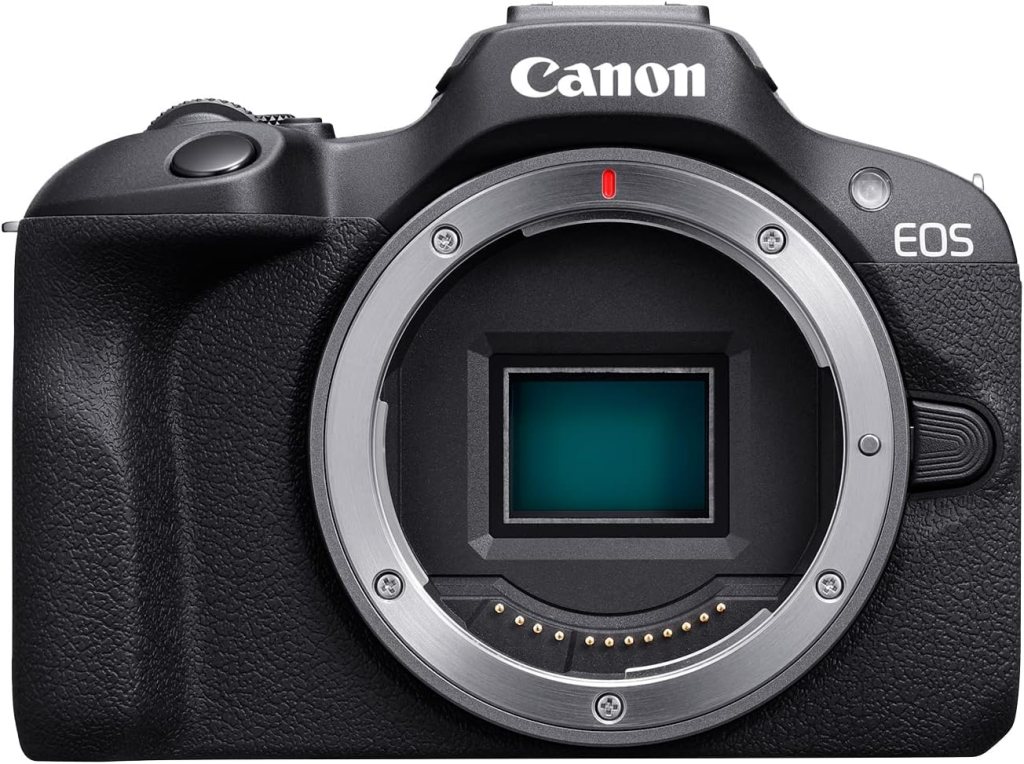
Canon gives you a 24.1MP APS-C sensor, RF lens compatibility, 4K video, wireless connectivity, and a mic input in a light body. On pure image quality per dollar, this camera has a strong case.
The reason it lands second instead of first is simple. It is more camera than some Instagram users need, but less creator-friendly than the ZV-1 II or R50 in day-to-day handling.
The fixed screen is the main thing that keeps it from feeling effortless for solo content. Still, if your Instagram leans photo-first and you want that bigger APS-C look, the R100 makes sense fast.
Review summary: The EOS R100 is the smartest entry point here for buyers who want strong photo quality, interchangeable lenses, and a sensible price without stepping into junk territory.
Pros
- APS-C sensor at a very approachable price
- Access to Canon’s RF lens system
- Light body
- Mic input adds flexibility
- Strong fit for portraits and stills
Cons
- Fixed rear screen
- 4K autofocus is less advanced than Full HD autofocus
- Less natural for self-recording than the ZV-1 II or R50
Real Testimonial
The R100 is the sensible value pick for someone who wants better image quality than a phone and likes the idea of interchangeable lenses without spending too aggressively. Its 24.1MP APS-C sensor, RF mount, Dual Pixel CMOS AF for stills and Full HD video, 4K UHD recording, and external mic input make it a strong first camera, even if the fixed screen makes it less natural for solo shooting.
3) Canon EOS R50

Best for creators who want room to grow
This is where the article gets a little less beginner-safe and a little more ambitious.
The Canon EOS R50 is the camera for the person who already knows they’re going to stick with this. Maybe you’re posting Reels now, maybe you want cleaner portraits next month, maybe you’ll care about lenses once you realize how much a good prime can change your work.
The R50 gives you a 24.2MP APS-C sensor, vari-angle display, external mic input, Canon’s newer subject-focused handling, and 4K UHD 30p with Full HD 120p.
It feels more like a camera you can grow into instead of a camera you’ll replace the minute you get serious. That matters. A lot of roundup lists treat beginner buyers like they should start with something disposable.
I don’t agree with that. If you already know you enjoy making images, it’s often smarter to buy once with a little more intent.
Review summary: The EOS R50 is the best hybrid choice for people who want Instagram-friendly simplicity now and more creative headroom later.
Pros
- APS-C sensor with strong overall image quality
- Vari-angle screen is better for solo content
- Interchangeable lenses let you expand
- Better creator fit than the R100
- Full HD 120p is useful for stylized clips
Cons
- Costs more than the value pick
- You may end up wanting extra lenses quickly
- Less pocketable than the fixed-lens cameras here
Real Testimonial
Buyers describe the EOS R50 as easy to use, lightweight, and capable of very sharp photos. Most of the praise centers on beginner-friendly controls and strong image quality. The main complaint is that the small body can feel cramped.
4) DJI Osmo Pocket 3
Best for Reels and handheld video
This one breaks the shape of the list a bit. That’s why it belongs.
The Osmo Pocket 3 is not the best Instagram camera for everyone. It is, however, one of the best tools on the market for creators whose content moves. Walking tours. Street clips. Coffee shop B-roll. Behind-the-scenes footage.
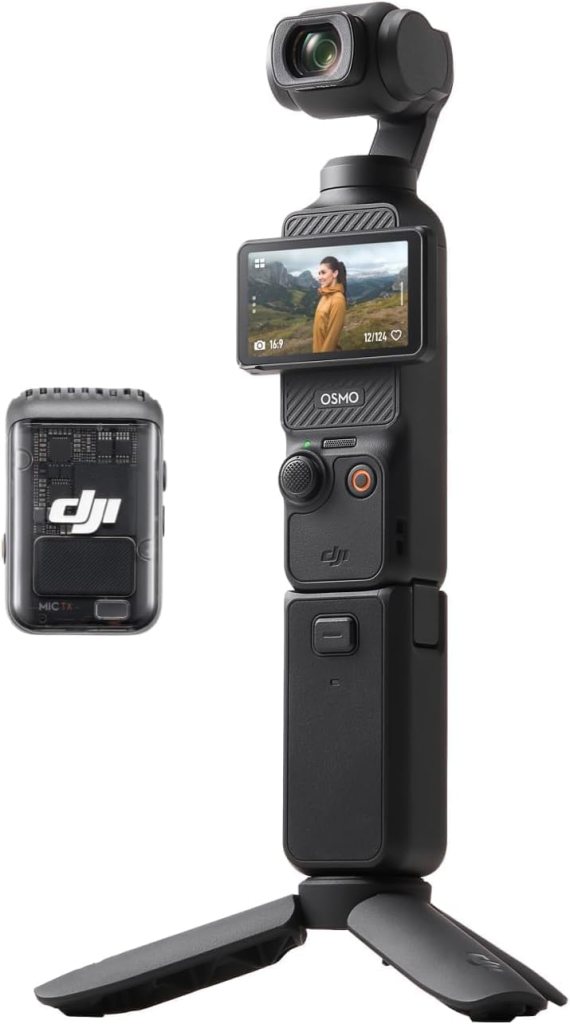
Quick voiceover sequences while actually living your life. DJI built it around a 1-inch CMOS sensor, a 2-inch rotatable touchscreen, full-pixel fast focusing, 4K/120, and three-axis mechanical stabilization. That recipe is unusually strong for short-form video.
The footage looks polished with less effort. That is the big win. You don’t need to fight shaky hands or improvise weird stabilization tricks. The camera does a lot of the ugly work for you. If your Instagram identity leans hard into Reels, this is the most specialized and arguably the most satisfying pick on the page.
Review summary: The Osmo Pocket 3 is the motion king here. Not the best stills-first choice, but a brutally effective option for anyone building around vertical video.
Pros
- Mechanical stabilization is a real advantage
- 4K/120 gives you slow-motion options
- Rotating screen fits vertical shooting well
- Tiny body travels easily
- Excellent for walking shots and quick capture
Cons
- Less traditional for still photography
- Built around a very video-first workflow
- Not the best fit if portraits and static photos matter most
Real Testimonial
Reviewers consistently like the Osmo Pocket 3 for smooth video, portability, and simple setup. Many say it is great for travel, vlogging, and quick everyday filming. The most common downside is heat during longer recording sessions.
5) Canon PowerShot G7 X Mark III
Best pocket camera for everyday Instagram shooting
The G7 X Mark III still makes sense because it understands what a pocket camera is supposed to do.
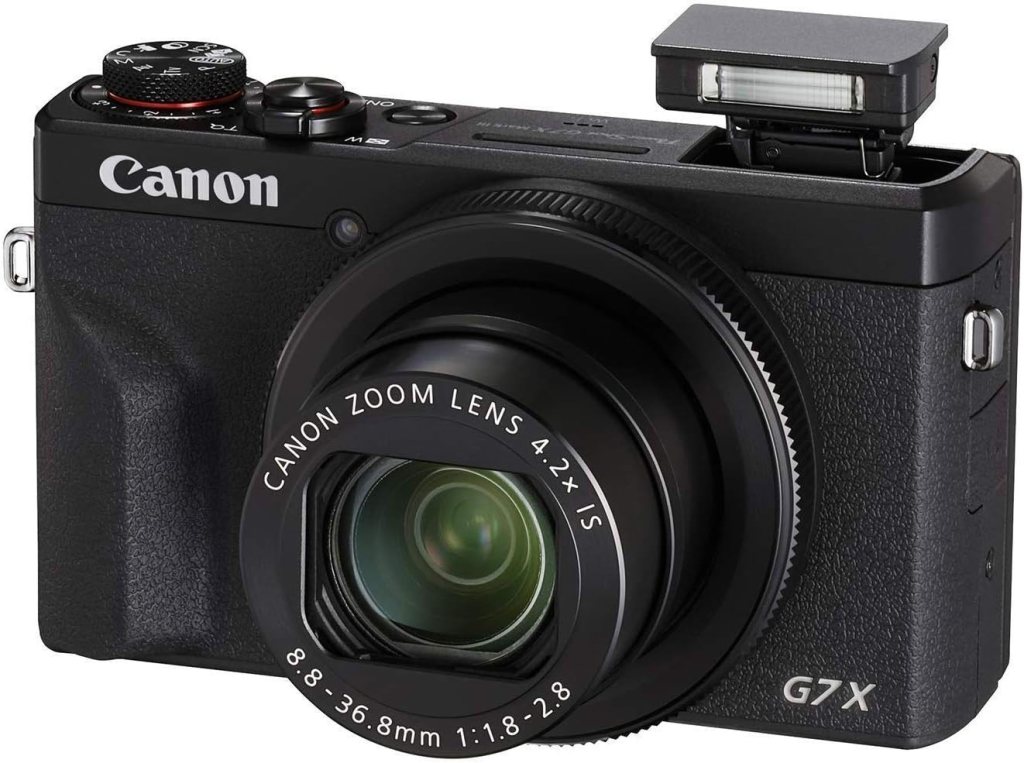
You throw it in a bag. Or a jacket. You pull it out fast. You get better files than a phone, a bright 24-100mm equivalent f/1.8-2.8 lens, a 1-inch stacked sensor, 4K video, Full HD 120p, a tilt-up screen, and a mic input. That’s a lot packed into a body this small.
I would not call it the newest-feeling pick here, but I would call it one of the most intuitive. It’s especially appealing if your Instagram is more photo-first than video-first and you want a compact camera that feels quick, familiar, and flattering.
The zoom range helps too. It gives you room for food, detail shots, casual portraits, and travel scenes without making you think too hard.
Review summary: The G7 X Mark III is still a very sensible carry-everywhere camera for Instagram users who want a compact body, solid stills, and creator-friendly extras.
Pros
- Pocketable and easy to live with
- Bright built-in zoom lens
- 1-inch sensor still holds up well
- Tilt screen is useful for self-framing
- Mic input adds flexibility
Cons
- Older than some rivals
- Not as video-specialized as the Osmo Pocket 3
- Usually pricier than many people expect from a compact
Real Testimonial
Buyers like the G7 X Mark III for its compact size, strong image quality, and easy phone sharing. It is often seen as a convenient everyday camera with good video performance. The main downside is that buyer feedback is a bit more mixed on autofocus and reliability.
Best for different Instagram styles
If you mostly post selfies, talking videos, and daily life clips, get the Sony ZV-1 II.
If you care most about value and want a real step up from a phone, get the Canon EOS R100.
If you know you’ll want better lenses later, get the Canon EOS R50.
If Reels are the center of your strategy, get the DJI Osmo Pocket 3.
If you want a camera that disappears into everyday life, get the Canon PowerShot G7 X Mark III.
What I’d actually buy
For most people, the answer stays the same: Sony ZV-1 II.
Not because it wins every spec comparison. It doesn’t.
It wins because it removes friction without feeling limited too early. That’s rare. The best Instagram camera is often the one that asks the least from you while still giving you noticeably better files.
The R50 is the smarter long-term play if you already know this hobby is sticking. The Osmo Pocket 3 is the better tool if your identity is mostly video. But for the widest range of normal buyers, the ZV-1 II is the cleanest recommendation.
FAQs
What is the best digital camera for Instagram right now?
For most people, it’s the Sony ZV-1 II. It has the right mix of image quality, portability, built-in lens convenience, 4K video, and creator-friendly framing tools.
Is a mirrorless camera better than a compact camera for Instagram?
Sometimes. Mirrorless cameras like the Canon EOS R50 and R100 give you larger APS-C sensors and interchangeable lenses. Compact cameras like the ZV-1 II and G7 X Mark III are easier to carry and simpler to live with.
Do I need 4K for Instagram Reels?
You do not need it, but it helps with flexibility in editing and reframing. Instagram’s help guidance still centers on vertical video with solid resolution and frame rate rather than “maximum camera spec at all costs.”
Is the Canon EOS R100 good enough for Instagram beginners?
Yes. Especially if your posts lean more toward photos than solo video. The APS-C sensor and RF lens system make it a strong first real camera.
Is the Canon EOS R50 worth the extra money over the R100?
For many creators, yes. The vari-angle screen and more creator-friendly handling make it easier to use for solo shooting, and it has a stronger overall hybrid feel.
Is the DJI Osmo Pocket 3 good for Instagram photos too?
Yes, but it shines brightest in video. If your content is mostly Reels, walking footage, or movement-heavy clips, it makes a very strong case.
What camera do influencers use for Instagram?
There is no single answer. Compact creator cameras, APS-C mirrorless bodies, and dedicated video tools all show up often because different creators prioritize portability, lens options, or video stabilization.
Can a pocket camera still beat a phone for Instagram?
Yes. A good pocket camera can still give you better lens behavior, cleaner files in difficult light, better subject separation, and more reliable control than a phone. The ZV-1 II and G7 X Mark III are both strong examples.
Which camera is easiest to carry every day?
The DJI Osmo Pocket 3 and Canon PowerShot G7 X Mark III are the easiest bodies here to keep on you without thinking much about it.
Which camera is best for low-light Instagram content?
Among these, the APS-C models give you the most room to work with, especially once you add a stronger lens. The compact 1-inch sensor cameras still do well, but the larger sensor bodies offer more headroom.
Do I need interchangeable lenses for Instagram?
No. A lot of people are better off without them at first. Fixed-lens cameras are faster, simpler, and often more fun. Interchangeable lenses matter when you know why you want them.
Which camera is best for travel Instagram content?
The Sony ZV-1 II is the best all-around travel answer. The Osmo Pocket 3 is the strongest if travel means motion-heavy Reels.
Which camera is best for fashion, food, or lifestyle creators?
The ZV-1 II and G7 X Mark III are both strong because they stay compact, focus on creator-friendly framing, and cover useful everyday focal lengths with built-in zoom lenses.
How much should I spend on an Instagram camera?
Enough to get a real step up from your phone, not enough to resent carrying it. That usually puts the value sweet spot somewhere around entry mirrorless or premium compact territory, depending on your style.
What accessories matter most for Instagram creators?
A small tripod, extra battery, fast memory card, and maybe a compact mic. That’s usually enough. Most people need consistency more than a shopping spree.
Conclusion
If you want the best digital camera for Instagram, do not overthink this into a cinema purchase. The right camera is the one that makes it easier to shoot often, post faster, and get cleaner results than your phone without adding friction to your day.
For most people, that still makes the Sony ZV-1 II the safest overall pick, while the Canon EOS R50 is the better choice if you already know you want room to grow.
The DJI Osmo Pocket 3 makes the strongest case for creators who live in Reels, and the Canon PowerShot G7 X Mark III still earns its place as an easy everyday carry option.
What matters most is not chasing the most technical camera on paper, but choosing one that matches the kind of content you actually make.
Meta’s own best-practice guidance for vertical video also reinforces the bigger point here: short-form social content works best when it is designed for mobile viewing first, which is exactly why compact, creator-friendly cameras make more sense than oversized gear for most Instagram users.
Affiliate Disclaimer
This article contains affiliate links. We may earn a small commission if you purchase through these links, at no extra cost to you.


Leave a Reply