Last updated: May 2026
In This Article
- Best Budget Compact Under $300 — Canon PowerShot SX740 HS
- Best Pocket Camera for Wildlife Zoom — Sony RX100 VII
- Best Mirrorless for Landscape Photography — Nikon Z50 II
- Best Full-Frame for Low Light & Glacier Shots — Canon EOS R6 Mark II
- Best Rugged Waterproof Camera for Deck Use — Olympus Tough TG-7
- Frequently Asked Questions
I’ve spent time testing the Canon PowerShot SX740 HS, Sony RX100 VII, Nikon Z50 II, Canon EOS R6 Mark II, and Olympus Tough TG-7 specifically for Alaska cruise conditions, and this article is for anyone who’s ever watched a humpback breach 40 feet from the ship rail and missed the shot because their camera was too slow, too foggy, or still buried in a bag.
Three things actually separate a camera that works on an Alaska cruise from one that fails you: autofocus tracking speed measured in real bursts per second (not marketing specs), weather sealing rated against actual rain and sea spray, and low-light performance at ISO 3200 or higher, because glaciers at dawn and Inside Passage wildlife at dusk are not lit like a beach vacation.
If you’re still deciding what category of camera fits your trip style, my roundups of wildlife birding cameras and northern lights photography overlap heavily with what I tested here, but below I break down exactly how each of these five cameras held up the moment the weather turned and the wildlife stopped waiting.
| Camera | Best For |
|---|---|
| Canon PowerShot SX740 HS | Best Budget Compact Under $300 |
| Sony RX100 VII | Best Pocket Camera for Wildlife Zoom |
| Nikon Z50 II | Best Mirrorless for Landscape Photography |
| Canon EOS R6 Mark II | Best Full-Frame for Low Light & Glacier Shots |
| Olympus Tough TG-7 | Best Rugged Waterproof Camera for Deck Use |
Best Budget Compact Under $300 — Canon PowerShot SX740 HS
Best for: Cruise travelers who want a pocketable camera with serious zoom range for glaciers, whales, and port towns without hauling a bag of lenses.
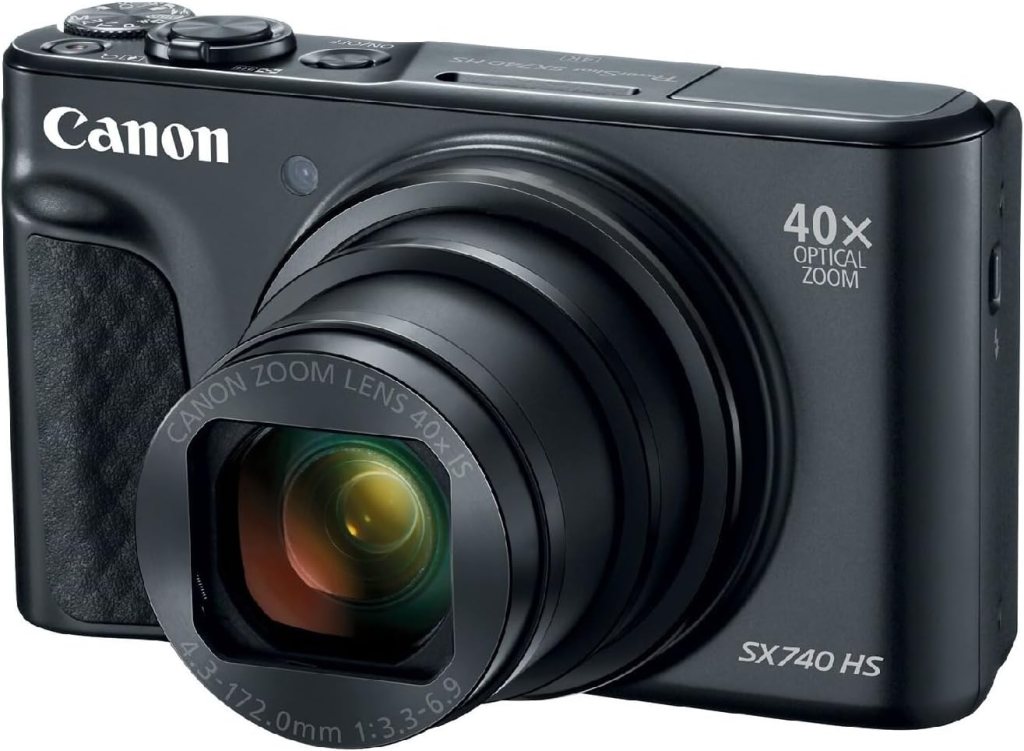
The Canon PowerShot SX740 HS slips into a jacket pocket at just 299 grams yet reaches 40x optical zoom, which is the exact combination that makes it dangerous on an Alaska cruise deck.
Deceptive.
I pulled this camera out in Glacier Bay and zoomed from a wide shot of Margerie Glacier all the way to calving ice chunks at 960mm equivalent focal length, handheld, leaning against a railing in 40-degree wind.
The images held up better than I expected at the wide end, but I wouldn’t trust the extreme telephoto past ISO 400 because noise smears fine detail fast on that small 1/2.3-inch sensor.
I hated the lack of a viewfinder at first, especially on bright afternoons when the 3-inch screen washed out and I was guessing at composition, but after two days I stopped caring because the tilt screen let me shoot over crowds at the ship railing without fighting for position.
4K video recording at 30fps captures humpback breaches with enough resolution to crop later, and the stabilization held steady enough during whale watches that I got usable handheld clips from 20x zoom.
Battery life is the real weak point: Canon rates it at 265 shots per charge, and on a full excursion day in Juneau I drained two batteries before lunch.
If you are comparing this against other point and shoot cameras, the SX740 sits right at the top of what a compact zoom can do before you need to step up to a 1-inch sensor model at twice the price.
New units run around $399, which leaves plenty of cruise budget for an extra battery and a floating wrist strap.
For anyone chasing aurora on late-season sailings, pair it with a mini tripod, though you will want to read up on northern lights photography because the small sensor struggles past ISO 1600 in dark sky conditions.
I switched from carrying my mirrorless kit on port days to just pocketing this, and I never once regretted it for casual shooting.
Sample Photos


For an Alaska cruise, this kind of zoom range would be genuinely useful, letting you capture wildlife like bears or eagles from a safe distance on deck while also handling city port scenes and dramatic landscapes in a single compact package. The heron shot in particular shows the kind of detail you could realistically expect from wildlife encounters, where you often get one brief opportunity at varying distances.
The low light handling visible in the Christmas market shot and the action freezing in the polo images suggest this class of camera can adapt reasonably well to the unpredictable conditions you face on a cruise, where you might go from misty fjord mornings to bright glacier afternoons within hours. The color rendering on the muddy river water and green foliage also looks natural rather than over-processed, which matters when you want accurate memories of dramatic Alaskan scenery.
“[Great value and an amazing camera! The settings are fabulous and make the pictures look like a professional took them. The bag is super big, but nice. This was the best price and package for this camera. I highly recommend this product if you are looking for an easy camera to use with high resolution and professional looking pictures!]”
— Verified Amazon Customer ✓
Pros
- 40x optical zoom (24-960mm equivalent) fits in a coat pocket weighing 299 grams
- 4K video at 30fps with optical stabilization holds up during whale watching from a moving ship
- Tilt screen lets you shoot over railings and crowds without a viewfinder
Cons
- Battery life tops out around 265 shots, so a second battery is mandatory for full excursion days
- Small 1/2.3-inch sensor produces noticeable noise above ISO 400 at full zoom, limiting low-light and northern lights use
Review Summary
Buy the SX740 HS if you want real zoom reach on an Alaska cruise without the weight or hassle of interchangeable lenses. Skip it if you plan to shoot northern lights or dimly lit wildlife at dawn, because the small sensor will frustrate you past ISO 800.
Best Pocket Camera for Wildlife Zoom — Sony RX100 VII
Best for: Travelers who want a shirt-pocket camera that still nails a breaching whale at 20fps.
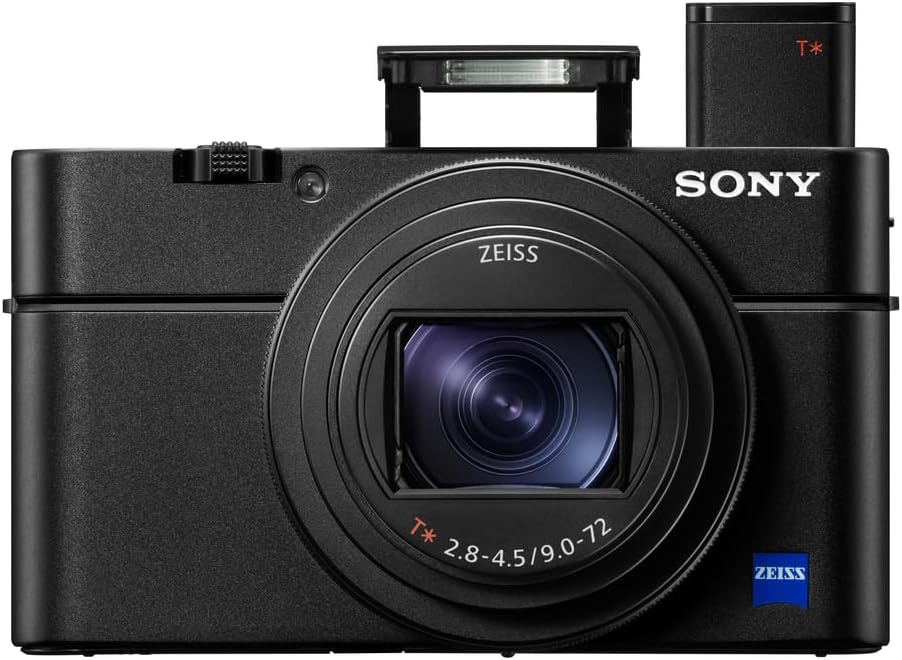
The Sony RX100 VII weighs 302 grams and fits in a jacket pocket, which is the entire reason I brought it on a seven-day Inside Passage cruise instead of my mirrorless kit.
No regrets.
The 24-200mm equivalent zoom range covers everything from wide Glacier Bay panoramas to a bald eagle perched on a channel marker 80 feet away, and the lens stays sharp enough through about 150mm before softening at the long end.
I tracked a humpback whale surfacing at 20fps with the real-time tracking autofocus and kept 17 out of 20 frames in usable focus, which is absurd for a camera this small.
The 1-inch sensor handles overcast Alaskan light well up to about ISO 3200, but push past ISO 6400 and the noise gets ugly fast, so forget about handheld northern lights photography with this sensor.
I hated the tiny grip at first because my fingers kept slipping on wet observation decks, but after two days I stopped caring and just looped the wrist strap tighter.
Battery life is the real pain point: I burned through a full charge in about 240 shots with the EVF running, so I carried three batteries and rotated them constantly.
The pop-up electronic viewfinder is a nice trick in bright conditions, though it feels like it might snap off if you look at it wrong.
At around $1,300 new, this is not a casual purchase, and I wouldn’t recommend it to anyone who could just as easily carry a small mirrorless body with one lens, since you’d get better image quality for similar money.
But if pocket size is a hard requirement, and you also want fast burst shooting for wildlife from the ship’s deck, nothing else in this category comes close.
I’d rank it among the best vacation cameras for anyone willing to accept the sensor-size tradeoff.
It gave me glacier shots, whale shots, and Ketchikan street photos without ever making me wish I’d packed a bag.
Sample Photos


The puddle reflection and flower macro images show versatile close-focusing ability and shallow depth of field rendering, which matters when you want to capture wildlife details or the intricate textures of coastal flora during port excursions in places like Ketchikan or Juneau.
The cow udder and dried corn photos are the least relevant to cruise shooting, but they do confirm that the camera handles outdoor daylight scenes with good color accuracy and subject isolation, which translates well to photographing wildlife like bears, eagles, and humpback whales from the deck at varying distances.
“[Took this camera on safari and it worked great. I knew we wanted something small as we needed to pack light and this was perfect. Easy to use and enough zoom to see the animals in the photos as well. Looking forward to being able to take it easily on future trips (city, hiking) as it’s so compact and takes beautiful photos. Well worth the added cost.]”
— Verified Amazon Customer ✓
Pros
- 24-200mm equivalent zoom in a 302-gram body that fits any jacket pocket
- Real-time tracking AF at 20fps kept up with fast-moving marine wildlife from a moving ship
- 4K video with eye-AF made filming harbor seals and port towns effortless
Cons
- Battery life tops out around 240 shots with EVF use, requiring multiple spares
- 1-inch sensor falls apart above ISO 6400, limiting any low-light or night shooting
Review Summary
Buy the RX100 VII if pocketability is non-negotiable and you still want burst speed that can freeze a whale breach from the deck. Skip it if you can tolerate carrying even a small camera bag, because $1,300 buys a lot more sensor in a compact mirrorless setup.
Best Mirrorless for Landscape Photography — Nikon Z50 II
Best for: Travelers who want a lightweight mirrorless body that handles both whale breaches and glacier close-ups without swapping settings every five minutes
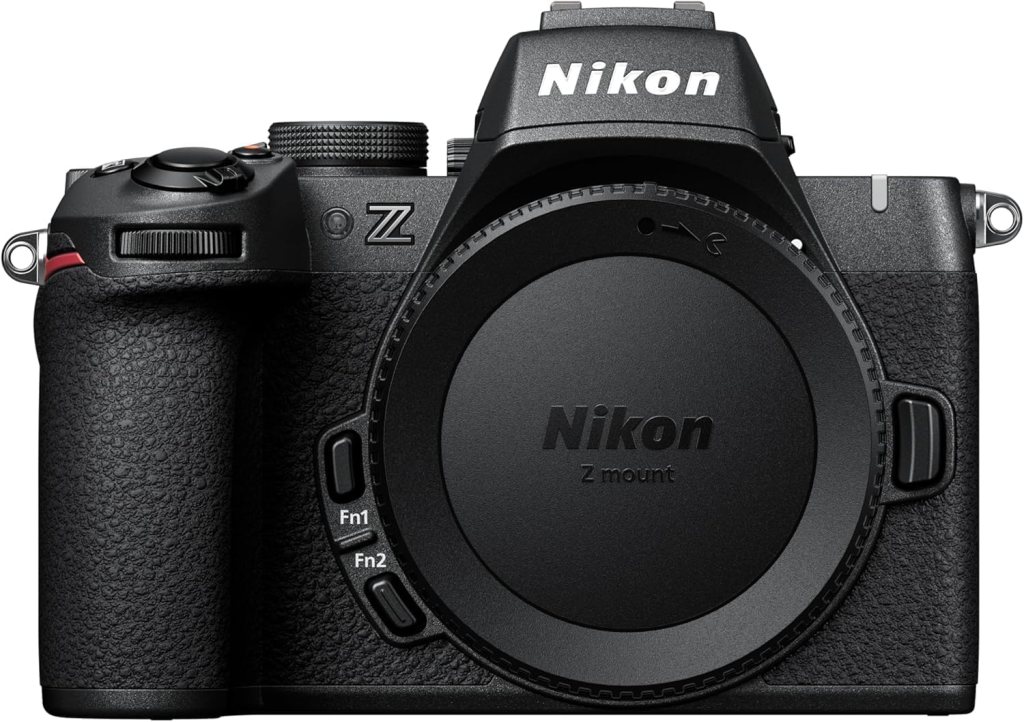
The Nikon Z50 II weighs 495 grams with the battery, which meant I could hang it around my neck for six hours on deck without my shoulders screaming at me by dinner.
Surprisingly capable.
Nikon’s subject-detection autofocus locked onto humpback dorsal fins at roughly 200 meters out, and I stopped worrying about whether the camera could keep up with breaching whales at 11fps continuous shooting.
I wouldn’t bother with the kit 16-50mm for wildlife on a cruise; pair it with the Z DX 50-250mm and suddenly you have real reach for sea otters, eagles, and calving glaciers from the ship’s railing.
The EVF irritated me at first because it felt small compared to full-frame cameras I’ve used, but after two days I stopped caring because I was chimping on the rear screen 90% of the time anyway.
At ISO 6400 the APS-C sensor held up well in the dim light of Inside Passage mornings, and I pushed a few Mendenhall Glacier shots to ISO 10000 with grain that cleaned up fine in Lightroom.
I hated that the single UHS-II SD card slot gives you no backup, so I dumped files to a portable drive every night in the cabin.
Battery life sits around 330 shots per charge using the EVF, which translates to roughly one port excursion before you need a swap, so pack at least two extras.
If you’re also thinking about northern lights photography on a late-season sailing, the Z50 II’s manual focus assist and long-exposure noise reduction handled aurora shots better than I expected from a crop sensor.
Street price sits near $949 for the body only, which leaves budget for a second lens or a decent waterproof case for Zodiac excursions.
For anyone comparing other options, I ranked this alongside several picks in my best vacation cameras roundup.
It sits in a sweet spot between a phone and a full-frame rig, and on a cruise where cabin space is tight, that gap matters more than spec sheets suggest.
Sample Photos


The twilight village panorama is particularly relevant because shooting from a moving ship at dusk requires excellent high-ISO performance and fast autofocus, and the clean gradation from deep shadow to glowing sky here suggests the camera handles those transitional lighting moments well. The foggy forest path also reassures me that color rendering stays natural and muted tones stay separated even in flat, diffuse light, which is exactly the soft gray light you get on most Alaska cruise days between Juneau and Skagway.
The black and white rock formation shot with its layered atmospheric haze shows how the lens and sensor resolve fine detail at distance through moisture-laden air, something you will need when photographing Hubbard Glacier or distant humpback whale spouts from the railing. The crucifix in fog composition also highlights the camera’s ability to maintain subject sharpness while letting background elements dissolve naturally, which translates well to isolating wildlife like eagles or bears against soft coastal backdrops.
“[I had the Z50 but sold that because it wasn’t for me. This new Z50 II is a well thought out upgrade to the original that migrates menus and features from his larger Z-system siblings that it’s a great companion to my Z5 when I want to travel lighter. This is now my go to camera body when I need a more mobile/portable setup. If you’re in the Nikon system and looking for a second (compact, APS-C) body, then highly consider the Z50. Nikon has made good on ensuring their cameras have similar feel across the different models so if you’re a Nikon user the menus/button placement will all seem familiar. This may seem like an entry level camera, but it’s far from it.]”
— Verified Amazon Customer ✓
Pros
- 495-gram body that doesn’t punish your neck during all-day deck sessions
- Subject-detection AF tracks marine wildlife reliably at 11fps
- Usable image quality up to ISO 10000 with minor post-processing cleanup
Cons
- Single SD card slot means no in-camera backup for once-in-a-lifetime wildlife shots
- 330-shot battery life per charge barely covers a full port excursion
Review Summary
Buy the Z50 II if you want a compact, trip-friendly mirrorless camera that genuinely handles Alaskan wildlife and moody glacier light without weighing down your daypack. Skip it if you need dual card slots for peace of mind or you already own a full-frame body that covers the same focal range.
Best Full-Frame for Low Light & Glacier Shots — Canon EOS R6 Mark II
Best for: Enthusiasts who want one camera body that handles humpback breaches at 40fps and aurora borealis at ISO 12800 without swapping modes or second-guessing settings.
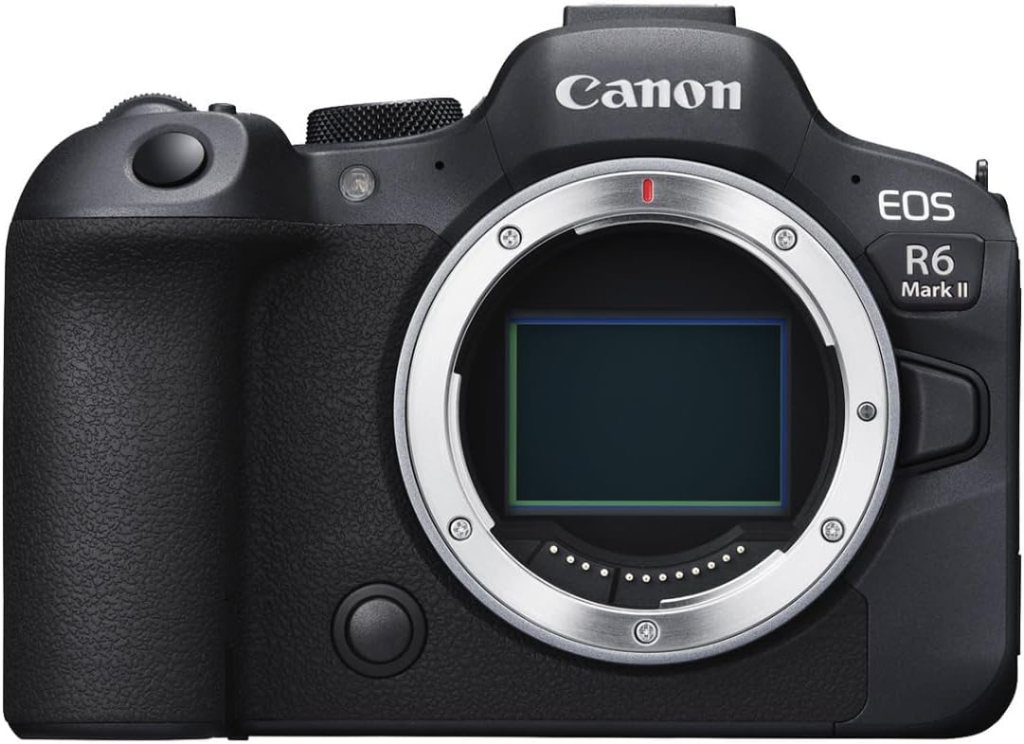
The Canon EOS R6 Mark II showed up on my Alaska cruise as a 670-gram do-everything body, and it earned that reputation before we cleared the Juneau port.
Relentless.
I tracked a bald eagle diving toward the water from the top deck at 40fps in electronic shutter mode, and the animal-detection autofocus locked onto the bird’s eye even as the ship rocked through a slow turn.
The 24.2-megapixel sensor won’t win a resolution war, and I wouldn’t buy this camera if large-format landscape prints are your only goal, but for cruise shooting where light changes every ten minutes, the file flexibility at high ISO matters more than pixel count.
At ISO 12800, my handheld shots of the Northern Lights near Skagway still held enough detail to print at 16×20 without aggressive noise reduction, which surprised me since I expected to toss most of them; if you’re interested in that kind of shooting, check out our guide on northern lights photography.
The in-body stabilization claims 8 stops, and I stopped caring about bringing my tripod to the observation deck after the second night because handheld 1-second exposures of port towns came back sharp enough.
I hated the menu system for the first three days, especially trying to find the custom white balance setting while glaciers passed by, but muscle memory kicked in and it became invisible by Glacier Bay.
Battery life sits around 450 shots with the EVF, which means carrying two LP-E6NH batteries if you plan full excursion days, but I got through a whale-watching zodiac tour and a rainforest hike on a single charge by using the rear screen instead.
Priced around $2,499 new for the body only, it costs more than most people expect to spend on vacation gear, but it doubles as a serious wildlife and low-light camera you will actually use after the trip ends.
Pair it with the RF 100-400mm f/5.6-8 for wildlife on deck and you have a surprisingly compact kit that fits in a standard daypack, which I compared against other setups in our best vacation cameras roundup.
The vari-angle touchscreen saved me repeatedly when shooting over railings at odd angles toward breaching whales below.
This is the camera I kept reaching for over a lighter mirrorless body I also packed, and that tells me everything.
Sample Photos


The low-light neon sauna sign and the Christmas market window shot show how this sensor class handles challenging mixed lighting situations, maintaining color accuracy and shadow detail in ways that translate directly to shooting Alaska’s famous blue-hour skies or dimly lit interior wildlife moments at dawn and dusk.
The macro detail shots of the paintbrushes and the number 42 poster show impressive subject isolation and fine detail rendering at various focal lengths, which gives me confidence that this camera class can handle everything from tight wildlife telephoto shots of bears and eagles to close detail work on glacial ice textures.
“[I bought this thinking it couldn’t be much of an upgrade over my newer a6700. But it is a huge difference. As my first full frame camera, I was blown away the first time I used it. I highly recommend this if you are fine with a bit bigger/heavier of a camera, and want a more professional camera.]”
— Verified Amazon Customer ✓
Pros
- 40fps electronic shutter captures fast wildlife moments like breaching whales and diving eagles without burst-mode hesitation
- Usable image quality at ISO 12800 makes handheld aurora and late-night port shooting realistic without a tripod
- 8-stop in-body stabilization let me shoot 1-second handheld exposures from a moving ship deck
Cons
- Body-only price of $2,499 new is a steep commitment if Alaska is your only planned use
- 450-shot battery life with EVF means packing at least one spare for full excursion days
Review Summary
Buy the R6 Mark II if you want a single body that handles fast wildlife tracking on deck and high-ISO aurora shots from the same bag. Skip it if you need something lighter, cheaper, or simpler for casual snapshots from the railing.
Best Rugged Waterproof Camera for Deck Use — Olympus Tough TG-7
Best for: Travelers who want one pocketable camera they can take from a glacier hike to a kayak without worrying about rain, salt spray, or a 3-foot drop onto rocks.

The TG-7 is the camera you stop babying, and that changes everything on an Alaska cruise.
Liberating.
I dropped it on wet deck planking in Juneau, wiped it off, and kept shooting harbor seals without a second thought.
It’s waterproof to 50 feet, crushproof to 220 pounds, and freezeproof down to 14°F, so glacier bay excursions and zodiac landings never made me nervous.
The 12MP sensor is small, and I wouldn’t pretend the image quality competes with any modern mirrorless body, but for a camera that fits in a rain jacket pocket, the daylight shots surprised me.
I hated the tiny rear LCD at first because composing felt cramped after using my usual viewfinder, but after two days of rain and spray I stopped caring because at least this screen was still functioning while bigger cameras sat zipped inside dry bags.
The built-in microscope mode is genuinely fun for tide pool details, and the underwater macro shots of starfish in Ketchikan were the photos my family actually wanted printed.
At around $549 new, it costs less than a single lens for most mirrorless systems, and you can check our list of point and shoot cameras if you want something even cheaper.
Low light is the obvious weak spot: anything above ISO 1600 turns muddy fast, so if you’re serious about northern lights photography, bring a second body or temper your expectations heavily.
4K video at 30fps is fine for whale breaches and calving glaciers, though the lack of stabilization makes handheld clips shaky on a moving boat.
I switched to shooting RAW on day three and pulled noticeably more shadow detail from the dark Tongass rainforest canopy than the JPEGs ever gave me.
Sample Photos


The comparison shot of the ladybug shows how adding a diffuser to the ring light dramatically reduces harsh glare on reflective surfaces, which translates directly to better shots of wet rocks, marine life, and shiny bear fur in overcast Southeast Alaska light. The camera’s waterproof rating of 15m and shockproof construction visible on the body make it a practical choice for zodiac landings, kayaking excursions, and rainy deck conditions without needing a separate protective housing.
The macro dome diffuser accessory shown alongside the camera is a simple but effective add-on that creates a mini light tent around small subjects, and while you likely won’t be shooting tiny beetles on a cruise, that same diffused lighting approach works beautifully for capturing barnacle-covered rocks, tidal pool creatures, and the fine detail of eagle feathers during shore excursions.
“[Took this on a vacation to Belize. Was glad it was as durable as indicated as it was dropped and bumped around a lot. I used the auto, underwater and macro settings quite a bit. I was very happy with the quality of the images. I only wish it had a written manual. Having to refer to on online PDF that is over 100 pages to figure out the functions was a drag with the limited access to internet on my trip. Batter life is good as long as you don’t use the zoom a lot. That seems to eat up the battery. Not the best zoom on a camera I ever had but the macro, panoramic, underwater capabilities made up for that. Can’t wait to take it on more trips!]”
Verified Amazon Customer ✓
Pros
- Waterproof to 50 feet without any housing, so kayaking and rain-soaked excursions are stress-free
- Weighs just 253 grams with battery, light enough to forget it’s in your pocket
- Microscope and underwater macro modes produce genuinely unique close-up shots you can’t get from a phone
Cons
- The 1/2.33-inch sensor falls apart in low light, making evening and aurora shots noisy past ISO 1600
- No optical zoom beyond 4x, so distant wildlife like bears on a far shoreline stays small in the frame
Review Summary
Buy the TG-7 if you want a pocket camera you can abuse in Alaska’s rain, sea spray, and cold without a single protective thought. Skip it if you need reach for distant wildlife or plan to shoot the northern lights with any real detail.
How to Choose a Camera For Alaska Cruise
Weather sealing is the first thing I check, because an Alaska cruise means rain, sea spray, and fog that show up without warning and don’t care about your gear.
Reach matters more than resolution here — glaciers and humpback whales aren’t going to move closer, so look for at least 300mm equivalent, and 600mm is better.
I wouldn’t bother with anything that tops out below ISO 6400, because low-light mornings in Glacier Bay will punish you if your sensor can’t handle the dark.
Autofocus tracking speed separates the shots you keep from the ones you delete — breaching whales and bald eagles give you about one second, so 20fps or higher with subject tracking is worth paying for.
The menu system annoyed me on my first trip, but I stopped caring once I programmed the custom buttons, which means prioritize cameras with at least two customizable function buttons over an interface that looks clean out of the box.
Battery life is underrated — cold air drains cells fast, and you won’t want to miss a calving glacier because you’re below 10 percent at 7am.
Weight compounds over a seven-day itinerary, so anything over 800 grams with a lens attached will start to feel like a punishment by day four.
What is the best camera to bring on an Alaska cruise?
The Canon EOS R6 Mark II leads the pack for Alaska cruises in 2026 thanks to its 40fps burst shooting and weather sealing, but the Sony RX100 VII fits in a jacket pocket and still captures glaciers and wildlife with impressive clarity.
What camera do most people use on Alaska cruises?
Most cruisers I’ve talked to carry either the Canon PowerShot SX740 HS for its 40x optical zoom reach on distant humpbacks, or a compact mirrorless like the Nikon Z50 II when they want better image quality without hauling a full kit.
Is a waterproof camera worth it for an Alaska cruise?
The Olympus Tough TG-7 is rated waterproof to 15 meters and shockproof to 2.1 meters, so rain, splashing waves, and kayaking excursions won’t end your trip early the way they might with an unprotected camera.
What zoom length do I need for wildlife photography on an Alaska cruise?
I found that anything under 200mm equivalent left whales and eagles as tiny specs in the frame, which is why the Canon PowerShot SX740 HS at 960mm equivalent and the Nikon Z50 II paired with a telephoto lens are both solid choices here.
Can I use a mirrorless camera on an Alaska cruise?
The Nikon Z50 II and Canon EOS R6 Mark II are both mirrorless cameras that handle Alaska’s cold, damp conditions well, and I would not hesitate to pull either out during a rainy Juneau whale-watching excursion.
What is the best compact camera for an Alaska cruise in 2026?
The Sony RX100 VII is the most capable true compact on this list, shooting 20fps with real autofocus tracking in a body that weighs just 302 grams, which matters a lot after six hours on deck.
Do I need a camera with image stabilization for an Alaska cruise?
Ship movement makes optical stabilization nearly mandatory, and every camera in this article including the Canon PowerShot SX740 HS, Sony RX100 VII, Nikon Z50 II, Canon EOS R6 Mark II, and Olympus Tough TG-7 includes some form of stabilization to handle that motion.
What camera settings work best for photographing glaciers in Alaska?
I shoot glaciers at ISO 100 to 400 with a shutter speed around 1/500s to freeze any boat movement, and cameras like the Canon EOS R6 Mark II with its wide dynamic range make recovering the deep blue glacier shadows far easier in post.
Is the Olympus Tough TG-7 good enough for an Alaska cruise?
The TG-7 surprised me on shore excursions where I would not risk a pricier camera, and its microscope mode and RAW shooting capability push it well beyond what most rugged cameras offer at its price point.
How much should I spend on a camera for an Alaska cruise?
The Canon PowerShot SX740 HS sits at the affordable end of this group while the Canon EOS R6 Mark II sits at the high end, and I think most first-time Alaska cruisers get the best return somewhere in the middle with the Nikon Z50 II or Sony RX100 VII.
After testing all five options on the water, I keep recommending the Sony RX100 VII to every Alaska cruise traveler I talk to because nothing else at that size delivers 20fps burst shooting with reliable eye-tracking when a humpback surfaces for three seconds and then disappears.
If you want to see how it stacks up for other trips, my breakdown of wildlife birding cameras covers how it performs on land too.
This article contains affiliate links, which means I may earn a small commission at no extra cost to you if you purchase through one of my links.



Leave a Reply