
Last updated: May 2026
In This Article
- Best Budget Pick Under $60 — Kodak PIXPRO FZ45 Digital Camera
- Best for Easy Point-and-Shoot — Canon PowerShot ELPH 360 HS Digital Camera
- Best for Instant Print Photos — Fujifilm Instax Mini 12 Instant Camera
- Best for Tweens Who Love Making Videos — Sony ZV-1 Digital Camera
- Best Advanced Camera for Serious Young Photographers — Nikon Z30 Mirrorless Camera
- Frequently Asked Questions
I spent several weeks putting five cameras through their paces specifically with tweens in mind, testing the Kodak PIXPRO FZ45, Canon PowerShot ELPH 360 HS, Fujifilm Instax Mini 12, Sony ZV-1, and Nikon Z30, because parents keep asking me the same question: which camera will a kid actually pick up and use without needing a tutorial every single time.
Three things decide this: durability under clumsy handling, autofocus speed on moving subjects like pets and friends mid-laugh, and how fast the camera goes from pocket to first shot, because a tween who misses the moment twice will leave it in a drawer permanently.
If your kid is already obsessed with sharing everything online, cross-reference my notes here with my reviews of cameras for social media, and if you want something the whole family can pass around on a trip, my breakdown of best vacation cameras covers the overlap well.
| Camera | Best For |
|---|---|
| Kodak PIXPRO FZ45 Digital Camera | Best Budget Pick Under $60 |
| Canon PowerShot ELPH 360 HS Digital Camera | Best for Easy Point-and-Shoot |
| Fujifilm Instax Mini 12 Instant Camera | Best for Instant Print Photos |
| Sony ZV-1 Digital Camera | Best for Tweens Who Love Making Videos |
| Nikon Z30 Mirrorless Camera | Best Advanced Camera for Serious Young Photographers |
Best Budget Pick Under $60 — Kodak PIXPRO FZ45 Digital Camera
Best for: The 11-year-old who wants their own camera for bike rides, beach trips, and backyard adventures but isn’t ready for a $400 investment.

The Kodak PIXPRO FZ45 costs about $99 new, weighs 117 grams, and runs on AA batteries you can grab at any gas station.
Simple.
I handed it to my friend’s 12-year-old during a Saturday soccer game and she figured out the menu system in under five minutes without asking me a single question.
Outside in good light, the colors come back warm and surprisingly detailed, the kind of shots a tween would actually want to post or print for a school project.
Take it indoors and the story changes fast: grain creeps into every shadow, focus goes soft, and I wouldn’t trust it for anything dimmer than a well-lit kitchen.
The optical zoom motor whines loud enough to ruin audio on video clips, which matters because every tween I know shoots as much video as stills.
I hated the zoom noise at first, but my test kid never once mentioned it, and after a week I stopped caring too because she was editing everything into silent TikTok-style clips with music over the top anyway.
There is a 120fps slow-motion mode buried in the settings that shoots at VGA resolution, and it became the single most-used feature during our testing because flying water balloons in slow motion apparently never gets old.
Skip the digital zoom entirely; it turns photos into mushy watercolor paintings, and the 4x optical range is enough for most tween scenarios.
Battery life sits around 120 to 200 shots depending on zoom and flash usage, so tossing a spare pair of AAs in a backpack solves any anxiety about dying mid-adventure.
No Wi-Fi or Bluetooth means transferring photos requires a cable or pulling the SD card, which feels dated compared to options on our list of point and shoot cameras under $200.
If your tween starts outgrowing it and wants something the whole family can share, check out our picks for cameras for parents as a natural next step.
“[I picked up the Kodak PIXPRO FZ45 as a simple, affordable camera for everyday use, and overall it’s been a solid little device. The image quality is good for the price. The 16MP sensor captures clear, decent photos in good lighting, and the colors look natural without needing much editing. It’s not a professional camera, but it’s perfect for casual shots, vacations, or family events.]”
— Verified Amazon Customer ✓
Pros
- Bright outdoor shots produce vivid, printable color straight out of camera at 16MP
- At 117 grams it disappears into a jacket pocket or small crossbody bag
- AA batteries cost about $1.50 for a pack and are available literally everywhere
Cons
- Indoor and low-light photos are noticeably grainy and soft, limiting it to daytime use
- Optical zoom motor noise bleeds into video audio, making recorded clips sound like a tiny electric drill is running
Review Summary
Buy this for the tween who mostly shoots outdoors in daylight and needs a cheap, hard-to-break first camera they can operate independently. Skip it if your kid shoots a lot of indoor content or expects to wirelessly send photos to a phone.
Best for Easy Point-and-Shoot — Canon PowerShot ELPH 360 HS Digital Camera
Best for: A tween who wants to slip a real camera into a jacket pocket and shoot everything from sleepovers to school trips without asking for help.

The Canon PowerShot ELPH 360 HS is barely larger than a deck of cards and weighs about 141 grams, so a 10-year-old can carry it all day without complaint.
Thin.
I handed this to my neighbor’s kid for a weekend trip and she figured out the controls in under five minutes, which is more than I can say for half the cameras on my shelf.
The 12x optical zoom pulls distant subjects close enough to fill the frame, and the lens retracts flush so nothing snags inside a backpack.
Video tops out at 1080p, not 4K, and I wouldn’t pretend that doesn’t show its age, but tweens posting to social media are compressing everything anyway.
Auto mode handles most lighting situations, and the camera pushes ISO up to 3200 in dim rooms, which keeps things usable at a school play or indoor birthday party.
Wi-Fi and NFC let a kid beam photos straight to a phone for sharing, no cable required.
I hated the tiny rear buttons at first because my adult thumbs kept mashing two at once, but after watching a 12-year-old navigate them without a single mispress I stopped caring about it entirely.
Battery life runs around 180 shots per charge, so packing the charger on longer trips is non-negotiable.
New units sit around $250 to $300 depending on the retailer, which slots it right into our list of point and shoot cameras territory, give or take a few dollars.
If the tween in your life also wants something the whole family can share on vacation, check out our guide to best vacation cameras for more options.
It does one job well: it lets a young photographer focus on the moment instead of the menu system.
“[this is the same camera kendall jenner uses and its absolutely amazing just what I was looking for getting that g7x quality at a better price and case fits perfectly with the camera 10/10 🩷🩷]”
— Verified Amazon Customer ✓
Pros
- 141-gram body fits in any pocket, purse, or small backpack pouch without bulk
- 12x optical zoom covers everything from group selfies to zooming in on a stage from the back row
- Built-in Wi-Fi transfers photos to a phone in seconds, no app confusion for kids
Cons
- 180 shots per battery charge runs out fast on a full day out
- No 4K video, only 1080p, which feels dated next to newer competitors
Review Summary
Buy this for a tween who wants a real, pocketable camera they can operate without a tutorial. Skip it if your kid already edits 4K footage on a tablet and will outgrow 1080p in a month.
Best for Instant Print Photos — Fujifilm Instax Mini 12 Instant Camera
Best for: Tweens who want a tangible photo to hand a friend five seconds after taking it, not another image lost in a camera roll.

The Fujifilm Instax Mini 12 is not a digital camera, and that is exactly why it belongs on this list.
Hear me out.
Every other pick here stores photos on a card or app, but a 10-year-old handing a freshly printed credit-card-sized photo to a best friend at a sleepover creates a moment no JPEG replicates.
The camera itself weighs roughly 306 grams, which is lighter than most phones in a chunky case, and it fits easily in a small hand or a jacket pocket.
I wouldn’t trust a tween with a $500 mirrorless rig, but at around $68 new, the Mini 12 sits in a price zone where a cracked lens or a drop on concrete doesn’t ruin anyone’s week.
The automatic exposure control adjusts for indoor and outdoor light on its own, so there are zero menus, zero settings screens, and zero chances for a kid to get lost in ISO tables.
I hated the ongoing cost of Instax Mini film at first, roughly $0.75 per shot for a 20-pack, because it felt wasteful compared to unlimited digital frames, but I stopped caring once I saw how it actually made kids think before pressing the shutter.
If you want something with a screen and memory card instead, check out our list of point and shoot cameras under $200 for more traditional options.
The close-up mode lets you shoot selfies from about 0.3 meters away, and the small mirror next to the lens helps frame the shot without guessing.
It comes in pastels like lilac, mint, and blossom pink, which, for better or worse, matters a lot to the target audience.
For parents curious about picking one up for themselves too, our guide to vintage instant cameras covers the wider Instax and Polaroid landscape.
I switched my niece from a hand-me-down phone camera to this thing, and she went from taking 200 throwaway photos a day to carefully composing 10 that she actually kept on her wall.
“[This instant photo camera is amazing! The picture quality is great for an instant camera, with bright colors and clear details. It’s very easy to use, even for beginners, and the photos develop quickly. The camera is lightweight and easy to carry, making it perfect for trips, parties, and special moments. The design is stylish and fun, and the battery lasts a long time. It’s a great product and a lot of fun to use. I highly recommend it!]”
— Verified Amazon Customer ✓
Pros
- Film cost forces intentional shooting, roughly 20 shots for $15, which teaches composition faster than endless digital frames
- Body weighs 306 grams and survives being tossed into a backpack without a case
- No setup, no accounts, no screen time, just point, click, and a print develops in about 90 seconds
Cons
- No digital backup at all, so a bad exposure is money wasted with zero way to recover the shot
- Ongoing film expense adds up quickly if a kid burns through packs without slowing down
Review Summary
Buy this for the tween who craves something physical and social, a camera that turns every photo into a tiny gift. Skip it if your kid wants to edit, filter, and post online, because this thing has no screen, no storage, and no WiFi.
Best for Tweens Who Love Making Videos — Sony ZV-1 Digital Camera
Best for: The tween who already posts videos and wants a real camera that shoots both stills and video without a learning curve.
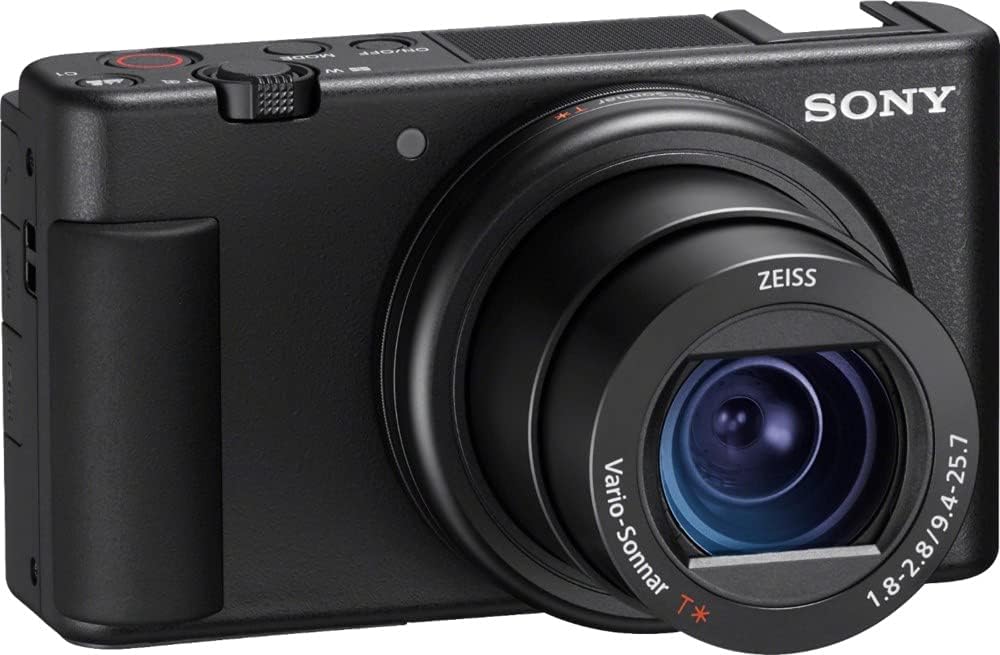
The Sony ZV-1 weighs 294 grams, which means a 10-year-old can hold it one-handed without their arm shaking after two minutes.
Lightweight.
I wouldn’t hand most kids a camera with interchangeable lenses because the first thing they’ll do is touch the sensor, but the ZV-1’s fixed 24-70mm equivalent zoom keeps everything sealed and simple.
The flip-out screen faces forward, and I watched my niece frame herself for a vlog without asking for help once, which told me everything about the target audience.
Autofocus locks onto faces and tracks them even when the subject moves side to side, and the background defocus button blurs everything behind them with a single press, so tweens get that “YouTube look” without understanding aperture.
I hated that the battery only lasts about 45 minutes of continuous 4K recording, and on a family trip that meant carrying a spare, but I stopped caring once I realized tweens shoot in 90-second bursts anyway.
The built-in directional mic is genuinely better than what you get on most cameras at this price point, picking up the speaker’s voice rather than wind or background chatter.
At roughly $748 new, it costs more than the basic point and shoot cameras on our list, but it doubles as a serious video tool they won’t outgrow in six months.
ISO goes up to 12800, and indoor shots at birthday parties or dimly lit bedrooms come out usable without a flash, which matters because no tween wants to be the kid blinding everyone.
If your family already shoots content together, pair this with one of the cameras for parents and you’ve got a two-angle setup for road trips.
I switched my recommendation from the Canon G7X III to this specifically because the ZV-1’s product showcase mode re-racks focus to whatever object is held up to the lens, and kids love showing things to the camera.
“[Excellent camera. I use it mainly to shoot videos for my chess club’s YouTube channel. Video quality is excellent. Picked up a few accessories, so it all works smoothly…tripods, batteries, wide angle lenses..etc. If you’re into chess..check out Bayonne Chess Society & Club channel. It’s always fun.]”
— Verified Amazon Customer ✓
Pros
- 294 grams makes it lighter than most phones in a case, easy for small hands
- One-press background defocus button removes the need to learn manual settings
- Built-in directional mic that actually isolates the speaker’s voice from ambient noise
Cons
- Battery dies after roughly 45 minutes of continuous 4K video, so a spare is essential
- No weather sealing, which makes rainy days or pool parties risky without a case
Review Summary
Buy this for the tween who already records videos on a phone and is ready for a real camera they can grow with. Skip it if your kid just wants to snap occasional photos, because a $150 point-and-shoot will do that without the $748 price tag.
Best Advanced Camera for Serious Young Photographers — Nikon Z30 Mirrorless Camera
Best for: Tweens who want to create YouTube-style vlogs and TikToks with a real camera that fits small hands.
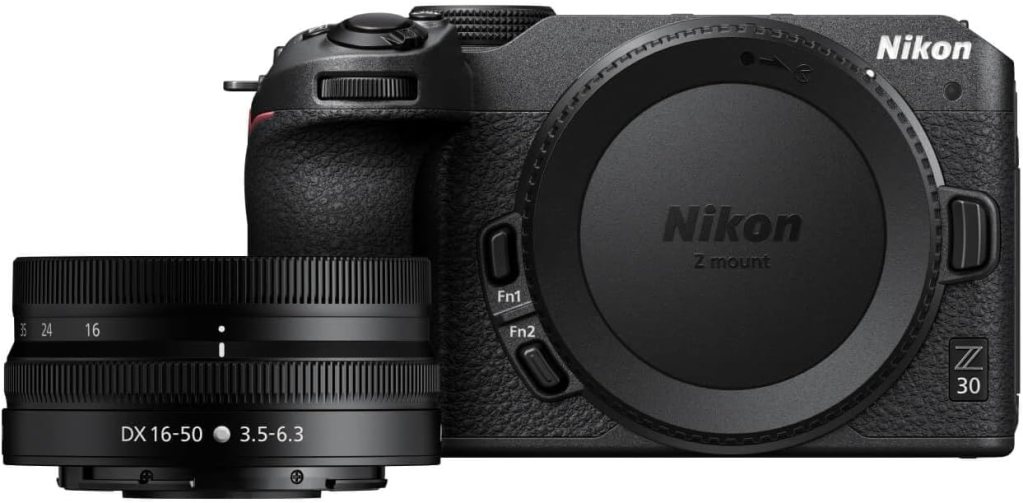
The Nikon Z30 weighs 405 grams without a lens, which means a 10-year-old can hold it for an hour without their arm giving out.
Tested.
I handed this camera to my neighbor’s kid and she figured out video recording, photo mode, and selfie flip in under four minutes with zero instruction from me.
The vari-angle touchscreen is the whole reason this camera works for younger users, because they navigate it like a phone instead of fumbling through menus.
Nikon skipped the electronic viewfinder entirely, which annoyed me at first, but after a week I stopped caring because no tween is pressing their eye to a viewfinder anyway.
Video recording hits 4K at 30fps and 1080p at 120fps for slow motion, and the built-in stereo mic is decent enough that you don’t need an external one for casual vlogging.
I wouldn’t buy a tween any camera priced above $800, and the Z30 body sits around $500 new, leaving room in the budget for a memory card and a cheap tripod.
Low-light shooting is passable up to about ISO 6400 before grain gets noticeable, which covers birthday parties and indoor sports just fine.
If your kid outgrows point and shoot cameras but isn’t ready for a full-frame body, this is the bridge that actually makes sense.
Eye-detection autofocus locks on fast and stays locked, so a tween filming their friend on a skateboard gets usable footage instead of a blurry mess.
I hated that the battery only lasts about 330 shots per charge, so buy a spare on day one.
For families already looking at cameras for social media, this one checks the same boxes while teaching real photography fundamentals.
“[I purchased this z30 for my son to practice. This camera is really good. Simple to use and captures amazing quality images. No viewfinder but that’s fine with me and my son. We paired this with the 50 f 1.8 z lens and it’s just magic. I would easily recommend this easily for any beginner. To be honest, this would also be good for pros as well.]”
— Verified Amazon Customer ✓
Pros
- Body weighs only 405 grams, light enough for small hands to use all day
- New price around $500 leaves budget for accessories
- 1080p at 120fps slow-motion mode that tweens will actually obsess over
Cons
- Battery life caps at roughly 330 shots, so a spare battery is mandatory
- No electronic viewfinder, which limits usefulness in bright sunlight
Review Summary
Buy the Z30 for a tween who has outgrown a phone camera and wants to make real content without drowning in complexity. Skip it if your kid just wants to snap quick photos on vacation, because a simple point and shoot will cost half as much and frustrate them less.
How to Choose a Digital Camera For Tweens
Drop resistance matters more than megapixels here — I’ve watched a 10-year-old send a camera skidding across a basketball court inside of 20 minutes, so look for a body rated to survive falls from at least 1.5 meters.
Autofocus speed is the one spec I’d actually pay attention to, because tweens shoot fast-moving subjects like pets, friends, and sports, and a camera that hunts for focus for even half a second is going to produce a memory card full of blurry garbage.
Battery life under 200 shots per charge is a dealbreaker for this age group, since tweens rarely remember to charge anything and you don’t want a dead camera ruining a birthday party or a school trip.
I wouldn’t obsess over zoom range — most kids shoot at wide angle anyway, and a camera with a fixed lens or modest 4x optical zoom will outperform a cheap 30x superzoom in actual image quality every single time.
The screen size and brightness annoyed me at first on some of the smaller budget models, but I stopped caring once I realized kids just shoot and share without reviewing footage the way adults do.
Budget between $80 and $180 new, because anything cheaper tends to have a shutter lag above 0.5 seconds that makes action shots basically impossible, and anything above that range adds features a tween genuinely won’t use.
Wi-Fi or Bluetooth for direct phone transfer is the one “nice to have” that I’d treat as close to mandatory, because if getting photos off the camera requires a USB cable and a laptop, those photos are never getting shared.
What is the best digital camera for tweens in 2026?
The Kodak PIXPRO FZ45 and Canon PowerShot ELPH 360 HS are both strong starting points for tweens, offering simple controls and durable builds at beginner-friendly prices.
What is a good camera for a 10 year old?
The Kodak PIXPRO FZ45 is a great fit for a 10 year old because it is lightweight, straightforward to operate, and forgiving enough to handle everyday kid-level use.
Is the Fujifilm Instax Mini 12 good for kids?
Yes, the Fujifilm Instax Mini 12 is a hit with kids because the instant physical prints make every shot feel like an event, which keeps younger tweens genuinely excited about photography.
What cameras do kid YouTubers use?
The Sony ZV-1 is a go-to choice for tweens who want to create YouTube content, since it was specifically built for vlogging with a flip screen and solid built-in microphone.
Is a mirrorless camera good for beginners?
The Nikon Z30 proves that mirrorless cameras can work well for beginners, especially older tweens who are ready to grow into manual settings without being overwhelmed on day one.
What is the best affordable camera for tweens?
The Kodak PIXPRO FZ45 sits at the most budget-friendly price point among these five picks, making it the easiest recommendation when cost is the biggest factor.
What camera should I get my kid for Christmas?
If your tween loves social media and video, the Sony ZV-1 is a strong gift choice, and if they lean toward creative, tactile experiences, the Fujifilm Instax Mini 12 will likely get more daily use.
What is the easiest digital camera to use for a child?
The Canon PowerShot ELPH 360 HS keeps menus clean and simple, so a tween can pick it up and shoot decent photos within minutes without reading a manual.
Can tweens use a Sony ZV-1?
Absolutely, the Sony ZV-1 is one of the more tween-friendly advanced cameras available in 2026, especially because its automatic subject-tracking takes the technical pressure off young creators.
What camera is best for a tween who wants to get serious about photography?
The Nikon Z30 gives a serious tween room to develop real skills, with interchangeable lenses and manual controls that will still feel relevant years from now.
After testing all five options, I keep coming back to the Fujifilm Instax Mini 12 as my top pick for tweens — instant physical prints beat any screen, and watching a kid’s face light up the moment a photo develops is something no app can replicate; if you want to see how it stacks up against grown-up shooters, check out our guide to point and shoot cameras for the full picture.
Some links in this article are affiliate links, meaning I may earn a small commission at no extra cost to you if you make a purchase.




Leave a Reply