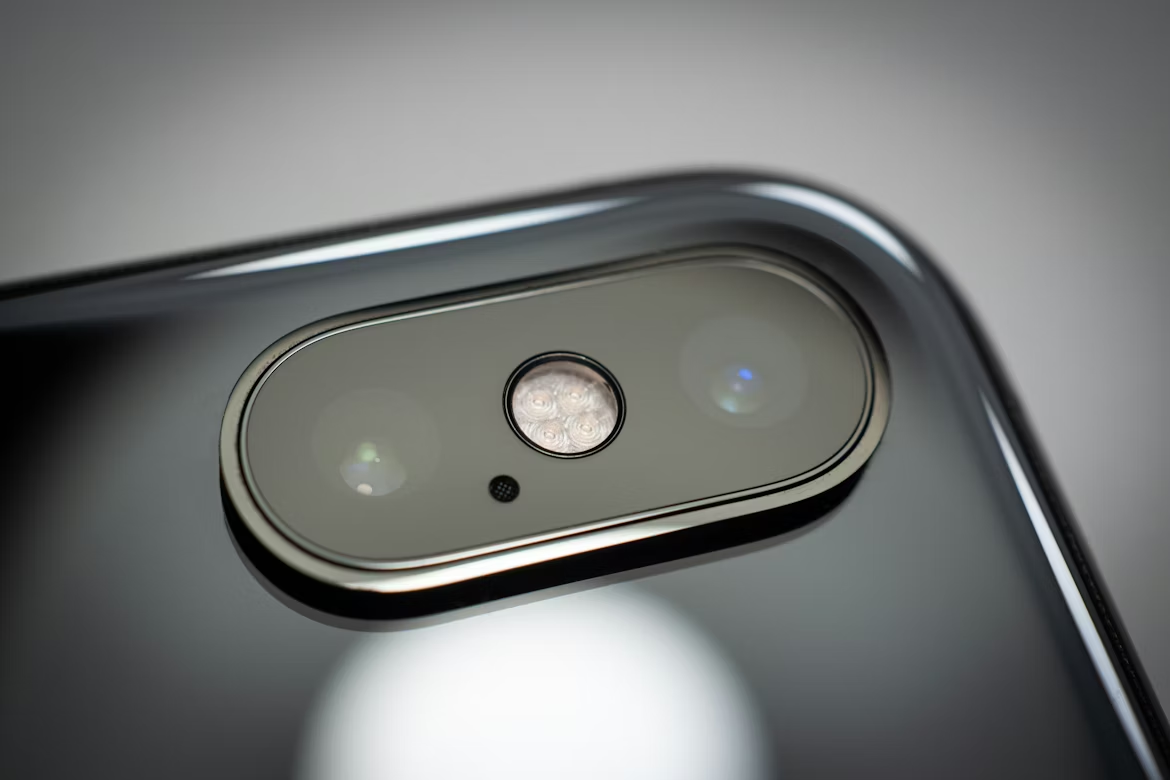
The market for the best camera phones under $300 is full of nonsense. Big numbers. Filler lenses. Phones that look good on a product page and feel flat the second the light gets tricky.
That is why I kept this list narrow. I cared more about the main camera, the screen you actually edit on, and whether the phone still feels good after the first week.
If you want a useful baseline for how phone cameras are judged beyond raw megapixels, DXOMARK’s camera testing methodology is worth reading. The phones below are all currently sold on Amazon US, and the core specs line up with current manufacturer listings and retailer pages.
I did not pick these because every spec is pretty. I picked them because each one has a clear reason to exist.
How I picked these phones
First, the phone had to stay under the $300 line on Amazon US at the time of research. Second, the main camera had to matter more than the extra junk lenses. Third, I looked at the whole experience.
A good camera phone with a dim screen, bad battery, or sluggish software gets old fast. Samsung’s Galaxy A16 5G brings a 50MP camera, a 6.7-inch FHD+ Super AMOLED display, a 5000mAh battery, and IP54 protection.
Motorola’s current Moto G adds a 50MP main camera, 16MP selfie camera, 120Hz display, microSD expansion, and IP54 protection.
The Moto G Power (2025) adds a 5000mAh battery and 15W wireless charging. OnePlus gives the Nord N30 5G a 108MP main camera, 120Hz FHD+ display, 5000mAh battery, and 50W charging.
That last point matters. A phone camera is not just a sensor. It is the way the phone gets out of your way.
Related articles
Quick comparison table
| phone | best for | main camera | display | battery / storage notes |
|---|---|---|---|---|
| Samsung Galaxy A16 5G | best overall | 50MP | 6.7-inch FHD+ Super AMOLED | 5000mAh, expandable storage |
| Moto G (2025) | best lower-cost value | 50MP | 6.7-inch 120Hz LCD | 5000mAh, microSD, 16MP selfie |
| Moto G Power (2025) | best battery life | 50MP | 6.8-inch 120Hz LCD | 5000mAh, wireless charging |
| OnePlus Nord N30 5G | best for daylight detail | 108MP | 6.72-inch 120Hz FHD+ LCD | 5000mAh, 50W charging |
| Samsung Galaxy A15 5G | best simple Samsung pick | 50MP | Super AMOLED | expandable storage |
| phone | what I like | main tradeoff | who should buy it |
|---|---|---|---|
| Samsung Galaxy A16 5G | balanced camera, AMOLED, durability | not the fastest phone here | most people |
| Moto G (2025) | practical camera, solid selfie cam | lower display resolution | value-focused buyers |
| Moto G Power (2025) | battery stamina, wireless charging | camera is good, not special | heavy users |
| OnePlus Nord N30 5G | sharp daylight photos, fast charging | weaker secondary cameras | daylight shooters |
| Samsung Galaxy A15 5G | familiar, easy, steady | older and less refined than A16 | casual users |
1. Samsung Galaxy A16 5G

Best overall
This is the one I would hand to most people without a speech.
The Samsung Galaxy A16 5G gets the top spot because it feels like the least compromised choice. Samsung gives it a 50MP main camera, a 6.7-inch FHD+ Super AMOLED display, a 5000mAh battery, and IP54 protection. That is a pretty solid base before you even talk about image quality.
The display matters more than people admit. If your screen is washed out or dim, every photo looks worse than it is. Samsung avoided that trap here.
More important, the camera setup makes sense. The 50MP main camera is the reason to buy it. Not the macro lens. Not the spec clutter. Just the main camera doing everyday work well enough that you stop thinking about it.
Colors tend to look more settled on Samsung budget phones than on a lot of rivals. Skin tones are usually safer. HDR usually behaves itself.
That is why this phone wins. It does not need a gimmick.
Review summary: The Galaxy A16 5G is the cleanest all-round camera pick in this range. It is not dramatic. It is not weird. It is just dependable, which is exactly what a lot of people need.
Pros
- Good balance of camera quality and screen quality
- AMOLED display is a real advantage at this price
- 5000mAh battery keeps the phone practical
- IP54 protection adds peace of mind
Cons
- The extra rear cameras are not the reason to buy it
- Performance is more steady than fast
- Night shots still need realistic expectations
Real Testimonial
The Samsung Galaxy A16 5G is the easiest phone on this list to recommend because it gets the important stuff right without trying to distract you with junk features. The main camera is reliable, the AMOLED screen is a real upgrade in this price range, and the whole phone feels more balanced than flashy. It is not built for people chasing weird spec-sheet wins. It is built for people who want photos that look good, a screen that does them justice, and a phone that feels sane day to day.
2. Moto G (2025)
Best lower-cost value pick
This is the phone for someone who wants the second-best answer without paying for the first one.
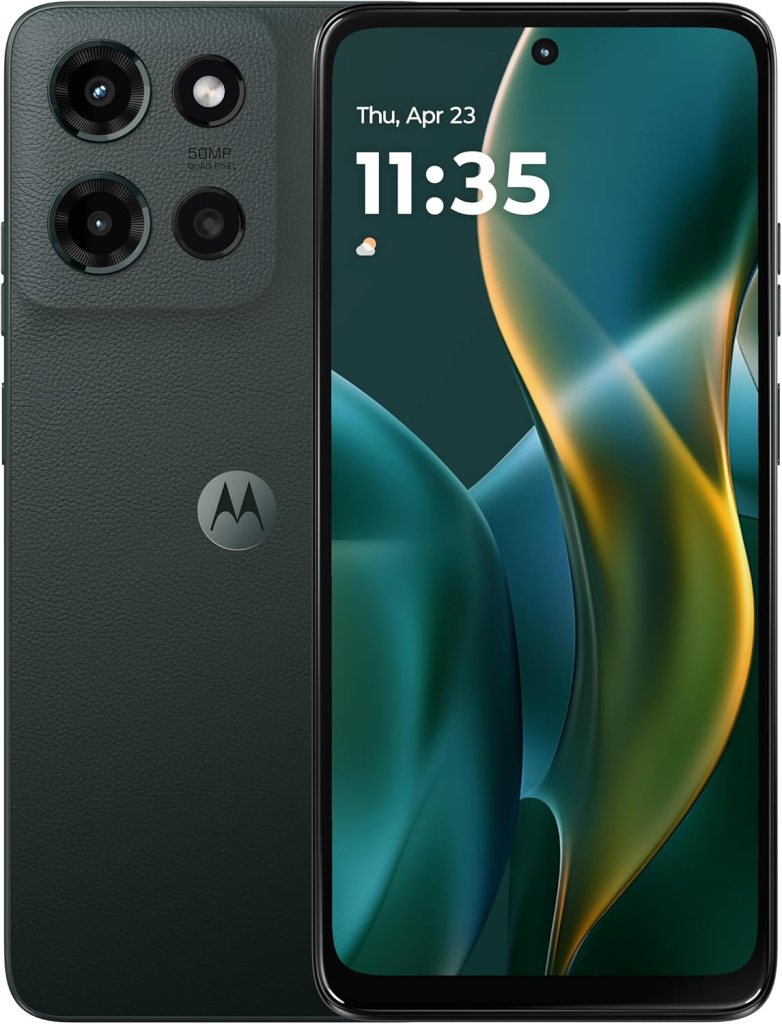
Motorola’s current Moto G (2025) has a 50MP main camera, a 16MP selfie camera, a 6.7-inch 120Hz display, 5000mAh battery, microSD expansion, and IP54 protection. The resolution is only HD+, which is the compromise you feel most, but the phone makes a good case for itself everywhere else.
The main camera is what keeps it on this list. In decent light, it is capable of sharp, shareable photos without trying too hard. I also like that Motorola gave this one a 16MP front camera. Budget phones often treat the selfie camera like an afterthought. This one does not feel quite so dismissive.
No, it is not a prestige object. Good. It is a phone that seems to know what job it has.
Review summary: The Moto G (2025) is the smart value play in this lineup. It gets you a useful main camera, a better-than-expected front camera, and the kind of everyday flexibility that matters more than spec drama.
Pros
- Good main camera for regular daily photos
- 16MP selfie camera is a genuine plus
- 120Hz display helps the phone feel lively
- microSD slot is still useful
Cons
- HD+ resolution is not ideal
- Low light is just okay
- Not as polished overall as the A16 5G
Real Testimonial
The Moto G (2025) is the value-minded pick that still feels like it has some taste. The main camera does a solid job in good light, and the selfie camera is better than you usually get at this level. Motorola also keeps the phone practical with expandable storage and a smooth 120Hz display. The weaker point is the lower-resolution screen, which keeps it from feeling as polished as the best overall option. Still, this is a smart buy for someone who wants a capable camera phone without overspending.
3. Moto G Power (2025)
Best for battery life and casual photography
Some people do not need the most refined camera. They need a phone that refuses to die.
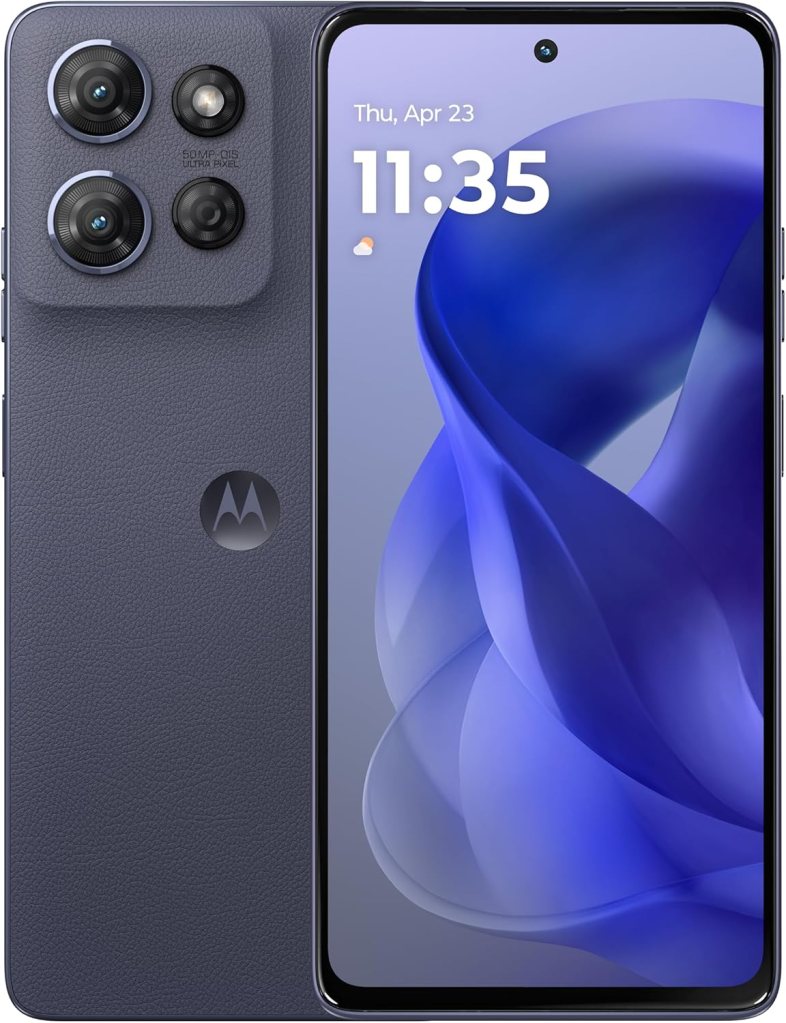
That is where the Moto G Power (2025) makes sense. Motorola gives it a 5000mAh battery, 30W charging, 15W wireless charging, a 6.8-inch 120Hz display, and a 50MP main camera. Wireless charging is still weirdly rare in this part of the market, so that alone gives it a little personality.
Review summary: The Moto G Power (2025) is the battery-first pick that still takes respectable photos. Buy it if you care about endurance and convenience more than squeezing every last bit of image quality from a budget sensor.
Pros
- Excellent battery practicality
- Wireless charging is a real bonus
- Good casual daylight photography
- Comfortable fit for heavy daily use
Cons
- Camera quality is decent, not standout
- Display resolution is not sharp enough to brag about
- Not the best choice for night photography
Real Testimonial
The Moto G Power (2025) is the phone for people who care about battery life first and camera quality second. That sounds like a compromise, but it is a reasonable one. The main camera is perfectly usable for everyday shots, especially outdoors, and the giant battery makes the whole experience easier to live with. Wireless charging helps too. It does not have the strongest camera system here, and it is not the phone I would pick for night shots, but it makes a lot of sense for heavy users who want a dependable all-day phone that can still take good casual photos.
4. OnePlus Nord N30 5G

Best for daylight detail and fast charging
This is the spec-forward pick that almost talks too loudly about itself.
The OnePlus Nord N30 5G has a 108MP main camera, a 6.72-inch FHD+ 120Hz LCD, a 5000mAh battery, and 50W charging. The charging speed is genuinely useful. The 108MP number is less meaningful on its own, but in bright light this phone can produce pleasing detail and crisp-looking photos that a lot of buyers will enjoy immediately.
That said, this is a phone you buy with open eyes. The main camera does the heavy lifting. The secondary cameras are not why anybody should be here. Still, I think the Nord N30 makes sense for someone who mostly shoots outside, likes a sharper display, and wants fast top-ups that do not drag through the afternoon.
There is a certain kind of buyer who will love this phone. Usually the one who notices charging speed on day two and never stops appreciating it.
Review summary: The OnePlus Nord N30 5G is a strong pick for daylight photos, quick charging, and people who like a phone that feels brisk. It is less balanced than the A16 5G, but more fun in a couple of specific ways.
Pros
- Strong daylight detail from the main camera
- 50W charging is genuinely useful
- Sharp FHD+ 120Hz display
- 8GB RAM helps it feel less cramped
Cons
- Secondary cameras add very little
- Less rounded camera experience than Samsung
- LCD panel is good, not great
Real Testimonial
The OnePlus Nord N30 5G is the most obvious spec-forward phone in the group, and in a few ways that works. Daylight photos can look sharp and detailed, the screen is crisp, and the fast charging is one of the most useful real-world features in the whole article. The problem is that this phone leans hard on its main camera and leaves the rest of the photography story feeling thinner. It is a good pick for buyers who mostly shoot in strong light and want a phone that charges fast, but it is not the most rounded camera phone here.
5. Samsung Galaxy A15 5G
Best for casual users who want the easy answer
There is always one phone on a list like this that wins by being familiar.
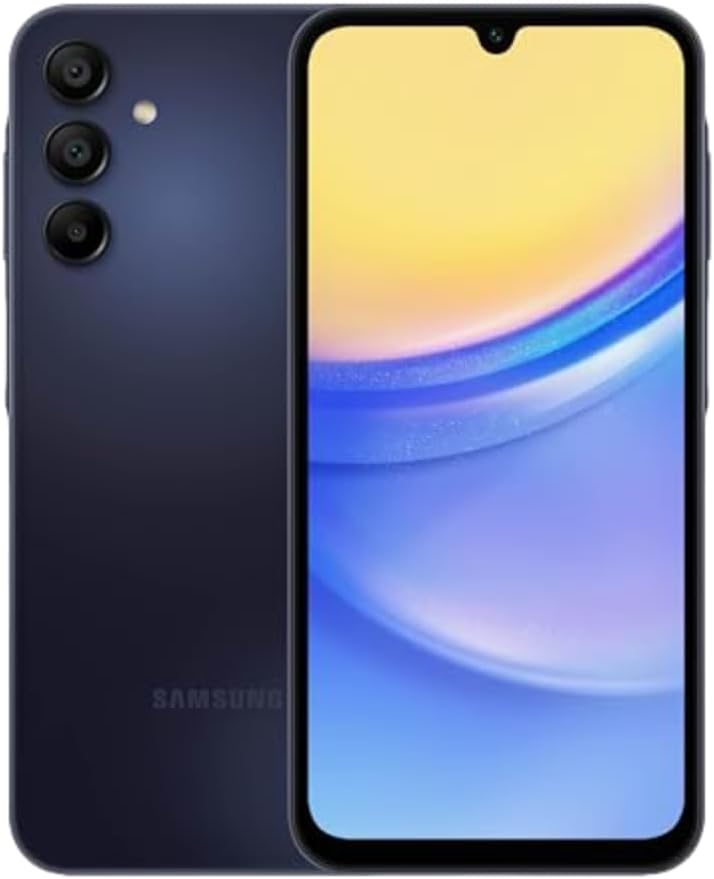
The Samsung Galaxy A15 5G is that phone. Amazon’s current listing shows a Super AMOLED display, expandable storage, and Samsung’s usual broad appeal in a simple unlocked package. It is not as fresh as the A16 5G, and that is exactly why it dropped lower here.
But it still works as a comfortable recommendation for people who want Samsung’s interface, a usable 50MP main camera, and a screen that does not feel bargain-bin.
I would not call it the most interesting phone on this list. I would call it the least likely to confuse someone.
That counts for something.
Review summary: The Galaxy A15 5G is the straightforward Samsung fallback. It is not the phone I would lead with, but it is still a perfectly sensible camera phone for casual buyers who value familiarity.
Pros
- AMOLED display still looks good
- Samsung camera tuning is easy to live with
- Expandable storage is useful
- Comfortable recommendation for casual users
Cons
- A16 5G is the better Samsung pick now
- Not the strongest value in the whole list
- Feels older beside newer rivals
Real Testimonial
The Samsung Galaxy A15 5G is the fallback option that still earns its place because it is familiar, steady, and easy to live with. The AMOLED display helps it feel better than a lot of budget phones the second you unlock it, and the camera is good enough for casual daily use. It is not the freshest or most exciting choice now that the A16 5G is out, but that does not make it bad. It just makes it the safer, older sibling in the lineup.
Which one I’d buy
I would buy the Samsung Galaxy A16 5G.
Not because it has the craziest spec sheet. It doesn’t. Not because it is the most exciting. It isn’t. I would buy it because this part of the market punishes overthinking. The A16 5G gets you the most sensible balance of main-camera quality, screen quality, battery, and everyday polish. That is the phone I trust most not to annoy me.
The Moto G (2025) is the one I would buy if the budget needed a little more breathing room.
The Moto G Power (2025) is the phone I would buy for somebody who burns through battery all day and hates babysitting a charger.
The OnePlus Nord N30 5G is the one I would buy if fast charging and bright-light detail mattered more than balance.
The Galaxy A15 5G is the one I would buy for someone who just wants a safe Samsung option and does not care about having the newest version.
FAQ
What is the best camera phone under $300 right now?
Right now, I think it is the Samsung Galaxy A16 5G. It has the best mix of a credible main camera, a strong AMOLED display, solid battery life, and enough durability to feel like a real long-term pick. Samsung lists the A16 5G with a 50MP main camera, 6.7-inch FHD+ Super AMOLED display, 5000mAh battery, and IP54 protection.
Is a 50MP camera better than a 108MP camera on a budget phone?
Sometimes, yes. A better 50MP main camera with more reliable image processing can beat a weaker 108MP setup in real life. Megapixels matter far less than processing, dynamic range, focus speed, and whether the sensor is supported by decent software.
That is why the Galaxy A16 5G sits above the OnePlus Nord N30 here even though the Nord N30 advertises a 108MP main camera.
Which phone here takes the best daylight photos?
The OnePlus Nord N30 5G has a strong argument in daylight because its 108MP main camera can produce crisp, pleasing photos in good light, and the phone pairs that with a sharp FHD+ 120Hz display. The Galaxy A16 5G is still the more balanced camera phone overall.
Which budget phone on this list is best for night photos?
None of these phones are true low-light monsters. Within realistic limits, the Galaxy A16 5G is the safest overall camera recommendation, while the Moto G Power (2025) can still produce usable low-light shots with Night mode and a steady hand. Expectations matter here. This is still the under-$300 class.
Are Samsung budget phones better than Motorola for camera quality?
Usually, I trust Samsung a little more for consistent image processing in this price range. Motorola often gives you good hardware and very practical phones, but Samsung tends to be the steadier camera bet for color and overall balance.
On the spec side, Samsung’s A16 5G also brings the advantage of an FHD+ Super AMOLED panel over Motorola’s HD+ LCD on the standard Moto G.
Which phone is best for selfies?
The Moto G (2025) stands out because Motorola lists it with a 16MP front camera, which is a nice touch at this level. Most of the phones here are centered on the rear main camera, so this one earns extra credit for not neglecting the front.
Do budget camera phones under $300 shoot good video?
They can shoot good casual video, especially outdoors or in even light. Most of the value here is in simple handheld clips, family videos, and social media posts. What you should not expect is flagship stabilization, rich low-light video, or consistently cinematic results. These phones are best when the scene is straightforward.
Should I care about ultrawide and macro cameras on budget phones?
Not much. On budget phones, the extra lenses are often filler. The main camera is what matters. That is why the rankings here focus so heavily on the quality and practicality of the main shooter instead of counting the number of rear lenses.
Which phone is best for battery life and photos together?
The Moto G Power (2025) is the battery-first answer. Motorola lists it with a 5000mAh battery and 15W wireless charging, which helps it stand out from the pack. The camera is good enough for casual use, which is really the point of this phone.
Which phone is best for Instagram and TikTok?
For rear-camera use, the Galaxy A16 5G is the best broad answer because it is the most balanced phone here. For a buyer who cares more about the front camera, the Moto G (2025) deserves a look because of its 16MP selfie camera.
How much storage do I need for phone photography?
For most people, 128GB is the comfortable floor now. Photos, apps, short videos, and cached junk build up fast.
Expandable storage also helps, which is another reason Samsung and Motorola still make sense in this bracket. Several of the phones here support extra storage through microSD expansion.
Can a phone under $300 replace a compact camera?
For everyday use, yes. For tricky lighting, zoom-heavy shooting, or serious creative control, not really. A good under-$300 phone camera is strong enough for daily life, travel snaps, pets, people, food, and social content. It just does not bend physics.
What matters most in a budget camera phone besides the camera?
The display. Then battery. Then software smoothness. A sharp, bright screen changes how your photos look the second you take them. That is one reason the Galaxy A16 5G scores so well here with its FHD+ Super AMOLED panel.
Are these phones good for teens, parents, or first-time smartphone buyers?
Yes. In fact, that is part of their appeal. The Galaxy A15 5G and Galaxy A16 5G are especially easy recommendations for casual users because they feel familiar and predictable. The Moto G (2025) also makes sense for a first-time buyer who wants a simple camera phone with a decent selfie camera.
What is the smartest buy if I care about value most?
The Moto G (2025). It is the value pick here because it gives you a usable main camera, a strong selfie camera for the price class, 120Hz refresh, and the kind of practical feature list that ages well enough.
Final take
If I had to cut through the noise and pick one winner from these 5 best camera phones under $300, it would still be the Samsung Galaxy A16 5G. It is the phone with the fewest excuses attached to it. The camera makes sense. The screen makes sense. The battery makes sense. That matters more than flashy numbers.
If you want a better grounding in how sensor size and pixel design affect image quality, Sony’s sensor guide is a useful read and a better source than the usual megaphone marketing.
The short version is simple. Bigger claims do not always mean better photos. The good budget phones are the ones that keep the whole experience honest. Camera-wise, this is a solid daylight phone. Not an exciting one. Not a sneaky giant-killer. Just solid.
The main sensor can produce good casual shots when the light is reasonable, and Motorola’s Night mode helps some, though it is not the kind of low-light performance I would build an article around. That is fine.
This phone is for people who shoot often but casually. Family photos. Quick travel snaps. A dog moving too fast through the yard.
It earns its spot because it gets the basics right and stays alive forever.
Affiliate Disclaimer
This article contains affiliate links. We may earn a small commission if you purchase through these links, at no extra cost to you.




Leave a Reply