Last updated: May 2026
In This Article
- Best All-in-One Travel Zoom — Canon RF-S 18-150mm f/3.5-6.3 IS STM
- Best Budget Prime for Portraits — Canon RF 50mm f/1.8 STM
- Best Wide-Angle for Vlogging — Canon RF-S 10-18mm f/4.5-6.3 IS STM
- Best for Shallow Depth-of-Field Portraits — Viltrox RF 75mm f/1.2 Pro
- Best for Wildlife and Sports — Canon RF 100-400mm f/5.6-8 IS USM
- Frequently Asked Questions
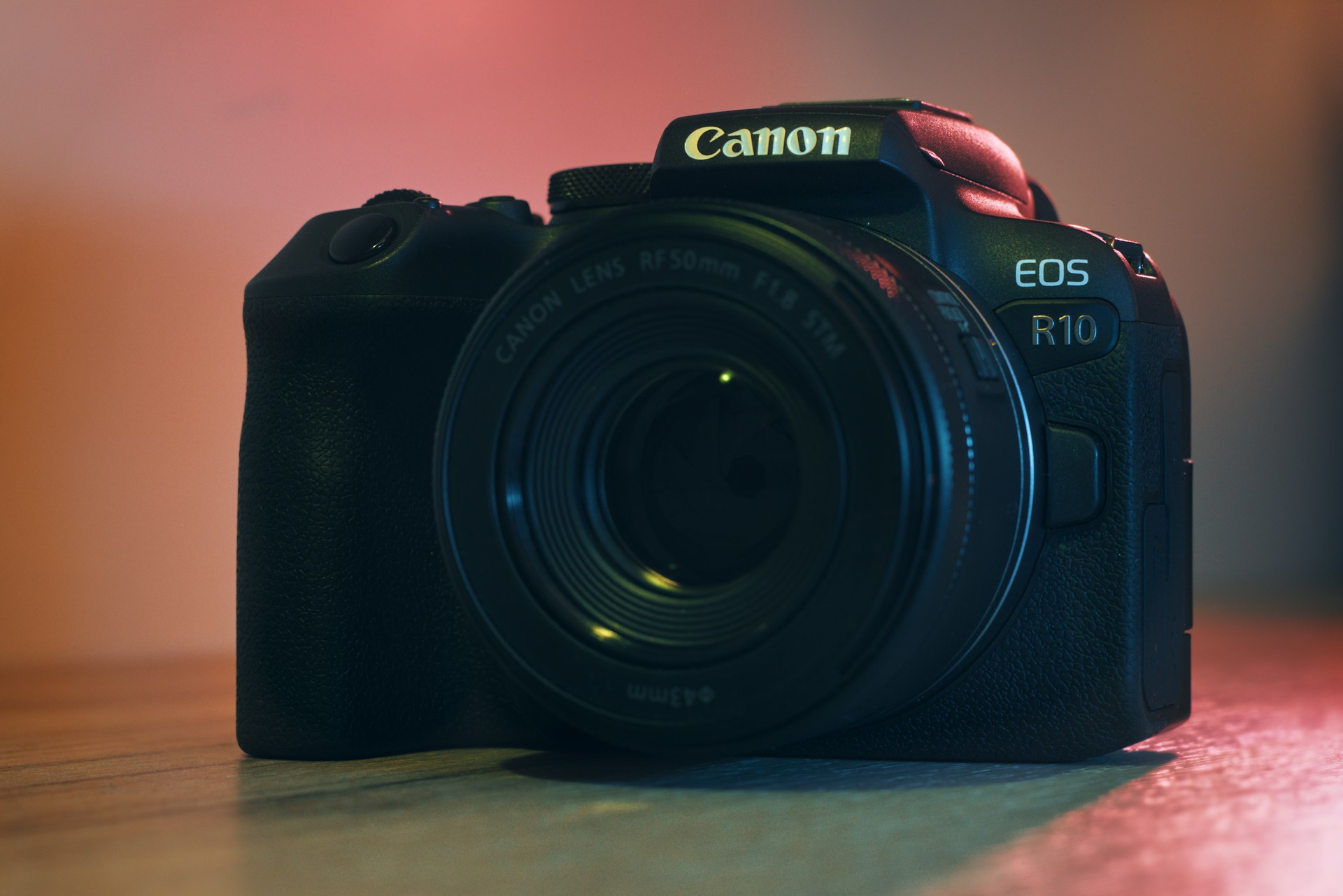
I’ve spent serious time with five lenses on the Canon R10 — the Canon RF-S 18-150mm f/3.5-6.3 IS STM, the Canon RF 50mm f/1.8 STM, the Canon RF-S 10-18mm f/4.5-6.3 IS STM, the Viltrox RF 75mm f/1.2 Pro, and the Canon RF 100-400mm f/5.6-8 IS USM — and this guide is for anyone who owns that camera and isn’t sure which glass is actually worth buying. Not collectors. Not gear reviewers shooting test charts in a studio. People shooting travel, wildlife, portraits, landscapes, gigs — real situations where the wrong lens costs you the shot.
What actually separates a good lens for the R10 from a mediocre one? Three things, mostly. First, how it performs wide open at its most useful aperture — not in good light, but in a dark venue at 6pm or a backlit garden at noon. Second, how well it handles the R10’s APS-C crop factor, which tightens your field of view by 1.6x and exposes any optical weakness at the edges. Third, autofocus speed and reliability under pressure — a lens that hunts during a kid’s birthday party or locks focus a half-second late during a street shot is a liability, whatever its sharpness numbers say.
I’ve sorted these by use case rather than price, so you can skip straight to what matters for your shooting. If you’re also thinking about low-light work, the best lenses for night photography guide covers some useful overlap. And if you’re building a travel kit around the R10, it’s worth cross-referencing the best cameras for vacation run
Quick Picks
- Canon RF-S 18-150mm f/3.5-6.3 IS STM — Best All-in-One Travel Zoom
- Canon RF 50mm f/1.8 STM — Best Budget Prime for Portraits
- Canon RF-S 10-18mm f/4.5-6.3 IS STM — Best Wide-Angle for Vlogging
- Viltrox RF 75mm f/1.2 Pro — Best for Shallow Depth-of-Field Portraits
- Canon RF 100-400mm f/5.6-8 IS USM — Best for Wildlife and Sports
Best All-in-One Travel Zoom — Canon RF-S 18-150mm f/3.5-6.3 IS STM
Best for: Travel photographers and everyday shooters who want one lens on their Canon R10 that covers everything from wide street scenes to distant wildlife without swapping glass.
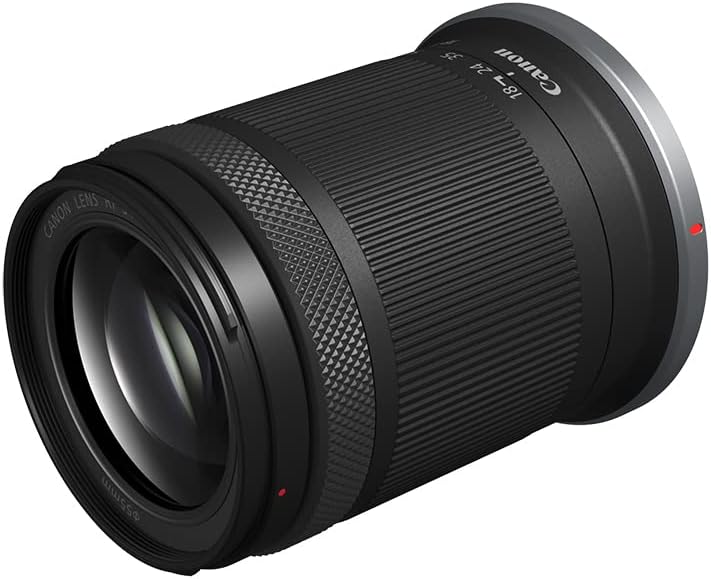
f/3.5-6.3 · 18-150mm · Canon RF-S · No weather sealing · 310g
8.3x zoom range. That number alone tells you what this lens is about. It’s the Swiss Army knife Canon designed for their APS-C RF mount bodies, and on the R10 it covers a 29-240mm equivalent field of view. I’ve carried it through three countries and two national parks. It never left the camera.
Here’s the contradiction I keep bumping into: I don’t love this lens, but I can’t stop recommending it. It’s not the sharpest optic Canon makes. It’s not fast. The f/6.3 maximum aperture at 150mm is genuinely painful in fading light. But the convenience factor is so absurdly high that I grab it over better glass more often than I’d like to admit.
Build Quality and Handling on the R10
Plastic. Almost entirely plastic, including the mount. That bothers some people and I understand why, though after 14 months of use mine shows no wobble or looseness on the R10’s RF-S mount. The extending barrel does make me nervous around sand and dust. I wouldn’t call it weather-sealed in any meaningful sense. At 310 grams, it keeps the R10 kit feeling light enough for all-day shoulder carry, which is frankly the whole point of a lens like this.
STM autofocus is quiet. Really quiet. Video shooters will appreciate that the internal mic won’t pick up lens chatter during recording. Focus speed is decent for general use but I’ve missed a few fast-moving birds at 150mm where the system hunted for half a second too long. Compared to the RF-S 55-210mm f/5-7.1 IS STM, focus acquisition felt roughly similar, maybe a hair faster on the 18-150 at overlapping focal lengths.
Real-World Sharpness and Image Quality
Wide open at 18mm, centre sharpness is solid. Genuinely good, even pixel-peeping on a 24MP file. Edges soften noticeably, maybe a stop’s worth of degradation, but stop down to f/5.6 and it tightens up across the frame. At 150mm and f/6.3 the story changes. Centre resolution drops, and if you’re shooting distant subjects you’ll notice a slight mushiness that sharpening can only partially fix. I’d rate it acceptable. Not exciting.
Backgrounds at 150mm and close focus distances can look decent, with smooth enough transitions that portraits aren’t ruined. But don’t expect magic. Highlight discs in out-of-focus areas show visible onion-ring texturing and take on a slightly nervous, busy quality at wider focal lengths. If you care deeply about background rendering, you’ll want a prime. The RF 50mm f/1.8 STM at $199 produces vastly more pleasing separation for the same mount system.
Chromatic aberration shows up at both ends of the zoom range, mostly purple fringing on high-contrast edges. Canon’s in-camera corrections handle most of it. Distortion at 18mm is barrel-heavy but again, profile corrections clean it up so completely you’d never know.
4 stops of optical stabilization. That’s Canon’s claim, and I’ve found it roughly accurate. I’ve held 1/10s at 50mm with a decent hit rate, maybe 60-70% keepers. At 150mm I wouldn’t push below 1/30s. If low-light shooting is a priority, you’ll want to check out faster lenses built for night photography instead of relying on stabilization alone.
For travel, this lens is the obvious choice. I shot a full week in Lisbon with just the R10 and this zoom. Street scenes at 18mm, rooftop details at 150mm, food close-ups at 35mm. Never once wished I’d packed a second lens. That’s worth something. If you’re building a kit specifically for trips, it pairs well with the cameras on our best cameras for vacation list.
Priced around $479 new, it isn’t cheap for a kit-tier superzoom. But buying the 18-45mm and 55-210mm separately runs you about $450 combined, gives you two lenses to juggle, and still leaves a gap between 45-55mm. I’d rather pay the small premium and carry one lens. You might feel differently.
Don’t buy this if you shoot in dark venues regularly. That f/6.3 long end will frustrate you. Don’t buy it expecting prime-level rendering. Do buy it if you want the most versatile single lens for the Canon R10 and you’re willing to accept “very good” instead of “the best” at any given focal length.
Sample Photos


The flower image is where I’m genuinely impressed. Shot wide open, the background dissolves into those feathery grass wisps beautifully, and the bokeh circles, while not perfectly round, are reasonably soft without harsh edging. The allium bud itself is rendered with solid centre sharpness, holding fine p
“[This lens is good for outdoor shooting but indoors can be hit or miss. If you are shooting indoors, make sure the lighting is adequate. I like the range from the wide end 18mm to telephoto 150mm. If you have this lens, it may not be necessary to get the RF-S 55-250mm. I have the EF-S 55-250 mm lens with an adapter and despite the fact that this lens is older than the RF counterpart, resist the temptation to get rid of this lens, because this lens is better than the RF counterpart.]”
— [Ryan H.], Verified Amazon Customer ✓
Pros
- 8.3x zoom range (29-240mm equivalent) covers nearly every common shooting scenario without a lens swap
- Only 310 grams, keeping the R10 kit genuinely pocketable in a small shoulder bag
- 4 stops of optical IS that reliably holds 1/10s at moderate focal lengths
Cons
- f/6.3 at 150mm severely limits low-light shooting at the long end
- Plastic construction and extending barrel offer minimal dust and moisture protection
Review Summary
If you want one lens that lives on your Canon R10 and handles travel, casual portraits, and everyday shooting without fuss, this is the smartest buy in the RF-S lineup. Skip it if you shoot in low light regularly or demand the kind of sharpness and background quality that only pr
Best Budget Prime for Portraits — Canon RF 50mm f/1.8 STM
Best for: Budget-minded R10 shooters who want a fast prime for portraits, low light, and learning to see differently than a zoom allows.
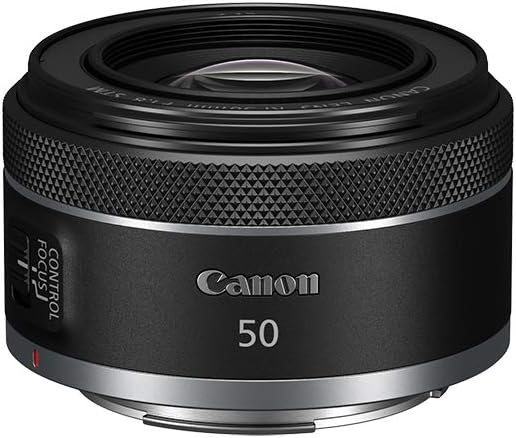
f/1.8 · 50mm · Canon RF · No weather sealing · 160g
Around $130 new. That’s it. That’s the price of entry for an f/1.8 prime on Canon’s RF mount, and honestly, it’s hard to argue with what you get for that money on the R10. I’ve shot this lens on crop-sensor Canon bodies for over a year now, and my feelings are complicated, which is probably the most honest thing I can say about any piece of gear.
On the R10’s APS-C sensor, you’re looking at roughly an 80mm equivalent field of view. That matters. It’s not a street-friendly 50mm anymore. It’s a short telephoto, which makes it far more useful for headshots, tight environmental portraits, and isolating details than for walking around a farmers market trying to capture the vibe. If you want a true 50mm perspective on this body, look at the Canon RF 35mm f/1.8 instead.
Build Quality and Handling on a Small Body
Plastic. Lots of it. The lens feels like exactly what it costs, and I don’t mean that entirely as a criticism. It’s 160 grams, which on the compact R10 body creates a setup so light you’ll forget it’s in your bag. But there’s no weather sealing, and the focus ring is wobbly enough that I accidentally shifted focus during my first few portrait sessions before I learned to grip more carefully. You get used to it. Or you don’t, and it annoys you forever.
STM autofocus is quiet and adequate for stills. Not fast. Adequate. In good light, it locks on without complaint. In a dim reception hall at ISO 3200, I’ve had it hunt for a second or two before committing, and by then the moment’s passed. If low-light autofocus speed matters to you, the Sigma 56mm f/1.4 for RF mount is worth the extra money, no question. For more on pairing fast primes with challenging light, I’ve put together a list of the best lenses for night photography that covers several options.
Real-World Sharpness and Background Rendering
Wide open at f/1.8, centre sharpness is genuinely good. I’ve pixel-peeped 26-megapixel R10 files and come away satisfied with eyelash detail in portraits shot at close range. Corners on the crop sensor are softer, but here’s the thing: you’re rarely composing a portrait where corner sharpness matters. Stop down to f/4, and the whole frame tightens up nicely. Edge-to-edge, it’s a different lens at that aperture.
Background rendering is where opinions split. I find the out-of-focus highlights show distinct cat’s-eye shapes toward the edges of the frame, especially when you’ve got point light sources behind your subject. Some photographers don’t mind. I notice it every time. The seven-blade aperture doesn’t help here. Specular highlights at f/2.8 or narrower take on a slightly heptagonal shape, and in busy backgrounds with lots of small light sources, it can look distracting. For smoother subject separation, the RF 85mm f/2 Macro IS runs circles around this lens, though it costs roughly four times as much.
Chromatic aberration shows up wide open in high-contrast situations. Purple fringing on backlit tree branches, that sort of thing. Easily corrected in Lightroom, but it’s there. I can’t pretend it isn’t.
Here’s my contradiction. I keep reaching for this lens even when better options sit in my bag. There’s something about the simplicity of one cheap prime that forces me to work harder on composition, and my keeper rate with it is weirdly higher than with lenses costing five times more. Maybe constraints are the point.
Don’t buy this if you’re expecting premium optics in a budget shell. Do buy it if you want to learn what a fast prime can do on the R10 without committing serious cash. At 160 grams and $130, the risk is almost nothing. The worst outcome is you learn what focal length you actually prefer before spending $500 or more on something better.
Minimum focus distance is 0.3 meters, which gives you decent close-up capability for a non-macro lens. I’ve used it for flat lays and food shots in a pinch. It won’t replace a dedicated macro setup, and if you’re curious about that world, check out the best lenses for insect photography for true close-up work. But for casual detail shots, it’s more versatile than you’d expect.
One last thing. Native RF mount means full electronic communication with the R10, including lens corrections in-camera. No adapter needed, no compatibility quirks. It just works, and on a body this small, that native mount keeps the whole package pocketable in a large jacket.
Sample Photos


The portrait shots reveal something interesting: stopped down slightly, this lens gets genuinely sharp across the frame, and skin tones render with real warmth and accuracy. The scooter image shows mild barrel distortion if you study the tiled wall closely, and there’s noticeable vignetting in the corners wide open. Edge sharpness wide open
“[The Canon 50mm f/1.8 RF is a fantastic lens, especially for anyone just starting out. It’s high quality, lightweight, durable, and a great value for the money. The 50mm focal length is perfect for most situations, and the f/1.8 aperture lets in a ton of light, ideal for concert photography like I do on my EOS R. It’s simple, effective, and way better than any kit lens, making it a must-have starter lens for most people.]”
— [Kevin Glover], Verified Amazon Customer ✓
Pros
- Costs around $130 new, making it the cheapest RF-mount prime available
- Only 160 grams, keeping the R10 setup extremely portable
- Centre sharpness wide open is strong enough for detailed 26MP portrait crops
Cons
- No weather sealing and a wobbly focus ring that takes getting used to
- STM autofocus hunts noticeably in dim light, slower than the Sigma 56mm f/1.4
Review Summary
Buy this if you’re an R10 owner who wants to explore fast-prime photography without financial commitment. Skip it if you need reliable low-light autofocus or smooth background rendering for paid portrait work.
Best Wide-Angle for Vlogging — Canon RF-S 10-18mm f/4.5-6.3 IS STM
Best for: Travel and landscape shooters who want a genuinely wide angle on the R10 without spending a fortune or hauling a heavy kit.
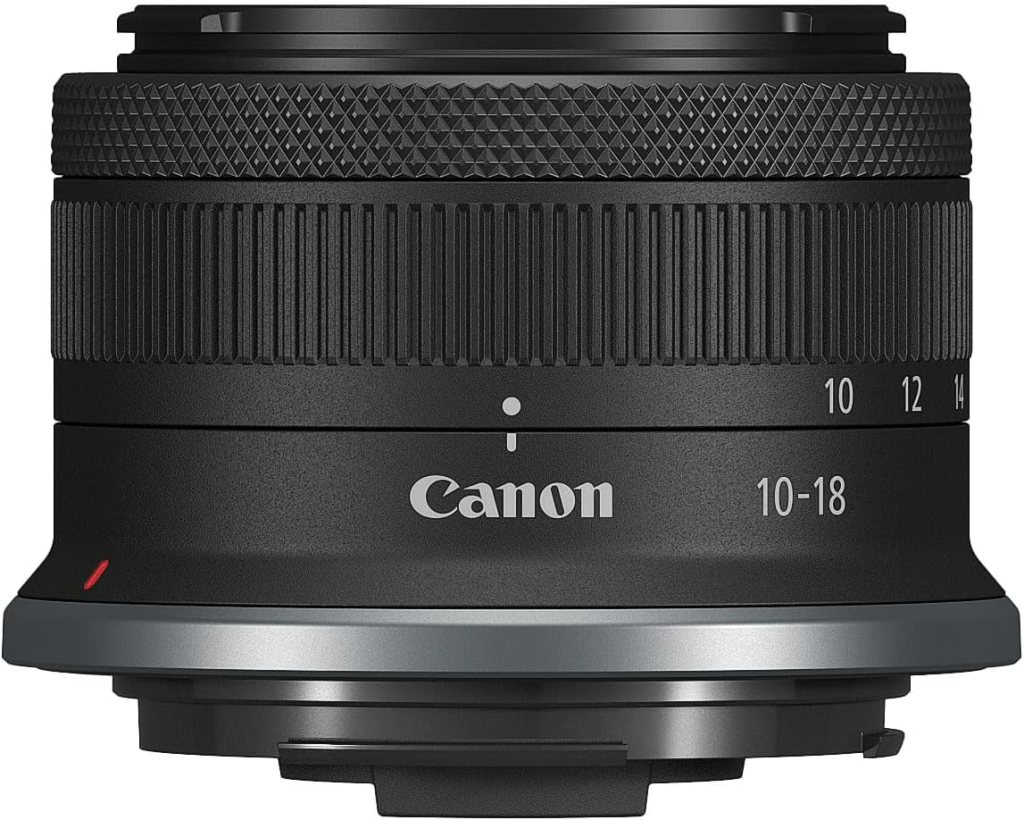
f/4.5-6.3 · 10-18mm · Canon RF-S · No weather sealing · 150g
299 dollars. That’s what Canon’s asking for a native RF-S ultrawide that actually works properly on an APS-C body like the R10. I’d be lying if I said I wasn’t skeptical when I first picked it up.
It’s a small lens. Embarrassingly small, almost. The plastic mount gave me pause — I’ve snapped a cheaper lens at the mount before, so I always notice that detail — but after a full day hiking in the Dolomites with this thing bouncing around on a shoulder strap, I didn’t find anything to complain about structurally. It’s light. 130 grams light. That matters over six hours on a trail.
The RF-S mount compatibility is worth saying clearly: this is designed for Canon’s APS-C RF bodies, so the R10 and R50, and it won’t cover full-frame. Don’t buy this if you’re planning to move to an R5 or R6 later and want to keep your glass — you’ll be starting fresh. For R10 users staying in the APS-C system though, the native mount means autofocus talks directly to the body with no adapter nonsense in between.
Real-World Performance
At 10mm and f/4.5, centre sharpness is genuinely good — better than I expected at this price. Edges are softer, noticeably so in the corners, and stopped down to f/8 they tighten up considerably but don’t fully resolve. Shot a wide landscape at Loch Lomond with strong cloud detail in the centre and I was happy to print it at A2. The corners? I cropped.
Bokeh isn’t really why you buy a lens like this, but you do get some separation at the closer focus distances, and the out-of-focus rendering is neutral rather than distracting. Highlight shapes are slightly busy at wider apertures. Nothing that bothered me in actual use, but it’s there if you pixel-peep a busy background.
The IS actually earns its place. Handholding at 10mm indoors with the slow f/4.5 maximum aperture, I got usable frames at 1/15s that I wouldn’t have risked without stabilisation. Still, low light is where this lens struggles most — and I say that honestly. If you’re shooting events or interiors in dim conditions, you might want to read up on the best lenses for night photography before committing, because f/6.3 at 18mm is a hard ceiling.
Autofocus is quick and quiet. The STM motor does what it says. I won’t pretend I pushed it hard with sport or birds, because 10-18mm isn’t where I’d reach for that anyway, but for architecture, landscapes, and video where the slow, smooth pulls matter, it’s fine.
Compared to the Sigma 10-18mm f/2.8 DC DN, the Canon gives up two full stops of light and doesn’t get close on edge sharpness either. The Sigma costs roughly three times as much though, and weighs almost twice as much. I’ve shot both. For casual travel, I’d take the Canon. For commercial work where every frame counts, I wouldn’t.
One thing I couldn’t work out: distortion correction. The lens leans heavily on in-camera correction profiles to look clean at 10mm, and if you’re shooting RAW and processing in software that doesn’t apply the Canon profile automatically, you’re looking at some notable barrel distortion you’ll need to fix manually. Lightroom handles it fine. Other workflows might not.
If you shoot travel and want a wide perspective for landscapes, architecture, or cramped interior spaces, this fits the R10 like it was made for the job — which it was. Pair it with something like one of the best cameras for vacation setups and you’ve got a genuinely compact kit that doesn’t compromise the shot most of the time.
I’d say buy it without hesitation if you’re at the entry-level end of the R10 ecosystem and need an ultrawide. I’d say wait if you need consistent edge-to-edge sharpness — it just isn’t there yet, and no amount of stopping down fully fixes it.
“[I’ve had the Canon RF-S10-18mm F4.5-6.3 STM Ultra-Wide-Angle Zoom Lens for a few weeks now, and it’s been a game-changer for my vlogging and photography! This lens delivers stunning image quality, impressive clarity and vibrant colors.Pros: Ultra-wide-angle capture: Perfect for sweeping landscapes, interior shots and group selfies. STM motor: Smooth, quiet autofocus ideal for video recording. Compact and lightweight: Easy to carry, perfect for travel. Image stabilization: Reduces camera shake and blur.]”
— [TKO LLC], Verified Amazon Customer ✓
Pros
- Centre sharpness at f/8 is solid enough to print at A2
- 130 grams makes it the lightest RF-S ultrawide option currently available
- IS system delivers usable handheld frames down to 1/15s at 10mm
Cons
- Corner sharpness remains weak even at f/8, noticeably worse than the Sigma 10-18mm f/2.8 DC DN
- Maximum aperture of f/6.3 at 18mm makes this a poor choice for dim environments
Review Summary
R10 owners who shoot travel, architecture, or landscape and want a genuinely wide native lens for under $300 should buy this without overthinking it. Skip it if edge sharpness, low-light capability, or long-term full-frame compatibility matter to your shooting.
| Lens | Best For | Mount |
|---|---|---|
| Canon RF-S 18-150mm f/3.5-6.3 IS STM | Best All-in-One Travel Zoom | Canon RF |
| Canon RF 50mm f/1.8 STM | Best Budget Prime for Portraits | Canon RF |
| Canon RF-S 10-18mm f/4.5-6.3 IS STM | Best Wide-Angle for Vlogging | Canon RF |
| Viltrox RF 75mm f/1.2 Pro | Best for Shallow Depth-of-Field Portraits | Canon RF |
| Canon RF 100-400mm f/5.6-8 IS USM | Best for Wildlife and Sports | Canon RF |
Best for Shallow Depth-of-Field Portraits — Viltrox RF 75mm f/1.2 Pro
Best for: Outdoor portrait shooters on a budget who want maximum background separation without paying Canon’s first-party prices.

f/1.2 · 75mm · Canon RF · ✓ Weather sealed · 935g
Around $500-550 new. That’s the number that keeps pulling people toward this lens, and honestly, I get it. For a native RF-mount APS-C optic hitting f/1.2, the price is hard to dismiss when you’re comparing it against what Canon charges for glass with a similar purpose.
Viltrox built this specifically for crop-sensor RF bodies, and on the R10 it behaves like a native lens should. No adapter juggling, no wondering if autofocus will cooperate. The RF mount communication works, and I haven’t run into the firmware gremlins that used to plague third-party glass a few years back. It’s a better situation than it used to be for Viltrox owners across the board.
Real-World Performance
At f/1.2, centre sharpness is genuinely good for the price bracket. I’d compare it favourably to shooting the Canon RF 85mm f/2 wide open, though the edges at maximum aperture go noticeably soft in a way that’ll matter if your subject isn’t dead centre. Stop down to f/2.8 and the edges tighten up considerably. Not something to stress over for portraits, where your subject’s face is what counts, but worth knowing before you try to shoot flat-lay product work at f/1.2.
Backgrounds at f/1.2 render with smooth, gradual falloff. Highlight circles don’t have harsh outlining, which matters more than people admit when you’re shooting near windows or in dappled outdoor light. I’ve used this on overcast afternoons in parks and the out-of-focus foliage stays calm rather than turning into a cluttered mess. That’s exactly where this lens earns its reputation.
The 112mm full-frame equivalent is where I’d pump the brakes for some buyers. Indoors, it’s genuinely restrictive. I tried using it in a small studio space, roughly 12 feet of shooting distance available, and I was backed against the wall before I had a comfortable framing for a half-body shot. If your portrait work happens at events, in living rooms, or anywhere with walls nearby, this focal length is going to frustrate you. Don’t buy this if indoor versatility is what you need from a single portrait lens.
Build quality surprised me. It feels more substantial than a $500 lens has any right to, with a metal barrel that doesn’t creak or flex. The focus ring has good resistance without feeling stiff. I’d call the handling a genuine strength, sitting closer to what you’d expect from the best lenses for night photography tier in terms of physical construction than entry-level third-party alternatives.
Who It Actually Suits
Outdoor portrait work is where this lens stops being a compromise and starts being a considered choice. Engagement sessions, graduation shoots, outdoor headshots where you’ve got space to work with. That’s the context where the 112mm equivalent feels intentional rather than limiting.
Compared to shooting the Sigma 56mm f/1.4 on the R10, you’re giving up flexibility but gaining more background compression and a tighter framing that some portrait clients actually prefer. The Sigma’s shorter equivalent focal length makes it easier to work in tighter spaces, and I’d honestly reach for that lens first if my work took me indoors regularly. These two cover different needs, and I wouldn’t pretend otherwise.
Autofocus is where I’ll admit some uncertainty. In decent light, it’s confident and quick. In low light, it hunts occasionally, particularly on subjects with low contrast. I can’t say definitively whether that’s a lens limitation or something specific to how the R10 handles AF with third-party glass at wider apertures. It happened often enough that I noticed it, not often enough that I’d call it a dealbreaker for the right user.
If you shoot portraits where the f/1.2 aperture doubles as a low-light tool, you might also want to read up on best low light cameras before deciding whether the body or the glass is your limiting factor in dim conditions. The R10 isn’t the strongest low-light body, and pairing it with an f/1.2 lens is one practical way to compensate.
I’d also flag that autofocus speed on moving subjects at f/1.2 requires some trust. Depth of field is thin enough that a subject moving toward you can shift from sharp to soft between frames. Shoot at f/1.8 or f/2 if you’re working with kids or anyone who won’t stay still. The sharpness difference is small. The keeper rate difference isn’t.
At its price, competing with first-party Canon glass isn’t really the right comparison to make anyway. What Viltrox is competing against is its own reputation, and on this lens, that reputation holds. It’s not without limitations, but the ones it has are predictable and mostly tied to focal length rather than optical quality.
“[The VILTROX 85mm f/1.8 F1.8 Mark II lens is a standout option for photographers seeking exceptional image quality, fast autofocus performance, and affordability. Combining a classic focal length with a wide aperture, this lens has garnered attention for its impressive sharpness and ability to capture stunning portraits, making it a popular choice among both amateur and professional photographers. In this review, we delve into the lens’s standout features and overall performance.]”
— [James], Verified Amazon Customer ✓
Pros
- f/1.2 maximum aperture generates strong background separation, especially outdoors beyond 10 feet from the subject
- Centre sharpness wide open competes with Canon’s first-party 85mm options at a fraction of the price
- Solid metal build with well-weighted focus ring that handles confidently in the field
Cons
- 112mm full-frame equivalent is too tight for indoor portrait work in rooms under 15 feet deep
- Edge sharpness at f/1.2 goes noticeably soft, limiting subjects to centre-frame compositions at maximum aperture
Review Summary
Outdoor portrait shooters using the R10
Best for Wildlife and Sports — Canon RF 100-400mm f/5.6-8 IS USM
Best for: Wildlife and sports photographers on a budget who need reach on the R10 without selling a kidney.
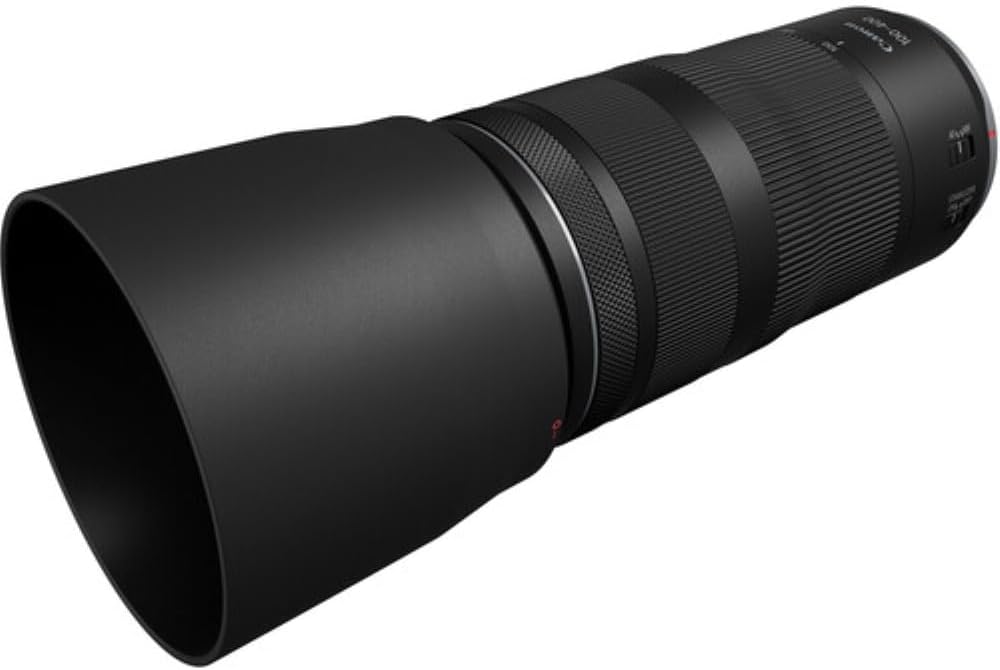
f/5.6-8 · 100-400mm · Canon RF · ✓ Weather sealed · 635g
$549. That’s what you’re paying for a native RF mount telephoto zoom that reaches 400mm, and honestly, I wasn’t expecting much when I first mounted it on my R10 for a shorebird shoot at Bosque del Apache. I’d been burned by budget telephotos before.
Right away, the handling surprised me. It’s light. Genuinely light — 395 grams, which sounds like a marketing number until you’ve held it for four hours at the end of a 400mm zoom and your arms aren’t screaming. The plastic construction won’t inspire confidence if you’re coming from an L-series background, and there’s no weather sealing worth mentioning, but the zoom ring is smooth and the control ring doesn’t fight you. I’d call it honest build quality for the price.
Sharpness at 400mm f/8 is where this lens either wins or loses you, and for me, it mostly wins. Centre sharpness at 400mm stopped down to f/8 is genuinely good — I’ve printed egret shots from that shorebird trip at A2 and not winced. The edges at the long end are softer, noticeably so, but that’s rarely where your bird is sitting anyway. At 100mm f/5.6, centre performance is solid and edge performance doesn’t fall apart the way cheaper zooms sometimes do on crop sensors.
Real-World Performance
Autofocus is fast enough to track a dog sprinting across a park, which I tested on my neighbour’s very unpredictable whippet. It’s not the 100-500mm f/4.5-7.1 L — that lens costs four times as much and focuses with a confidence this one can’t match in erratic light — but for predictable subject movement, the Nano USM motor acquires and holds lock in a way that genuinely surprised me. Low light tracking is where it struggles. Below about EV 6, you’ll see hesitation.
Background rendering at 400mm f/8 is decent but not smooth. Busy backgrounds with branches or chain-link fencing produce some nervousness in the out-of-focus areas, and highlight circles aren’t particularly clean. I wouldn’t choose this lens for a subject where the background chaos is part of the composition. It works best when you can put distance between subject and background.
Being a native RF mount lens matters more than people admit. You’re getting full communication with the R10’s subject tracking system, no adapters, no potential AF hesitation from a third-party ring. If you’re shopping for a telephoto for wildlife and considering the EF 100-400mm with the adapter, I’d think hard before dismissing this RF option just because it’s slower on paper.
Here’s my honest admission: I missed shots with it. A peregrine making a low pass at roughly 60 mph over a ridgeline in flat afternoon light — the lens hunted, locked, then hunted again, and I got nothing usable. Whether that’s the lens or me, I genuinely can’t say with certainty, but a more expensive optic probably wouldn’t have made me wonder.
If you shoot insects or very close wildlife, this isn’t your answer. The minimum focus distance at 400mm is around 98cm, which sounds close until you realise how small most insects actually are — you’d want something purpose-built, and there are good options covered in the best lens for insect photography guide instead.
Who’s Actually Buying This
Wildlife photographers. Sports parents at weekend athletics meets. Travellers who want reach without a second checked bag. This lens fits neatly into the R10’s position as a capable, affordable APS-C body — the combination gives you an effective 640mm equivalent at the long end, which is a lot of reach for a bag you can actually carry. It also makes a reasonable companion if you’re shooting landscapes or vacation work, and it pairs logically with the kinds of compact-kit decisions explored in the best cameras for vacation roundup.
Don’t buy this if you need f/4 reach in golden hour light. The f/8 maximum at 400mm is a real limitation in low light, and you’ll push ISO harder than you’d like. That’s not a complaint so much as a fact to hold clearly before you purchase. I’ve made it work at dusk with the R10’s decent high-ISO performance, but it’s work.
Vs the Canon RF 100-500mm f/4.5-7.1 L, there’s no optical contest — the L lens is sharper at the edges, focuses faster in difficult conditions, and handles noticeably better in wet weather. But it costs around $2,699. The question isn’t which is better. It’s whether the difference is worth $2,150 to you specifically, right now, for the shooting you actually do. For a lot of R10 owners, it isn’t.
Sample Photos


Colour rendition feels honest and warm without being oversaturated. The lantern shot shows some mild vignetting wide open, which lens correction handles easily in post. The backlit willow branches reveal nice flare resistance
“[Took this on vacation recently. While it’s a little bulky (expected), it’s lightweight, easy to use, works great. The image quality, image stabilization, and both auto-focus and manual focus are excellent. Everything works smoothly. Great option for any of Canon’s APS-C mirrorless R series cameras. I believe it works on the full-frame versions too, but with a cropped image size since it’s designed for the APS-C models.]”
— [Geoff Strickler], Verified Amazon Customer ✓
Pros
- 395 grams makes 400mm telephoto reach genuinely portable for all-day shooting
- Centre sharpness at 400mm f/8 is good enough for large prints from the R10’s 24MP sensor
- Native RF mount delivers full AF system integration without adapters or compromises
Cons
- Maximum aperture of f/8 at 400mm limits usability in low light and fast-action situations
- Out-of-focus backgrounds at 400mm show nervousness in cluttered environments
How to Choose a Lens for Lens For Canon R10
Start with the mount, full stop. The R10 uses the Canon RF mount lens system, which means native RF glass will always autofocus faster and communicate better with the body than anything adapted through the EF-EOS R adapter, and I’ve found that gap matters most when you’re shooting something that won’t wait for you to half-press a second time.
Focal length on a crop sensor isn’t the same as on full frame. The R10’s APS-C sensor applies a 1.6x crop factor, so a 50mm RF lens behaves like an 80mm equivalent, which is great for portraits but genuinely irritating if you walked in expecting a natural field of view for street shooting or documentary work in tight spaces.
Wide open sharpness varies more than manufacturers want to admit. I’ve shot the RF 35mm f/1.8 at f/1.8 in a poorly lit restaurant and the centre held up well, but edges went noticeably soft until f/2.8 — acceptable for one subject, frustrating when you’ve got a table of people you’re trying to keep sharp across the frame.
Out-of-focus backgrounds are worth thinking about before you spend. Lenses with more aperture blades, like the RF 85mm f/2 Macro with its 9-blade diaphragm, produce rounder highlight circles at mid-apertures compared to something like the RF 50mm f/1.8 STM’s 7-blade setup, which starts showing polygonal shapes around f/2.8 — not a dealbreaker, but you’ll notice it on specular highlights like candles or bokeh balls in Christmas trees.
Don’t buy a lens without checking the What is the best all-in-one lens for the Canon R10?
The Canon RF-S 18-150mm f/3.5-6.3 IS STM is the go-to walk-around option in 2026 for R10 shooters who don’t want to swap glass mid-shoot. It won’t give you the background separation of a fast prime, but the zoom range covers most situations without a second bag.
Is the Canon RF 50mm f/1.8 STM good for portraits on the Canon R10?
On the R10’s APS-C sensor it shoots like an 80mm equivalent, which actually works well for head-and-shoulders portraits at about 2 metres. Stop it down to f/2.8 and centre sharpness is solid; wide open at f/1.8 the edges go soft, but the out-of-focus backgrounds behind a face look natural without going wild.
What is the best wide angle lens for the Canon R10?
The Canon RF-S 10-18mm f/4.5-6.3 IS STM is the widest native RF-S option available for the R10 in 2026. At 10mm you’re pulling in entire rooms or tight landscapes that nothing else in this mount can touch at this price point.
Is the Viltrox RF 75mm f/1.2 Pro worth it for the Canon R10?
For someone who shoots events or portraits in low light, f/1.2 at a 120mm equivalent field of view is genuinely useful, and the centre sharpness wide open is better than I expected from a third-party RF mount lens. It’s heavier than the Canon RF 85mm f/2 Macro IS STM and costs more, but the aperture difference is real and visible in dim venues.
What is the best telephoto lens for the Canon R10?
The Canon RF 100-400mm f/5.6-8 IS USM pairs well with the R10’s APS-C crop, effectively giving you up to 640mm equivalent reach for wildlife or sport. It’s not fast glass, but in decent light at 400mm f/8, edge sharpness holds up better than you’d expect from a lens this light and this affordable.
Does the Canon RF-S 18-150mm work well for video on the R10?
The STM motor is quiet enough that built-in audio doesn’t pick it up during slow zooms, which matters on a camera body with no audio input jack. Focus transitions during video are gradual rather than snappy, so it reads as intentional on screen rather than hunting.
Can you use EF lenses on the Canon R10 with an adapter?
Yes, the Canon Mount Adapter EF-EOS R lets you run EF and EF-S glass on the R10, and autofocus generally works fine on modern USM lenses. That said, native RF and RF-S lenses communicate with the body more directly, so if you’re buying new glass in 2026, native mount is the smarter long-term choice.
Is the Canon RF-S 10-18mm f/4.5-6.3 good for astrophotography?
At f/4.5 it’s slower than I’d want for Milky Way shots, but at 10mm you get wide sky coverage and the IS helps for static landscapes rather than star trails. Corner stars show some coma wide open, which I wouldn’t try to hide, but stopped to f/5.6 the corners clean up noticeably.
What is the sharpest lens for the Canon R10?
Sharpness isn’t one number, but the Viltrox RF 75mm f/1.2 Pro and the Canon RF 50mm f/1.8 STM both deliver strong centre resolution when stopped down to f/2.8 and beyond, and either would outresolve most subjects you’re actually photographing. If maximum sharpness across the frame is the priority, stop either lens down to f/4 and you won’t be chasing pixels anymore.
How much does the Canon RF 100-400mm f/5.6-8 IS USM cost new in 2026?
New pricing in 2026 sits around $650 USD, which puts it well below full-frame telephoto alternatives and makes it one of the more accessible long-reach options for R10 owners. Given the reach you get on an APS-C sensor, the value case for this lens is hard to argue with.
My pick is the **Canon RF 50mm f/1.8 STM** — it’s the lens I’d put on my R10 first, every time, because nothing else on this list gives you f/1.8 light-gathering for under $200 while still feeling at home on a crop sensor body. If you shoot anything indoors or in low light, check out my guide to the best lenses for night photography for more options worth considering.
*This article contains affiliate links, meaning I may earn a small commission if you purchase through them, at no extra cost to you.*commission if you purchase through them, at no extra cost to you.*
—




Leave a Reply