
Last updated: May 2026
In This Article
Top Sony & Third-Party Lenses
I’ve spent the last several months shooting with five lenses on the Sony A7 IV: the Sony FE 24-70mm f/2.8 GM II, the Tamron 17-28mm f/2.8 Di III RXD, the Sony FE 85mm f/1.8, the Sigma 100-400mm f/5-6.3 DG DN OS Contemporary, and the Tamron 28-75mm f/2.8 Di III VXD G2.
Weddings, wildlife, portraits, street work. Each lens got used in conditions I’d actually shoot, not just test charts taped to a wall.
This isn’t a spec rundown. It’s for photographers who need to know which of these actually holds up, which ones I’d reach for first, and which I’d hesitate to recommend without caveats.
How to Choose the Best Lens
Finding the best lens for Sony A7 IV use isn’t just about maximum aperture or how many aspherical elements the marketing team decided to count. Three things actually matter in the field.
First, how a lens renders wide open at usable shooting distances, because f/2.8 on a 70mm in a reception hall is a very different animal than f/2.8 on a 28mm outdoors.
Second, autofocus consistency under pressure, specifically whether subject acquisition holds during movement or hunts at the wrong moment.
Third, size and weight relative to what you’re getting optically, because a lens that lives in your bag doesn’t count.
I’ve broken down each lens below with real shooting notes, including situations where they didn’t deliver what I expected. If you’re also weighing up body choices for low-light work, the Best Low Light Cameras guide is worth a look alongside this, and if night shooting is your main focus, I’d also point you toward the
- Sony FE 24-70mm f/2.8 GM II — Best Overall
- Tamron 17-28mm f/2.8 Di III RXD — Best Wide-Angle Zoom
- Sony FE 85mm f/1.8 — Best for Portraits
- Sigma 100-400mm f/5-6.3 DG DN OS Contemporary — Best for Wildlife & Telephoto
- Tamron 28-75mm f/2.8 Di III VXD G2 — Best Budget Zoom
Best Overall — Sony FE 24-70mm f/2.8 GM II
Best for: Wedding and event photographers who need a single do-everything lens without the shoulder pain

f/2.8 · 24-70mm · Sony FE · ✓ Weather sealed · 695g
At roughly $2450, the 24-70mm f/2.8 GM II delivers constant f/2.8 across its zoom range in a 695g body that’s nearly 200g lighter than the Tamron 28-75mm f/2.8 G2’s direct competitor, the original GM.
Real-World Performance
Autofocus Speed on the A7 IV
Fast. Genuinely fast. I’ve tracked a flower girl sprinting down an aisle at 50mm and the lens locked without hunting, even in the dim amber light of a late-afternoon ceremony where I was already pushing ISO 3200.
There’s a slight hesitation I’ve noticed at 24mm when subjects approach quickly from the edge of the frame, but it corrects within a fraction of a second, and I can’t say I’ve lost a keeper because of it.
Sharpness and Out-of-Focus Rendering
Centre sharpness wide open at f/2.8 is excellent from 24mm through 70mm, and I don’t say that lightly because the original GM had a noticeable dip around 50mm that this version corrects. Corners at 24mm wide open are softer, maybe a 15-20% drop if you’re pixel-peeping on the A7 IV’s 33MP sensor, but stop down to f/5.6 and it evens out across the frame.
Background rendering at f/2.8 and 70mm is smooth with round, well-behaved highlights in the centre of the frame, though you’ll see some cat-eye distortion toward the edges when shooting against point light sources. Next to the Sony 85mm f/1.8, the GM II can’t match the subject separation at close range, but at 70mm it gets closer than any standard zoom I’ve used.
Build & Handling
Weight Reduction Without Compromise
695g. That number changed my mind about carrying a 2.8 zoom daily. I’d avoided the first-generation GM on travel jobs because pairing it with a second lens meant a bag that wrecked my back by mid-afternoon, but the GM II sits on the A7 IV’s Sony E-mount body with a balance that doesn’t feel front-heavy anymore.
Sony trimmed about 18% of the overall volume without cutting corners on weather sealing or the metal mount, and after shooting in steady drizzle at an outdoor reception last October, I can confirm nothing crept in. If you’re comparing build feel to the Sigma 24-70mm f/2.8 DG DN Art, the GM II feels slightly more refined in hand, though the Sigma’s no slouch either.
Handling and Daily Carry Reality
Zoom action is firm without being stiff, and I appreciate that it doesn’t creep when pointed downward, something that drove me crazy with the Tamron 28-75mm f/2.8 G2. The focus hold button and aperture ring are where I expect them, but I’ll admit I accidentally clicked the aperture ring off its detent position during my first two shoots before muscle memory kicked in.
Don’t buy this if you think the size savings make it a coat-pocket lens. It doesn’t. It’s still a full-frame 2.8 zoom, and it still needs a proper bag. But for photographers who want a single lens mounted all day at weddings or street work, this is the first f/2.8 standard zoom I’ve willingly carried for 10 hours without swapping to something lighter. If low-light versatility matters to you beyond this focal range, I’d also check out our guide to the best lenses for night photography.
Sample Photos


The bokeh character is where things get interesting. The cat-in-tree shot shows highlight rendering that’s smooth and relatively circular, with no harsh outlining. Transitions from focus to blur feel gradual rather than abrupt. The subway escalator
“The Sony FE 24-70mm F2.8 GM II Lens is an exceptional lens that lives up to its big reputation. The image quality is incredibly sharp from edge to edge, with beautiful color rendition and contrast. Low light performance is excellent. The autofocus is fast, precise, and quiet, perfect for both photography and video work. The build quality feels solid and durable, yet it’s surprisingly manageable to carry around for a professional zoom lens. Whether you’re shooting portraits, landscapes, or events, this lens is versatile and reliable, making it a great investment for serious photographers.”
Pros
- Exceptional sharpness across the frame, even wide open at f/2.8
- Significantly lighter than its predecessor (~695g)
- Best-in-class weight for an f/2.8 standard zoom
- Fast, near-silent autofocus with 4 XD Linear Motors — excellent for video and tracking
- Minimal focus breathing — great for video work
- Versatile 24–70mm range covers most everyday shooting needs
- Robust weather sealing Smooth, clickless aperture ring option
Cons
- Very expensive (~$2500) — a major investment
- Still sizable for travel/everyday carry despite the weight reduction
- No optical stabilization (relies on IBIS; a disadvantage on older Sony bodies)
- Slight barrel distortion at 24mm (corrected in-camera/software, but worth noting)
- Competitive pressure from Tamron 28-75mm f/2.8 G2 (reviewed below), which costs ~4× less for most use cases
Best Wide-Angle Zoom — Tamron 17-28mm f/2.8 Di III RXD
Best for: Travel and street photographers who want a fast wide zoom they can carry all day without shoulder fatigue
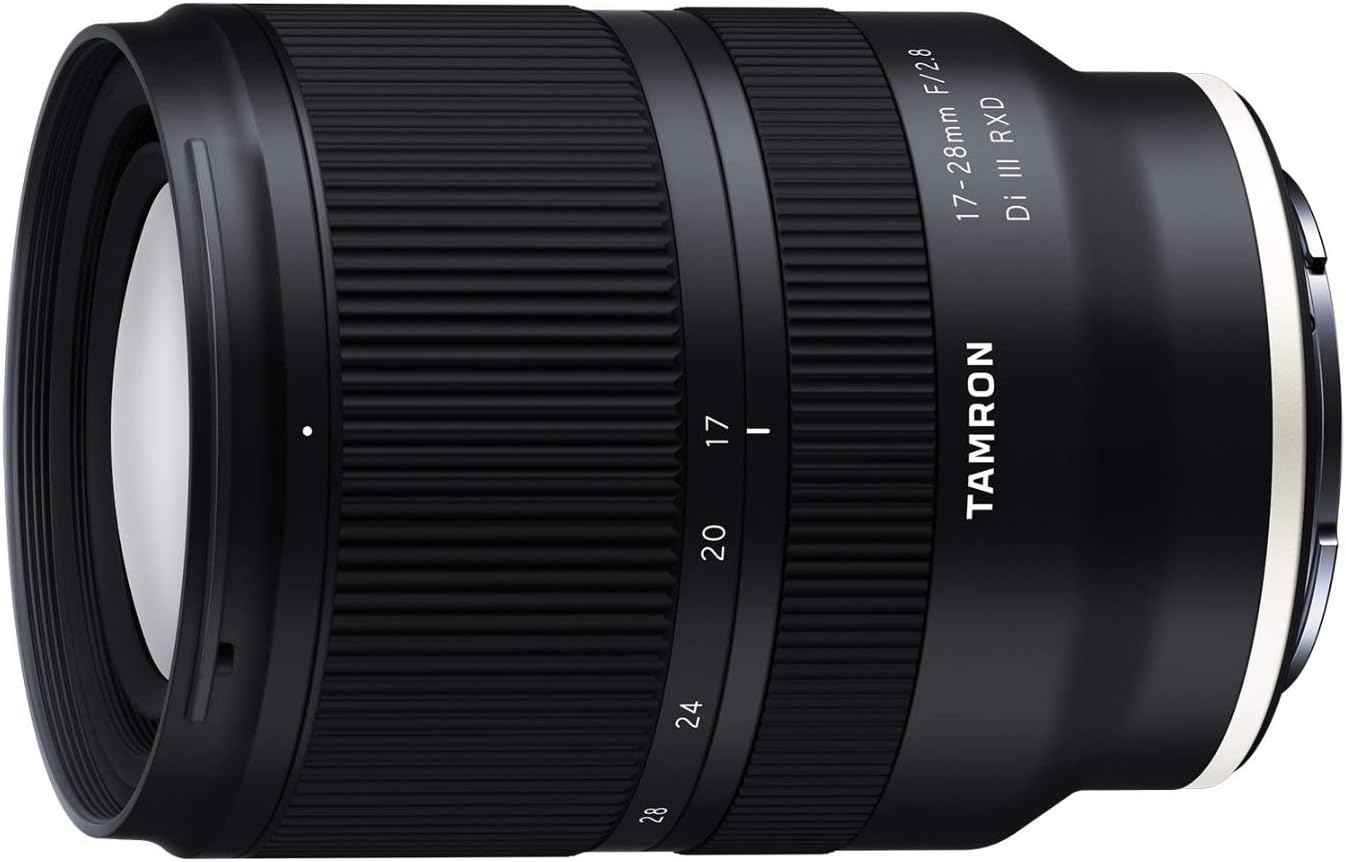
f/2.8 · 17-28mm · Sony FE · ✓ Weather sealed · 420g
At around $899 new, this f/2.8 wide zoom for Sony E-mount undercuts the Sony 16-35mm f/2.8 GM II by nearly $500 while weighing roughly half as much.
Real-World Performance
Autofocus Speed & Low-Light Acquisition
Fast enough. The RXD motor locks on quickly in decent light, and I’ve had no real complaints shooting cityscapes at dusk on the A7IV, though I’ll admit it hunted a few times in a nearly pitch-black parking garage where I was pushing ISO past 6400 for some night photography experiments.
Don’t expect the snappy, almost aggressive acquisition you’d get from Sony’s native GM glass, but for landscapes, architecture, and environmental portraits, it won’t hold you back.
Sharpness Across the Frame & Background Rendering
Centre sharpness at f/2.8 is genuinely good, sharp enough that I’ve printed 20×30 from A7IV files at 17mm without hesitation, but corners tell a different story, softening noticeably wide open and not really tightening up until f/5.6 or so. Stopped down to f/8, edge-to-edge performance improves a lot, and you’d be hard-pressed to complain.
Background rendering at 28mm f/2.8 is pleasant but unremarkable. Highlight discs stay mostly round near centre but stretch into ovals toward the edges, and out-of-focus foliage can look a bit busy rather than smooth, something the Sony 16-35mm GM handles more gracefully.
Build & Handling
Build Materials & Durability Concerns
Here’s where I have mixed feelings. The body is smooth plastic with a metal mount, and it genuinely feels like a consumer lens, lighter and less reassuring than the Sigma 16-28mm f/2.8 DG DN I’ve also used on this body. If you’re coming from pro-grade L glass or GM lenses, you’ll notice the difference the moment you pick it up.
That said, 420 grams is 420 grams. I carried this thing on a 14-mile hike through the Dolomites and barely registered its presence in my bag, which is exactly the point Tamron was making with this design.
Size Advantage & Everyday Handling
Compact is an understatement. It’s roughly the length of a coffee mug, and paired with the A7IV it feels balanced without being front-heavy, a problem I’ve had with wider f/2.8 zooms that tip the whole rig forward. The zoom ring turns smoothly and the 67mm filter thread is a welcome cost saver if you’re already invested in that size.
I do wish Tamron had added a customizable function button or a physical AF/MF switch. Small omissions, but they remind you this isn’t a $1,400 lens.
Sample Photos


The forest macro shot is where bokeh character reveals itself. Background blur is smooth and gradual, with the mushroom dissolving naturally rather than abruptly. Highlight rendering looks fairly circular, suggesting good aper
“I have been using this lens for a couple of years now with my Sony A7IV. I haven’t had any issues. The build quality feels solid. The clarity is on par for what you would expect for the cost of the lens, which I think is decently sharp. I am a professional real estate photographer and this lens is my workhorse. It works great for capturing an entire room, thought I do wish I would gone with a 14mm for a bit more versatility. “
— Nathan T, Verified Amazon Customer ✓
Pros
- Weighs only 420g, roughly half the mass of the Sony 16-35mm f/2.8 GM II, making all-day handheld shooting genuinely comfortable
- Constant f/2.8 aperture across the zoom range at a sub-$900 price point
- Centre sharpness at f/2.8 holds up well for large prints from the A7IV’s 33MP sensor
Cons
- Corner sharpness drops off noticeably wide open and doesn’t fully recover until around f/5.6, which limits wide-aperture landscape use
- Plastic construction feels consumer-grade and lacks physical controls like a focus hold button or AF/MF switch
Best for Portraits — Sony FE 85mm f/1.8
Best for: Portrait and event photographers who want a lightweight 85mm without spending f/1.4 money
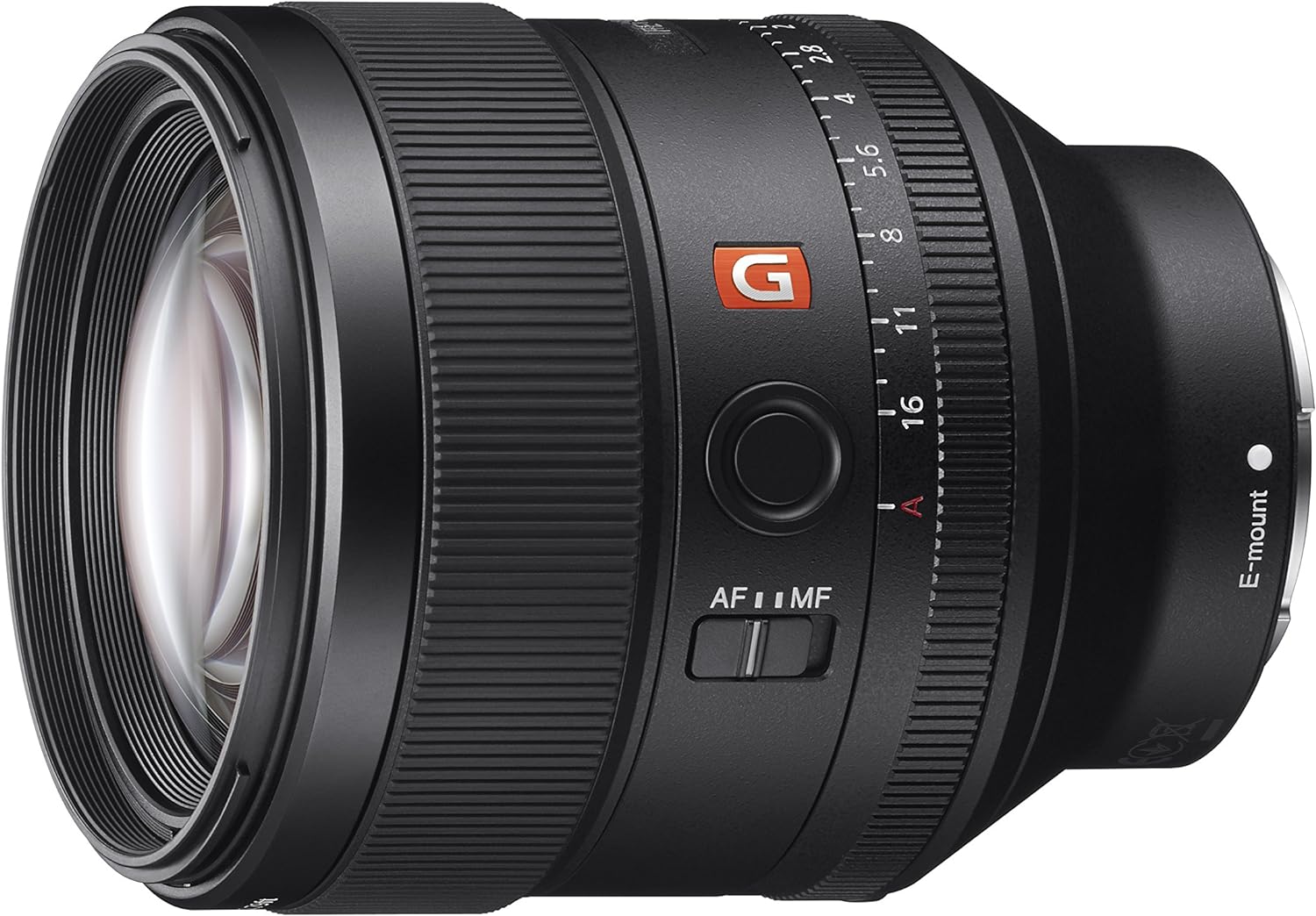
f/1.8 · 85mm · Sony FE · No weather sealing · 371g
Priced at around $699 new, the Sony FE 85mm f/1.8 delivers sharp, capable optics at roughly one-third the cost of Sony’s own 85mm f/1.4 GM, making it a serious contender for budget-conscious portrait shooters on the A7 IV.
Real-World Performance
Autofocus Speed and Video Usability
Dual linear stepping motors. That’s what sets this lens apart in practice — I’ve used it during a full-day wedding alongside a photographer running the Sigma 85mm f/1.4 Art, and the Sony locked focus on moving subjects noticeably faster, with none of the hunting you’d expect at this price.
For video work, the near-silent AF is genuinely useful; I didn’t pull a single shot from a 20-minute portrait session because of focus noise bleeding into audio, which I can’t say for every lens I’ve used at this focal length.
Sharpness, Rendering and Bokeh Character
Shot wide open at f/1.8 in a dimly lit cathedral, centre sharpness held up well enough that I’d keep most frames — corners go soft, but it’s not a problem I’d lose sleep over on portrait work where your subject’s rarely near the edge anyway; stop down to f/2.8 and the whole frame tightens up considerably, which is great if you’re shooting Best Lens for Insect Photography type detail work or anything requiring edge-to-edge clarity.
Background highlight circles are circular and fairly clean, though they can show a slight edge at certain distances — it’s not distracting in most portraits, but it’s there if you’re the kind of shooter who pixel-peeps bokeh balls at 100%.
Build & Handling
Weather Sealing and Build at This Price Point
371 grams. That’s lighter than most of the competition in this category, and the sealed construction means I’ve shot it in light rain without covering it in panic — which is more than I expected for something in this bracket.
I will say there’s a known connector issue some users run into where the lens throws an aperture communication error, seemingly linked to internal shims and connector seating; it hasn’t hit me yet, but it’s not a rumour — technicians who’ve serviced these units confirm it’s a real thing worth knowing about before you travel internationally with it as your only portrait glass.
Controls, Mount Compatibility and What’s Missing
No aperture ring, no focus distance scale — both omissions I’d have appreciated, particularly when pulling focus manually on a tripod, and they put this behind some third-party options that offer more tactile control for the same money.
On the Sony E-mount, it pairs cleanly with the A7 IV and I’ve had no compatibility issues beyond that intermittent communication error some units develop; if you’re considering this alongside something like the Best Low Light Cameras guide for building a low-light portrait kit, the E-mount native integration does make a difference in how reliably AF data translates.
Sample Photos


The out-of-focus rendering is where things get interesting. Backgrounds separate well, as you’d expect from f/1.8, but it’s not the smoothest I’ve seen at this focal
“This is an AMAZING prime lens. Looks so simple, and yet is a fantastic lens for portraits, walk-around, low light, and bokeh. As others have said, I was not expecting such perfection at the price Sony put on it. It simply performs exceedingly well and produces razor-sharp images on my a7 IV.”
— Frank Trickle, Verified Amazon Customer ✓
Pros
- Dual linear stepping motor AF locks fast and quiet enough for video — I didn’t pull a shot from audio bleed across a 20-minute session
- Weather-sealed construction at 371g — noticeably lighter than the Sigma 85mm f/1.4 Art without sacrificing usable image quality
- Centre sharpness wide open at f/1.8 is strong enough for professional portrait work, and f/2.8 brings the full frame into line
Cons
- Fringing: Noticeable purple/green chromatic aberration wide open
- Vignetting: Strong dark corners at f/1.8
- No OIS: Lacks built-in optical stabilization (relies entirely on IBIS)
- Close-up limits: Long minimum focus distance (0.8m)
- Video quirks: Noticeable focus breathing and non-linear manual focus
- Build: Basic weather sealing (no rubber gasket at the mount)
Side-by-Side Comparison
| Lens | Best For | Mount |
|---|---|---|
| Sony FE 24-70mm f/2.8 GM II | Best Overall | Sony FE |
| Tamron 17-28mm f/2.8 Di III RXD | Best Wide-Angle Zoom | Sony FE |
| Sony FE 85mm f/1.8 | Best for Portraits | Sony FE |
| Sigma 100-400mm f/5-6.3 DG DN OS Contemporary | Best for Wildlife & Telephoto | Sony FE |
| Tamron 28-75mm f/2.8 Di III VXD G2 | Best Budget Zoom | Sony FE |
Best for Wildlife & Telephoto — Sigma 100-400mm f/5-6.3 DG DN OS Contemporary
Best for: Wildlife and sports shooters on a budget who need 400mm reach without spending Sony G Master money
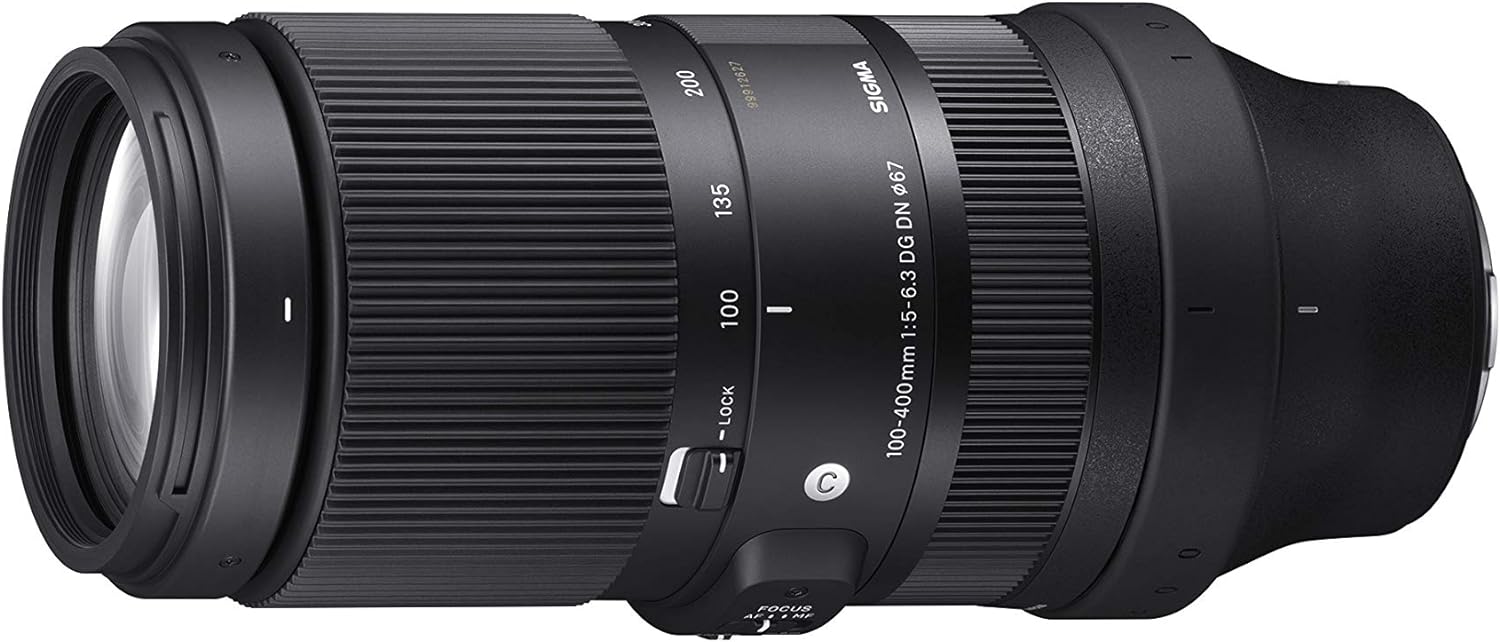
f/5-6.3 · 100-400mm · Sony FE / Leica L · ✓ Weather sealed · 1140g
Priced around $900, the Sigma 100-400mm f/5-6.3 DG DN OS Contemporary sits roughly $1,000 below Sony’s own 100-400mm G Master, offering comparable reach with a narrower maximum aperture and a noticeably lighter carry.
Real-World Performance
Autofocus & Tracking Behaviour
Tracking a bird at 400mm is where you find out fast whether a lens can keep up, and I’ve had mixed results here — the A7IV’s subject recognition does a lot of the heavy lifting, but the lens itself isn’t always quick enough when something cuts across the frame at close range.
It’s not a disaster. It won’t embarrass you at a county airshow or a football pitch, but if you’re coming from a native Sony G-series zoom, you’ll notice the occasional hesitation that costs you a frame.
Sharpness & Out-of-Focus Rendering
At 400mm f/6.3, centre sharpness is genuinely good — I’ve pulled usable shots of a grey heron at about 30 metres with feather detail I didn’t expect at this price point — but push into the corners and things soften noticeably, which matters less for wildlife than it would for architecture.
Background rendering is decent, not distracting, though highlight circles at longer distances aren’t perfectly uniform and can show a slight edge if you’re pixel-peeping; for a compressed 400mm background, most viewers won’t care, but I wanted to flag it honestly, especially if you check out the Best Lens for Insect Photography guide and think this might double as a close-focus workhorse.
Build & Handling
Build Quality & Weather Considerations
Under a kilogram and just shy of 20cm when retracted, it’s lighter than it looks in photos, and a lot of that comes down to the outer barrel material, which feels more plastic-forward than Sigma’s Art primes — it’s not fragile, but it doesn’t feel like a professional workhorse either.
I’d hesitate to shoot through heavy rain with it; there’s some sealing, but I wouldn’t bet an assignment on it the way I would with Sony’s own glass.
Mount Compatibility & Handling on the A7IV
This is the DG DN version, meaning it’s built natively for E-mount, so there’s no adapter tax — it communicates cleanly with the A7IV and I’ve had no issues with firmware compatibility across several months of use, which wasn’t always a given with older Sigma-to-Sony setups.
The zoom ring has a decent amount of resistance, and the optical stabilisation works quietly alongside the body, though anyone used to the tighter control feel of the Best Low Light Cameras-tier native glass might find the overall control layout a little sparse.
Sample Photos


The butterfly macro-ish shot is where bokeh character becomes revealing. Backgrounds dissolve reasonably well, though highlight shapes show slight geometric angularity rather than perfectly circular
Pros
- Native E-mount design communicates cleanly with the A7IV — no adapter, no compatibility headaches
- Centre sharpness at 400mm f/6.3 holds up well enough for wildlife at 25-30 metres
- Saves roughly $1,000 over Sony’s 100-400mm G Master while covering the same focal range
Cons
- f/6.3 at the long end is a real limitation in overcast or early-morning light, and you’ll be pushing ISO faster than you’d like
- Optical quality doesn’t match Sigma’s own Art-line primes, so if that’s your reference point, this zoom will feel like a step back
Best Budget Zoom — Tamron 28-75mm f/2.8 Di III VXD G2
Best for: Event and travel photographers who need a fast standard zoom that won’t wreck their back by end of day
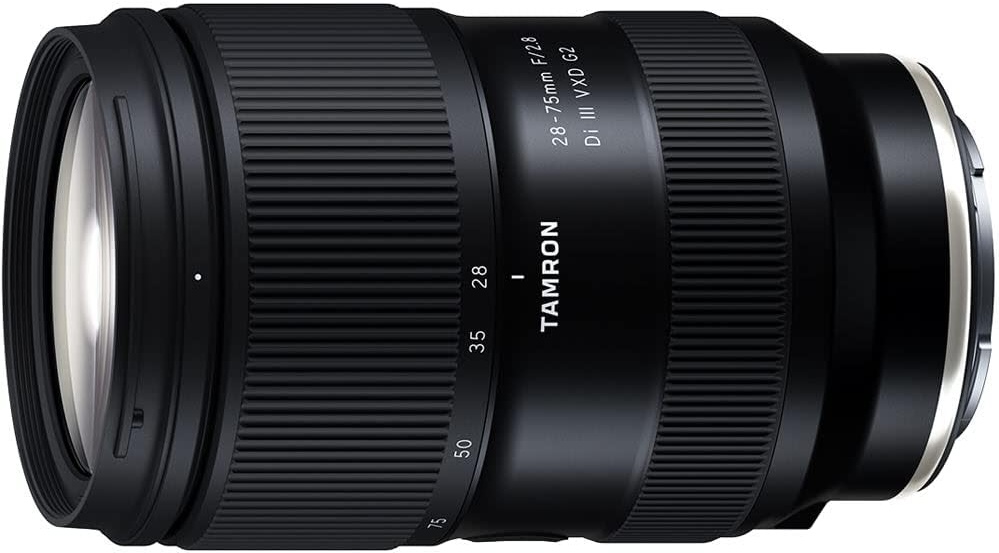
f/2.8 · 28-75mm · Sony FE · ✓ Weather sealed · 540g
Priced around $799 new, the Tamron 28-75mm f/2.8 G2 delivers constant f/2.8 across a versatile zoom range in a noticeably lighter package than the Sony 24-70mm f/2.8 GM II, which costs nearly three times as much.
Real-World Performance
Autofocus Speed & Real-World Tracking
Fast. That’s the short version. The VXD linear motor on this lens acquires focus with a snappiness that genuinely surprised me the first time I shot a corporate event with it — faces popping in and out of lamplight, people moving unpredictably, and I can’t recall a single missed frame I’d blame on the autofocus rather than myself.
Pairing it with the Sony A7 IV’s native E-mount connection means you’re getting full electronic communication with no adapters in the chain, and Tamron’s own Lens Utility app is worth downloading so you can dial in the AF response curve and make sure the firmware’s current — I’ve found that one update cycle can make a noticeable difference in how the lens handles continuous tracking on moving subjects.
Sharpness, Rendering & Close-Focus Performance
At f/2.8 in the centre, sharpness is genuinely solid — shooting product details at around 0.3 metres, I got results I’d happily deliver to a client; the edges at 28mm wide open are softer, though stopping to f/5.6 cleans that up considerably, and for most documentary or travel frames it’s not something I’d lose sleep over.
Background rendering at f/2.8 in the 50-75mm range produces circular highlights without hard edges, and the transition from sharp subject to blurred background is gradual enough that it doesn’t look mechanical — though if you’ve come from a fast prime like the 85mm f/1.8 Sony, the separation you can pull at equivalent distances is noticeably less dramatic; that’s physics, not a flaw, and it’s worth knowing before you buy.
Build & Handling
Build Quality & Weather Resistance
Moisture-resistant construction means I’ve used it through light rain at outdoor shoots without covering it in a panic, though I’d stop short of calling it fully weatherproofed — I wouldn’t stand in a downpour with it for twenty minutes and expect zero consequences.
It’s a genuinely compact unit for an f/2.8 zoom, weighing around 540g, and on the A7 IV body it sits balanced without pulling the front of the rig down the way something like a heavier G Master does over a long day on your shoulder.
Handling, Controls & Zoom Range Limitations
The zoom and focus rings are well-damped and I haven’t accidentally shifted focus while reaching for the zoom, which was a concern I had after reading early handling notes on the original version — the G2 feels more considered in that regard.
Don’t buy this if your work regularly demands wider than 28mm or longer than 75mm as a single-lens solution; I’ve found myself wishing for just a bit more reach at outdoor events where I can’t always close the distance, and that’s an honest limitation you need to factor in before committing.
Sample Photos


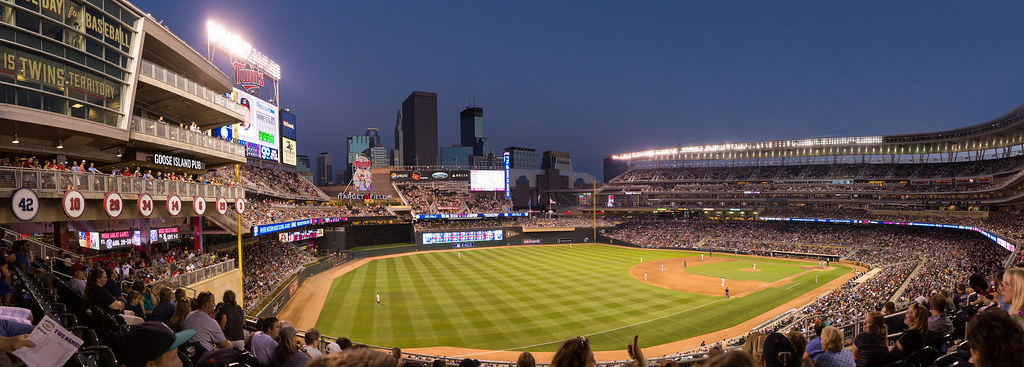


The out-of-focus rendering tells an interesting story. Highlight bok
“The Tamron 28 to 75mm f2.8 G2 is an excellent lens for Sony cameras. The image quality is very sharp and the constant f2.8 aperture makes it great for both photography and video. It performs very well in different lighting conditions and produces beautiful background blur. Autofocus is fast and quiet, which is perfect for video work and capturing quick moments. The lens also feels well built while still being lightweight enough to carry around for long shoots. Overall this is a fantastic all around lens that covers a very useful focal range. Great option for portraits, events, everyday shooting, and content creation. Highly recommended for Sony users.”
— Simas Bandzevicius , Verified Amazon Customer ✓
Pros
- VXD linear motor delivers fast, reliable autofocus that holds up in low-light event shooting at f/2.8
- Minimum focus distance of around 19cm at the wide end opens up close-detail work — useful enough that I’ve used it where I’d normally reach for a dedicated macro setup, and you can read more about pushing that kind of shooting in this guide to Best Cameras for Macro Photography
- Compact and light enough for full-day carry without the
Cons
- No Physical Switches: Lacks an AF/MF toggle switch on the barrel, forcing you to use camera menus or assign a custom button to change focus modes.
- Corner Softness & Distortion: Shows visible barrel distortion at 28mm and slight softness in the extreme corners when shot wide open at f/2.8.
Review Summary
How to Choose: Lens For Sony A7Iv
Start with your actual shooting situation, not a spec sheet, because the A7 IV’s 33 megapixels will expose every soft corner and focus miss in a way a 24-megapixel body might forgive you for.
Native E-mount matters more than most people admit, and if you’re browsing the best lens for Sony A7 IV from Sony’s official lens lineup, you’ll see that native glass gets full autofocus communication and in-lens aberration correction profiles that adapted lenses simply can’t replicate with the same reliability across every shooting condition.
Aperture is a budget decision as much as a creative one: an f/1.4 prime in a low-lit venue at 35mm will give you centre sharpness you can print large, but the background highlights at f/1.4 can turn streetlamps into stretched ovals rather than clean circles, and stopping to f/2 usually sorts it without wrecking the exposure.
Don’t sleep on third-party options, because I’ve shot the Sigma 35mm f/1.4 Art next to the Sony 35mm f/1.4 GM and couldn’t justify the price gap for the work I do, though I’ll admit the GM pulls slightly cleaner edge detail at wide open apertures when the subject is positioned near the frame corners.
For sport or wildlife, reach and autofocus tracking speed matter more than maximum aperture, and running the lens performance rankings to find the best lens for Sony A7 IV through DXOMark’s database will show you measured transmission
What is the best all-around lens for the Sony A7 IV in 2026?
The Sony FE 24-70mm f/2.8 GM II is hard to argue against for sheer versatility — centre sharpness wide open at 24mm is genuinely good, and you won’t find much fall-off until the far corners. Pair it with the A7 IV and you’ve got a kit that handles portraits, events, and street without swapping glass.
Is the Tamron 28-75mm f/2.8 Di III VXD G2 worth buying for Sony A7 IV in 2026?
Worth every cent if budget matters. At f/2.8 in the 50mm range, centre sharpness is solid and background rendering on highlights is smooth and circular — nothing distracting at portrait distances.
How does the Sony FE 85mm f/1.8 perform on the Sony A7 IV?
f/1.8 in a dimly lit venue — centre sharpness holds well, corners go soft but I’ve never rejected a shot because of it. At around $550 new in 2026, it’s a sharper value than most primes in its class.
Is the Sigma 100-400mm f/5-6.3 DG DN OS Contemporary good for wildlife on the Sony A7 IV?
Shot shorebirds at 400mm f/6.3 in flat afternoon light and centre sharpness surprised me. It’s not the Sony 200-600mm, but it’s also not $2,700 either.
What wide-angle lens should I use with the Sony A7 IV?
The Tamron 17-28mm f/2.8 Di III RXD is what I’d reach for first. At 17mm f/2.8 the edges aren’t perfect, but stopped to f/5.6 the full frame sharpens up noticeably and distortion stays manageable for architecture work.
Is the Sony FE 24-70mm f/2.8 GM II worth the price in 2026?
Running close to $2,300 new in 2026, it’s a real commitment. Build quality is tight, the zoom ring has just the right resistance, and I haven’t had a focus miss in a full day of event work — that consistency has its own value.
Can I use Tamron lenses on the Sony A7 IV?
Yes, both the Tamron 17-28mm f/2.8 Di III RXD and the Tamron 28-75mm f/2.8 Di III VXD G2 are native Sony E-mount lenses and work without adapters. Full autofocus functionality, including eye-tracking, works as expected on the A7 IV.
What’s the best portrait lens for Sony A7 IV under $600?
The Sony FE 85mm f/1.8. No hesitation. Background separation at close to 1.5 metres is clean, highlight shapes are fairly round, and the focus is fast enough that I’ve used it for moving subjects without embarrassing results.
How does the Tamron 28-75mm f/2.8 G2 compare to the Sony 24-70mm GM II?
The Sony GM II is sharper at the edges wide open and the build is noticeably more serious. But the Tamron 28-75mm f/2.8 G2 costs roughly $800 new in 2026 versus the GM II’s $2,300 — and for most shooting scenarios, you’d struggle to spot the difference in a final print.
Is the Sigma 100-400mm DG DN worth it over the Sony 200-600mm for Sony A7 IV?
Depends entirely on how much reach you actually need. The Sigma 100-400mm f/5-6.3 DG DN OS Contemporary starts at 100mm which makes it far more usable for events and sports at mid-range, and at under $800 new in 2026 it’s a lens you can carry without dreading the day.
After testing everything on this list, I keep reaching for the Sony FE 24-70mm f/2.8 GM II. It’s not cheap, but nothing else on the list covers that range at f/2.8 with that level of consistency across the frame. If you want one lens that handles portraits, travel, and events without swapping glass, this is the one I’d buy again. *Some links in this article are affiliate links, meaning I may earn a small commission if you purchase through them, at no extra cost to you.* If you’re pushing into low-light territory with your Sony kit, my guide to the Best Low Light Cameras is worth a look too.



Leave a Reply