
Finding the best camera under $300 is mostly about resisting bad advice. A lot of cheap cameras exist to look impressive in a listing, then disappoint the second you actually use them.
Consumer Reports has long made the same basic point in camera buying guides: the right camera is less about inflated headline numbers and more about how well it fits the way you shoot.
At this price, you are not shopping for perfection. You are shopping for a camera with one clear job. Pocket travel camera. Simple family camera. Long zoom. Waterproof beater. Action cam. Once you accept that, the field gets a lot less messy.
I also did not want five versions of the same thing. That gets boring fast, and it is useless if you are trying to buy one camera that fits your life.
Quick answer
If you want the safest all-around pick, get the Kodak Pixpro FZ55.
If you want something dead simple and familiar, get the Sony DSC-W800.
If reach matters more than pocket size, get the Kodak Pixpro AZ255.
If your camera is going near water, dirt, kids, or general chaos, get the Kodak Pixpro WPZ2.
If you mostly care about action clips, helmets, bikes, or quick travel video, get the AKASO Brave 4.
Related articles
- 5 Best Digital Cameras Under $200
- 5 Best Cameras Under $1000 (Every Photography Niche)
- 5 Best Mirrorless Cameras for Beginners
How I picked these cameras
I cared more about optical zoom, handling, durability, and actual use cases than megapixel bragging. I also wanted models with current official support or active product pages, not dead-end cameras floating around from a decade ago. That ruled out a lot of junk immediately.
The other filter was simple. Each camera needed a reason to exist.
Comparison table
| Camera | Best for | Main strength |
|---|---|---|
| Kodak Pixpro FZ55 | Best overall | Good balance of size, lens, and ease |
| Sony DSC-W800 | Best simple everyday pick | Familiar, straightforward point-and-shoot feel |
| Kodak Pixpro AZ255 | Best for long zoom | 25x optical zoom gives it real reach |
| Kodak Pixpro WPZ2 | Best waterproof pick | Tough body for wet and rough use |
| AKASO Brave 4 | Best for action video | Strong fit for movement and mounting |
Quick tradeoff table
| Camera | Main tradeoff | Skip it if… |
|---|---|---|
| Kodak Pixpro FZ55 | Limited in low light | You want serious video tools |
| Sony DSC-W800 | Older-style CCD look and basic screen | You want modern creator features |
| Kodak Pixpro AZ255 | Bigger body | You need true pocket size |
| Kodak Pixpro WPZ2 | Image quality is secondary to toughness | You mostly shoot indoors |
| AKASO Brave 4 | Still photos are not the priority | You want a classic everyday photo camera |
1. Kodak Pixpro FZ55

Best Overall
This is the one I would recommend to the largest number of people. Not because it is magical. Because it knows what it is.
Kodak positions the FZ55 as a slim point-and-shoot with a 28mm wide-angle lens, 5x optical zoom, one-touch 1080p video, and a rechargeable lithium-ion battery. That combination still makes sense. It slips into a bag, starts fast enough, and covers the kind of everyday shots most people actually take.
Review summary
The FZ55 feels like the answer for someone who wants a real camera without turning this into a hobby. It is small. It is easy.
The lens is usefully wide. That matters more than people think, especially for travel, family photos, and quick street shots. It is not a low-light monster, and I would not buy it for serious video, but it hits the center of the board better than anything else here.
Pros
- Compact and easy to carry
- 28mm wide-angle lens is genuinely useful
- 5x optical zoom is enough for everyday shooting
- Rechargeable battery instead of AA hassle
- 1080p video is good enough for casual clips
Cons
- Limited in dim light
- No big performance jump over a good phone in easy lighting
- Basic controls if you want to grow into photography
Best for
Travel, family use, casual photos, and anyone who wants the cleanest all-purpose answer.
Real Testimonial
The Kodak Pixpro FZ55 is the easiest camera on this list to recommend because it gets the basics right without pretending to be more than it is. It is small, light, and actually pleasant to carry, which matters more than people admit. The 28mm wide-angle lens gives it more flexibility than a lot of bargain compacts, and the 5x optical zoom is enough for travel, casual family shots, and day-to-day use. In good light, it does exactly what most buyers want. Fast enough, simple enough, no drama.
2. Sony DSC-W800

Best Simple Everyday Pick
The Sony DSC-W800 has been around a while, but the reason it still belongs in this conversation is obvious the second you look at the spec sheet. Sony lists a 20.1MP Super HAD CCD sensor, a 26-130mm equivalent lens, and 5x optical zoom. That is classic compact-camera territory.
This is also the camera I would hand to a parent, a grandparent, or someone who just wants a separate camera for trips and family events without learning anything new.
Review summary
The W800 is not exciting. Good. That is the point. It has the familiar shape, the familiar zoom range, and that very direct point-and-shoot logic some people still prefer over phones and over-featured budget cameras. It is one of the cleaner “just shoot the photo” options in this range.
Pros
- Very straightforward to use
- Useful 5x optical zoom
- Sony lens and familiar menu style
- Good fit for casual snapshots and vacations
Cons
- Older design language
- Basic screen
- Not the best choice for creators or video-first buyers
Best for
People who want a no-fuss camera that behaves like a camera, not a tiny gadget pretending to be one.
Real Testimonial
The Sony DSC-W800 feels old-school in a way that works in its favor. It is a straight-ahead point-and-shoot with familiar controls, a usable zoom range, and none of the nonsense that clutters a lot of low-end cameras. If you want something you can hand to almost anyone without explaining a menu system for ten minutes, this is one of the better choices under 300. It has that classic “press the button and take the picture” feel.
3. Kodak Pixpro AZ255
Best for Long Zoom
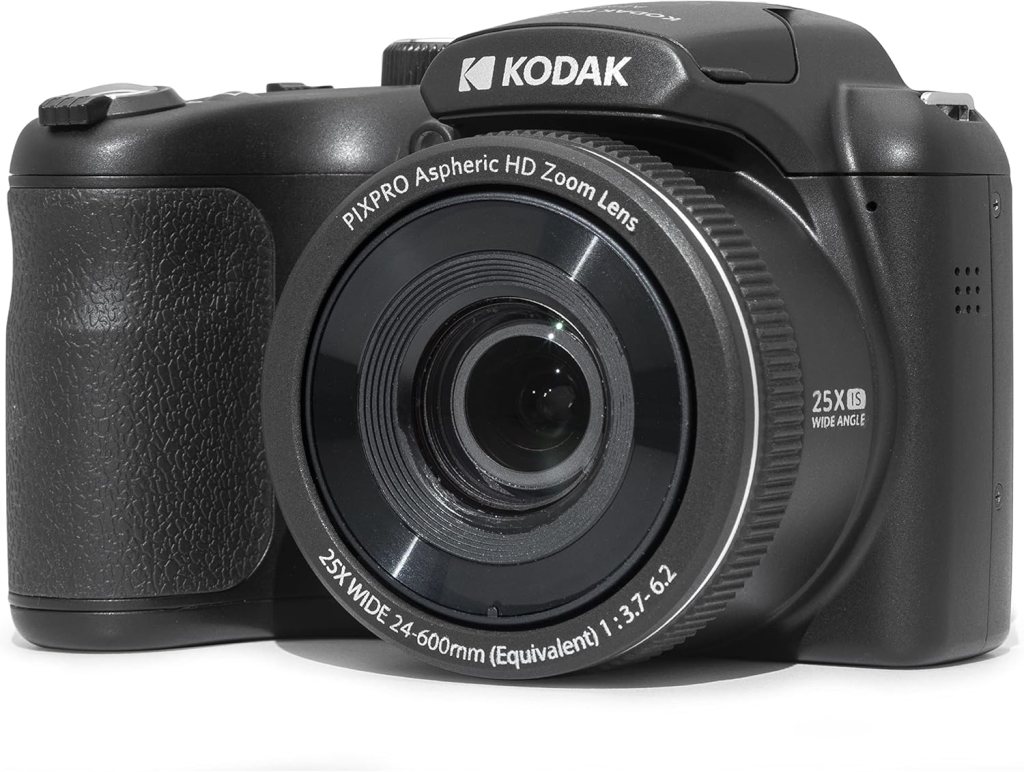
The AZ255 is where the conversation changes. Kodak describes it as a bridge camera with 16 megapixels, a 25x optical zoom, and a wide-angle lens. That one spec, 25x optical zoom, is why it is here.
If you shoot wildlife in the yard, kids on a field, landmarks from a distance, or anything outdoors where your feet cannot do the zooming, this camera makes more sense than a tiny compact.
Review summary
The AZ255 is not elegant, and I mean that as praise. It gives you reach that a pocket camera cannot touch at this price. The bigger body also makes it more comfortable to hold for longer stretches. This is the camera on the list with the clearest reason to forgive its size.
Pros
- 25x optical zoom is the headline feature
- Bridge-camera body is easier to grip
- More flexible outdoors than a pocket compact
- Wide-angle to long-zoom range covers a lot
Cons
- Not pocketable
- Less appealing if you mostly shoot indoors
- Budget image quality is still budget image quality
Best for
Outdoor shooting, sightseeing, backyard wildlife, sports from the sidelines, and anyone who wants reach more than portability.
Real Testimonial
The Kodak Pixpro AZ255 earns its spot for one reason right away: zoom. A 25x optical zoom changes what kind of shots are even possible at this price, and that gives the camera real value instead of just spec-sheet filler. If you like photographing wildlife from a distance, landmarks across a street or valley, or kids playing on a field, the AZ255 has a clear advantage over the smaller compacts here. It also feels more comfortable in the hand because the body gives you something to hold onto.
4. Kodak Pixpro WPZ2
Best Waterproof Camera
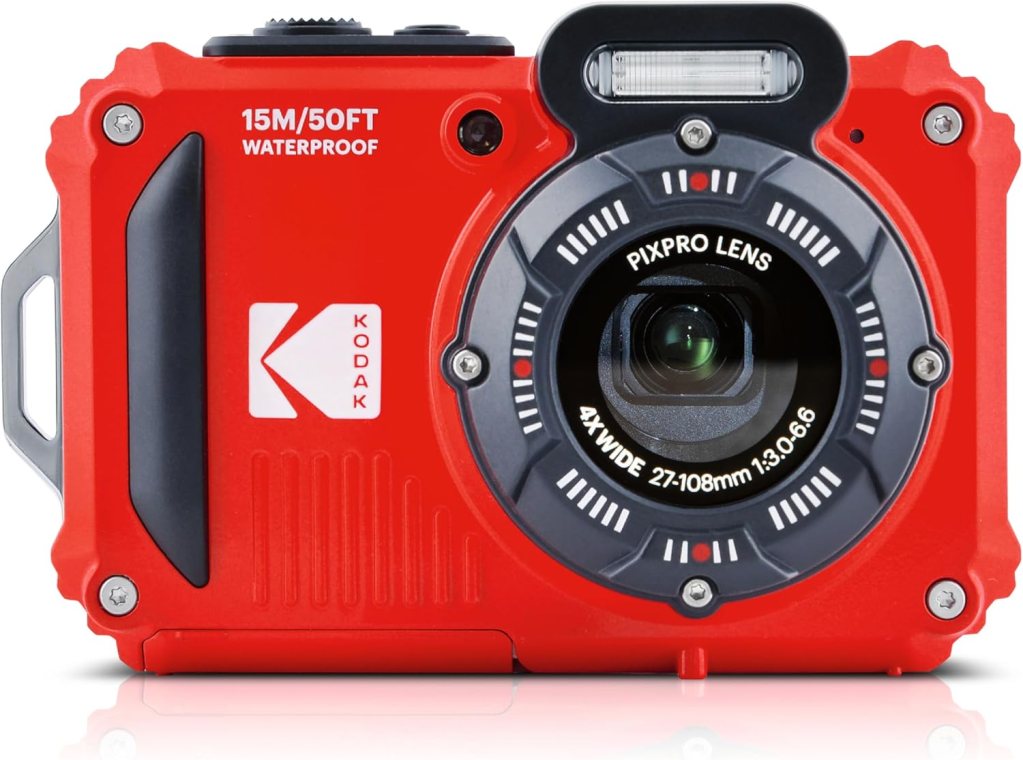
The WPZ2 is one of those cameras that makes sense the moment your phone starts feeling too fragile. Kodak says it is waterproof to 15 meters, shockproof, dustproof, and built around a 16.35MP BSI CMOS sensor with 4x optical zoom. It also includes 1080p video and built-in Wi-Fi.
That is a real use case. Beach trips. Pool days. Rainy hikes. Kayaks. Kids with wet hands. A ski bag. A camping bin.
Review summary
You do not buy the WPZ2 because it wins a beauty contest. You buy it because normal cheap cameras die young in rough conditions. This one does not mind living a harder life. That trade is worth it for the right person.
Pros
- Waterproof, shockproof, and dustproof
- 4x optical zoom is more useful than fixed-lens novelty cams
- Better fit for outdoor abuse than a phone
- Wi-Fi adds some convenience
Cons
- Indoor image quality is nothing special
- Smaller sensor limitations still show
- Not the best value if you never shoot near water or dirt
Best for
Beach trips, family vacations, camping, boating, and anyone tired of worrying about their camera every time the weather turns.
Real Testimonial
The Kodak Pixpro WPZ2 is not about chasing the prettiest image. It is about surviving real conditions. That sounds obvious, but it is exactly why this camera deserves attention. Waterproofing, shock resistance, and dust protection give it a job that most cameras under 300 cannot handle. If your life involves beaches, boats, snow, camping, pool days, or just a lot of messy family activity, the WPZ2 makes much more sense than carrying a fragile compact and hoping for the best.
5. AKASO Brave 4
Best for Action Video
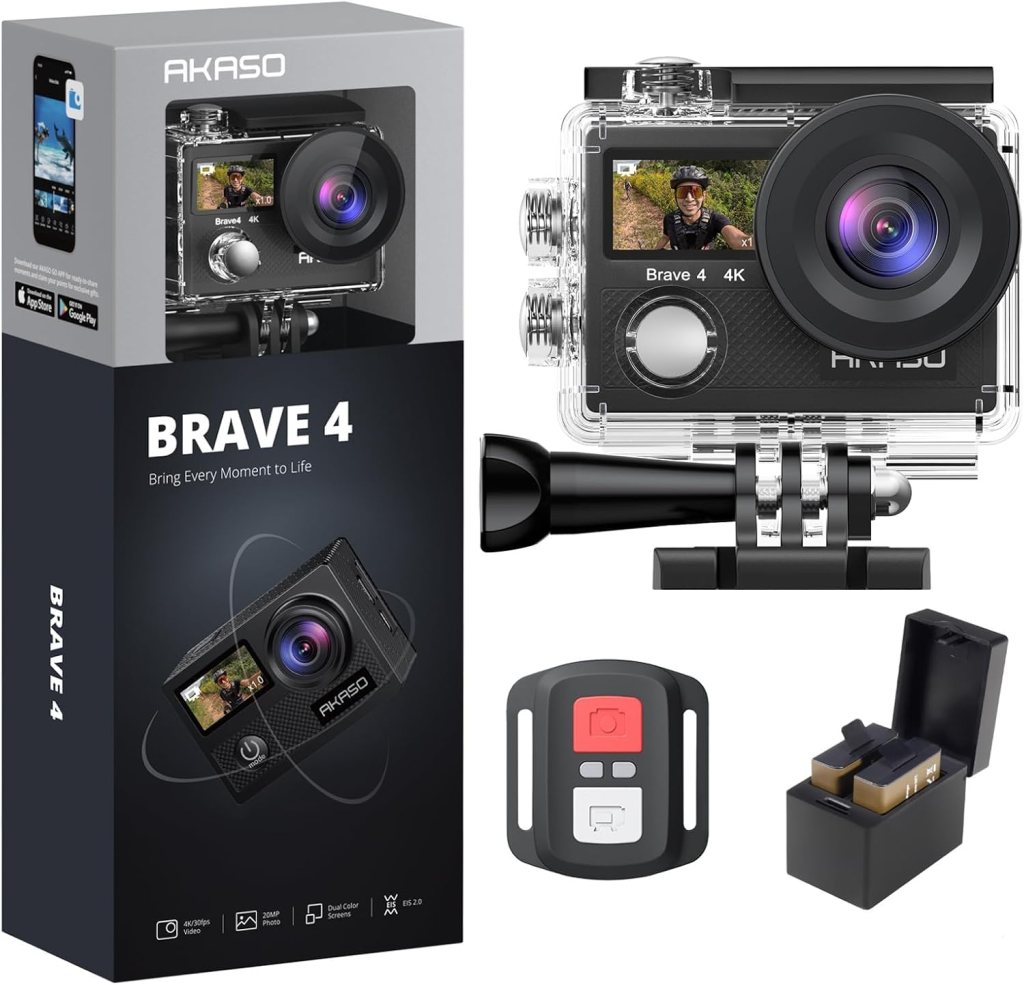
This is the odd one out, and that is exactly why it earned the fifth slot. AKASO’s current Brave 4 support documentation lists a 2-inch IPS screen, front screen, micro HDMI, Type-C, and support for an external mic via Type-C. AKASO also positions the model line around 4K video and action use.
If your idea of a camera is handlebars, helmets, travel clips, body mounts, and fast messy footage, a tiny action cam is a better answer than forcing a pocket camera into the wrong job.
Review summary
The Brave 4 is the pick for movement. Not subtle photography. Not portraits. Not a day wandering around a city taking stills. Movement. It is the camera here that makes the most sense for biking, skiing, snorkeling, and rough travel video when you want something small and replaceable enough to actually use.
Pros
- Made for action footage, not delicate handling
- Small, mountable form factor
- Front screen helps framing
- External mic support adds flexibility
Cons
- Still photos are not the main event
- Less versatile as an everyday family camera
- Action-cam look is not for everyone
Best for
Action video, first-person clips, sports, travel adventures, and anyone who values mounting options more than classic photo handling.
Real Testimonial
The AKASO Brave 4 is the most specialized option here, and that is why it works. It is not trying to be a traditional everyday photo camera. It is built for motion, mounting, travel clips, and rougher situations where a standard compact feels like the wrong tool. If your priority is biking, skiing, snorkeling, road-trip footage, or action-heavy travel video, the Brave 4 makes more sense than forcing a point-and-shoot into that role.
Which camera should you buy?
Buy the Kodak Pixpro FZ55 if you want the cleanest answer and do not want to think too hard.
Buy the Sony DSC-W800 if you value simplicity more than novelty.
Buy the Kodak Pixpro AZ255 if zoom is the reason you are shopping for a camera instead of just using your phone.
Buy the Kodak Pixpro WPZ2 if your gear lives around water, sand, mud, or children.
Buy the AKASO Brave 4 if video and movement matter more than still-photo charm.
What not to expect from a camera under 300
Do not expect elite autofocus. Do not expect beautiful low-light files. Do not expect rich microphone options, premium screens, or the kind of image depth people associate with larger-sensor mirrorless cameras.
That is fine.
The whole trick here is picking a camera with a strength that survives the compromises. The worst budget cameras try to be everything. The better ones stay in their lane.
FAQ
What is the best camera under 300 overall?
The Kodak Pixpro FZ55 is the best overall pick here because it balances size, ease of use, a genuinely useful 28mm wide lens, 5x optical zoom, and 1080p video better than the others.
Is a camera under 300 better than a phone?
Sometimes, yes. Usually when you want optical zoom, a dedicated shooting experience, or a camera built for water or action. In easy light, a good phone may still match or beat a cheap camera. The edge for these cameras is fit, not universal image dominance.
Which camera under 300 has the best zoom?
The Kodak Pixpro AZ255 has the strongest zoom in this lineup with 25x optical zoom. That is the whole reason to buy it.
What is the best waterproof camera under 300?
The Kodak Pixpro WPZ2 is the best waterproof pick here because it is built for wet and rough conditions, with waterproofing to 15 meters plus shockproof and dustproof protection.
Are there any good vlogging cameras under 300?
There are usable video options, but I would be careful with the word “good” if you mean polished creator gear. The AKASO Brave 4 makes the most sense for action-style clips. The FZ55 works for casual handheld video. Neither is a real substitute for a stronger creator camera.
Is Kodak Pixpro FZ55 worth it?
Yes, if you want a simple compact camera with a real optical zoom range and a decent wide-angle starting point. No, if you expect serious low-light performance or advanced video tools.
Is Sony DSC-W800 still worth buying?
It can be, especially for someone who wants a familiar, uncomplicated point-and-shoot. The official Sony spec page still supports the model, and the feature set remains workable for casual use.
What is the best beginner camera under 300?
For most beginners, the Kodak Pixpro FZ55 is the best starting point. For beginners who want zero friction, the Sony DSC-W800 is also a strong pick.
Which camera under 300 is best for travel?
The Kodak Pixpro FZ55 is the best general travel pick because it is compact and has a useful wide-angle view. The AZ255 is better if travel for you means scenic overlooks, wildlife, and distant subjects.
Which camera under 300 takes the best video?
If video is the main priority, the AKASO Brave 4 is the most purpose-built option in this lineup. If you want a more traditional camera that also records casual clips, the FZ55 is the better compromise.
Should I buy a compact camera or an action camera?
Buy a compact camera if you care more about everyday photos, vacations, and family use. Buy an action camera if your shots involve motion, mounts, water, or rough handling.
What matters more at this price, sensor or zoom?
Use case matters more than either one by itself. A camera with a smaller sensor but the right zoom range or the right rugged design can be the better buy if that is what you actually need.
Final thoughts
There is a reason compact cameras keep hanging on. CIPA’s 2026 shipment outlook projects built-in lens digital cameras to rise year over year, which tells you this category still has a pulse even in a phone-first world. People still want dedicated tools when the tool fits.
That is the real takeaway here. Buy the camera that solves the problem in front of you. Not the one with the loudest specs. Not the one pretending to be a bargain miracle. Just the one with a clear job and enough competence to make you keep using it.
Affiliate Disclaimer
This article contains affiliate links. We may earn a small commission if you purchase through these links, at no extra cost to you.





Leave a Reply