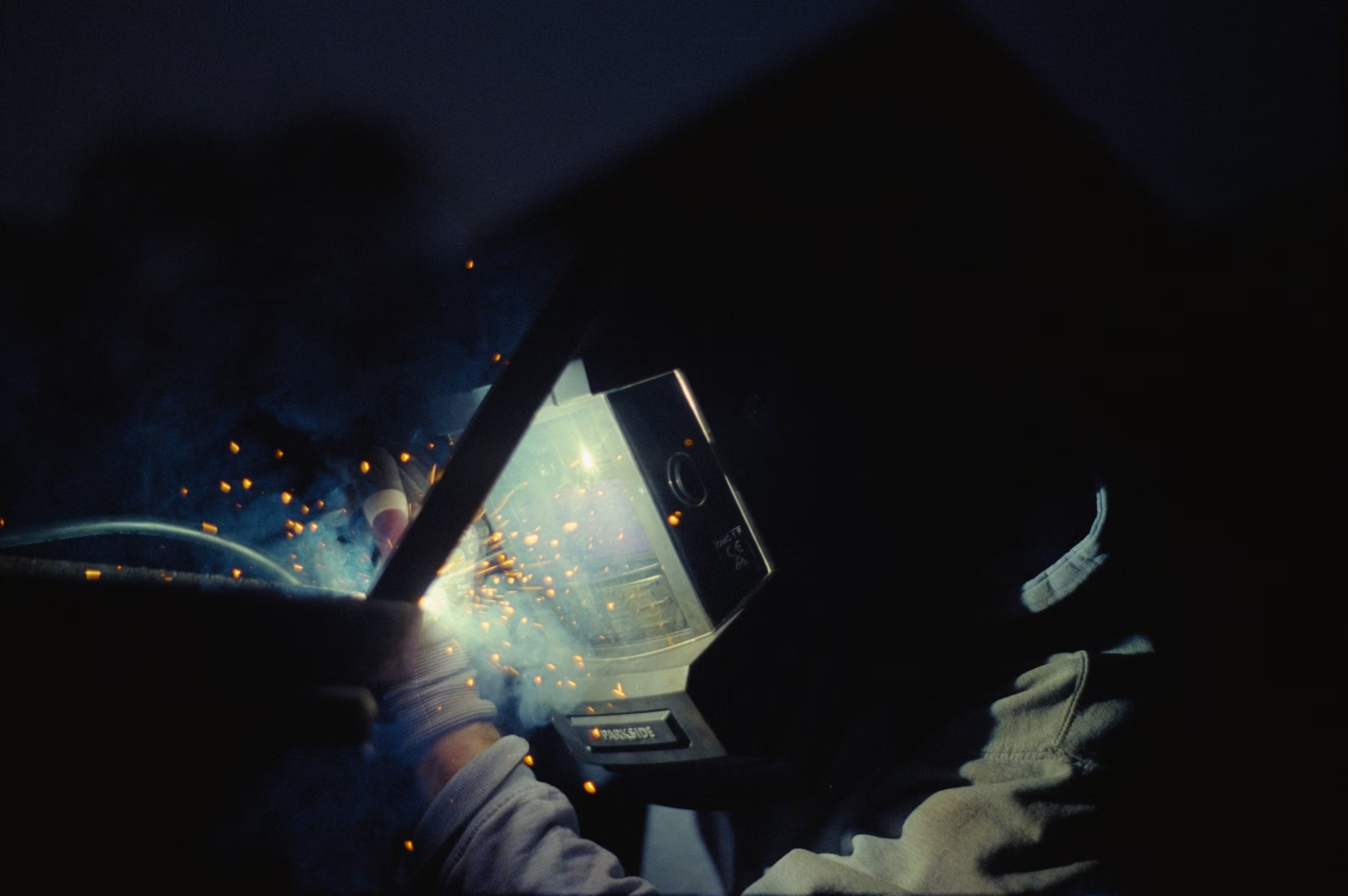
Picking the best auto darkening welding lenses is not really about chasing the darkest shade or the flashiest coating. It is about seeing what you are doing without fighting your gear.
Good lenses make the puddle easier to read, cut down on eye strain, and let you stop thinking about the lens entirely. OSHA’s guidance is still the baseline here: the right filter shade matters, and darker is not always better if it costs you visibility.
I leaned toward 2″ x 4.25″ cartridge-style lenses because that is where a lot of pancake, pipeliner, and chopped-hood buyers live. I also gave extra weight to true-color visibility, low-amp TIG behavior, and whether a lens solves a real problem instead of just sounding impressive on a product page.
Quick picks
If I had to cut this list down fast, the Lincoln Electric KP3775-1 is the best overall choice. It has a variable shade 8 to 13 range, Lincoln’s 4C lens tech, and official specs that back up the usual claims about clarity and reduced eye strain.
The second lens, the Tefuawe 2×4 1/4 Shade 10 or 11 low-amp TIG lens, earns the “best value-style pick” slot. Not because it is the lowest-ticket option. Because it does a few things people actually care about: thin body, 5A TIG rating, and easy fit in standard hoods.
Related articles
Comparison table 1
| Product | Best for | Shade | Notable fit/use case |
|---|---|---|---|
| Lincoln Electric KP3775-1 | Best overall | Variable 8-13 | 2″ x 4.25″ cartridge, multi-process use |
| Tefuawe 2×4 1/4 Low-Amps TIG | Best lower-cost performance | Fixed 10 or 11 | Thin body for pancake and pipeliner hoods |
| The King 1.0 | Best adjustable gold lens | Variable 5-13 | One lens for wider job variety |
| Tefuawe Gold Variable Lens | Best for low-amp TIG | Variable, 2A TIG-rated | Buyers who want more tuning room |
| Lincoln Electric KP3779-1 | Best fixed-shade simplicity | Fixed 11 | Set-it-and-go work style |
Comparison table 2
| Product | Standout feature | Main drawback |
|---|---|---|
| Lincoln Electric KP3775-1 | 4C clarity plus variable shade | Costs more than the no-name field |
| Tefuawe Low-Amps TIG | 0.19″ thin body and 5A TIG | Fixed shade limits flexibility |
| The King 1.0 | Wide 5-13 range | Some listings note it is not for TIG |
| Tefuawe Gold Variable | 2A TIG rating with multiple settings | Less brand trust than Lincoln |
| Lincoln Electric KP3779-1 | Fixed-shade simplicity with 4C view | Less adaptable if you change process often |
1) Lincoln Electric 2x4C C-Series Auto-Darkening Lens KP3775-1
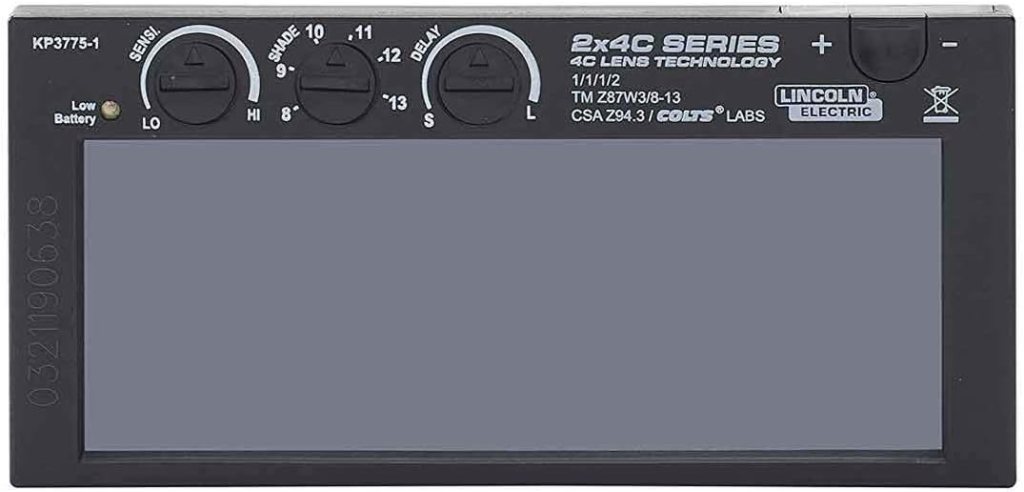
Best overall
This is the one I would start with if you want the safest recommendation.
Lincoln’s official specs are strong where they need to be strong. Variable shade 8 to 13. Shade 3 light state. 1/1/1/2 optical clarity. More than 5A TIG rating. Standard 2″ x 4.25″ cartridge size.
That is not marketing fluff. That is a real feature set for welders who move across processes and do not want to swap lenses every time the job shifts.
The bigger reason I like it is the 4C lens tech. Lincoln says it broadens the visible color range, cuts saturation, and makes the base material, arc, and puddle easier to see while reducing eye strain. That sounds like ad copy until you spend enough time behind bad green lenses and realize how much extra work your eyes were doing.
review summary: The best all-around pick for welders who want clarity, real brand support, and variable shade control without playing roulette on an off-brand lens.
pros
- variable shade 8-13
- official 5A+ TIG capability
- 4C true-color style view
- standard 2″ x 4.25″ fit
- strong published specs
cons
- pricier than the bargain field
- overkill if you only run one fixed setup
Real Testimonial
This is the strongest all-around pick in the group. It gives you variable shade control, a clearer true-color style view than older green-tint lenses, and the kind of fit that works well for people using standard 2×4.25 setups. It is the lens I would trust most for someone who wants one solid answer and does not want to second-guess the purchase.
2) Tefuawe 2×4 1/4 Auto Darkening Welding Lens, Low Amps 5A TIG
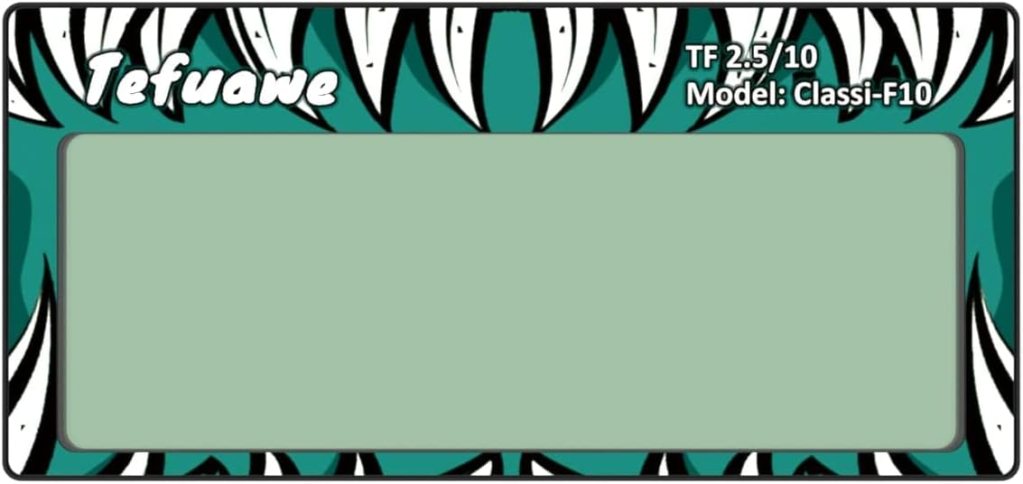
Best for strong performance without overspending
This is the lens for the person who wants a useful answer, not a prestige answer.
Tefuawe’s fixed-shade low-amp lens is thin at 0.19″, fits standard 2 x 4-1/4-inch hoods, and is rated for 5A TIG according to the Amazon product listing. That combination matters more than people admit.
Thin lenses fit where bulky cartridges turn into a headache. And low-amp stability is the difference between a lens that feels trustworthy and one that keeps you half-braced for a flicker.
I would not pretend it is in the same class as Lincoln for brand reputation. It is not. But for someone running a pancake or pipeliner hood and wanting a straightforward auto-darkening option that does not get cute, this is an easy recommendation.
review summary: A practical pick for buyers who care about fit, low-amp TIG behavior, and keeping things simple.
pros
- 0.19″ thin profile
- 5A TIG claim
- standard hood compatibility
- simple fixed-shade setup
cons
- fixed shade is less versatile
- less established brand track record
Real Testimonial
This one stands out because it solves a very specific problem well. It is slim, easy to fit into pancake and pipeliner hoods, and the low-amp TIG angle makes it more interesting than a generic fixed-shade budget lens. It is not the prestige pick, but it looks like a smart, practical choice for welders who care more about fit and function than branding.
3) The King 1.0 Adjustable Gold Auto Darkening Welding Lens

Best for adjustable shade flexibility
A lot of adjustable lenses say they do everything. This one at least gives you a real spread to work with.
The King 1.0 is listed as adjustable from shade 5 to 13, sold in the standard 2″ x 4 1/4″ format, and pitched as a 9-lenses-in-1 type solution. That is useful if you move between tasks and do not want to keep a little pile of cartridges around.
The catch is important. One current sales listing explicitly says this version is not for TIG. So I would not buy it as a low-amp precision lens. I would buy it if you want broad shade flexibility in a gold-front format and your welding use stays outside that specific TIG need.
That limitation actually makes the product easier to understand. It is not pretending to be your universal answer. It is a better fit for someone who wants range and likes the gold-lens style.
review summary: Best for buyers who want one adjustable lens with a broad shade range, but not as a dedicated TIG lens.
pros
- adjustable shade 5-13
- standard cartridge size
- good process flexibility outside TIG-specific use
cons
- not the lens I would buy for TIG
- fewer authoritative published specs than Lincoln
Real Testimonial
The appeal here is flexibility. A shade range from 5 to 13 gives it a wider working range than the fixed-shade options, and the gold-front style will appeal to buyers who like that look and want something a little different from the usual black cartridge. This feels like the right pick for someone who wants more control and variety, not someone shopping for the simplest possible setup.
4) Tefuawe 2×4 1/4 Gold Automatic Welding Lens, 2 Amp TIG Rating, Variable Shade

Best for low-amp TIG work
This one fills the gap the King does not.
The Tefuawe gold variable lens is listed with a 2A TIG rating and multiple settings for stick, MIG, and TIG. If that claim holds up in real use, that is a serious practical advantage for welders doing delicate low-amp TIG where unstable darkening gets old fast.
The listing also places it squarely in the same 2 x 4-1/4 format used by pancake and pipeliner hoods.
Would I rank it above the Lincoln overall? No. Lincoln still gets the nod for trust and spec transparency. But if your main question is, “Which one seems most aimed at low-amp TIG without stepping into full premium pricing?” this is the one that makes the most sense on paper.
review summary: A smarter pick than a generic adjustable lens if low-amp TIG is your main use case.
pros
- 2A TIG claim
- variable settings
- standard cartridge size
- gold-front lens option for buyers who prefer that look
cons
- fewer official specs from the manufacturer
- still not as proven as top-tier established brands
Real Testimonial
This is the more TIG-focused Tefuawe option, and that is what makes it useful. The 2-amp claim gives it a better low-amp story than most no-name adjustable lenses, and the variable settings make it easier to live with if your work changes from one job to the next. It feels like the more specialized choice in the lineup, especially for buyers who care about delicate arc performance.
5) Lincoln Electric Auto Darkening Lens, Fixed Shade 11 KP3779-1
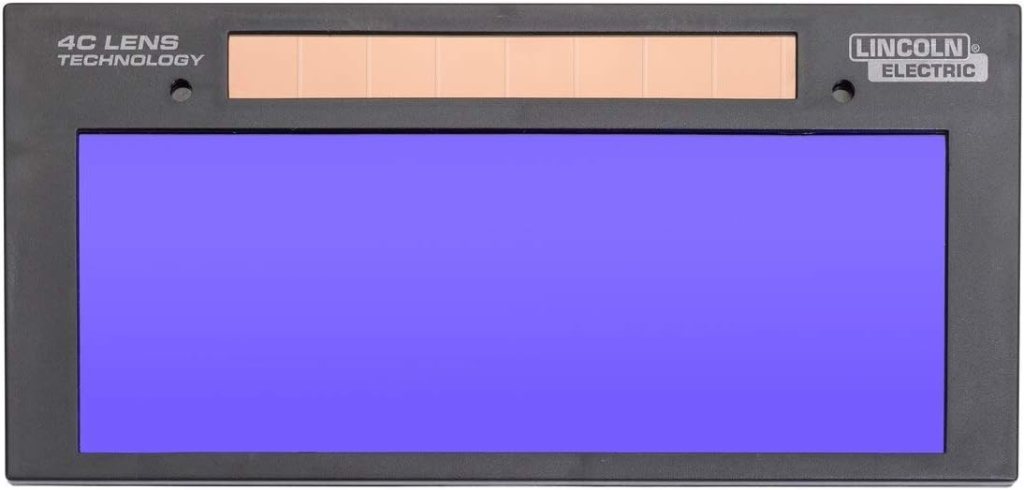
Best for simple, fixed-shade reliability
Not everybody wants knobs, settings, and endless adjustment. Some people just want the lens to darken and do its job.
That is why this fixed shade 11 Lincoln still belongs here. It keeps Lincoln’s 4C tech, uses a shade 3 light state for setup or inspection work, and fits the same standard 2″ x 4.25″ cartridge size as the variable model.
Lincoln positions it for low to medium amperage welding applications. That makes it a good fit for welders who already know the shade they like and want less messing around.
There is something refreshing about a lens that is narrower in purpose. You buy it because it matches your work, not because it wins every feature battle on paper.
review summary: Best for welders who want a clean, true-color fixed shade 11 experience from a brand with real support behind it.
pros
- fixed shade 11 simplicity
- 4C lens tech
- standard fit
- less setup fuss
cons
- not ideal for mixed-process buyers
- less flexible than variable-shade rivals
Real Testimonial
Lincoln Electric has been around long enough that this pick feels less like a gamble than a random marketplace brand. The Tradesman series is usually aimed at welders who want a straightforward, no-drama cartridge that fits standard hoods and does the job without a lot of feature clutter. This is the kind of lens that makes sense for someone who values reliability, simple operation, and a known welding brand over extra adjustability.
What actually matters in an auto darkening welding lens
Shade range matters, but only if you need it
OSHA’s filter lens guidance makes the bigger point here: shade selection depends on process and amperage, not vibes. If you stay in one lane, a fixed shade can make perfect sense. If your work changes often, variable shade becomes worth paying for.
True-color visibility is not a gimmick
Miller’s explanation of welding helmet clarity is blunt and accurate: optical clarity affects how well you see, and that affects weld quality. Their ClearLight material also argues that broader visible color transmission improves visibility of the weld pool and surrounding workpiece. Lincoln makes a very similar case with 4C. Different brand language, same core truth. Better lenses are easier on your eyes and easier to work behind.
Thin cartridges are a real advantage
A lens that fits cleanly in a pancake or pipeliner hood without forcing weird compromises is worth more than a spec sheet full of promises. That is one reason the slimmer Tefuawe options made this list.
Low-amp TIG exposes weak lenses fast
If a product can hold stability at 5A or even 2A, that matters. It means the lens is at least aiming at a tougher use case than generic stick-only duty.
FAQ
what is the best auto darkening welding lens overall?
The Lincoln Electric KP3775-1 is the strongest overall choice here because it combines variable shade 8 to 13, published optical clarity specs, 5A+ TIG capability, and Lincoln’s 4C lens technology.
are auto darkening welding lenses safer than passive lenses?
They can be just as protective when they meet the right safety requirements and use the correct shade. The advantage is convenience and visibility between welds. OSHA still emphasizes proper filter shade selection as the core issue.
what shade is best for MIG, TIG, and stick welding?
It depends on process and amperage. OSHA publishes minimum protective shade guidance rather than one universal answer.
is true color worth it in a welding lens?
Yes. Better color transmission and clarity make the puddle easier to read and can reduce eye strain over time. Both Lincoln and Miller explicitly frame their true-color style lens tech around visibility and reduced fatigue.
what is the best low-amp TIG option on this list?
The Tefuawe Gold Variable Lens is the most TIG-specific pick here because it is listed with a 2A TIG rating. The Lincoln KP3775-1 is also strong, with an official rating above 5A.
do these lenses fit pancake and pipeliner hoods?
Most of the picks here are built around the standard 2″ x 4.25″ or 2 x 4-1/4″ cartridge format used by many pancake and pipeliner setups.
do fixed-shade auto darkening lenses still make sense?
Absolutely. If your work is consistent and you already know the shade you prefer, a fixed-shade auto-darkening lens can be the cleaner choice. The Lincoln KP3779-1 is a good example.
what optical clarity rating should I look for?
Lower numbers in systems like 1/1/1/1 or 1/1/1/2 are better. Miller explains that clarity ratings reflect how well you can see through the lens and that visibility affects weld quality.
how long do auto darkening welding lenses last?
It varies by product, build quality, battery design, and use. Ridge says its auto-darkening lenses last about 1600 hours, but that is a brand-specific claim, not a universal rule.
Final verdict
If you want the safest bet, buy the Lincoln Electric KP3775-1. It is the most complete lens here. The specs are real, the fit is standard, and the clarity argument is backed by more than hopeful marketing.
If you want a more restrained spend without dropping into junk territory, the Tefuawe low-amp TIG lens is the smart second choice. And if low-amp TIG is the whole game, the Tefuawe gold variable 2A lens deserves a hard look.
Good welding lenses are not about flash. They are about seeing the work clearly enough to trust your hands. The broader point from Miller’s lens-clarity guidance holds up: better visibility is not a luxury add-on. It changes the quality of the work.
Affiliate Disclaimer
This article contains affiliate links. We may earn a small commission if you purchase through these links, at no extra cost to you.




Leave a Reply