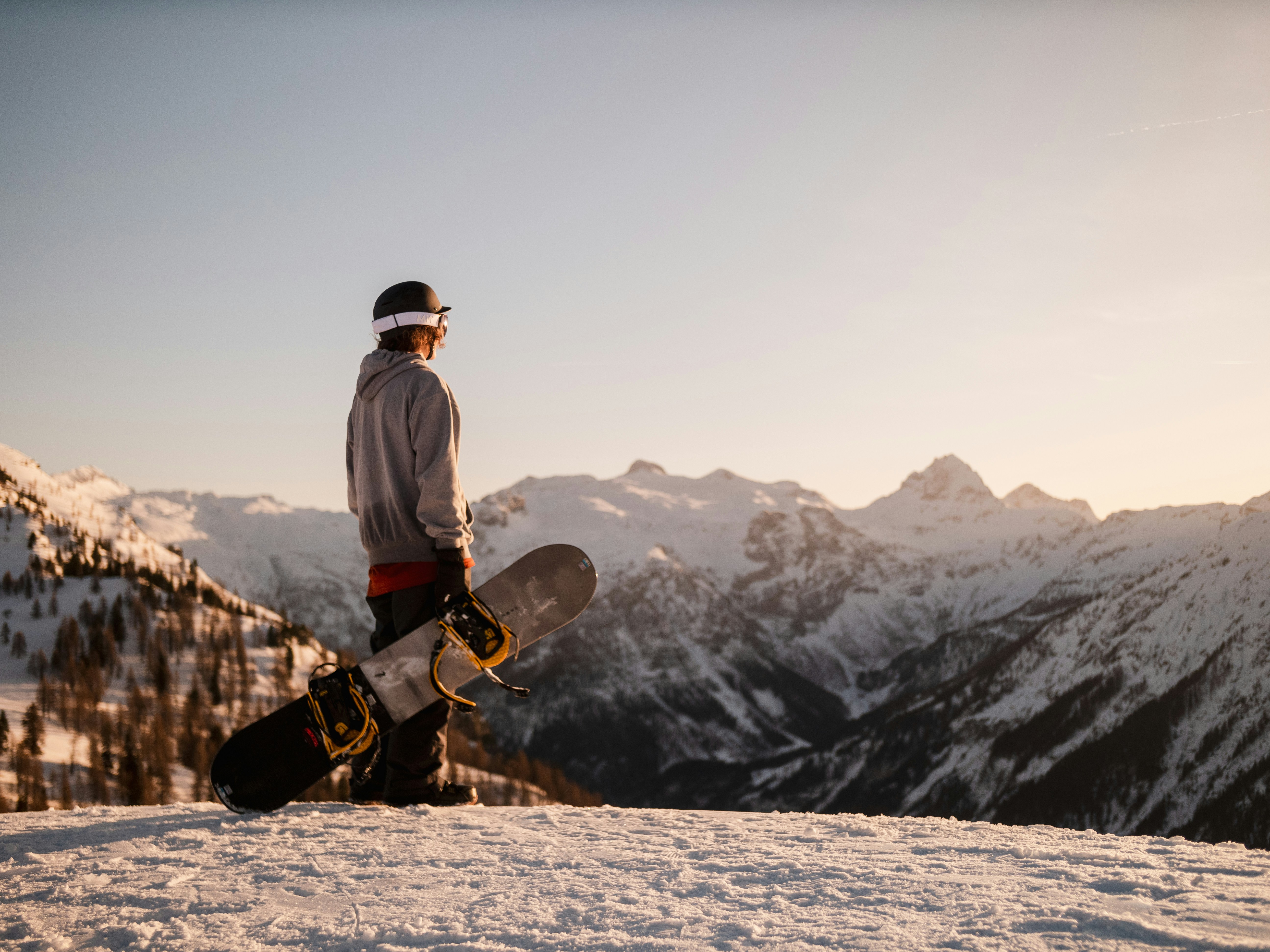
The best camera for snowboarding is not the one with the prettiest spec sheet. It is the one you can trust when the light goes flat, your gloves are thick, your battery is already annoyed by the cold, and you just want clean footage without fiddling around on a chairlift. That narrows the field fast.
Snowboarding is hard on cameras in a very specific way. You are moving fast, crashing sideways, filming in bright snow that can wreck exposure, then dropping into shade where weaker cameras fall apart. Good stabilization matters. Battery life matters more than people think. And if a camera makes editing feel like homework, most riders will stop using it after the second trip.
My take is simple. Most riders should buy a normal action camera and move on. The 360 option is fun, sometimes brilliant, but only if you will actually reframe your clips later. If not, it turns into another folder full of footage you never touch.
Related Articles
- 5 Best Cameras for Skiing (Action & Handheld)
- 5 Best Budget Action Cameras
- 5 Best Cameras for Surf Photography (By Budget)
Quick picks
- GoPro HERO13 Black for most riders
- DJI Osmo Action 5 Pro for battery life and value
- Insta360 X4 for sick 360 snowboard edits
- Insta360 Ace Pro 2 for the best-looking footage here
- AKASO Brave 8 for budget-minded riders
Comparison table
| Camera | Best for | Max video | Why it stands out | Main tradeoff |
|---|---|---|---|---|
| GoPro HERO13 Black | Best overall | 5.3K60 | Reliable stabilization, strong ecosystem, proven POV camera | Not the cheapest |
| DJI Osmo Action 5 Pro | Best battery life | 4K120 | Long runtime, good sensor, strong value | Less default mindshare than GoPro |
| Insta360 X4 | Best 360 footage | 8K 360 | Reframe later, creative angles, invisible-stick look | More editing work |
| Insta360 Ace Pro 2 | Best image quality | 8K30 | Bigger visual punch, flip screen, strong low-light specs | A little less pure and simple |
| AKASO Brave 8 | Best budget pick | 4K60 | Real action-cam layout without premium pricing | Not as polished as the top tier |
Key specs that matter on snow
| Camera | Battery note | Waterproof rating | Notable feature |
|---|---|---|---|
| GoPro HERO13 Black | 1900mAh Enduro battery, up to 2.5 hours continuous recording in some modes | rugged action-cam design | HyperSmooth 6.0 |
| DJI Osmo Action 5 Pro | up to 240 minutes | action-cam waterproof build | HorizonSteady and 1/1.3-inch sensor |
| Insta360 X4 | up to 135 minutes | 33 ft | 8K 360 and 4K60 single-lens mode |
| Insta360 Ace Pro 2 | up to 3 hours | 39 ft | 1/1.3-inch 8K sensor and 2.5-inch flip screen |
| AKASO Brave 8 | 1550mAh battery, about 90 minutes at 4K | 33 ft | 1/2-inch sensor and SuperSmooth stabilization |
GoPro HERO13 Black
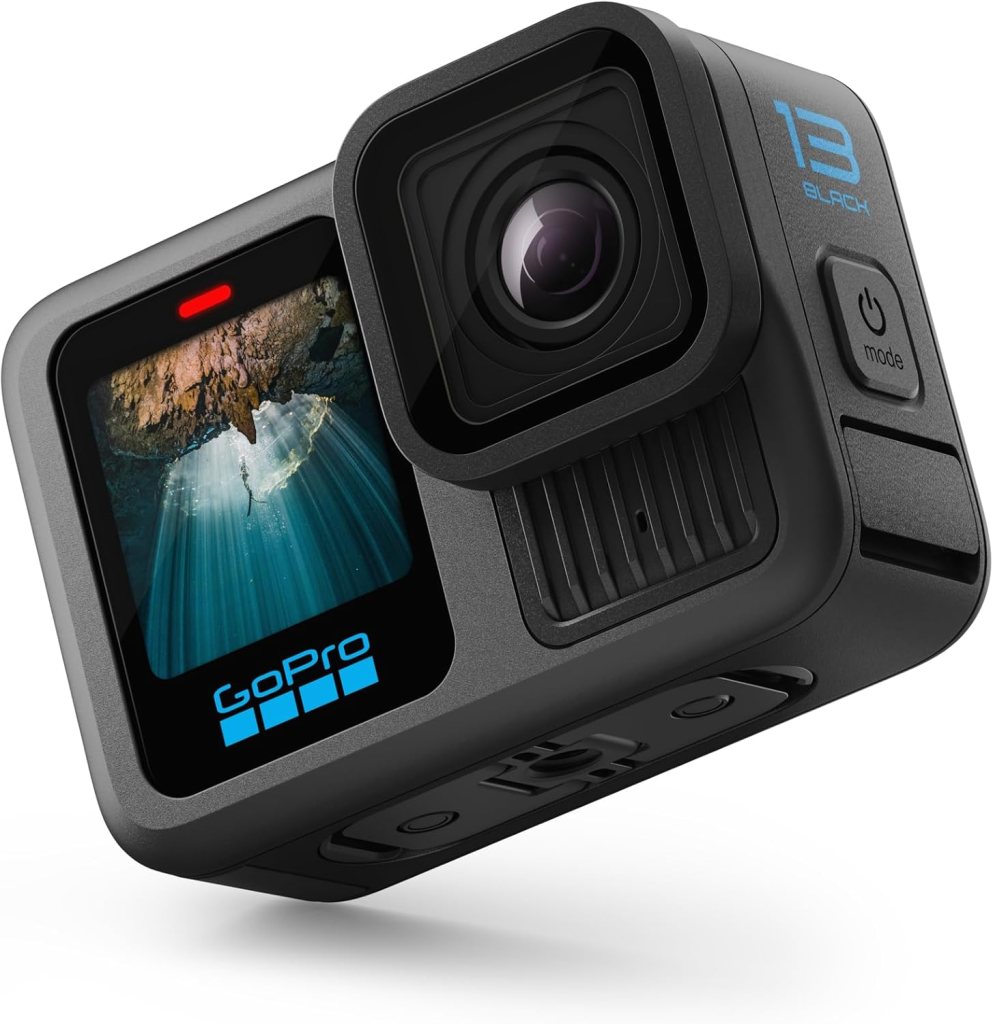
Best overall snowboarding camera
This is still the safe pick, and I do not mean that as an insult.
The HERO13 Black shoots up to 5.3K60, uses GoPro’s newer 1900mAh Enduro battery, and keeps HyperSmooth 6.0 in the mix. That combination is why it lands here. It is the camera I would hand to the largest number of riders without a long lecture first. Helmet mount, chest mount, park laps, mellow powder day, spring slush, whatever. It fits the job.
What I like most about using the GoPro, honestly, is that it rarely turns into a project. Mount it, hit record, forget about it. That matters on a mountain. A lot of cameras look good in product photos and feel annoying in the real world. GoPro still understands the real world pretty well.
It also has the broadest accessory and mount ecosystem here. That sounds boring until you need a chest rig that just works, or spare batteries that are easy to find, or a quick replacement because you left yours in a lodge charging dock like a genius. The HERO13 Black also supports GoPro’s HB-Series lens system, which adds flexibility if you are the kind of person who actually uses specialty mods.
Pros
- Strong stabilization
- Dependable POV footage
- Better cold-weather battery story than older GoPros
- Easy recommendation for most riders
Cons
- Still not cheap
- Image quality is excellent, but not the most cinematic here
- Everybody has one, if that bothers you
Review summary: If you want the least risky answer, this is it. Not the most exotic pick. Not the most interesting pick. Just the one I trust for the highest number of snowboarders.
DJI Osmo Action 5 Pro

Best camera for battery life and value
DJI finally built the action cam that makes people stop saying, “yeah, but GoPro.”
The Osmo Action 5 Pro pairs a 1/1.3-inch sensor with up to 240 minutes of runtime, dual OLED touchscreens, 4K120 video, and HorizonSteady stabilization. On paper that already looks strong. On snow, it makes even more sense because long battery life is not a luxury there. It is the difference between filming the whole day and rationing clips by lunch.
This is the camera I would pick for riders who want performance but hate paying the GoPro tax. It also gets extra points for ugly light. Mountains are full of ugly light. Flat afternoon snow, trees, quick sun-shade transitions, storm days. DJI’s larger sensor and 13.5-stop dynamic range give it a real advantage once conditions stop being postcard-perfect.
I also like that DJI did not phone in the stabilization. HorizonSteady is not marketing fluff. For snowboard footage, especially from a chest mount or pole, that level horizon correction matters. Your clips feel calmer without looking dead.
Pros
- Excellent battery life
- Very good stabilization
- Better value than the usual favorite
- Strong low-light and storm-day potential
Cons
- 4K ceiling, not 5.3K or 8K
- Still lives in GoPro’s shadow for some buyers
- The ecosystem is good, but not quite as universal
Review summary: This is the smartest buy for riders who care about runtime and don’t feel emotionally attached to a GoPro logo.
Insta360 X4

Best for 360 snowboard footage
Here is the fun one.
The X4 records 8K 360 video, 5.7K60 360 video, and 4K60 in single-lens mode. It also gets up to 135 minutes of battery life and is waterproof to 33 feet. More important than any one number is the workflow: shoot first, pick the angle later. That can be magic for snowboarding.
A normal action cam asks you to commit before the run. The X4 doesn’t. You can grab follow-cam style shots with the invisible selfie stick effect, keep your friends in frame, and make one run look like it had a second filmer. That is the appeal. It is less about raw image quality and more about freedom.
But here is the part people skip. A 360 camera is only great if you will actually edit 360 footage. If you hate editing, or you know deep down that you dump clips into your phone and never touch them again, do not buy this one just because the internet made it look cool. The X4 is for riders who enjoy the post-production side at least a little.
Pros
- Wildly flexible framing
- Great for group days and creative angles
- Strong 360 capture quality
- Can replace a second filmer in some situations
Cons
- Extra editing work
- More fragile lens situation than a standard action cam
- Overkill for riders who just want easy POV footage
Review summary: The X4 is the most fun camera here. It is not the best camera for everybody. That distinction matters.
Insta360 Ace Pro 2
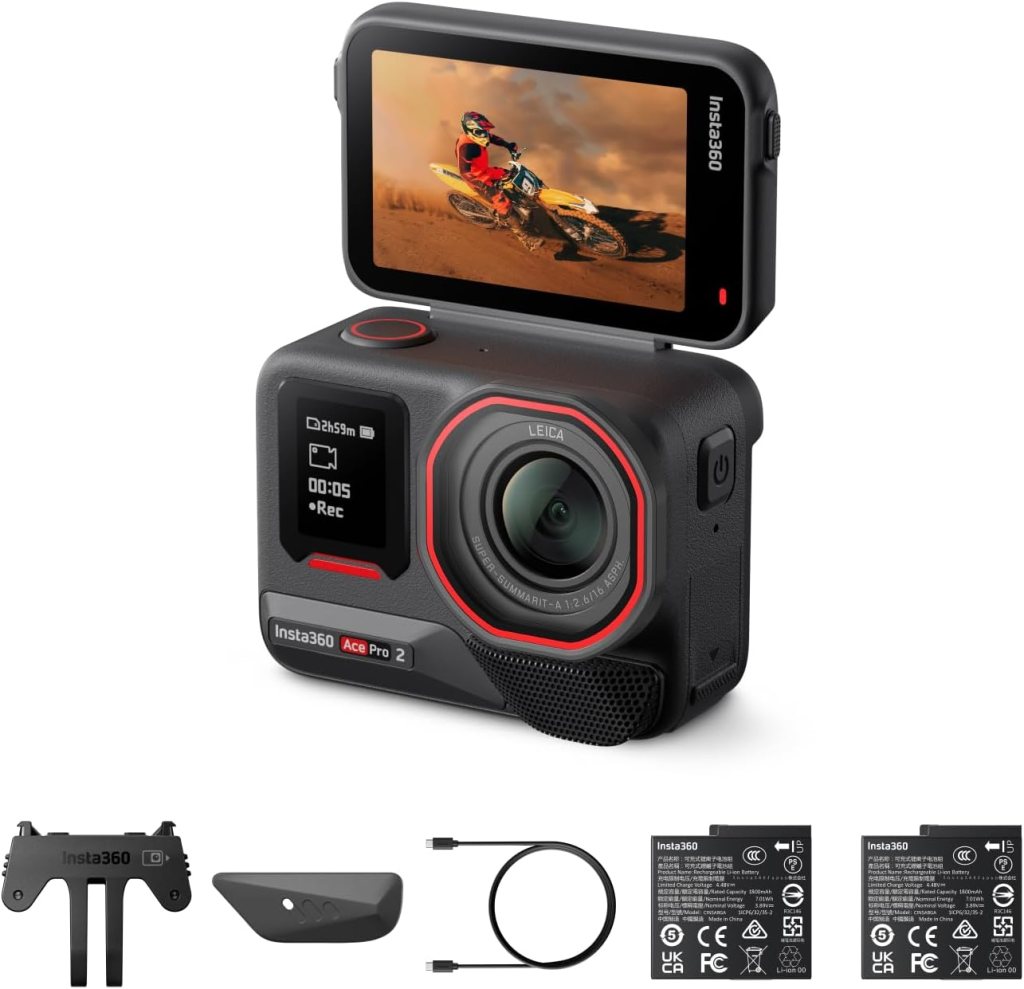
Best for image quality and more cinematic edits
This is the pick for people who care how footage feels, not just whether it is sharp.
The Ace Pro 2 uses a 1/1.3-inch 8K sensor, a Leica co-engineered lens, a 2.5-inch flip screen, up to 3 hours of battery life, and waterproofing to 39 feet. It is a more image-forward tool than the GoPro. Less blunt instrument, more style.
If your snowboarding clips are going to end up in real edits, not just quick dumps to a group chat, this camera deserves a serious look. The extra dynamic range and the overall rendering give footage a little more polish without slipping into fake, overprocessed junk. I also think the flip screen is underrated for riders who split time between POV clips and speaking to camera.
That said, I would not give this to every rider. Some people need a cleaner, simpler, more idiot-proof tool. The Ace Pro 2 is for the rider who already knows they care about the look of the final video.
Pros
- Best-looking footage in this group
- Strong low-light and mixed-light specs
- Useful flip screen
- Long battery life
Cons
- Less straightforward than the GoPro
- Bigger creator vibe, which not everyone wants
- Harder to justify if your clips stay casual
Review summary: If your snowboard footage is headed toward actual edits instead of random storage, this might be the most satisfying camera here.
AKASO Brave 8
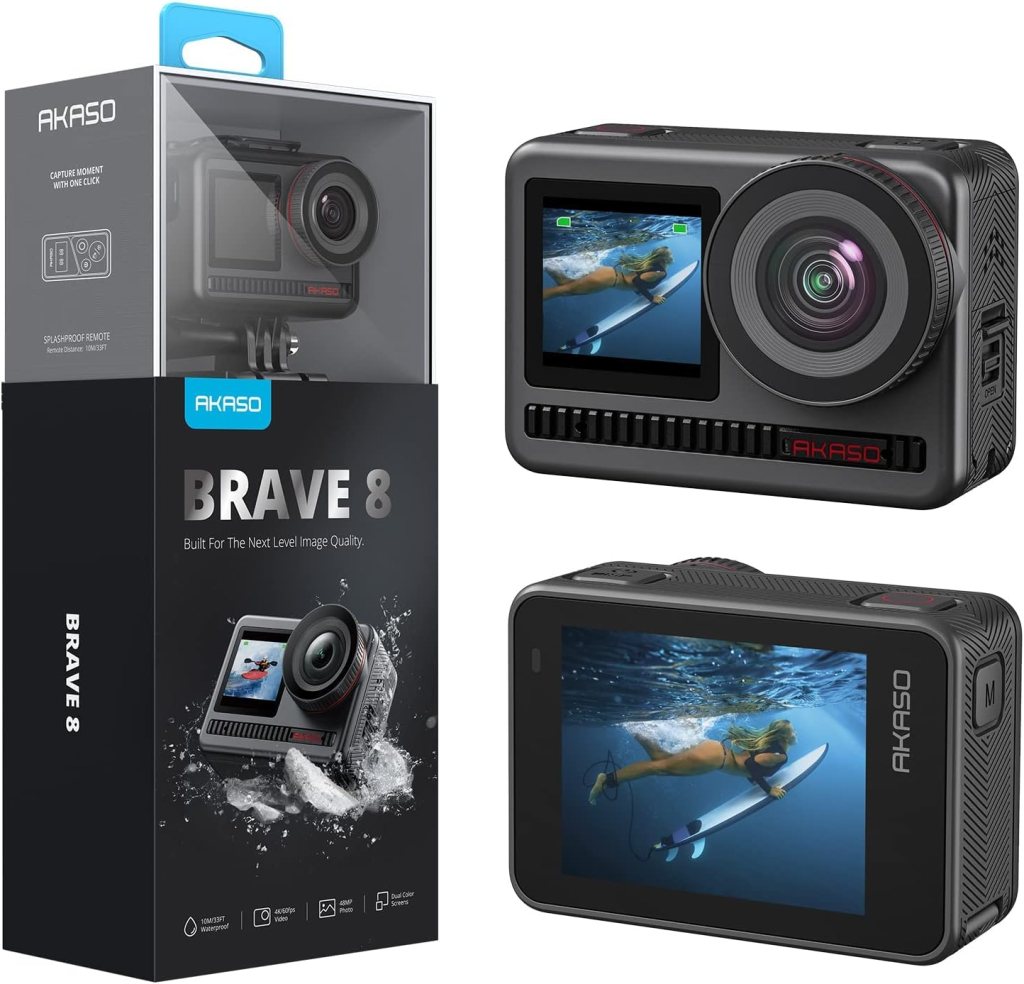
Best budget pick
Most cheap action cameras feel cheap in the exact wrong places. This one at least tries.
The Brave 8 shoots 4K60, uses a 1/2-inch CMOS sensor, includes SuperSmooth stabilization, is waterproof to 33 feet, and ships with a 1550mAh battery that AKASO says supports up to 90 minutes of 4K recording. That is a respectable base for riders who are not trying to spend flagship money.
I would not pretend it runs with the top three. It doesn’t. The premium cameras have better processing, better stabilization confidence, better ecosystems, and a more polished overall feel. But the Brave 8 clears the bar. It is a real action cam, not a toy dressed up as one.
This is a sensible buy for occasional trips, backup duty, teens, or anyone who wants snowboard footage without treating an action camera like a sacred object.
Pros
- Lower price without losing the whole point
- 4K60 is still plenty for most riders
- Waterproof body and usable stabilization
- Better fit for casual users than ultra-cheap junk
Cons
- Noticeably less refined than the premium models
- Weaker overall image pipeline
- Not the one to buy if you are picky
Review summary: The Brave 8 is the budget camera I would buy before I dropped even less money on something disappointing.
Best camera by rider type
If you want the shortest version, here it is.
- Beginner who wants the easy answer: GoPro HERO13 Black
- Rider who cares about value and battery life: DJI Osmo Action 5 Pro
- Creative rider who likes editing: Insta360 X4
- Creator chasing better-looking footage: Insta360 Ace Pro 2
- Budget buyer who still wants something real: AKASO Brave 8
What actually matters in a snowboarding camera
Resolution matters, sure. It just matters less than people think.
Stabilization is first. If your footage jitters every time the terrain gets choppy, 8K is not saving you.
Battery life is next. Cold drains batteries faster, and snowboard trips are full-day events. That is why the DJI stands out, and why the newer GoPro battery story matters.
Mounting matters more than sensor size for a lot of riders. Chest mounts usually give better snowboard footage than helmet mounts because the shot feels more grounded and you can see your board enter frame. Helmet mounts are still useful, but they often look flatter than people expect.
Then there is workflow. If you are lazy with footage, buy the easiest camera. Be honest with yourself. There is no shame in that. Half of good gear buying is admitting who you are.
Best mounts for snowboard footage
Chest mount is my default pick. It gives the most natural sense of speed and terrain.
Helmet mount is fine if you want a true rider-eye view or you keep switching layers and do not want to mess with a chest harness. Check helmet safety.
Pole or selfie-stick setups can look great, especially with the X4. They also invite the most nonsense if you are not careful.
Board mounts sound cool. Most of the time they look worse than people do in their head.
FAQ
What is the best camera for snowboarding?
For most riders, it is the GoPro HERO13 Black. It has the cleanest blend of stabilization, mounting flexibility, accessory support, and strong battery performance through its newer Enduro setup.
Is a GoPro or DJI better for snowboarding?
GoPro is still the safer all-around pick. DJI is the smarter buy if battery life and value are higher priorities for you. The Action 5 Pro’s rated runtime is a real selling point.
Are 360 cameras good for snowboarding?
Yes, but only for the right person. The Insta360 X4 is great for follow shots, group runs, and clips you want to reframe later. It is less ideal if you want simple footage with no editing burden.
What camera mount is best for snowboarding?
Usually a chest mount. It gives a stronger sense of terrain and movement than a helmet mount. Helmet mounts still work, but they often feel less dynamic.
Does cold weather hurt action camera battery life?
Yes. That is one of the main reasons battery specs matter more for snowboarding than for casual summer use. GoPro and DJI both put a lot of emphasis on battery performance in colder conditions and long runtimes.
Is 4K enough for snowboarding videos?
Absolutely. Good 4K with strong stabilization beats messy 5.3K or 8K every time. Higher resolution helps with cropping and reframing, but it is not the first thing I would optimize for.
Should I buy a 360 camera or a standard action camera?
Buy a standard action camera unless you know you want the 360 workflow. Most riders are better off with a GoPro or DJI. The X4 is better for riders who like editing and want more creative angles.
Which camera is easiest to use with gloves?
GoPro and DJI are the least annoying choices here. Their action-cam layouts are more straightforward than the cameras that lean harder into creator features.
What is the best budget camera for snowboarding?
The AKASO Brave 8. It gives you 4K60, waterproofing, and usable stabilization without wandering into toy-camera territory.
Is the Insta360 Ace Pro 2 worth it for snowboarding?
Yes, if you care about image quality more than pure simplicity. No, if you just want easy POV clips and do not plan to fuss with footage later.
What frame rate should I use for snowboarding?
If you want smooth everyday footage, 60fps is the practical choice. If you want cleaner slow-motion on jumps or sprays, 120fps can be worth it. Just know that higher frame rates can cost you light and battery.
Do I need extra batteries for a snowboard trip?
Yes. I would not go up a mountain with just one battery. That is asking for a dead camera by mid-afternoon.
Final verdict
If I were buying one camera for the broadest range of riders, I would still take the GoPro HERO13 Black. It is the least complicated answer, and complicated answers are overrated on a freezing chairlift.
If I wanted more value and longer runtime, I’d grab the DJI Osmo Action 5 Pro. If I wanted fun and weird angles, the Insta360 X4 is the one. If I cared most about prettier footage, I’d lean Ace Pro 2. If money were tight, I would buy the AKASO Brave 8 and keep riding.
That is the whole thing, really. The best camera for snowboarding is the one that matches the way you actually ride, not the one that wins a fake spec battle in your browser tabs.
Affiliate disclaimer
This article may include affiliate links. If you buy through them, the site may earn a small commission at no extra cost to you.


Leave a Reply