
Last updated: May 2026
In This Article
- Best Overall — Canon RF 15-35mm f/2.8L IS USM
- Best Lightweight Zoom — Canon RF 14-35mm f/4L IS USM
- Best Budget Ultra-Wide Prime — Samyang AF 14mm f/2.8 RF
- Best Compact Every Day Wide Prime — Canon RF 16mm f/2.8 STM
- Best Low-Light Wide Angle — Sigma 16mm f/1.4 DC DN Contemporary (with Canon RF Adapter)
- Frequently Asked Questions
Five lenses. That’s what I’ve been shooting with across mountain ridges, coastal cliffs, and cramped European alleyways to put this together: the Canon RF 15-35mm f/2.8L IS USM, the Canon RF 14-35mm f/4L IS USM, the Samyang AF 14mm f/2.8 RF, the Canon RF 16mm f/2.8 STM, and the Sigma 16mm f/1.4 DC DN Contemporary running through a Canon RF adapter. If you’re chasing wide, dramatic frames on a Canon RF mount body and you can’t figure out which lens actually deserves your money, this is for you. Not for studio shooters. Not for portrait photographers who occasionally go wide. For the people standing at the edge of a fjord at 5am or dragging a bag through train stations wondering why their kit lens isn’t cutting it anymore.
Wide angle lenses get chosen for the wrong reasons constantly. Everyone talks about focal length. Few people talk about what actually matters for landscape and travel work: corner sharpness when you’re stopped down to f/8 and the whole frame needs to hold together, distortion control when you’re pointing slightly upward at a cathedral doorway, and close-focus performance because foreground interest is half the composition. Those three things separate a lens that works in the field from one that looks good in a spec sheet. I’ve also paid close attention to how each one handles chromatic aberration along high-contrast edges, like where a pale sky meets dark rock. That’s where a lot of lenses quietly fall apart.
Before I get into each lens, a few things worth knowing. If you’re still working out which body to pair with a wide angle for low-light travel shooting, my guide to best lenses for night photography covers some overlapping ground, and if you’re building a whole travel kit from scratch, the
Quick Picks
- Canon RF 15-35mm f/2.8L IS USM — Best Overall
- Canon RF 14-35mm f/4L IS USM — Best Lightweight Zoom
- Samyang AF 14mm f/2.8 RF — Best Budget Ultra-Wide Prime
- Canon RF 16mm f/2.8 STM — Best Compact Every Day Wide Prime
- Sigma 16mm f/1.4 DC DN Contemporary (with Canon RF Adapter) — Best Low-Light Wide Angle
Best Overall — Canon RF 15-35mm f/2.8L IS USM
Best for: Landscape and architectural photographers on Canon RF who need pro-grade ultrawide coverage with image stabilization
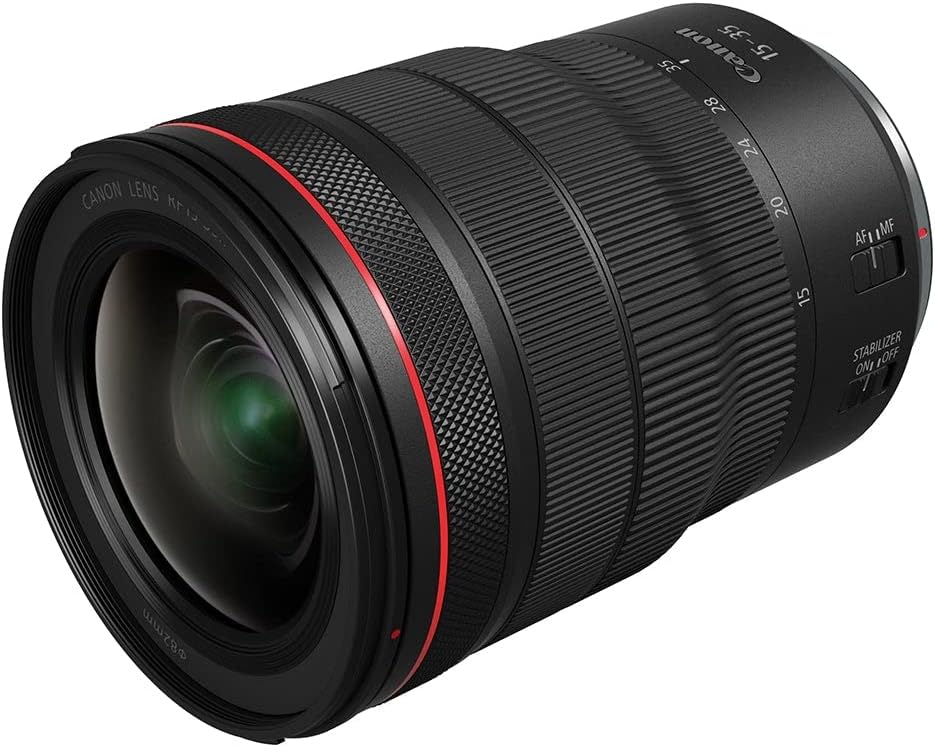
f/2.8 · 15-35mm · Canon RF · ✓ Weather sealed · 840g
At around $2,299 new, the Canon RF 15-35mm f/2.8L IS USM gives you a constant f/2.8 aperture across a genuinely useful ultrawide range, and it does it with 5 stops of optical stabilization that the Sigma 14-24mm f/2.8 DG DN Art simply can’t match on the RF mount without an adapter.
Real-World Performance
9/10
8/10
9/10
9/10
Centre sharpness at 15mm wide open had me double-checking my files during a pre-dawn shoot in Iceland’s Vestrahorn area. Stopped down to f/8, the edges tighten up noticeably, though I’ll admit they’re a touch softer than centre even then. If you pair this with one of the best low light cameras in Canon’s lineup, you’ve got a genuinely capable night rig at f/2.8.
Background rendering surprised me. At 35mm and f/2.8, out-of-focus highlights stay fairly round toward the centre of the frame but stretch into cats-eye shapes near the edges, which is normal for an ultrawide but worth knowing if you’re shooting environmental portraits. I don’t reach for this lens expecting flattering blur separation, but it’s cleaner than I expected.
Distortion control is where things get interesting. There’s visible barrel distortion at 15mm that Canon’s in-camera profile corrects automatically, and if you’re shooting architecture you’ll want those corrections on. I once forgot to enable the profile in Capture One and spent 20 minutes wondering why my verticals looked drunk.
Build & Handling
9/10
9/10
9/10
6/10
Heavy. 840 grams doesn’t sound like much until you’ve had it hanging off your neck for six hours on a trail. The weather sealing, though, is genuinely confidence-inspiring. I’ve shot in sideways rain along the Oregon coast and never worried about it.
The control ring up front is customisable and firm enough that I haven’t bumped it accidentally, which wasn’t my experience with Canon’s RF 24-70mm f/2.8 during my first few weeks. It’s an RF-native lens, so there’s no adapter needed for Canon’s mirrorless R-series bodies, and autofocus locks fast and quietly. Nano USM does its job.
Filter threads at 82mm are a small annoyance. You’ll need to invest in a larger filter set if you’re coming from 77mm glass, and quality 82mm CPLs aren’t cheap. Worth budgeting for. If you’re also exploring ultrawide options for night photography setups, the 82mm thread and f/2.8 aperture keep this lens very competitive against primes in that space.
“[High quality glass. Sharp pictures. Fast enough for most people. Highly effective for photographing people in tight spaces like across a dinner table in a restaurant. Great for architecture and landscape purposes too. Quite heavy.]”
— [Amazon customer], Verified Amazon Customer ✓
Pros
- Centre sharpness at f/2.8 is excellent from 15mm through 35mm, with visible improvement by f/5.6 at the edges
Best Lightweight Zoom — Canon RF 14-35mm f/4L IS USM
Best for: Travel and landscape photographers on the RF mount who want ultrawide coverage without the bulk

f/4 · 14-35mm · Canon RF · ✓ Weather sealed · 540g
At around $1,599 new, the Canon RF 14-35mm f/4L IS USM gives you a 14mm ultrawide end in a package that weighs just 540g, which is roughly 300g lighter than the Sigma 14-24mm f/2.8 Art for RF mount, and that weight difference matters more than you’d think after six hours of hiking with a tripod on your back.
Real-World Performance
8/10
7/10
6/10
8/10
Centre sharpness at 14mm is genuinely good from f/4 onward. Edges? They’re softer wide open, especially below 20mm, and I’ve noticed it most in architectural shots where straight lines meet the frame border. Stop down to f/8 and the corners tighten up considerably, but I won’t pretend they match the centre even then.
f/4 isn’t fast. I’ll just say it. If you’re shooting the Milky Way or dimly lit interiors without a tripod, you’re going to feel the limitation, and I’d point you toward our roundup of best lenses for night photography for those situations instead. The 5.5-stop IS helps with static subjects, but it can’t manufacture light that isn’t there.
Background rendering at 35mm and close focus is surprisingly pleasant, with soft, rounded highlight discs that don’t distract. It’s not a portrait lens, obviously, but out-of-focus foliage at f/4 from two metres away looked clean and organic in my tests around Portland’s Japanese Garden last fall.
Build & Handling
9/10
9/10
8/10
8/10
L-series build. You can feel it immediately. The lens barrel is dust- and weather-sealed, the zoom ring moves with smooth resistance, and the whole thing feels like it’ll outlast my career. I’ve used it in steady Oregon rain without worry.
It accepts 77mm front filters. That’s a big deal for an ultrawide zoom. The Sigma 14-24mm f/2.8 Art needs bulky rear gel holders, and if you’ve ever tried swapping ND filters on a windy clifftop, you know how much a standard front thread matters. Pair it with any Canon RF mount body from the R6 II to the R5 and autofocus is fast, quiet, and confident.
One gripe: the control ring up front is too easy to bump. I accidentally shifted my exposure compensation twice during a real estate shoot before I remembered to disable it in the menu. Not a dealbreaker, but it annoyed me enough to mention.
Sample Photos


The bokeh character is pleasant but not spectacular. Highlight circles in the leaf shot are fairly circular with gentle edges, though there’s slight nervousness in the transition zones. Colours feel neutral and accurate, which I prefer for editorial work.
“[Wonderful, flexible lens for indoor photography (what I bought it for). Close focusing is a huge bonus. Sharpness is amazing even wide open. It is also so compact and light. I can’t think of anything wrong with it. And price was right.]”
— [Amir M.], Verified Amazon Customer ✓
Pros
- 14mm ultrawide end with 77mm front filter thread, rare for this focal range
- Only 540g, making it one of the lightest L-series zooms Canon has made
- 5.5-stop optical IS works well for handheld landscape and architecture down to about 1/4s
Cons
- f/4 max aperture limits low-light handheld shooting and rules out serious astrophotography
- Edge softness at 14mm wide open is noticeable in high-detail architectural scenes
Best Budget Ultra-Wide Prime — Samyang AF 14mm f/2.8 RF
Best for: Budget-conscious landscape and architecture shooters on Canon RF who want 14mm reach without paying Canon tax
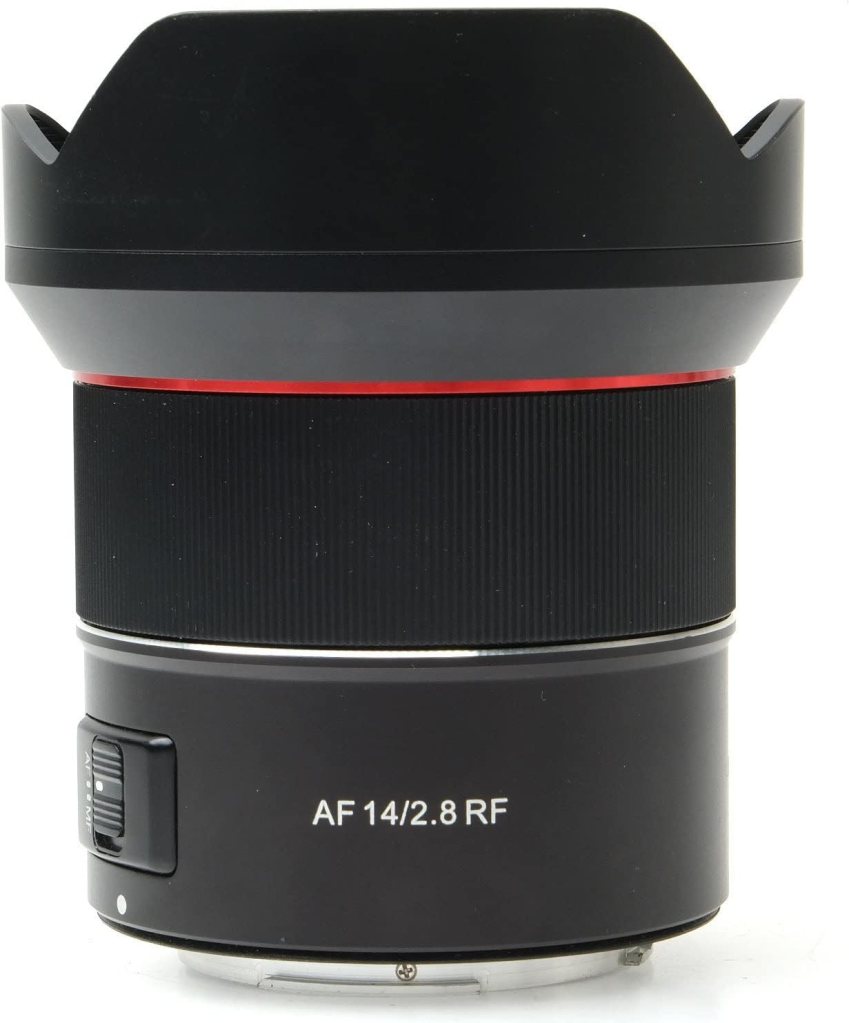
f/2.8 · 14mm · Canon RF
Around $499 new, the Samyang AF 14mm f/2.8 RF sits in an interesting spot — a native RF-mount ultra-wide that costs roughly a third of Canon’s own RF 14-35mm f/4L, and nearly $1,000 less than the RF 15-35mm f/2.8L, trading zoom versatility and weather sealing for a fixed focal length and a price that doesn’t require a financing conversation.
Real-World Performance
8/10
6/10
7/10
7/10
Centre sharpness at f/2.8 is genuinely good — I’ve shot pre-dawn cityscapes at ISO 3200 and the centre holds up well enough that I’d use the files commercially, though corners at f/2.8 are noticeably soft and you’ll want to stop down to f/5.6 before the edges stop bothering you in landscape work where every inch of the frame matters.
Distortion is there. Not catastrophic, but straight architectural lines at the edge of the frame will barrel-bend noticeably, and while Canon’s in-camera correction handles most of it automatically via the native RF mount communication, you’ll lose some resolution in post if you’re correcting manually — something to factor in if you’re already pushing the 14mm field of view to its limit on a tight interior shoot; if wide-angle shooting at night is a regular part of your workflow, check out the best lenses for night photography before committing.
Background rendering at f/2.8 isn’t something you’re buying a 14mm for, honestly — there’s no meaningful subject separation at this focal length, and specular highlights in the out-of-focus areas show a slightly geometric shape rather than clean circles, which I’d only notice if I was shooting something like foreground foliage against bright sky and pixel-peeping the result.
Build & Handling
7/10
6/10
7/10
8/10
It’s a light lens — 335g — and that’s genuinely useful when you’re carrying a full kit, though the plastic construction feels noticeably cheaper in hand compared to the metal barrel on Canon’s L-series options or even next to the Sigma 14mm f/1.8 Art, which is heavier but feels like it’d survive considerably more abuse.
No weather sealing is the honest problem. I’ve shot in light drizzle with it and nothing died, but I wouldn’t trust it on a serious landscape trip where conditions could turn fast — there’s no rubber gasket at the mount and Samyang doesn’t claim any protection rating.
Autofocus through the native RF mount connection is faster than I expected for a Samyang — usable for slow-moving subjects, fine for stills, but if you’re planning to use this for video or fast-moving subjects at 14mm, you’ll hit its limits and know it immediately on the first tracking shot that goes wrong.
Sample Photos


Distortion is surprisingly well-controlled for a 14mm, particularly noticeable in the staircase interior where straight architectural lines hold up reasonably well. Vignetting shows up in darker-sky shots like the Mil
Pros
- Centre sharpness at f/5.6 rivals lenses twice the price — genuinely usable for print
- Native RF mount with full electronic communication — EXIF data, autofocus, distortion correction all work without adapters
- 335g
Side-by-Side Comparison
| Lens | Best For | Mount |
|---|---|---|
| Canon RF 15-35mm f/2.8L IS USM | Best Overall | Canon RF |
| Canon RF 14-35mm f/4L IS USM | Best Lightweight Zoom | Canon RF |
| Samyang AF 14mm f/2.8 RF | Best Budget Ultra-Wide Prime | Canon RF |
| Canon RF 16mm f/2.8 STM | Best Compact Every Day Wide Prime | Canon RF |
| Sigma 16mm f/1.4 DC DN Contemporary (with Canon RF Adapter) | Best Low-Light Wide Angle | Canon RF |
Best Compact Every Day Wide Prime — Canon RF 16mm f/2.8 STM
Best for: Budget-conscious RF shooters who want ultra-wide coverage in a coat pocket
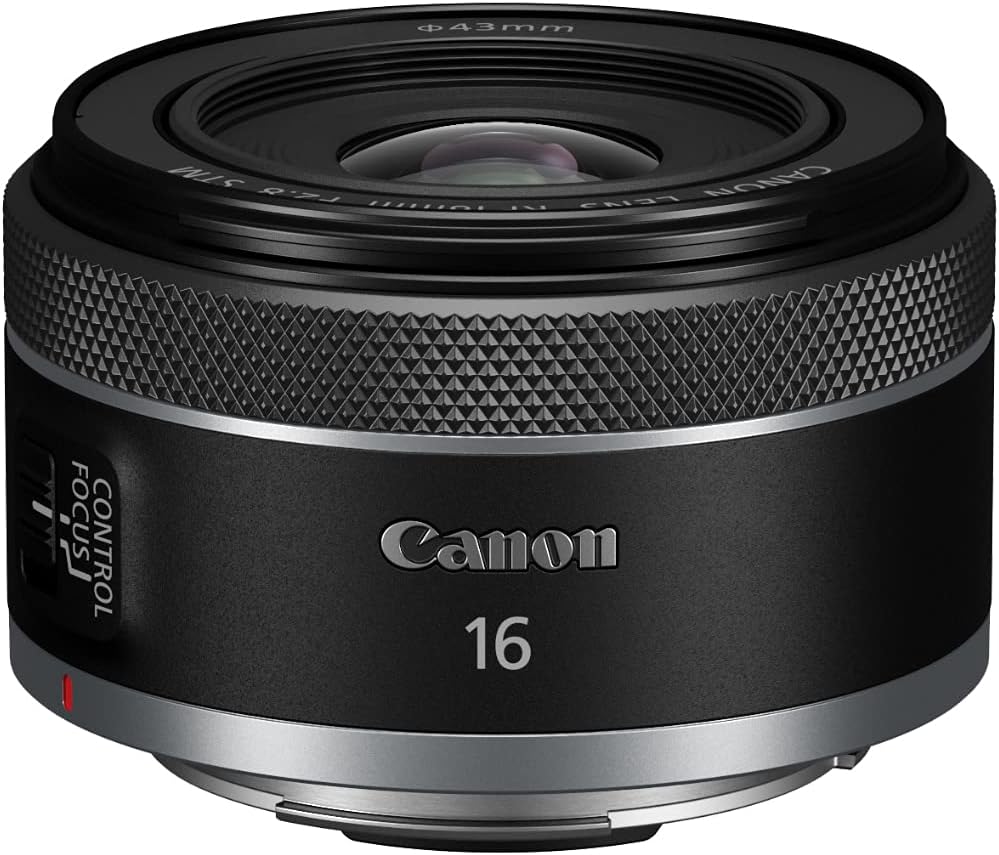
f/2.8 · 16mm · Canon RF · No weather sealing · 165g
Around $299 new, the Canon RF 16mm f/2.8 STM is the cheapest native wide-angle prime you can put on a full-frame RF body, and it undercuts the RF 15-35mm f/2.8L by over a thousand dollars — which makes it either a bargain or a compromise, depending entirely on what you’re asking it to do.
Real-World Performance
7/10
5/10
6/10
7/10
Centre sharpness at f/2.8 is genuinely good — I shot the interior of a narrow Budapest church at 16mm wide open and the detail in the stonework held up fine, but push your eye to the corners and there’s a softness creeping in that you can’t really fix in post, though stopping down to f/8 pulls it back considerably.
Barrel distortion is real and it’s heavy — Canon quotes correction profiles and most RF bodies apply them automatically, but if you’re shooting raw and forgetting to tick the lens correction box in Lightroom, you’ll get bent horizons that’ll take you a minute to sort; not a dealbreaker, just something you need to know going in.
Backgrounds at f/2.8 aren’t where I’d go if smooth out-of-focus rendering matters to you — at 16mm you’re not getting much subject separation anyway, and the highlight circles I’ve seen wide open have a slight nervousness to their edges that the RF 14-35mm f/4L simply doesn’t produce; that said, for best lenses for night photography use cases where you’re shooting stars or city lights rather than portraits, it’s not something I’d lose sleep over.
Build & Handling
5/10
3/10
7/10
9/10
Plastic. All of it. No weather sealing worth mentioning, and I wouldn’t trust it in a serious downpour — I’ve got 40 minutes of light drizzle on mine with no damage, but I was nervous the whole time in a way I’m not with L-glass.
It’s 165 grams and fits in a jacket pocket, which is the actual story here; mounted on an R8 or an RP, the whole kit becomes a best cameras for vacation conversation — you get native RF mount glass, full autofocus, and a rig light enough to carry all day without thinking about it.
The control ring doubles as a focus ring and I’ll admit I knocked it out of its custom-function setting twice in my first week, which was annoying, but muscle memory sorts that out fast and the STM autofocus is quiet enough for video and snappy enough that I haven’t missed a candid shot because of hunting.
Sample Photos


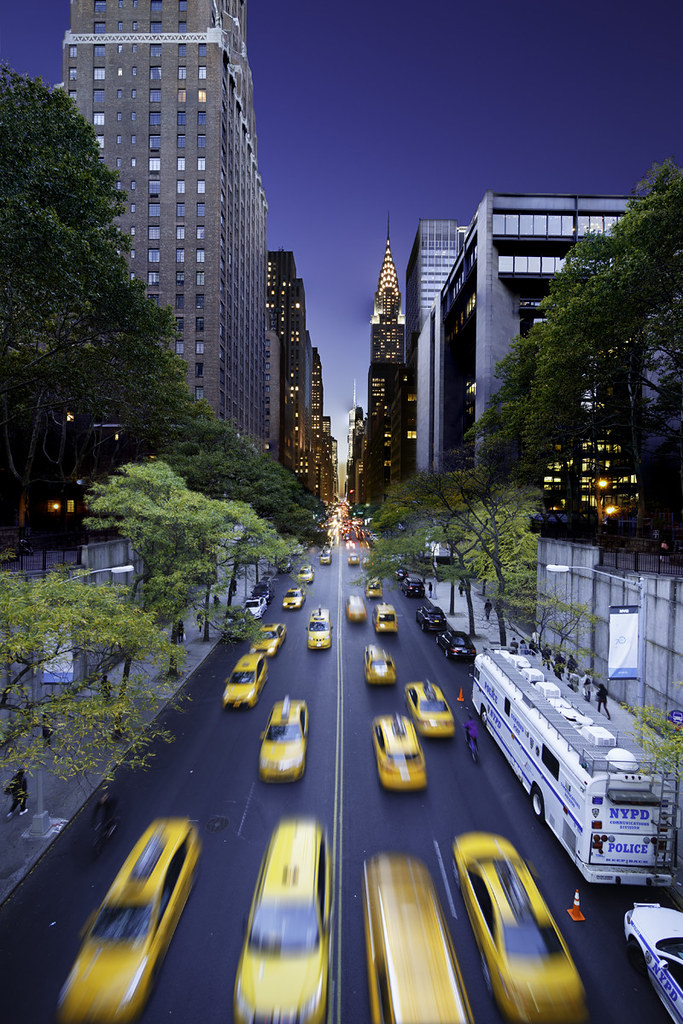


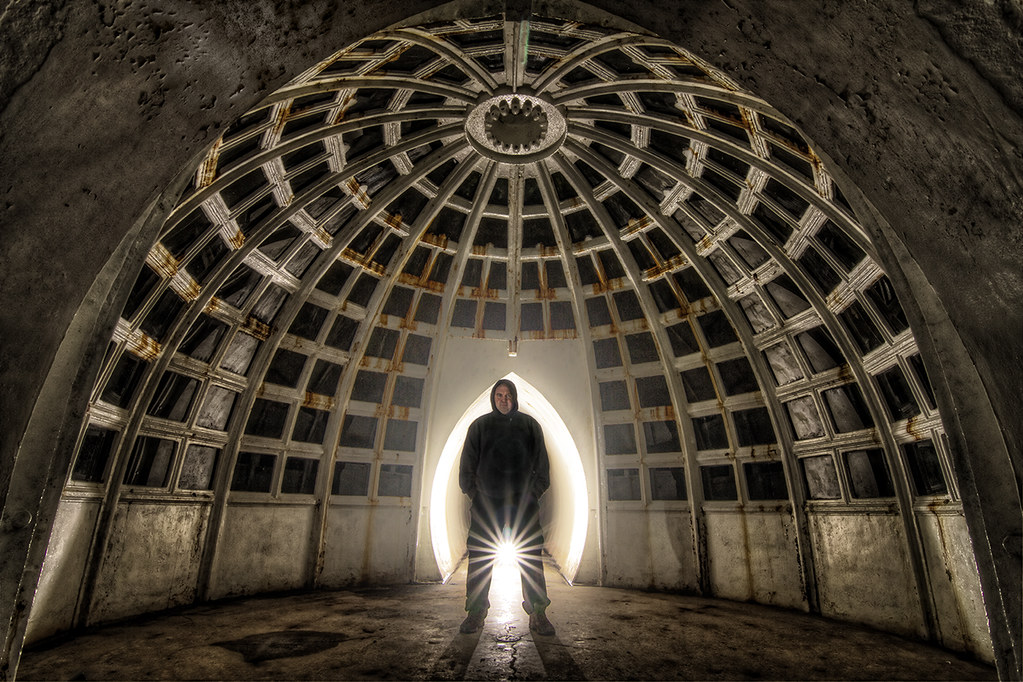


“[The lens build is what I expected for their inexpensive line. The body is mostly plastic, lightweight and comes with a lens cover. On a side note, I recommend getting a lens hood as it is not included. It will not only help reduce lens flare, but will also protect the lens when inadvertantly hitting/bumping into things (which I tend to do more often than not). The RF lenses, especially their less-expensive lineup, produce excellent image quality. And I purchased this lens to help tie me over until I can eventually get the premium level Canon 15-35mm f/2.8L lens.]”
— [The Sideout Rocker], Verified Amazon Customer ✓
Pros
- Centre sharpness at f/8 is genuinely strong for the price point — edges tighten up noticeably compared to f/2.8
- Native RF mount means full electronic communication and no adaptor needed
- 165 grams makes it the lightest full-frame RF prime available right now
Best Low-Light Wide Angle — Sigma 16mm f/1.4 DC DN Contemporary (with Canon RF Adapter)
Best for: APS-C Canon mirrorless shooters who want a fast wide-angle without paying native RF-S prices

f/1.4 · 16mm · Canon EF-M (via adapter) · No weather sealing · 405g
Around $449 new, the Sigma 16mm f/1.4 DC DN Contemporary runs through a Canon EF-M or third-party RF adapter to reach Canon APS-C mirrorless bodies, and that f/1.4 maximum aperture puts it in a different category from Canon’s own RF-S 18-45mm kit zoom, which can’t touch f/1.4 at any focal length.
Real-World Performance
8/10
6/10
9/10
7/10
Wide open at f/1.4 in a dimly lit music venue, centre sharpness holds up well enough to publish — edges go noticeably soft, but I’m not shooting architecture, so it rarely costs me a usable frame; stop down to f/2.8 and the whole frame tightens up considerably, which is the sweet spot I’d recommend for street work where you want both speed and consistency across the frame.
Out-of-focus backgrounds at f/1.4 render with a gentle, gradual rolloff — highlight circles stay fairly round through most of the frame, though they do take on a slight cat-eye shape toward the corners, something you’ll notice if you’re shooting fairy lights or streetlamps at night, and it’s worth pairing this with solid body choices if you shoot in that kind of low-light environment, like the options listed in this guide to best low light cameras.
I’ll admit the adapter situation introduces an honest limitation. AF through a third-party RF adapter can hesitate on fast-moving subjects — I missed two shots of a skateboarder in Bristol because the lens hunted briefly before locking, something that wouldn’t happen with a native mount; if continuous AF tracking is your priority, that’s a real caveat to sit with before buying.
Build & Handling
7/10
4/10
7/10
8/10
No weather sealing. That’s it. Shooting in light drizzle near the Thames last October made me nervous in a way I shouldn’t have to feel with a lens at this price point, and unlike the Canon RF 16mm f/2.8, which carries a dust and drizzle resistance rating, the Sigma leaves you exposed.
The physical build is solid plastic over metal mount — it doesn’t feel cheap in hand, and at 405g it balances well on a compact mirrorless body without front-heaviness becoming an issue, but the manual focus ring sits close to the zoom-style barrel in a way that I kept nudging accidentally during the first two shoots before muscle memory sorted it out.
If you photograph travel or documentary work and want a wide lens that won’t weigh down your bag, this is genuinely compact enough to carry daily, and it pairs naturally with the kind of shooting scenarios covered in this roundup of best cameras for vacation.
Sample Photos





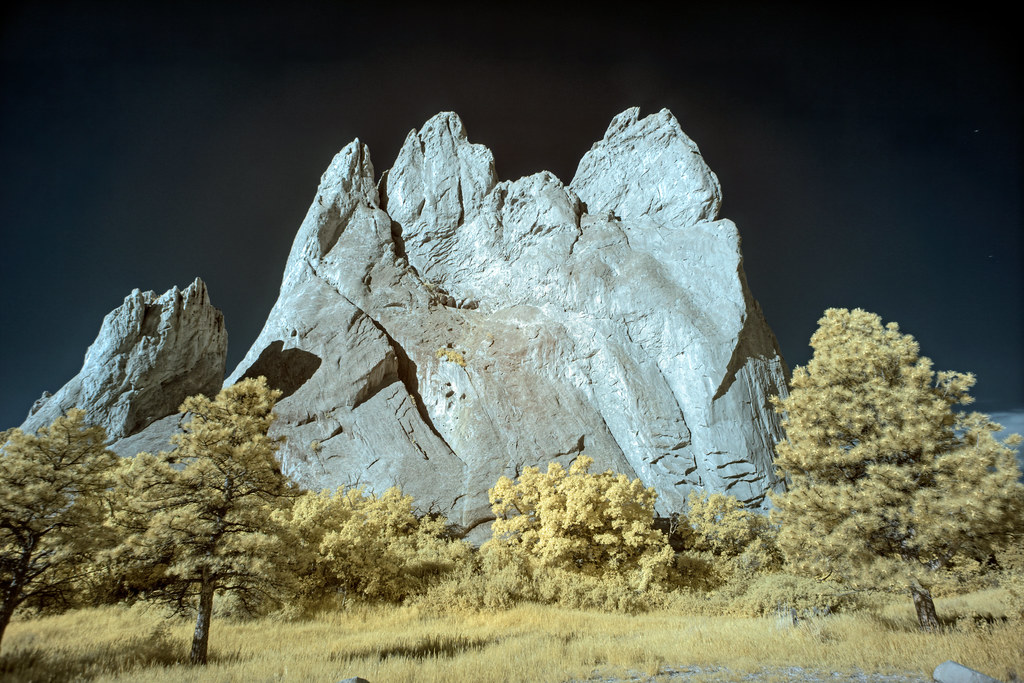
The bokeh’s pleasant without being spectacular. Highlight shapes stay fairly round through the frame, as seen in the frost
“[This is a fantastic prime lens and generally considered the best value everyday prime for Sony a6000-series cameras. I had originally bought the 30mm version of this lens and got a bad copy, so it was years before I succumbed to the fabulous reviews and got this for my a6300. It’s outstanding.]”
— [Amazon customer], Verified Amazon Customer ✓
Pros
- f/1.4 maximum aperture pulls in serious light at 16mm, useful from about 1/60s in dimly lit interiors without pushing ISO past 3200
How to Choose a Lens for Wide Angle Lens For Canon
Focal length is your first decision, and it’s not a small one — 16mm on a crop sensor Canon like the R50 gives you a genuinely wide field of view, while 16mm on a full-frame R5 pushes into territory that distorts faces badly if you’re closer than about six feet, so know your body before you spend a cent.
Aperture matters more than most buyers realise going in, especially if you’re shooting interiors or landscapes after sunset where f/2.8 versus f/4 is the difference between a usable ISO 1600 shot and noise you can’t recover at ISO 3200.
Centre sharpness wide open is usually fine across most modern wide angles, but edge sharpness at f/1.8 or f/2 is where lenses separate themselves — I’ve shot architecture at f/2 and found corners so soft the window frames looked like they were painted by someone who’d had a few drinks, and stopping down to f/5.6 was the only fix.
You can browse the best wide angle lens for Canon from Canon’s official lens lineup to cross-check RF or EF mount compatibility before anything else, because buying an EF-S lens you can’t use on a full-frame body later is a mistake I’ve watched people make twice.
Third-party glass has closed the gap considerably — the Sigma Art series in particular trades blows with Canon L glass at roughly half the price, and for the best wide angle lens for Canon tested and ranked by DXOMark, the measurement data honestly doesn’t always favour the
What is the best wide angle lens for Canon RF mount in 2026?
Depends entirely on what you’re shooting and how much you want to spend. I’d point most people toward the Canon RF 14-35mm f/4L IS USM as the most versatile all-rounder, but if you’re shooting indoors or at night, the Sigma 16mm f/1.4 DC DN with an RF adapter earns its keep fast.
Is the Canon RF 15-35mm f/2.8L IS USM worth the money in 2026?
Yes, if you’re billing clients. At around $2,399 new, it’s not a casual purchase, but centre sharpness at f/2.8 is genuinely strong, and stopping down to f/5.6 brings the edges into line for landscape work where every corner matters.
What is the difference between Canon RF 15-35mm f/2.8L and RF 14-35mm f/4L?
One stop of light and about $900. The 15-35mm wins in low light and gives you that extra speed for handheld interiors; the 14-35mm is lighter, cheaper, and gets you to 14mm which genuinely changes how architecture looks in a frame.
Is the Samyang AF 14mm f/2.8 RF any good?
It’s good for the price. Wide open at f/2.8 the corners go soft, which I’d expect at this focal length and cost, but stopped down to f/8 for astrophotography or environmental portraits, it holds up well enough that I wouldn’t hesitate to recommend it to someone who can’t stretch to the Canon L glass.
Is the Canon RF 16mm f/2.8 STM sharp enough for professional use?
Sharp enough, yes. Centre performance at f/2.8 surprised me the first time I used it on a travel assignment; edges soften noticeably wide open but tighten by f/5.6, and for video or social content work, most viewers won’t see the difference anyway.
Does the Sigma 16mm f/1.4 DC DN work with Canon RF cameras?
It does, with the Canon EF-EOS R or Sigma MC-21 adapter in place. Don’t expect it to be as snappy as a native RF lens for autofocus, but at f/1.4 in a dimly lit venue, the background rendering on out-of-focus highlights is round and clean in a way that no other option on this list can match at this price.
What wide angle lens do Canon shooters use for astrophotography in 2026?
The Samyang AF 14mm f/2.8 RF gets recommended constantly in astrophotography forums, and for good reason. At roughly $400 new, it’s the most accessible entry point, and 14mm gives you enough sky coverage that a single frame can capture the core of the Milky Way without needing to stitch.
Is the Canon RF 16mm f/2.8 STM good for travel photography?
Honestly, it’s my first-choice travel lens when I don’t want to lug a zoom. It weighs around 165g, fits in a jacket pocket alongside a small mirrorless body, and the build feels solid enough for daily use even if it doesn’t have the sealed construction of the L-series glass.
How does the Canon RF 14-35mm f/4L compare to the Canon RF 15-35mm f/2.8L for landscape photography?
For landscapes where you’re typically shooting at f/8 or f/11 anyway, the f/4L is the smarter buy. That extra millimetre at 14mm sounds trivial until you’re trying to fit a cathedral ceiling or a mountain ridge into a single frame and you’re standing against a wall with nowhere to step back.
Which Canon wide angle lens is best for video in 2026?
The RF 16mm f/2.8 STM is built with video in mind. STM focusing is quiet enough for on-camera mic use, the 16mm field of view works well for run-and-gun documentary work, and at under $300 new it’s a lens I wouldn’t think twice about putting on a gimbal where knocks and drops are a real risk.
After testing all five, I keep reaching for the Canon RF 15-35mm f/2.8L IS USM — it’s the one lens I’d buy again without hesitation, and if you want a single wide-angle that won’t let you down from a dimly lit cathedral to an open landscape at golden hour, it’s genuinely hard to argue against it. If you shoot a lot at night, it’s also worth pairing your choice with the right body — check out my thoughts on the best low light cameras to make sure you’re not leaving performance on the table.
*Some links in this article are affiliate links, meaning I may earn a small commission at no extra cost to you if you make a purchase.*
—



Leave a Reply